
Aluminum saw for vacuum chamber manufacturing is a sensible equipment question only when the buyer has identified the aluminum blanks that will be cut in-house. A vacuum chamber is an engineered, machined, joined and tested assembly. A circular saw prepares stock; it cannot establish the chamber’s seal geometry, cleanliness, leak rate or vacuum rating. The purchasing decision starts by separating those responsibilities.
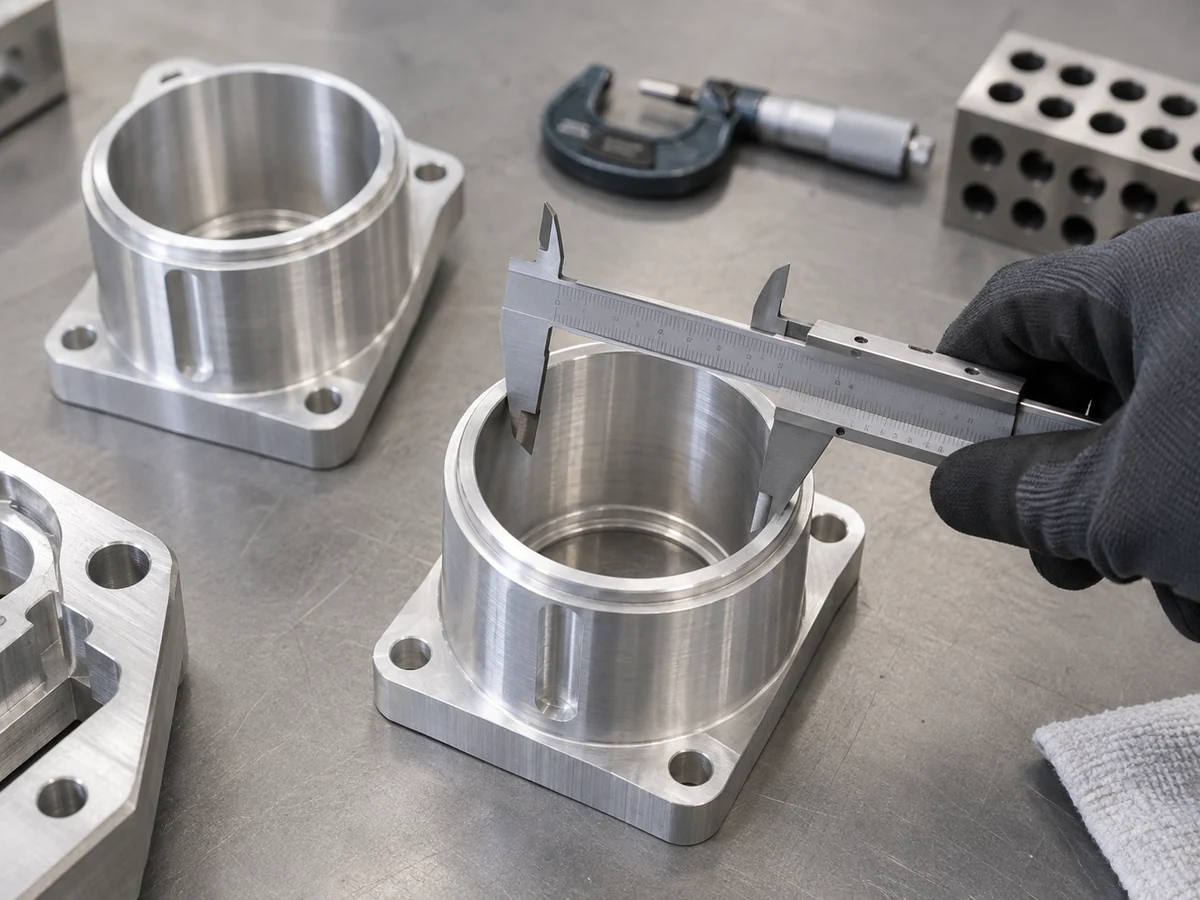
Decide what your plant will actually manufacture
Some teams buy a complete chamber from a specialist. Others buy a designed chamber body but machine ports or brackets locally. A fabrication shop may start from released aluminum plate, billet, tube or a specified extrusion, cut rough blanks, then send them through machining and joining. The saw belongs only in the latter two routes where repeatable blank preparation is part of the buyer’s own process.
Ask engineering for a controlled part list before requesting a saw quotation. Mark each item as purchased complete, cut in-house, machined in-house, welded or joined by an approved specialist, or still unresolved. Include flanges, port stubs, supports and covers only if their drawing and stock form are released. A supplier’s chamber catalog illustrates that actual chambers have different body, port and flange choices; it does not define which of your parts should be sawn. See the Kurt J. Lesker aluminum chamber overview and Pfeiffer vacuum chamber range for examples of the wider design scope.
Translate the drawing into a cut-blank schedule
For every part retained for sawing, record the drawing number and revision, alloy and temper, supplied form, outside envelope, wall thickness where applicable, supplied stock length, rough-cut length, quantity per batch and downstream machining allowance. Identify whether length is measured from a sawn face or from a later machined datum. If the face will be milled away, the saw’s target is an agreed allowance and a stable blank, not the final sealing dimension.
Do not assume that a hollow aluminum profile in a saw demonstration represents the chamber body. A plate, solid bar, tube and multi-cavity extrusion present different contact surfaces and cut sections. If engineering changes the input form, reassess the fixture and trial rather than transferring a result from one sample to another. Where the released drawing requires a machined chamber from solid stock, test the actual bar or billet envelope. Where a formed or welded body is bought complete, a saw may be relevant only to separate ancillary parts.
Aluminum saw for vacuum chamber manufacturing: what the trial should prove
Give the machine supplier representative stock, not only the easiest offcut. The sample matrix should include the largest section, the shortest required blank, any thin or asymmetric wall, and the material condition most likely to move under clamping. Agree on infeed support, clamp contact, datum location, blade access, cut-face burr limit and part handling. Request labeled samples from the trial, with the stock batch, programmed length, observed cut condition and measurement method recorded.
The trial should answer practical blank-preparation questions: Can the stock be held without visible deformation? Does a short piece stay controlled through the cut? Are burrs or chips likely to complicate the next operation? Can the operator keep the intended face clear of unacceptable contact marks? Measure the produced blank against the rough-cut drawing and inspect the edge. Any quoted accuracy, speed or throughput must be tied to a specified machine configuration and representative trial; it must not be inferred from a general equipment video.
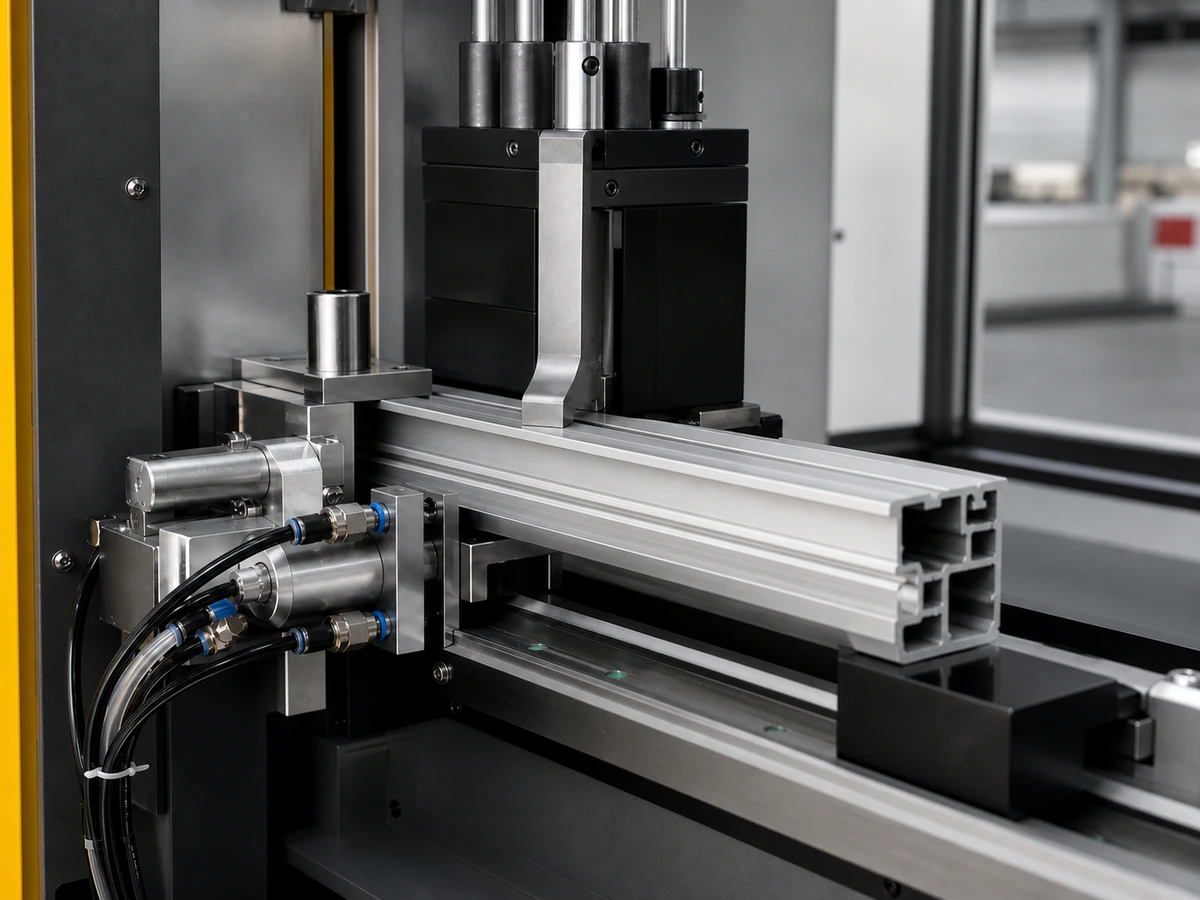
Keep sealing and cleanliness requirements with the right process
Final chamber performance depends on design decisions and downstream operations that a saw does not perform. The responsible chamber team must define the port layout, mating flange type, sealing surface finish, welding or joining procedure, cleaning sequence and acceptance test. Saw chips and lubricant residue should be controlled before parts enter precision machining or cleaning, but a clean-looking saw cut is not a vacuum-clean part. A caliper reading on a rough blank is not a leak test.
State in the process plan where the saw operator’s inspection ends and where machining inspection begins. If the cut face is only a temporary reference, protect enough stock for final facing. If it is used for handling or fixturing, define allowable burrs and squareness for that handoff. If an end face could become part of a final seal, require engineering to release the finishing and verification route rather than accepting it as-sawn by default. The specialist chamber supplier or the buyer’s qualified engineering team remains responsible for the vacuum application and final acceptance.
Compare a complete-chamber purchase with an in-house blank route
A complete-chamber quote and a saw quote solve different problems. The first may include design, selected ports and flanges, fabrication, cleaning and testing. The second covers equipment to prepare specified aluminum stock for a process the buyer controls. Compare them only after listing what work remains in-house. A low-priced saw cannot replace an unpriced machining, welding, cleaning and leak-test route.
For a mixed route, ask the chamber supplier whether any field trimming or part substitution is permitted. If not, do not buy a saw around a hypothetical modification. If the buyer has a stable portfolio of approved cut parts, compare saw options by the real section range, clamping access, batch mix, changeover effort, floor space, operator handling and documented trial results. Jiurun’s aluminum profile cutting machine range is a starting point for equipment discussion, but suitability for a given blank is established only by reviewing the released drawing and sample.
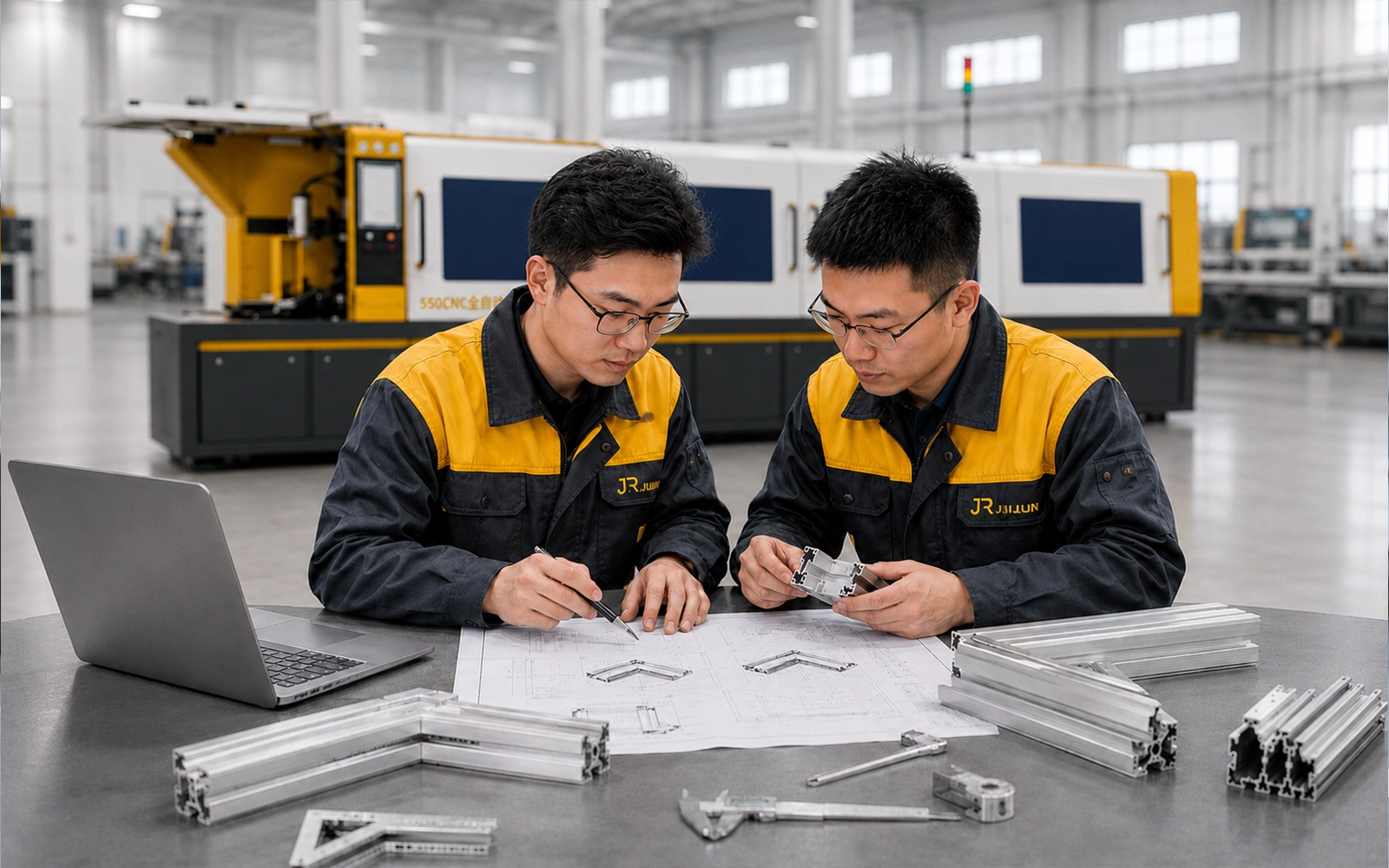
Video: an equipment scene, not a chamber test
The following video from Jiurun’s own YouTube channel shows a JR-455Q saw and its clamping/cutting process. It is a related equipment example only. It does not demonstrate the chamber material, blank dimensions, selected machine configuration, vacuum performance or a customer trial described in this guide.
Send an RFQ that can be tested
A useful request for quotation should contain the following, with unknown items clearly marked for engineering review:
- Responsibility boundary: complete chamber purchased, or named aluminum blanks retained for in-house sawing.
- Controlled inputs: drawing and revision, alloy/temper, stock form, section size, supplied length and available samples.
- Cut requirements: rough length, machining allowance, datum, end condition, burr and contact-mark limits, and any angle requirement.
- Production pattern: quantities by part, batch size, changeovers, shortest and longest blanks, and material handling.
- Trial plan: representative stock matrix, inspection method, recorded measurements, chip/edge observations and acceptance owner.
- Excluded work: final machining, joining, surface finishing, cleaning, leak testing and chamber certification unless separately contracted to qualified parties.
Request a written configuration and a trial report against these inputs. Ask how a change in stock section or clamping datum would affect the proposal. Keep the chamber designer’s acceptance criteria separate from the saw supplier’s blank-preparation evidence.
Buyer decision
For an aluminum saw for vacuum chamber manufacturing, define the retained blank portfolio before comparing machines. If the chamber arrives as an approved finished unit, begin with the chamber supplier, not a saw catalog. If your team owns a repeatable, released set of aluminum blanks, test the saw against those actual inputs and evaluate its fit for your batch mix. If the boundary is still unclear, resolve drawing ownership and downstream acceptance first. To discuss the retained cutting scope, send Jiurun the blank drawings, stock photos, target lengths and batch pattern through the machine inquiry form. We can review what a cutting trial would need to show; chamber integrity remains the responsibility of the qualified chamber process.