
Aluminum saw for umbrella manufacturing becomes a useful buying question only after the factory separates the metal members it will cut from the frame assemblies it will buy. A center-post parasol and a cantilever parasol can require different mast, arm, rib and strut families. The canopy, connectors, lift parts and base are separate purchasing and assembly decisions. A circular saw can prepare released aluminum blanks; it cannot qualify the complete umbrella, its movement, stability or outdoor performance.
Start with the actual umbrella portfolio
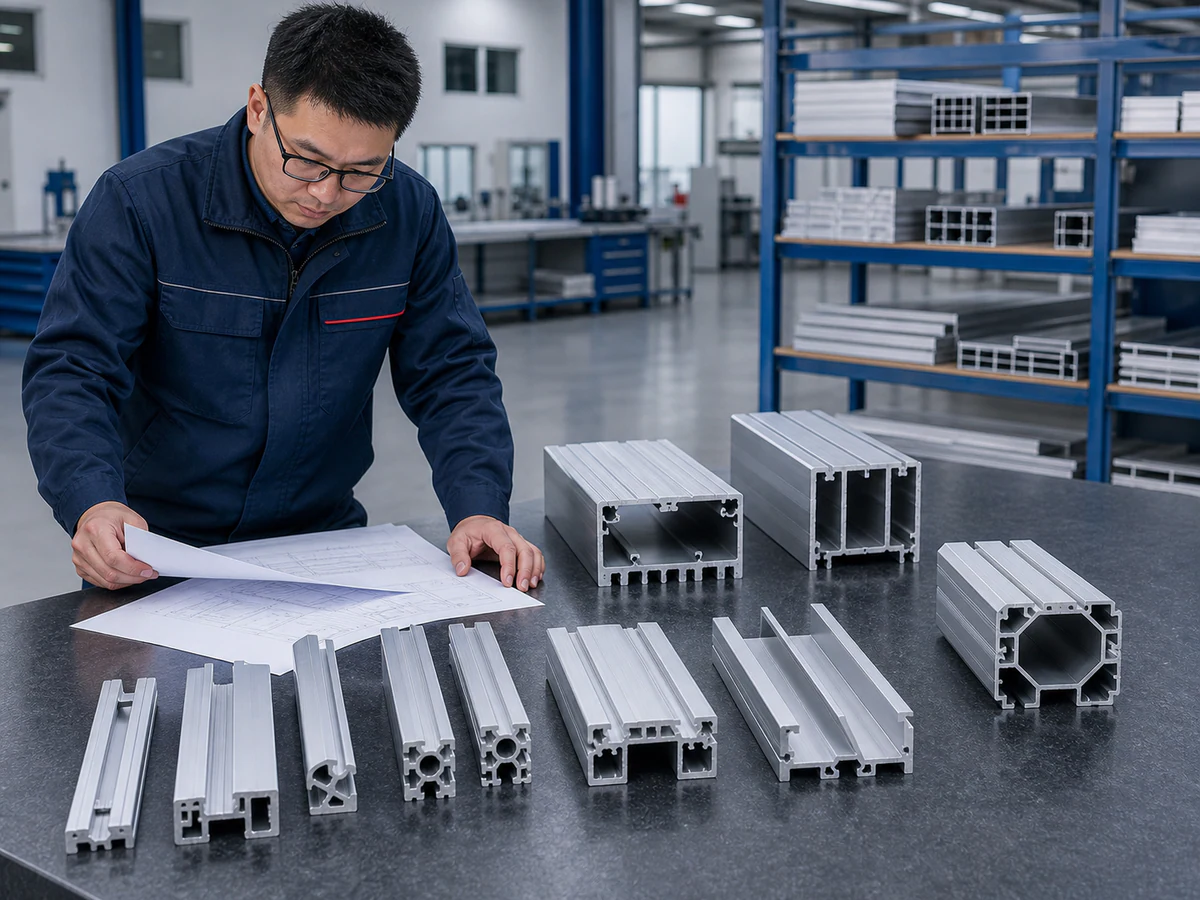
Do not buy a saw around the word “umbrella.” List the product families the plant has approved or plans to manufacture, then identify the physical metal member families in each. A center-post range might retain posts and selected rib blanks. A cantilever range may add different mast and arm sections. This is a planning framework, not a claim that every design uses the same aluminum sections. The product owner must supply the released drawings, material forms and assembly route.
Tuuci’s parasol collections distinguish multiple product families, and its cantilever product example shows why a finished parasol includes more than a metal cut part. Those pages illustrate category breadth; they do not establish Jiurun machine suitability, the section used by your factory or an operating specification. Request a portfolio list from the buyer’s own engineering team rather than copying dimensions from a finished-product catalog.
Mark every member by supply and receiving stage
Give each mast, arm, rib and strut a part number and revision. For every part, state whether the plant receives raw extrusion or tube, a cut blank, a machined and finished member, or a complete frame subassembly. Mark canopy fabric, base, connectors and lifting components as bought-in items when that is the real route. A bought frame does not create saw demand simply because it contains aluminum.
The receiving stage matters to the investment case. If a supplier delivers approved, finished rib sets, a new saw may serve only the posts retained in-house. If the factory cuts most members from long stock, it needs a wider trial matrix and more handling capacity. A mixed route can change with season, product variant or supplier allocation; quote the expected mix, not an idealized all-in-house volume.
Compare routes at the same handoff: purchased raw stock plus in-house cut, purchased cut blanks requiring downstream work, or purchased prepared member sets ready for the next assembly step. Include freight, scrap, handling, changeover and inspection labor. Comparing the price of one raw length to a delivered prepared frame is misleading because the remaining work is different.
Translate the released member list into a cutting schedule
For each retained part, the aluminum saw for umbrella manufacturing quotation should receive the section drawing, alloy and temper, finish state at the saw, supplied stock length, outside envelope, wall thickness, required blank length, end condition, batch quantity and downstream allowance. Identify the reference face and whether final length is measured after machining, forming, finishing or assembly. Do not promote a saw positioning figure into a finished umbrella tolerance.
Separate center-post, cantilever-mast, arm and rib entries even if two currently share a length. They may differ in cross-section, clamp contact, shortest usable blank or protected surface. Record straight cuts and any released angled cuts separately. Where the end will be drilled, milled or fitted to hardware, engineering must define the material left for that operation. The saw supplier should not invent an allowance or treat an as-sawn face as an approved joint.
Check long stock, short blanks and surface handling together
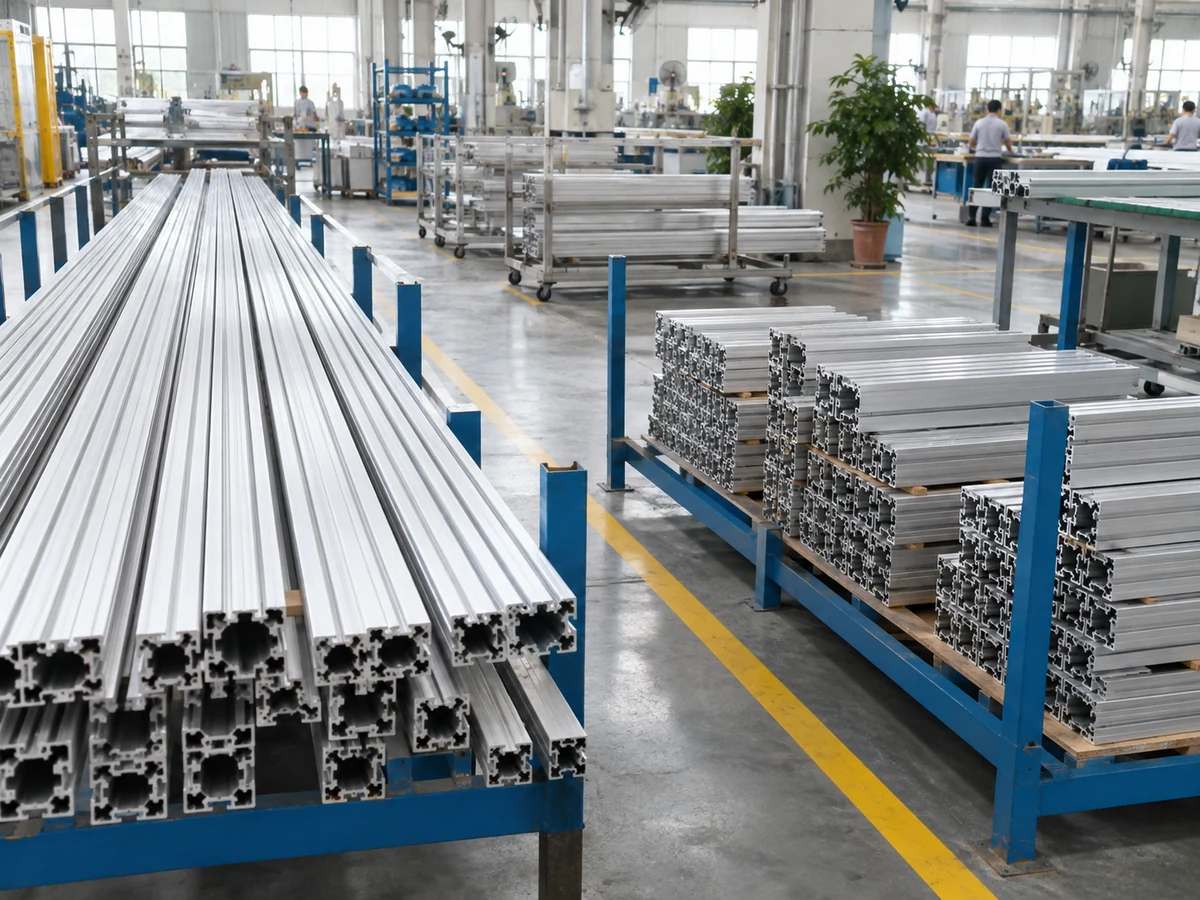
A long mast may be easy to support but awkward to feed and transfer. A small rib blank may be easy to carry but difficult to keep controlled near the cut. Test both ends of the actual part range. Ask how the saw’s infeed, clamping, outfeed and finished-part collection work for the largest and smallest released sections. Inspect for visible marking or deformation on surfaces that will remain exposed after finishing.
Make a representative sample matrix, not a single demonstration piece. Include the longest incoming stock, shortest required blank, thinnest or least stable section, different cross-sections and any angled end. State the quantity of each trial part, the approved stock batch, intended datum and inspection method. A video of another profile being cut can show equipment movement, but it cannot prove that this sample range is safe, accurate or acceptable for the buyer’s product.
After the cut, label parts by variant and drawing revision. Check length from the agreed reference, end condition, burr, visible clamp contact and the condition of any finish that already exists. Record what the saw has demonstrated and what still belongs to drilling, machining, surface treatment, joining or assembly. If an extrusion is changed, repeat the relevant fixture and trial checks rather than carrying forward a result from a different section.
Compare the machine with the complete factory route
For an in-house member portfolio, compare machine proposals against the released section range, straight or angled cut requirements, clamping access, support length, changeover effort, operator handling and actual trial records. Ask the supplier to identify the quoted configuration and any fixtures included. Jiurun’s aluminum profile cutting machine range can start that discussion; model suitability must be checked against the buyer’s actual section and sample.
For bought member sets or assembled frames, compare supplier lead time, receiving inspection and assembly handoff instead. A saw may still be useful for a smaller retained portfolio, but the demand forecast must count only those physical cuts. Use a complete identified product set when calculating the business case: one center-post unit or one cantilever unit with its purchased and in-house components clearly separated. Do not count a canopy or base as a saw output.
Video: related saw operation, not an umbrella test
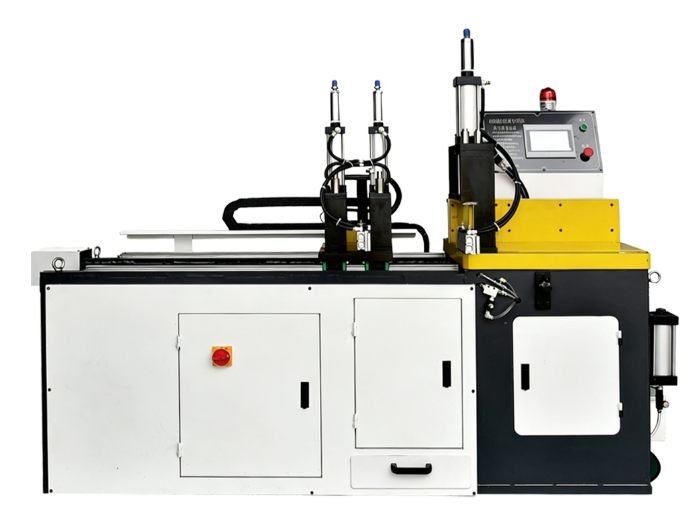
The video below comes from Jiurun’s own YouTube channel and shows a JR-455Q saw operating on an aluminum section. It is an equipment and clamping example only. It does not show the mast, rib, material, configuration, customer job or accepted umbrella trial described in this article.
Build an RFQ that can produce a decision
Send a practical package to the saw supplier. It should contain the approved center-post and cantilever families, the retained part list with drawings and revisions, actual stock photos or representative samples, section sizes and lengths, finished blank requirements, expected batches and changeovers, protected surfaces, and the downstream process owner. List bought canopy, base, hardware and complete frames outside the saw scope. Mark unresolved product decisions clearly instead of making the equipment supplier infer them.
- Inputs: material form, finish state, stock length, section envelope and available sample quantity.
- Cut outputs: blank length and reference, end orientation, acceptable edge condition and part identification.
- Production mix: quantities by member and product family, shortest and longest pieces, order frequency and changeover pattern.
- Trial evidence: representative samples, recorded measurements, clamp-mark review and signed acceptance responsibility.
- Excluded work: canopy, base, connector, lift, frame assembly and complete parasol qualification unless separately contracted.
Where a current fixture or saw may be reused, review the fixture-transfer questions before assuming compatibility. If the sample stock is supplied by either party, define its ownership, consumption and return using the trial-material checklist. These checks make proposals comparable without substituting generic machine claims for your product evidence.
Buyer decision
Choose the supply boundary before choosing an aluminum saw for umbrella manufacturing. If the plant buys complete approved frames, start with supplier and receiving controls. If it retains a defined group of aluminum masts, arms or ribs, run a documented trial on those actual members and compare the equipment with the full cost of downstream work. If the product portfolio or drawing ownership is still unsettled, settle that first. To discuss the retained cutting scope with Jiurun, send the released drawings, stock photos, length schedule and production mix through the machine inquiry form. Final umbrella design, assembly and product qualification remain with the responsible product team.