
An aluminum saw for tent frame manufacturing needs to match the pole system you make. A business supplying segmented camping poles, a factory producing telescoping support assemblies and a manufacturer preparing large shelter-frame members do not have the same cutting job. Before comparing machines, identify the aluminum work inside your own production route and the output that your next operation actually needs.
The product name is only the beginning. A straight tube blank may still need a connector, a formed end, holes or another preparation step before it becomes a pole segment. A cut profile may be one member of a complete frame kit. A saw purchase should improve that retained production stage while leaving the other stages clearly assigned.
This guide is for manufacturers purchasing industrial cutting equipment. It explains how to compare pole systems, establish section and end requirements, plan kits, evaluate changeovers and build a useful quotation package. It does not prescribe a tent design or establish structural, weather or consumer-product approval. All numerical examples below are invented production-planning illustrations.
1. Start with the pole system and supply boundary
Write down what your factory sells: loose blanks, finished pole segments, assembled supports or complete frame kits. These delivery formats change the work around the saw. A buyer who purchases finished segments from another supplier may have little retained cutting, while a business receiving long stock needs to describe the full stock-to-member route.
Hydro’s camping and outdoor applications overview lists tents, shelters and shade products among aluminum applications. The range includes different kinds of tents, support legs and portable canopies. That breadth is a reason to specify your particular product family, not evidence that one pole geometry, alloy or saw configuration serves every outdoor product.
For a segmented system, identify the member families and the joining components that make them into the intended pole set. For a telescoping support, identify the separate inner and outer members and the locking or locating features. For a larger profile framework, identify the members, corners and connections that comprise the released frame.
These are purchasing categories, not design recommendations. Use the actual approved product route. A saw supplier should assess the specified cutting operation; the responsible product process retains ownership of connections, assembly performance and application suitability.
| System supplied | Cutting inquiry must describe | Work to identify separately |
|---|---|---|
| Segmented pole set | Each tube member and its cut-stage condition | Joining pieces, formed features and set assembly |
| Telescoping support | Separate member families, lengths and end requirements | Locking features, sliding fit and assembly checks |
| Profile frame kit | Every released profile and end form in the kit | Connection preparation, fittings and complete-frame acceptance |
| Purchased finished components | Any actual cutting retained after receipt | Supplier preparation and receiving inspection |
A useful scope statement might say that the purchase covers cutting identified tube members from received stock, with end preparation and set assembly performed elsewhere. Another factory may require the quotation to include additional processing. Both can be valid scopes, but they are not comparable until the included operations are written down.
2. Define the section families before discussing machine size
Send drawings of the actual sections. Round tubes need their relevant outside, inside and wall information; shaped or grooved profiles need enough detail to explain the complete contour. Include the stock condition and the operation being assessed. An industry photograph or the largest outside dimension does not describe the whole workpiece.
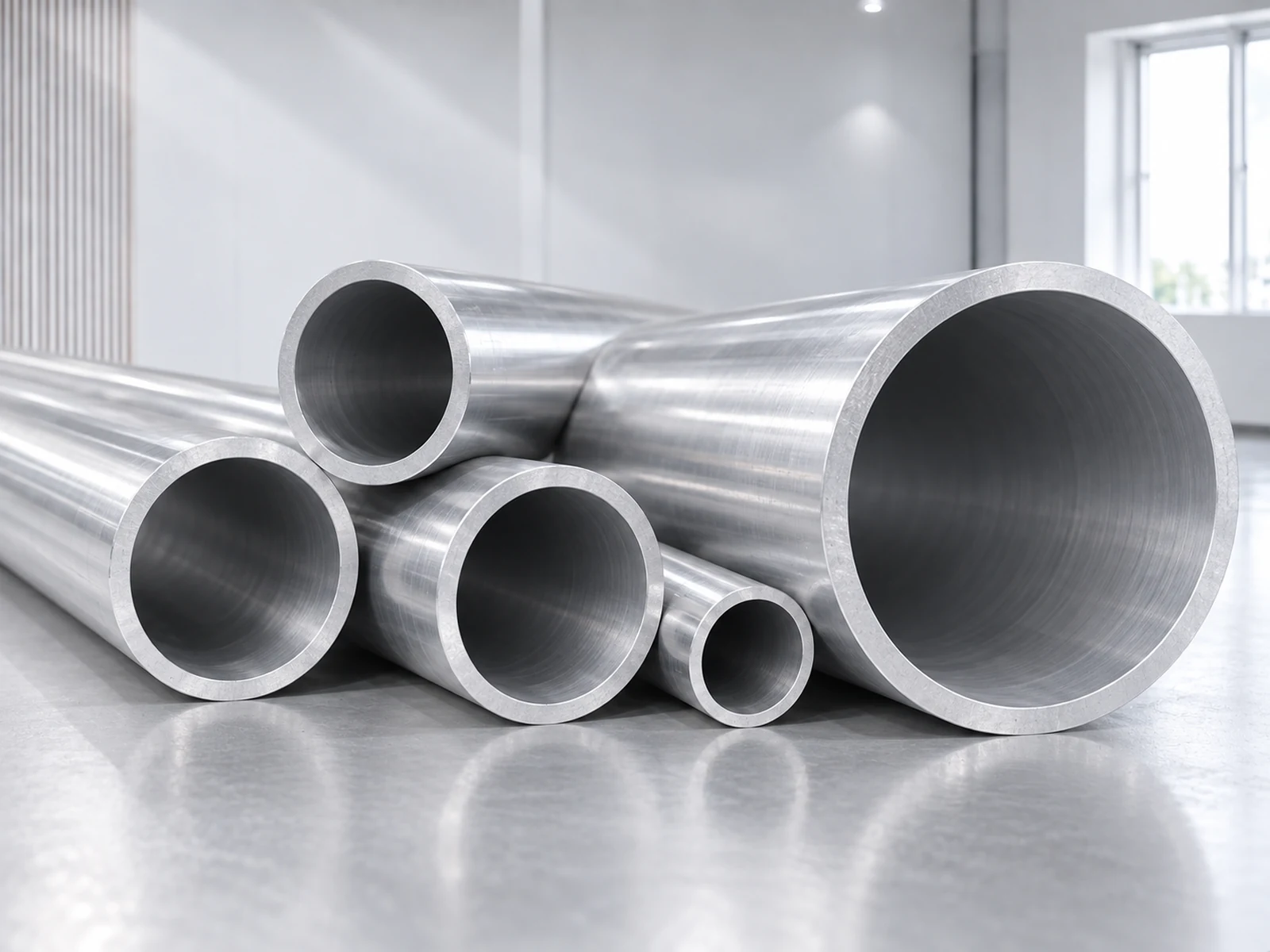
Identify material and condition from your production requirements. Do not replace a real designation with lightweight tent aluminum. The material selected for the product and the suitability of the cutting equipment are related inquiries with different responsible decisions. A general aluminum capability statement does not settle the actual incoming job.
Keep different families separate even when they share a nominal length. A round tube and a rectangular member are not one cutting family because they enter the same kit. Inner and outer tubes should not be merged into one requirement because both belong to a telescoping support.
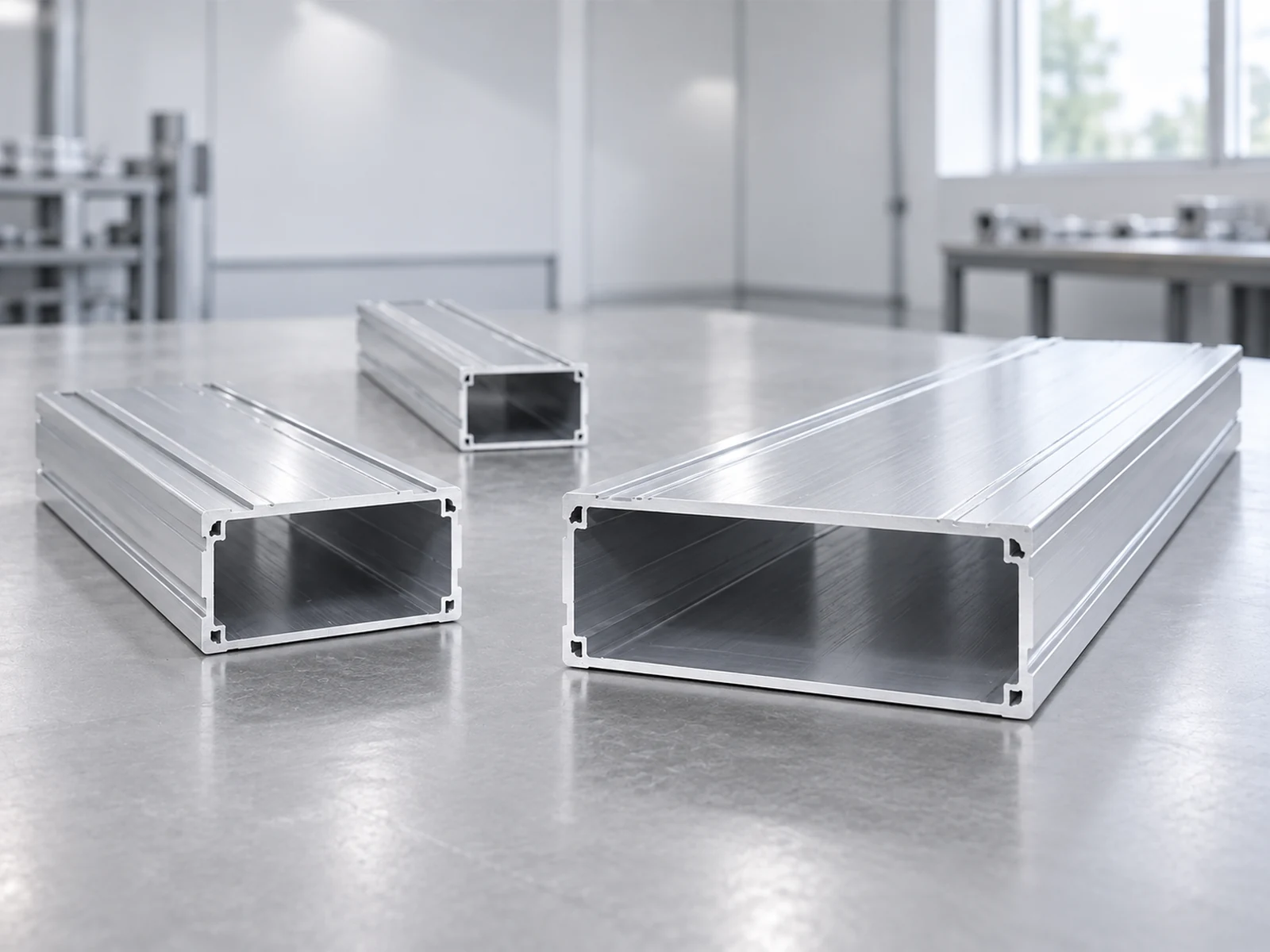
Describe how each family is received: long stock or prepared lengths, surface treatment, packaging and supplier identification. Where the workflow includes material from different sources, show the differences rather than assuming the same handling condition. Ask the equipment supplier which conditions have been evaluated and which remain open.
The proposed loading, support and holding arrangement must be assessed for those actual families. Do not choose a holding orientation from an editorial picture. Ask for a stated configuration and its site requirements, then compare that package with the material that will really enter the station.
3. Keep the cut length separate from the assembled pole length
A pole assembly can contain several pieces and joining features. Its assembled span is therefore not automatically the saw cut length of every segment. Provide the released drawing for the member at the cutting stage, including its reference and end form. If a connection consumes part of a segment or another process changes an end, the relevant drawing must make that relationship clear.
Do not let a purchase inquiry silently assume that equal-looking segments are interchangeable. An end segment, an intermediate segment and a member with a special connection can have different requirements. Identify them separately if the released product requires that distinction.
Telescoping members add a different boundary. Cutting can establish a specified member condition, but sliding fit, locking positions and finished assembly behavior need their own requirements and responsible checks. A saw length result cannot prove that the support extends, locks or performs as intended.
For a profile frame with angled ends, state the length reference and orientation on the actual member drawing. Keep an assembly envelope, an opening dimension and a member end reference distinct. Do not ask the equipment supplier to reconstruct all member dimensions from a photograph of a completed tent.
Write the transfer requirement to the next process. If drilling follows cutting, show the receiving reference and the drilling scope. If a connector is purchased finished, specify its supply boundary instead of treating it as a feature made by the saw. The separate cutting and drilling discussion can help frame that production handoff.
4. Identify forming, joining and fabric work outside the saw
Some pole routes involve bending or other forming before the finished set is assembled. Decide whether the proposed station receives straight stock, prepared pieces or another defined form. A result for a straight cutting job should not be carried over to an already formed member without assessing the actual new operation and handling conditions.
Keep the order of operations explicit. A cut-first route and a route that performs preparation earlier can present different incoming parts and different checks. Ask each supplier to quote the same route rather than allowing one offer to assume supplier-prepared input while another includes that preparation in-house.
Joining hardware also needs ownership. Sleeves, inserts, hubs or other components may be bought, manufactured elsewhere or included in a separate offer. Name the real items in your system and the process that accepts their fit. A generic pole connection picture is not evidence that those components are supplied with a cutting machine.
Fabric preparation and complete product assembly are additional scopes. The cover, its interfaces and the released frame belong to the product manufacturing route, but do not become saw operations by association. Describe any assembly-facing check needed to receive the cut members while retaining responsibility for the complete product where it belongs.
This separation prevents two common purchasing mistakes: buying a saw for work already outsourced, or expecting a saw-only quote to include the remaining pole and tent operations. The remedy is a route map with real inputs, outputs and named responsibilities rather than a longer list of general machine features.
5. Plan production in pole sets and frame kits
The next department usually needs the right combination of members. An attractive total piece count can conceal a missing family. Explain which members must be released together and which variants remain separate. Count usable sets at the receiving point when that is the output your business actually sells or assembles.
Consider an invented segmented pole set requiring two end members and six intermediate members. An order for 40 identical sets needs 80 end members and 240 intermediate members. If the receiving stage accepts 84 end members and 228 intermediate members, those quantities support only 38 complete sets. Extra ends cannot substitute for missing intermediate members.
This example assumes interchangeable accepted pieces within each named family and no additional variant constraint. If left and right ends, revisions or product variants differ, count them separately. It establishes no real pole construction, machine rate or tent performance.
For a mixed product order, keep a member-to-product allocation instead of pooling all similar pieces. A finished member may look suitable for several kits while belonging to only one released system. Preserve the identification needed by your own process through collection, checking and transfer.
Discuss what occurs when one family falls short. The production plan may need a small recovery run with another loading and changeover sequence. Include that observed pattern when evaluating the station. An offer based solely on long uninterrupted runs may understate the work involved in completing real orders.
6. Compare batch strategy and the cost of the retained route
Prepare a representative order mix containing your recurring families and the changes between them. Compare producing one large family batch with producing smaller kit-oriented campaigns on the actual information available. The former may reduce some changes while increasing sorting and waiting; the latter may improve kit availability while adding other work. Measure the relevant tradeoff in your factory rather than assuming one approach always wins.
Record loading, job setup, cutting, checking, collecting and transfer if those steps fall within the purchased station’s responsibility. State where the observation starts and ends. A cutting-cycle figure, accepted-member count and complete-kit output are different measures and should be labeled separately.
Compare in-house cutting with buying prepared members using the same accepted output. Include the preparation you retain, receiving checks, handling and the production changes observed in the representative mix. Keep actual records, trial observations and forecasts separate so that a hoped-for future workload does not appear as measured performance.
A useful purchasing worksheet can list the job family, accepted quantity, required preparation, observed time interval and unresolved requirements. It need not invent a machine saving or a payback figure. If a cost input is unknown, request it or mark it unresolved rather than filling the gap with a generic percentage.
Also ask what happens after cutting. If the next operation cannot accept the members as they arrive, faster cutting may produce waiting stock. Confirm whether the proposed investment addresses the current recurring constraint or merely moves it elsewhere in the tent-frame route.
7. Build a trial around the important product changes
Select representative members from the families that materially affect the buying decision. Include their section drawings, material designations, stock condition and end requirements. Identify the receiving criteria before asking for a demonstration. A trial should answer the real equipment question rather than simply show that a blade passes through aluminum.
Agree the configuration and work sequence to be observed. Where practical, include a change between important families and the required output checks, because a successful single piece does not describe the whole production pattern. Keep the trial bounded to the supplied materials and released requirements.
Record accepted and rejected output under the agreed criteria. If the evaluation extends into connector fitting or set assembly, identify that separate process and who performs it. Do not describe the cutting result alone as proof that a complete pole system or shelter is qualified.
Ask for the open cases as well as successful observations. A different profile, end requirement or incoming condition can require another assessment. The quotation should name evaluated families, state assumptions and explain what evidence is needed to resolve the remaining cases.
Compare offers with the same member package. Identify included loading and support provisions, collection arrangements, installation responsibilities, training and stated service arrangements. Separate any additional processing or assembly equipment. A price difference is meaningful only after the delivery scope is comparable.
8. Send a useful aluminum saw for tent frame manufacturing inquiry
Tell Jiurun which pole system you manufacture and what you deliver. State whether the proposed purchase covers raw-stock cutting, prepared-member supply or a defined stage before your own assembly. Identify the components and processes you buy from others so that the quotation does not assume work you do not retain.
Attach representative member drawings, section details, material conditions, stock photographs and the typical order mix. Explain the difference between segment cut lengths and any assembled dimensions. State the important family changes, receiving checks and the current production constraint.
Request a configuration assessment that names the input, accepted output, included operations, assumptions and unresolved cases. Compare Jiurun aluminum cutting equipment against that bounded production job. Keep complete-product design and acceptance in their responsible process.
Frequently asked purchasing questions
Can one machine serve every tent pole system?
Do not assume that from the industry name. Provide the actual section families, materials, ends and work sequence for an assessment of the offered configuration. A result for one family does not cover every other system.
Is the assembled pole length the cutting length?
Not necessarily. Use the released member requirement at the cutting stage. Joining features and later preparation can make the assembled span different from an individual segment’s cut length.
Does a saw-only offer include telescoping or locking functions?
Only the actual stated offer determines what is supplied. Identify locking-feature preparation, sliding fit and assembly checks separately. A member-cutting result does not establish the completed support’s function.
What should a capacity comparison count?
State the observation boundary and count accepted output there. Where the business needs complete sets, also check the member combination supporting those sets. Keep preparation, changes, inspection and transfer visible within the agreed scope.
Send Jiurun your pole-system drawings and retained cutting scope to discuss the proposed equipment and the trial evidence needed for your production decision.
Watch the cutting stage in context
This Jiurun video shows general aluminum cutting context. It is not a tent-pole trial, a complete shelter demonstration or proof of the invented set-count example. Assess the actual member package and configuration separately.