
An aluminum saw for subrack manufacturing should be specified against the released chassis and rail members that the factory will actually cut. A purchased subrack kit, a prepared rail set and a factory-cut extrusion portfolio place very different work at the saw. Before asking for a machine price, identify which parts remain in-house, which arrive ready for assembly, and what the next operation must receive.
This is a purchasing framework for aluminum cut members, not a qualification of an electronic enclosure or a promise that any Jiurun model can process a particular rail. The system owner must release the drawings and acceptance limits. Electrical, thermal, shielding, card-fit and environmental performance belong to the finished product and its separate validation plan.
When is an aluminum saw for subrack manufacturing needed?
Make one list of every product family that may contribute aluminum work. A subrack can contain front and rear horizontal rails, side panels, covers, guide hardware, fasteners and a front-panel interface. A different chassis may use extruded corner members, sheet panels and purchased modules. The saw requirement comes from the retained extruded or otherwise saw-cut members, not from the name of the finished enclosure.
Manufacturer catalogues illustrate why this separation matters. nVent SCHROFF’s subrack catalogue identifies different horizontal rails, side panels, inserts and covers within product families. Elma’s subrack range likewise distinguishes kits and enclosure variants. These are examples of how system bills of material differ; they are not Jiurun machine specifications or proof of a buyer’s approved design.
For each retained member, record the drawing revision, material and finish, incoming section, stock length, required cut datum, end preparation, order quantity, peak mix and receiving owner. Keep sheet-metal, moulded, electrical and purchased hardware lines separate. If two product families appear to share a rail, obtain engineering approval before pooling stock or treating one cutting trial as representative of both. Appearance alone does not establish interchangeability.
Compare stock, prepared members and complete kits at one handoff
There are three common sourcing boundaries. With a complete-kit purchase, the manufacturer receives the specified assembly or package and may have no local rail-cutting work. With prepared members, a supplier delivers rails or panels to the released length and preparation state; local work starts at the next operation. With retained stock, the buyer receives longer raw or finished sections and undertakes cutting, identification, inspection and downstream preparation. The choice changes responsibility for waste, first-piece approval and revision control.
Do not compare a raw extrusion price with a ready-to-assemble kit price. Put all routes at the same accepted handoff. Include setup samples, cut-off loss, usable remnants, finishing and surface protection, drilling or other operations where applicable, inspection, labelled kitting and packaging. The purchase route that looks cheapest per metre can be expensive when small mixed batches and missing accessories disrupt assembly. Conversely, buying a complete kit can be excessive if the factory has stable volume and a controlled cut-member process.
Define the exact member handed to the next operation
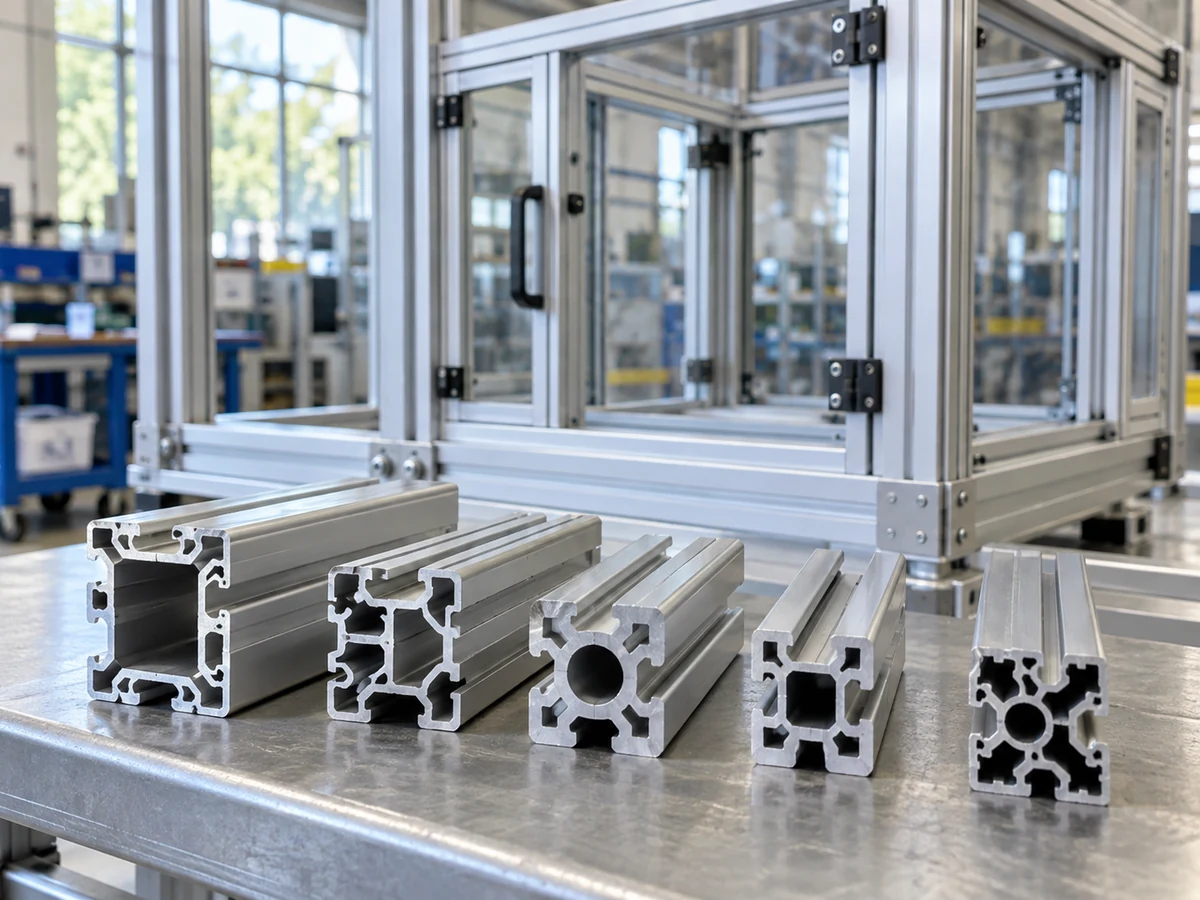
A cutting-cell quote needs an exit definition. Is the deliverable a square-cut rail blank, a finished visible member, a labelled set of front and rear rails, or a kit containing non-cut parts supplied elsewhere? List those boundaries before selecting feeding length, handling, outfeed and labour assumptions. The saw supplier should not silently inherit responsibility for drilling, tapping, finishing, deburring, gasket placement, electronics assembly or functional approval.
Specify the datum for each cut. A nominal chassis width, an installed face-to-face distance and a rail cut length may be related, but they are not interchangeable instructions. Identify the face or feature from which length and end orientation are measured, along with the drawing-controlled acceptance method. Distinguish a machine’s stock-feed repeatability from final assembled dimensions. If downstream machining establishes a final datum, state what the saw-stage inspector can actually check.
Traceability must survive the move from stock rack to assembled unit. Mark or segregate family, revision, finish, rail position, order and next operation. If left and right members look similar, keep them in separately labelled containers until an approved pairing step. When a drawing changes, quarantine the previous release and its partly prepared inventory. A fast saw with weak revision control can produce a large batch that cannot be assembled.
Build the machine RFQ around actual sections and a witnessed trial
Send the supplier drawings and physical samples for the relevant section families, including the thinnest or most easily damaged wall and any heavier rail that changes support or clamping. Include real stock lengths, coating or anodized faces, short finished pieces, expected mix and the specified cut-end condition. Ask for a trial matrix that states which samples represent each family and which variation remains untested. Do not accept a generic aluminum profile as proof for a critical released rail.
The proposed configuration should name the work support, clamp contact, blade and cutting setup, loading and unloading arrangement, chip control where offered, and the inspection approach. Observe first-piece adjustment, changes between sections and handling of accepted as well as rejected parts. Record settings and the actual quoted accessories. If a protective contact, feeder or collector is needed but absent from the quote, identify it as a separate scope item rather than assuming it is standard.
Use the buyer’s drawing limits for acceptance. Inspect incoming stock first so twist, finish marks or pre-existing damage are not misattributed to the cutting process. Measure cut samples against the released datum and inspect burrs, deformation and visible surfaces. Then pass accepted pieces to a controlled downstream fit or machining check. A standalone clean cut does not validate board insertion, front-panel alignment, shielding, cooling or finished-enclosure compliance; those have their own owners and tests.
Account for mix, revisions and accepted-output cost
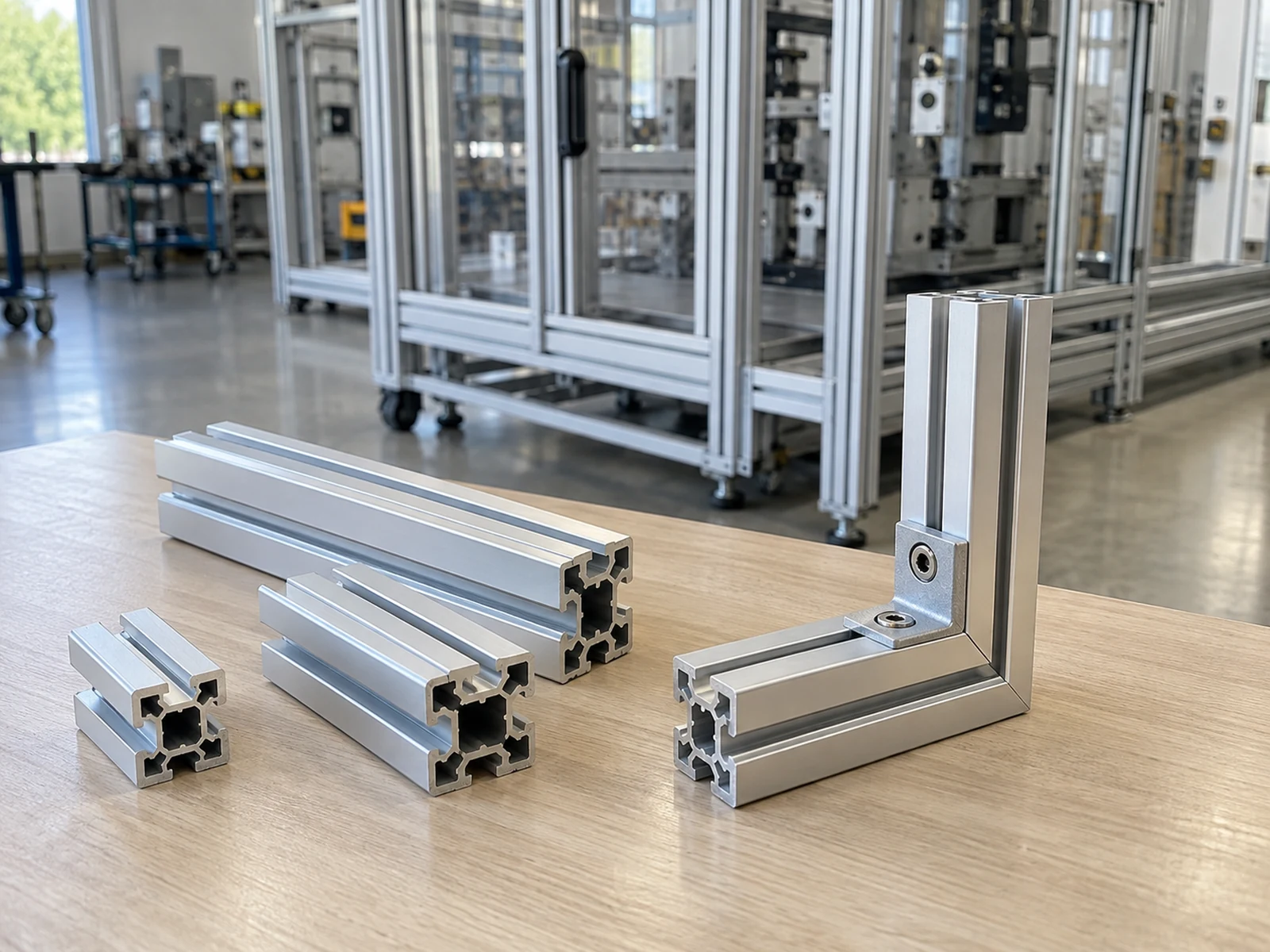
Calculate the business case with a released annual mix, not a single high-volume rail. Include repeat orders, engineering changes, setup pieces, remnant policy, operator time, inspected good parts and rework. A model based only on blade cycle time misses the cost of moving finished rails without damage, maintaining separate bins and rebuilding kits after a revision. Compare each sourcing route using the same handoff definition and the same accepted-piece standard.
Separate capacity from capability. A trial can show whether specified samples are cut acceptably in a witnessed configuration. A production commitment also needs the part mix, available hours, changeover routine, staffing, maintenance and downstream bottlenecks. Ask the supplier to state assumptions behind quoted output. If a family has not been trialled, leave the gap visible and make it a condition of purchase approval rather than projecting performance from another profile.
Send a release package the supplier can actually quote
Provide a product-family matrix, marked make-or-buy boundary, current drawings, section and finish list, stock condition, cut-stage datums, sample quantities, acceptance criteria, estimated mix and downstream handoff. State who supplies trial stock, who owns offcuts and which samples may be retained. Ask for a configuration-specific machine proposal, exclusions, trial record and a route for unresolved samples. Keep electrical and enclosure-system qualifications outside the cutting-equipment acceptance unless explicitly contracted to a competent owner.
For material ownership and trial consumption, use the existing saw-trial material terms guide. For missing dimensions and revision questions before a firm quote, see the cut-part drawing gaps guide. Those controls support the subrack-specific release package; they do not replace the product owner’s drawings.
The Jiurun video below shows general aluminum-cutting equipment footage from the official Jiurun Machinery channel. It illustrates a machine station only. It does not depict an electronic subrack customer order, the rails discussed here, the quoted configuration, an accepted trial or a performance result.
If your factory is deciding which aluminum members to retain, send Jiurun the actual section drawings, sample members, expected mix and cut-stage acceptance criteria. Request a machine and trial proposal tied to those inputs. Confirm every model, option and output claim against the specific quoted configuration before issuing an order.