
Aluminum saw for storefront fabrication is a useful procurement question only after the buyer identifies the work that will actually stay in the factory. A storefront order may arrive as long system profiles, prepared cut members, fabricated frames, or a glazed entrance package. Those are different purchases. A saw can be assessed for defined aluminum member cuts; it cannot be credited with glazing, weather performance, site fit or a complete entrance merely because the finished system contains aluminum.
This guide helps a storefront fabricator build a comparable saw request for quotation (RFQ). Start with the approved storefront system and project drawings, then define member identities, end conditions, delivery stages and acceptance evidence. The proposed Jiurun machine and any tooling must be confirmed for the actual profiles and trial; no machine configuration or result is assumed here.
Decide whether the saw belongs in your storefront supply route
List what you buy ready-made and what you plan to retain. One factory may buy complete glazed units and need no member saw for this job. Another may receive cut and machined frame kits, assemble them, and buy a saw only for small replacement runs. A third may receive stock extrusions and cut a portfolio of vertical and horizontal members every day. Treat these as separate economic and technical cases, rather than comparing machine prices against a single storefront opening size.
Write the purchased output on the first RFQ page: accepted loose cut members, prepared but unglazed frame members, or assembled/glazed units. Identify the party responsible for each later feature, joint, seal, finish, glass, hardware and site operation. If a supplier quotes a saw, ask it to price the cutting stage and named optional support equipment. A quote for a saw does not silently include fabrication or installation.
A storefront system is not simply a residential door frame enlarged. In one YKK AP storefront specification, jambs and vertical mullions, heads and sills, intermediate horizontals, corner posts and entrance framing have distinct system roles and joining details. That document describes YKK AP’s own system; it is a useful example of why a buyer must follow its chosen supplier’s released drawings, not a universal cutting formula or a Jiurun performance claim.
Turn the storefront system into a member portfolio
Build a schedule for the actual projects and revisions that will run on the proposed saw. Give each line a system/profile code, material and finish state, incoming stock length, required cut length and its reference points, end geometry, orientation, quantity, visible face and next operation. Separate vertical jamb or mullion members from head, sill, transom and door-frame parts. They may look similar in a photograph but differ in section, joint or later machining.
Show an assembled elevation beside the member schedule. The design team should confirm whether a vertical is continuous or captured between horizontal members under the selected system, and where connection details change. An overall opening, daylight opening, glass size, finished frame size and cut-member length are not interchangeable numbers. Derive each member from the approved fabrication documents, with its revision recorded. The existing door-frame cutting guide explains this dimension-boundary issue for door members; here the buyer must coordinate an entire storefront and entrance mix.
Include opposite-hand parts and corner conditions as distinct identities where the drawings require them. If a piece needs holes, notches or another prepared feature after cutting, mark the downstream operation and owner. Do not describe a saw-cut blank as a finished storefront component solely because its length is correct.
Use actual profiles to review support, clamping and appearance
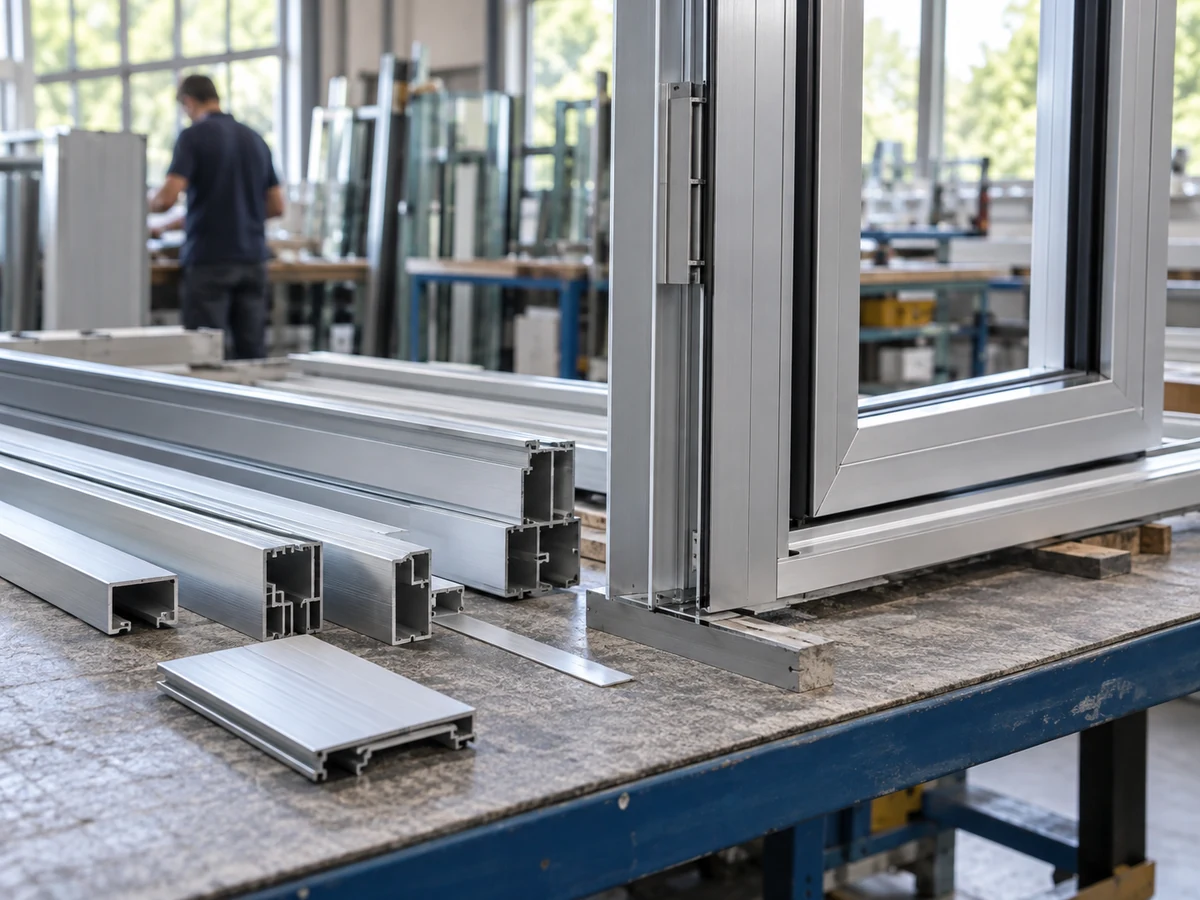
Send section drawings and representative physical profiles, including the longest member, shortest repeated member, a thin or projecting feature, an angled end if present, and the finish that will actually reach the machine. The supplier should review where each profile rests on infeed and outfeed support, which face locates at the cutting zone, and which surfaces the proposed jaws contact. A nominal cutting-envelope figure alone does not answer whether a particular lip, glazing channel or visible surface remains acceptable.
Record whether stock arrives mill-finished, coated, anodized or protected by film, and who approves cutting at that stage. A finished visible face raises a different handling question from an unfinished member scheduled for later surface work. Ask for a written answer covering the offered clamps, pads, supports, collection and any profile-specific changeover. Do not assume optional fixtures are standard on a Jiurun model.

For each sample, distinguish incoming-section variation from effects introduced during holding, cutting or collection. Identify the bar and lot before the trial, then retain that identity on the cut part and inspection record. If a visible surface is marked, or a channel no longer accepts its intended downstream component, record the condition and investigate the stage that created it. Do not infer a fix from a general equipment video or a different manufacturer’s catalogue.
Define the cut-part acceptance gate separately from glazing
Agree the release condition for a loose member: part and revision identity, length datum, end orientation, relevant section features, surface condition and whatever dimensional limits the released drawing actually specifies. Specify who measures, with which approved method, and when the piece is checked after release from the fixture. A clean cut face does not establish a correct miter, a complete frame, or a watertight storefront.
Then define the next gate. A frame assembler may need drilling, joint preparation, corner joining and hardware interfaces before a cut member becomes a prepared frame. A glazing team needs the system’s glass, beads, gaskets and installation details. The responsible designer and installer must determine structural, weather, thermal, access and building-code requirements. A saw trial cannot certify any of those system outcomes.
The Aluminum Extruders Council notes that an extrusion can integrate features used for joining other components and subsequent assembly. That supports asking which profile features matter at the handoff, while the actual storefront system drawing still controls acceptance. A general frame-kit checklist can help keep member counts separate from complete assembly counts.
Witness a trial that represents the quoted production route
Ask the supplier to use the final proposed machine configuration and the actual profile families. A useful trial matrix includes a normal repeated member, the longest supported stock, a short finished piece, the most delicate contact face, and any miter or handed condition in the purchase scope. If the project requires several profile families, demonstrate the changeover instead of extrapolating from one easy section.
Record machine and tooling identity, approved stock condition, operator setup, support arrangement, cutting sequence, accepted-piece count and rejected-piece reasons. Collect pieces as the real factory would: by part code, by frame set, or by project, with a clear owner for identification. A demonstration cycle without collection and inspection does not prove the accepted storefront member output per shift.
At the next workstation, use the project team’s approved fit check for one representative joint or interface. Keep its result alongside, but separate from, the saw’s measured cut-part result. If fit fails while the cut dimensions pass, investigate the released system detail and downstream preparation rather than automatically changing the saw. If a cut dimension fails, retain the stock and setup evidence before deciding the remedy.
Compare storefront saw quotations at the same delivery boundary
Normalize each offer against the same member portfolio and accepted output. One quotation may include infeed support, special contact pads, outfeed collection and a witnessed trial; another may list only a base machine. Put those inclusions and exclusions in one comparison table. Ask who supplies the actual blades, profile fixtures, handling devices, sample stock and inspection labor, and who signs off on the final setup.
Forecast the job mix using complete storefront projects or released member sets, not just theoretical saw cycles. Include changeovers, stock loading, offcut handling, rejected parts, labeling and transfer to the next stage. Do not convert catalogue feed travel or a machine’s nominal cutting range into a promise about accepted daily frames. The buyer should obtain supplier-confirmed limits for each proposed configuration and validate them with representative profiles.
If the comparison instead favors purchased prepared members or glazed units, record that make-or-buy result. The relevant question is which route delivers the approved package with clear responsibility, not whether a saw can cut one aluminum sample in isolation.
Video: general Jiurun equipment view
The following video is from the Jiurun Machinery YouTube channel and shows general saw equipment operation. It is an equipment-view example only. It does not show the storefront system, profile finish, quoted model configuration, customer project, approved trial or measured performance discussed here.
What to send with the aluminum saw for storefront fabrication RFQ
- The approved system name, project elevations, member drawings and revisions.
- A portfolio of vertical, horizontal, entrance and corner part codes, quantities and finished length references.
- Actual profile samples, stock lengths, alloy/condition and finish state, with protected visible faces identified.
- Required end conditions, downstream machining/joining and the party responsible for glazing and installation.
- Accepted cut-part measurements, sample matrix, collection/labeling method and witnessed trial decision owner.
- The work period and production mix to compare, plus all optional support and fixture items to be priced.
Send JiurunCut the member schedule and representative profiles for a configuration and cutting-trial discussion. Request a written, application-specific proposal before treating any catalogue photograph or generic demonstration as approval for your storefront production.