
Aluminum saw for screen printing frames is a purchase decision about the bare metal work your plant will actually make. A print shop can buy complete stretched screens, buy empty welded frames, receive cut member kits, or cut approved tubing from stock. Those routes have different saw workloads and different owners for squareness, joining, mesh and print registration. Count the released member cuts first; a finished screen order is not automatically a cutting order.
SAATI lists rigid aluminum, drawbar, roller and snap-in screen-frame options. Schilling describes finished welded frames made from several aluminum tubing profiles, while Hurtz identifies rectangular, square and slope profiles as frame inputs. These supplier examples establish why the incoming object must be named. They are not Jiurun machine specifications or approval of any particular cutting setup. The frame designer’s drawing and your accepted supply contract control the job.
1. Choose the bare-frame supply boundary
Start with one row per screen family and customer route. A pre-stretched screen may arrive ready for imaging or printing, with no frame-member cutoff in your plant. A bought bare frame transfers the metal fabrication and joining to its supplier. A bought member kit may leave joining, surface preparation and mesh work with you but not raw-stock cutoff. A retained stock route gives your plant the cut-length task, plus traceability and first-off inspection. Include only the members that have an approved drawing and a clear receiving point.
| Supply route | Possible saw work at your plant | Separate acceptance owner |
|---|---|---|
| Complete stretched screen | None for the supplied screen | Screen supplier and print-process owner |
| Bought bare frame or member kit | None, or only separately released replacement members | Frame supplier for delivered metal geometry; plant for its retained operations |
| Retained straight tubing stock | Released side members for specified frame families | Plant for blanks, then joining and mesh teams for their own results |
| Proprietary roller, drawbar or cast frame | Only specifically authorized parts, if any | System owner for frame mechanism and compatibility |
Do not merge these routes into a single volume forecast. A ten-frame order of finished screens and a ten-frame order of four loose members each have different stock, handling and quality work. Record the bought/retained boundary beside each product code. If purchasing changes from welded bare frames to loose stock, update the cut list and downstream capacity plan before asking for a saw quotation.
2. Identify the metal profile, not just the screen size
Release a cross-section drawing, material and finish for each approved rigid-frame member. Screen-frame suppliers use different flat, rectangular and square tubing; a proprietary retensionable design can use a very different member and mechanism. The same outside screen size does not imply the same tube size, wall distribution or joint treatment. Distinguish extrusion, bought welded frame, cast frame and assembled roller or drawbar system in the RFQ. Do not assume a conventional straight-profile saw should cut every item called a frame.
Ask the frame owner to identify the surfaces that later contact mesh, adhesive, clamp hardware or press fixtures. Record stock length, bow or twist allowance, protective film, surface finish, hollow cavity and any insert or coating. The saw supplier should see the actual stock, not only a finished screen photograph. The machine question is whether identified material can be supported, clamped and cut to the released blank requirement without unacceptable damage. Mesh tension and printing performance are later acceptance questions.
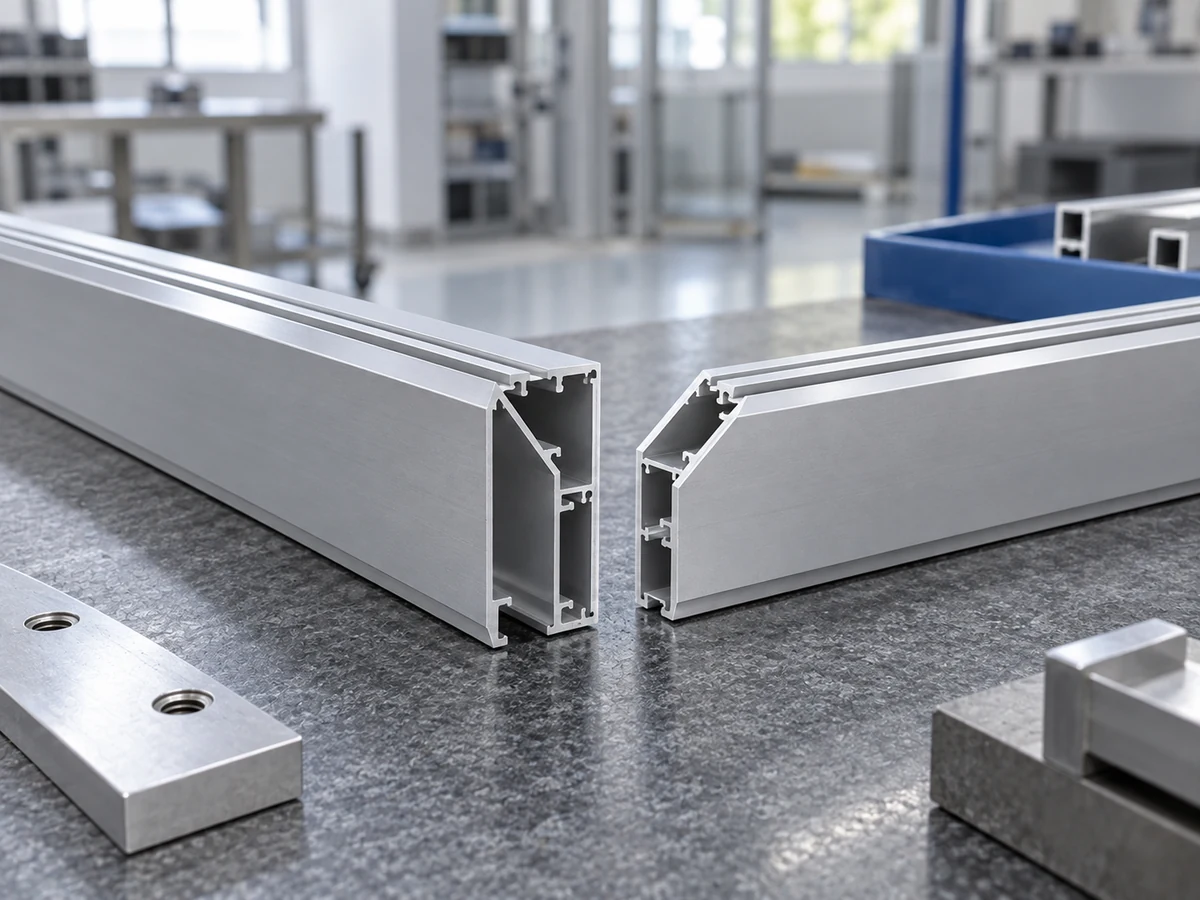
For a conventional four-sided rigid frame, determine whether the approved joining route needs square ends, miters or another preparation. The joining owner must release the actual blank lengths and end geometry, including any machining allowance. Do not derive saw settings from the screen’s outside dimensions by applying an informal corner formula. The resulting frame may also need controlled flatness, diagonals and weld or joint checks beyond the saw’s blank inspection.
3. Release member kits that can be traced to a frame
Create a controlled member record with frame family, drawing revision, external and internal frame dimensions as defined by the designer, profile code, incoming stock lot, member identity, cut length, datum, end condition and quantity. A kit for one bare frame should identify all sides and any special members. If similar-looking profiles have different wall or finish conditions, label them separately at receipt and at the saw. If the press uses a particular registration or clamping interface, record the responsible downstream check rather than claiming that a good cut alone establishes fit.
Control changes tightly. A new mesh specification, press fixture, frame profile or joining method can make an old cut sheet obsolete. The cut operator should have a clear stop condition for a missing drawing, unapproved substitution or unexplained stock marking. The release record should say who owns welding or joining, surface preparation, mesh stretching, adhesive work and the finished screen. Keeping those handoffs visible prevents a saw quotation from silently promising screen production.
Include repair and remeshing in a separate order class. Remeshing an approved bare frame is normally a mesh-service decision, not evidence of new aluminum cutting demand. A damaged frame that needs a replacement member requires the frame owner’s repair release; it is not safe to infer a replacement dimension from a distorted used part. Proprietary re-tensionable mechanisms need their system owner’s parts and instructions. Do not put them through a new-frame cutoff route because their outside outline looks rectangular.
4. Design a trial around the hard frame members
Send identified stock and the released drawing to the equipment supplier. Select samples that represent the thinnest wall, longest and shortest members, most visible finish, and any profile that is difficult to clamp. Agree the blade and condition, support length, clamp contacts, datum, end orientation, operator loading and chip control before the trial. A cut on a solid square bar does not qualify a thin-wall hollow frame tube or a finished face. Where the input is not available, mark the quotation conditional and list the evidence still needed.
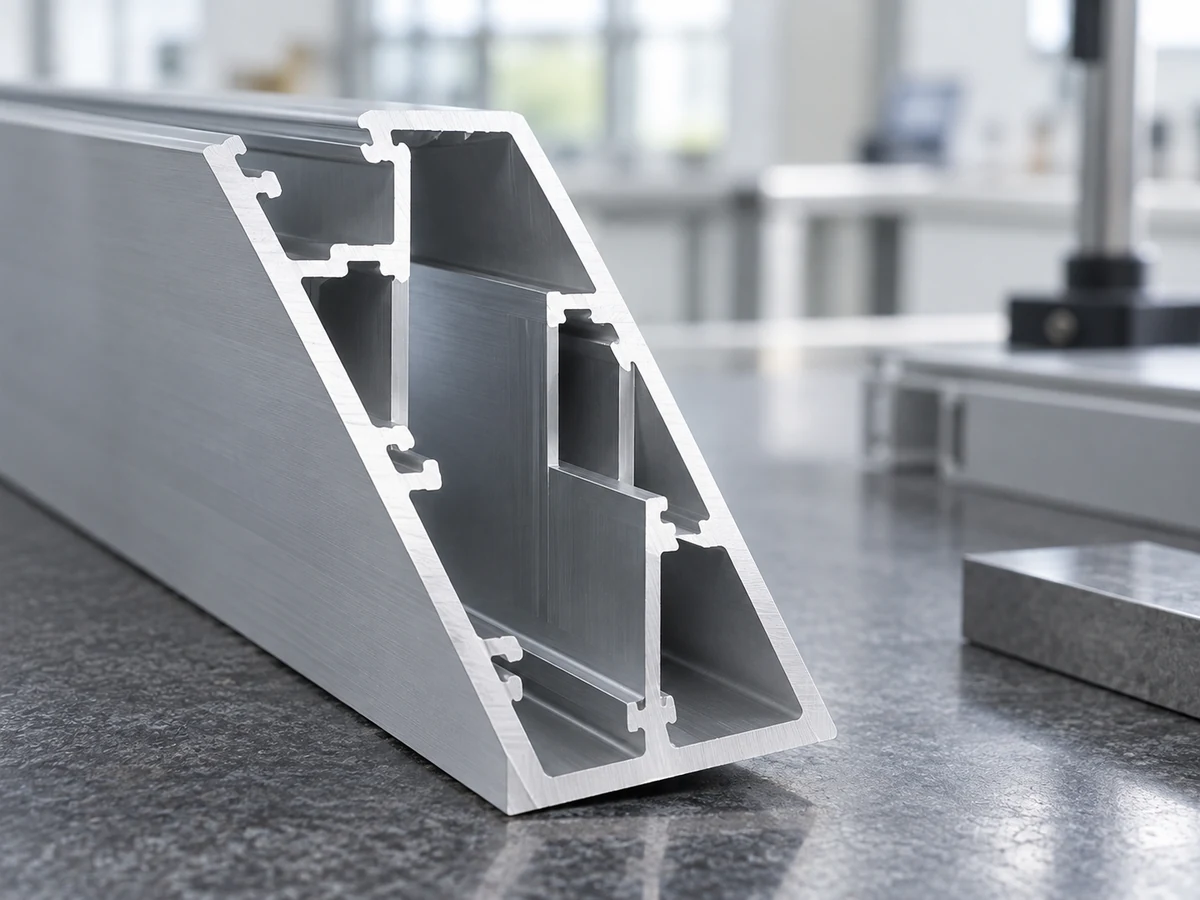
Inspect the blank against the agreed datum and drawing: length, end angle or squareness, burr, cavity chips, lip distortion and visible face marks. Preserve representative accepted and rejected pieces with lot and setup identifiers. The joining team should then check its own frame dimensions, diagonal relationship, flatness and joint result according to the frame specification. Mesh preparation and tension, stencil work and registration remain downstream. A blank that passes at the saw does not prove a print-ready screen.
Ask whether a setup change between profile families requires a new first-off sample. A high-volume standard rectangular tube and a low-volume sloped profile can have very different clamp and support requirements. Measure the changeover and rejected first pieces, not just a steady run. If the supplier demonstrates an automation option, verify which stops, infeed, outfeed, blade, guarding and extraction are included in the quotation. Do not extend a demonstration to models or configurations that were not shown.
5. Compare bought screens, bare frames and in-house blanks on one basis
Calculate route cost for the same accepted frame mix and the same accounting period. Bought complete screens carry supplier price, lead time, minimum orders and receiving checks. Bought bare frames carry metal fabrication outside your plant but still need mesh and print-process work if those operations remain in-house. Retained blanks add stock purchase, storage, setup, cutting, inspection, scrap, joining, finish protection and rework. Include the people, fixtures, quality records and floor space needed to hand the blank kit into frame assembly.
Separate recurring frame families from rare special sizes. A repeatable family can justify a dedicated cut program and fixture if its accepted volume supports it. A rare size may be more economical as an approved bought bare frame or prepared kit. Quote the same quantities, accepted geometry and service level across routes. Do not credit the saw with savings from mesh stretching, print setup or registration unless a separate process change actually delivers them.
Look at the bottleneck after cutoff. If welded bare frames wait for joining, faster sawing may only increase work in progress. If most orders arrive as pre-stretched screens, an in-house saw may serve only a small replacement-member stream. If the plant retains multiple rigid-frame profiles, ask whether changeovers, support and first-off checks fit the production schedule. A capital proposal should state this workload explicitly.
6. Aluminum saw for screen printing frames: send a testable RFQ
- Supply split: Which product codes are complete screens, bare frames, prepared member kits and retained stock?
- Profile identity: Which approved rigid-frame cross sections, finishes and stock lengths are cut in-house?
- Released blank: Who signs member length, datum, end geometry, quantity and drawing revision?
- Representative trial: Which real stock lots cover delicate walls, visible faces and the length range?
- Acceptance handoff: Which checks belong to the saw, frame joining and mesh/print teams?
- Commercial basis: What is the same-period cost of bought complete screens, bare frames and retained blanks?
Attach approved member drawings, the frame-family mix, identified trial stock and blank acceptance criteria. Ask the machine supplier for a process boundary, included equipment and a witnessed sample plan. Leave proprietary frame mechanisms, mesh service and printing results with their responsible owners. This gives the buyer a saw proposal for a defined metal job, rather than a broad promise to manufacture a screen.
Related Jiurun equipment footage
The following video from the Jiurun Machinery channel shows aluminum saw equipment as related context. It does not show a screen-printing frame, this article’s stock, a customer trial, a qualified configuration or printing performance. Use it to frame questions for an actual sample cut.
What to send JiurunCut
To evaluate an aluminum saw for screen printing frames, send JiurunCut the retained rigid-frame member list, approved profile drawings and revisions, stock photos and finish, frame-family quantities, cut lengths and end conditions, and the blank checks your joining team will accept. State whether complete screens, bare frames or mesh work are bought. We can review the defined aluminum cutoff task and trial material for suitable equipment; the frame and finished screen remain under their own design and quality approvals.