
An aluminum saw for rail vehicle manufacturing should be assessed against the actual objects your factory cuts. An individual extrusion, a prepared member and a joined body panel are different inputs. A machine accepted for one section does not establish a cutting route for all aluminum visible in a completed rail vehicle.
The investment decision needs the approved profile and panel boundaries, retained manufacturing tasks, real incoming dimensions and the next operation’s acceptance requirements. This guide explains how to compare a member-cutting station with a broader production requirement without assuming that joining, panel processing or rail-vehicle approval is included. It is an equipment purchasing guide, not a vehicle design or fabrication procedure.
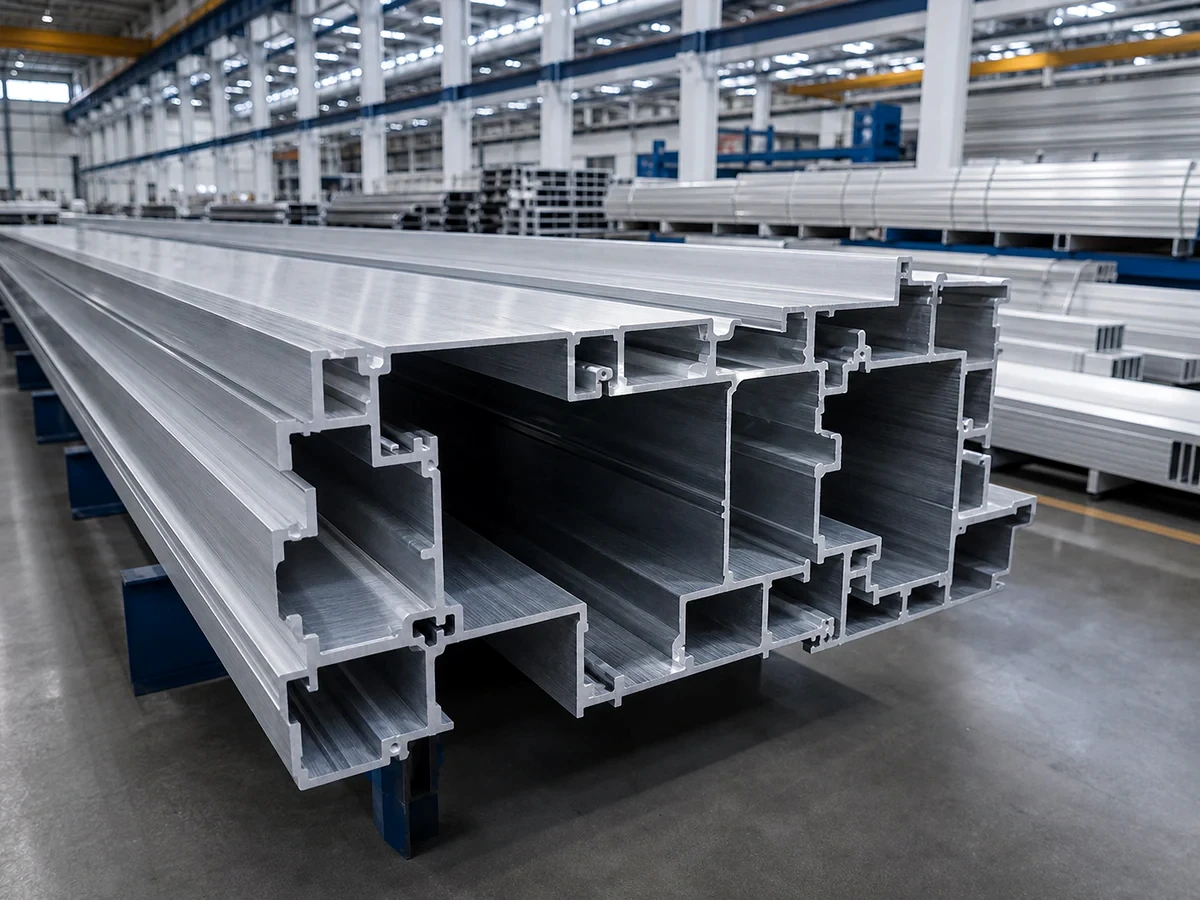
Define the scope of an aluminum saw for rail vehicle manufacturing
List the work your factory actually retains. Distinguish individual profiles cut from stock, members bought already prepared, larger elements received as joined units and assembly modules delivered by other suppliers. Record which objects enter the proposed saw station. The end product’s rail-vehicle classification does not identify those inputs.
For application context, Hydro’s modern trains page lists extruded solutions for body sides, roof and floor panels and other connecting members. It also discusses additional joining and kit supply. These are different manufacturing and delivery stages. Hydro’s fabrication capabilities or supply-chain claims do not establish a JiurunCut configuration, a suitable cutting envelope or your factory’s vehicle approval.
Separate primary body-member work from smaller retained frame, trim or equipment-support tasks where those are part of your released manufacturing list. Describe the actual objects, not only their application names. A small familiar profile may help demonstrate a machine, but it cannot settle an offer that also includes large or materially different inputs.
Use the approved vehicle and component records to identify responsible owners. The equipment supplier can respond to defined cutting cases; it should not be expected to derive member geometry or a complete structural manufacturing route from an application photograph.
Preserve the profile-to-panel boundary
A single stock extrusion can become part of a wider element through later joining. At that point its processing object and handling boundary have changed. Identify whether cutting is required before or after that operation. Do not transfer a saw assessment for the separate members to the joined panel through a summary such as body-section cutting.
Record the actual incoming object’s overall dimensions, section shape and condition. A joined element can contain multiple members or features outside the envelope of an individual extrusion. It needs its own assessment of the offered equipment and transfer arrangement. No capacity for such an object is established by a profile-only demonstration.
If your factory buys finished panels or prepared modules and cuts only separate members, remove the purchased units from the retained cutting workload. Keep their receiving and assembly responsibilities visible in the broader project plan. This can change the investment boundary substantially even though the completed vehicle looks the same.
If the investment includes both individual members and joined elements, request separate supplier responses for those cases. Preserve exclusions and identify the equipment that addresses each input. A complete project may require different processing routes; a single machine name does not make them one accepted task.
| Input stage | Cutting object to assess | Scope limit to record |
|---|---|---|
| Loose extrusion stock | The actual individual section and member requirements | Later joining or assembly is a separate route |
| Prepared individual members | Any retained cutting operation expressly required | Do not include preparation already supplied |
| Joined element | The whole incoming element and its interfaces | Individual-profile acceptance does not cover the combined object |
| Purchased finished module | Only a separately defined retained cut task, if any | Module integration is not saw output |
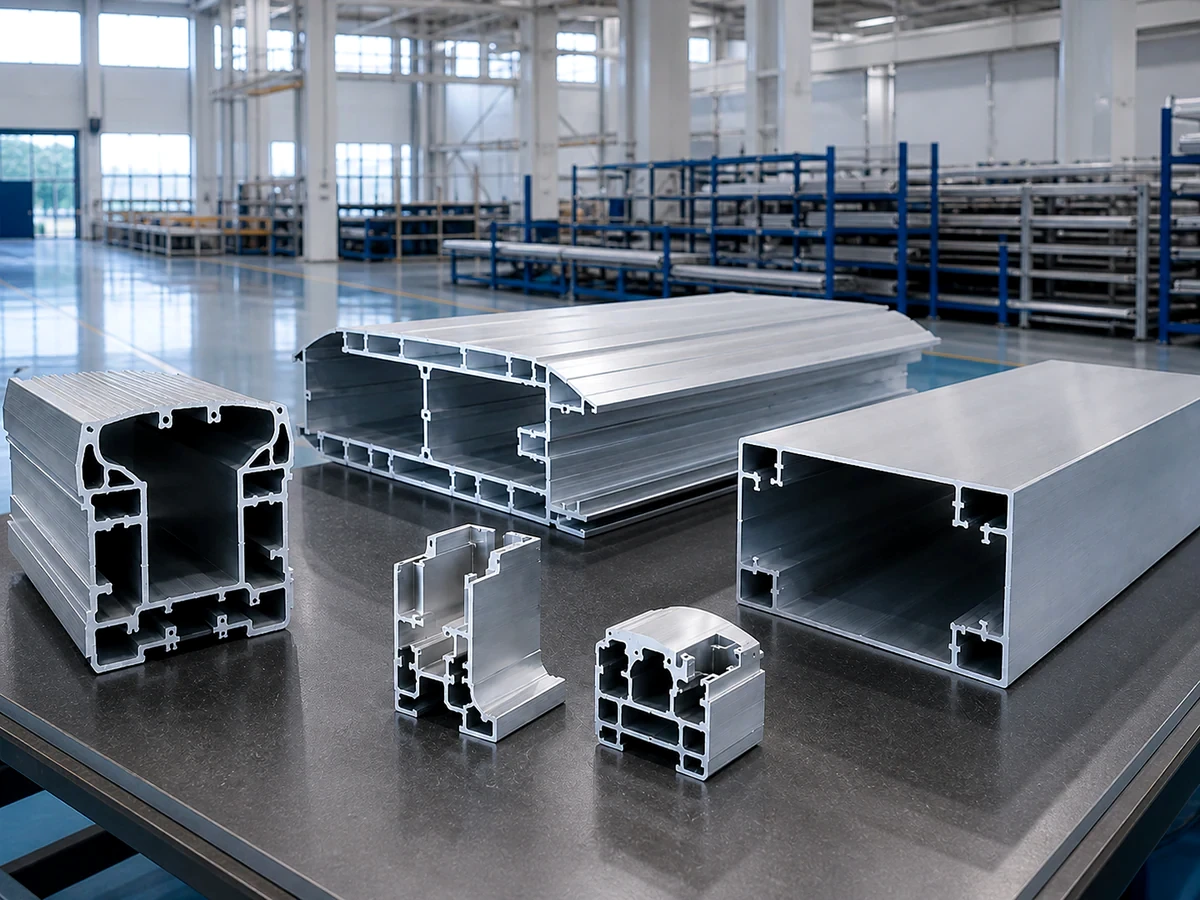
Use actual sections rather than an application-wide maximum
Give the supplier a reviewed section list, including the material designation, stock condition and required cut range. Record the relevant walls, internal features, openings and orientation of each profile. An outside width and height are necessary inquiry fields where applicable, but they do not describe the whole section or contact case.
Ask which proposed models and configurations the supplier will assess for each case. If a section or combined object is outside the confirmed proposal, retain that as an exclusion. Do not assume custom capacity from a large-looking machine image, an unrelated model’s information or a general reference to industrial aluminum.
Long incoming members also create a support and transfer question. Describe their actual length and how they arrive at the station. Ask which supports and handling interfaces are included and what the buyer must provide. Do not infer an approved installation or loading arrangement from a short sample placed on a machine.
A quotation should distinguish normal released jobs from unresolved future possibilities. If a future profile has not been defined, keep it open rather than treating an estimated envelope as acceptance. The supplier’s confirmed case list is the basis for comparison.
Match cut references to the following operation
Use the drawing for the item leaving the cutting station. An assembled vehicle or joined element’s overall span may not equal the raw member’s length. Where later machining or end preparation changes the member, have the responsible process owner specify the actual blank and receiving-operation requirements.
Identify the references defining each cut. Record whether opposite ends differ and how the stock orientation relates to subsequent work. A groove or internal feature can help identify the intended orientation, but a photograph alone is not the approved manufacturing record. Keep the actual part identifier and revision visible.
Where two similarly sized members belong to different vehicle variants or locations, preserve their separate identities. Equal length does not establish interchangeability. The cutting inquiry should explain how accepted output is identified for its receiving operation without assuming that a labeling or tracking feature is included in the machine.
Define what the next operation must accept: the specified dimensions, end condition, reference surfaces and stock identification applicable to the real route. Keep those requirements separate from the machine supplier’s general descriptions of a smooth cut or precise feeding.
Keep joining and larger-element processing separate
Record the operations occurring before and after the cut. If extrusion members are later machined, joined or incorporated into a body element, identify those interfaces and their responsible processes. A saw purchase does not establish welding equipment, joining procedures or the resulting assembly’s acceptance.
If an object arrives already joined, identify that condition in the inquiry. The supplier should assess the whole object for the proposed operation. Do not represent a trial on a loose constituent profile as a result for the combined element. The processing stage is part of the actual test case.
Keep requested end preparation separate from actual equipment functions. An operation required by the next process is not automatically provided by the saw. Ask how the quoted scope addresses it, whether another station supplies it and what remains with the buyer.
Do not treat feeding repeatability as finished-member accuracy, or sawn member acceptance as completed-element accuracy. Measurements should correspond to the object, condition and references in the agreed acceptance record. Each subsequent process keeps its own responsibilities.
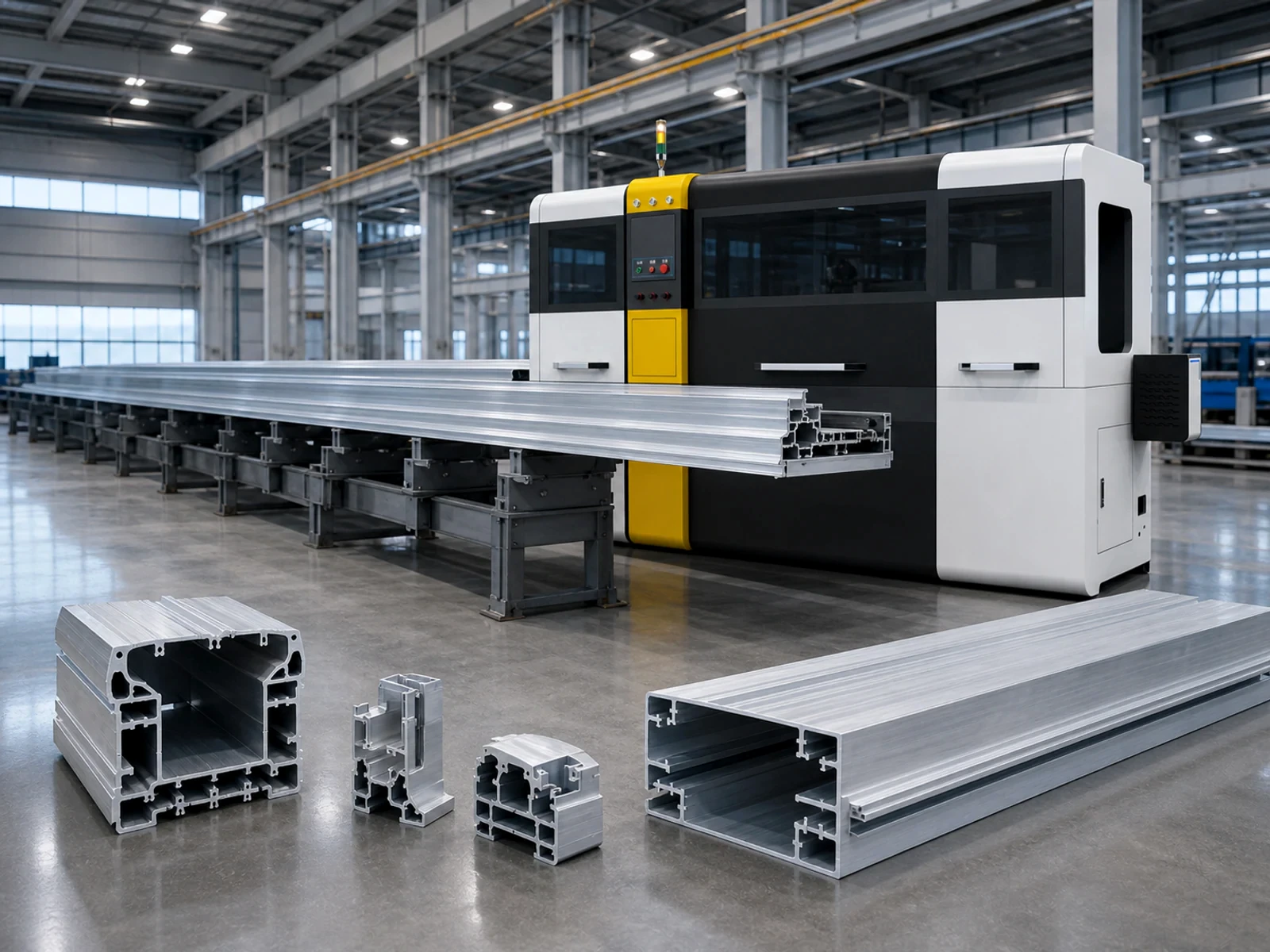
Compare the released production mix and transfer work
Select representative jobs from the retained scope. A stable batch of one individual profile, several different member families and a separately reviewed joined element can have different preparation and transfer requirements. Give the supplier the actual released quantities, lengths, stock conditions and change sequence.
In a hypothetical comparison, one order contains twelve identical members, while another contains three members in each of four different families. Both contain twelve pieces. That count alone does not describe support changes, identification, preparation or receiving-operation work. These invented numbers illustrate the comparison and are not cycle-time or machine-output claims.
Review the offered route from stock arrival to accepted transfer. Include loading, any configuration changes, cutting, inspection and collection where they belong to the proposal. Separate the observed cutting action from completed order output. A video of one cut cannot establish the full mixed production route.
Ask how the quoted positioning, feeding or other options apply to the reviewed cases. Have the supplier identify the actual configuration and any different working arrangements needed. Preserve which job families were assessed and which require further samples or another equipment response.
Make member-set and module readiness visible
Define the output released by cutting. Identified accepted members can be transferred to another process or collected as a member set. Material awaiting inspection, revision clarification or disposition should remain visible as held work. A collection rack’s piece count is not proof of accepted output.
Report a complete member set separately from a completed vehicle module. The set can still wait for another process or a purchased element. A module can still await its required inspection and project release. Preserve these dependencies so the equipment comparison does not combine unrelated causes into one unsupported capacity claim.
Describe the protection and identification required by the receiving route and material condition. Confirm which packaging or transfer provisions are included in the actual supplier offer. Do not borrow another manufacturer’s kitting services or promised benefits as part of a JiurunCut machine quotation.
Use the traceability and process records required for your actual factory and customer. Ask which information the proposed equipment supplies and which records the buyer maintains. The presence of a saw does not establish a rail-sector quality system or product approval.
Select a trial that represents the purchase
Use actual production stock and approved member drawings. Include a section that resolves the proposed support and contact arrangement, an end or length case relevant to the next operation and a materially different family where the quotation claims to cover one. Explain the purchasing question each case must answer.
If a combined element is in scope, retain it as a separate reviewed object. A suitable individual-profile trial cannot replace its assessment. Require a supplier response identifying whether the proposed equipment covers it and what additional evidence is needed. Do not manufacture an acceptance by selecting only cases that are easy to demonstrate.
The sample cutting trial checklist supports the link between stock, requested output, actual model and configuration and observed results. Record dimensions tied to the agreed references, relevant end and surface conditions, exclusions and open questions. A requested requirement must remain distinct from an achieved result.
Where trial equipment or supports differ from the quotation, record the relationship before accepting the offer. Review changes to the section, stock condition or production stage against the original evidence. Earlier acceptance should not silently become approval of an unreviewed input.
Keep vehicle and project approval outside saw acceptance
Acceptance of a cutting station provides evidence for its defined manufacturing tasks. It does not establish rail-vehicle structural approval, joining qualification, fire performance, crash behavior or the release of a complete vehicle. Keep those matters with the appropriate design, manufacturing and customer responsibilities.
Use the JiurunCut aluminum cutting equipment range to discuss equipment, then request the actual configuration and assessment basis for your input objects. Neither an application illustration nor another producer’s rail-sector capabilities establishes the supplied machine’s suitability.
See JiurunCut cutting equipment in operation
This JiurunCut equipment video provides inquiry context. It is not a trial of the proposed rail-vehicle stock, proof of joined-panel processing or a vehicle approval. Agree the actual objects, quoted configuration and acceptance evidence for your retained work.
Prepare a complete rail-vehicle manufacturing inquiry
For an aluminum saw for rail vehicle manufacturing, send the retained-versus-purchased scope, separate profile and joined-element records, released drawings and revisions, actual material and incoming dimensions, cut references and end requirements, representative order mix and receiving-operation conditions. Identify the trial cases and exclusions explicitly.
Contact JiurunCut with your rail-vehicle member cutting requirements and ask for a proposed model and configuration, confirmed reviewed objects, included support and handling scope and a trial plan. A clear profile-to-panel boundary makes the complete equipment comparison usable without assuming unverified manufacturing or vehicle capabilities.