
Aluminum saw for clothes drying rack manufacturing is a buying question only after the rack maker identifies which aluminum members the saw supplier must cut and where that responsibility ends. A folding rack may combine an aluminum frame with wire grids, polymer connectors, and moving joints. A clean saw cut does not by itself establish hinge alignment, load capacity, corrosion resistance, or a safe finished rack.
This guide compares four supply stages, then turns the selected stage into a practical request for quotation. It is for a rack maker, contract fabricator, or sourcing team specifying a repeatable cutting process, not a claim that any pictured machine has been qualified for a named rack.
1. Name the retained member before naming the saw
Start with the member that remains in the sold rack. Is it a round pole, square tube, flat bar, or another extrusion? Record the drawing or physical sample revision, alloy and temper if known, outside shape, wall thickness, finish condition, and the face that must remain visible. A supplier cannot infer the correct holding method from the phrase “aluminum rack frame.” The same outer size can still need different support when its wall, cross section, or coating changes.
Map each cut member to its actual mating part: a push-in plastic connector, a hinge plate, a riveted bracket, or an open end requiring a cap. State whether the drawing controls overall length, the distance between functional features, or both. Ask which face and end form the inspection datum. A burr that is harmless on a hidden blank may obstruct a connector or create an exposed edge on a consumer product.
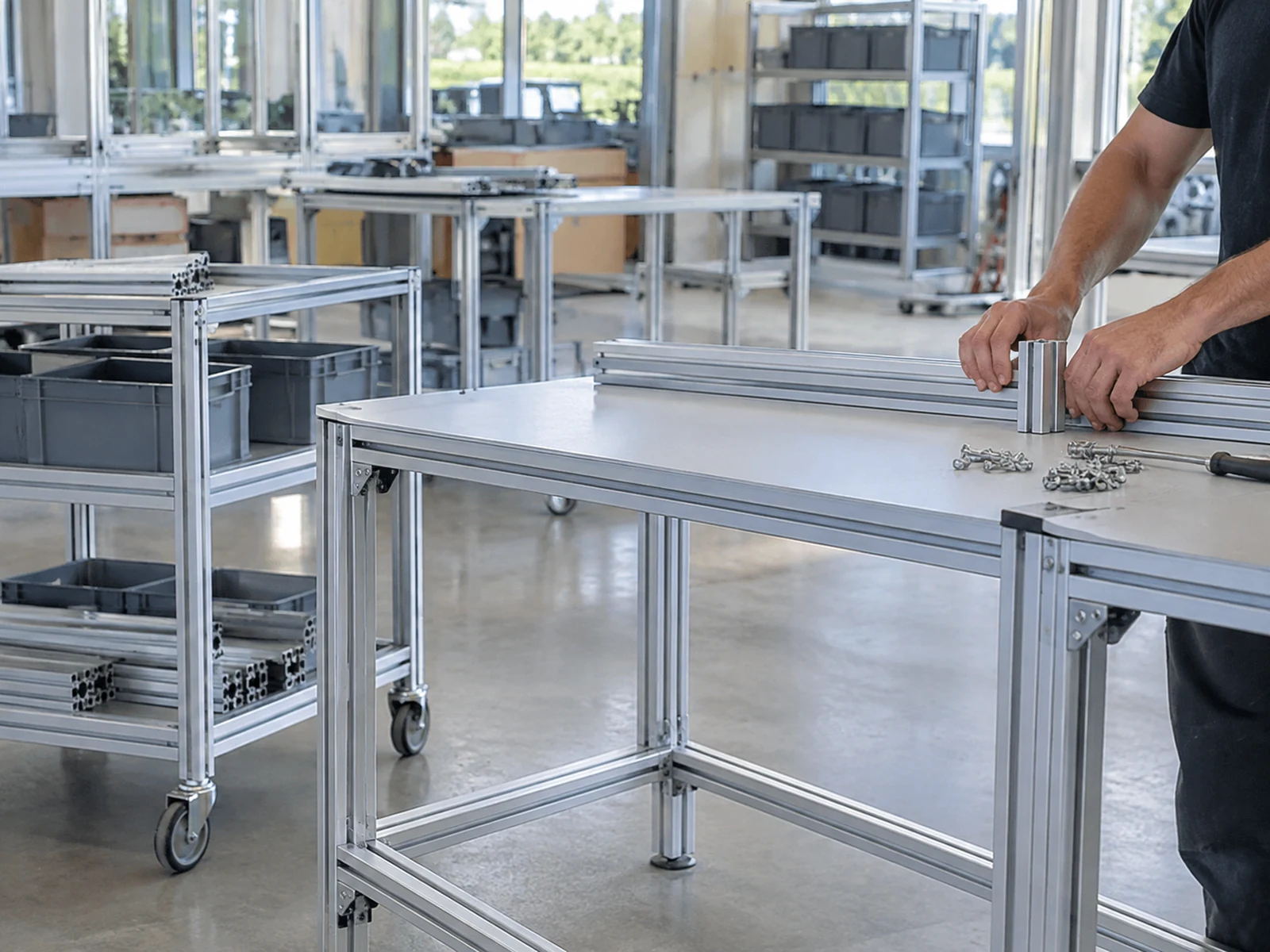
2. Compare four possible supply stages
| Stage quoted | What the saw cell hands over | What still needs an owner |
|---|---|---|
| Cut blanks | Identified lengths from released stock, labeled by member and revision | Deburring, drilling, finish protection, joints, and assembly |
| Ready-to-join members | Cut ends plus specified edge condition and any separately authorized secondary operation | Connector fit, hinge geometry, and rack assembly approval |
| Member kit or metal subframe | Grouped and traceable aluminum parts, possibly a separately inspected metal assembly | Wire grids, polymer parts, final folding action, and product tests |
| Complete drying rack | A finished multi-material product | Requires a product integrator and an acceptance plan beyond the saw purchase |
The commercial boundary matters. If the RFQ says “rack frame cutting” but the price covers only loose saw-cut blanks, the buyer may discover too late that hole placement, joints, and kitting belong to other suppliers. Put the accepted stage in the first line of the quotation. For each later process, name the party that releases the drawing, performs the work, checks it, and pays for rejects.
Manufacturer examples show why a rack should not be treated as one uniform extrusion. Metaltex describes its Ciclone drying rack as using an anodized aluminum frame with coated iron-wire grids and plastic accessories. MUJI lists an aluminum pole together with ABS connection parts and caster components for an indoor airer. These are examples of distinct product architectures; neither is a Jiurun customer, a Jiurun machine specification, or a substitute for the buyer’s released bill of materials.
3. Aluminum saw for clothes drying rack manufacturing: release the member trial
For a meaningful trial, send the actual stock or a representative production lot, the released member drawing, and the mating connector or hinge component when fit is a concern. Identify the cut orientation and whether both ends are square, angled, or otherwise shaped. If the part is coated before cutting, say which surfaces must avoid clamp marks. If coating comes afterward, define the allowance and who owns the finishing operation.
Ask the saw supplier to document stock support, datum placement, clamping contact, blade or tooling choice, chip removal, and how the first article is measured. Do not accept a single attractive cut face as proof of repeatability. Request a small sequence across normal stock variation and record dimensions and end condition at the points that matter to the rack assembly. The buyer should approve sampling size and acceptance limits before the trial.
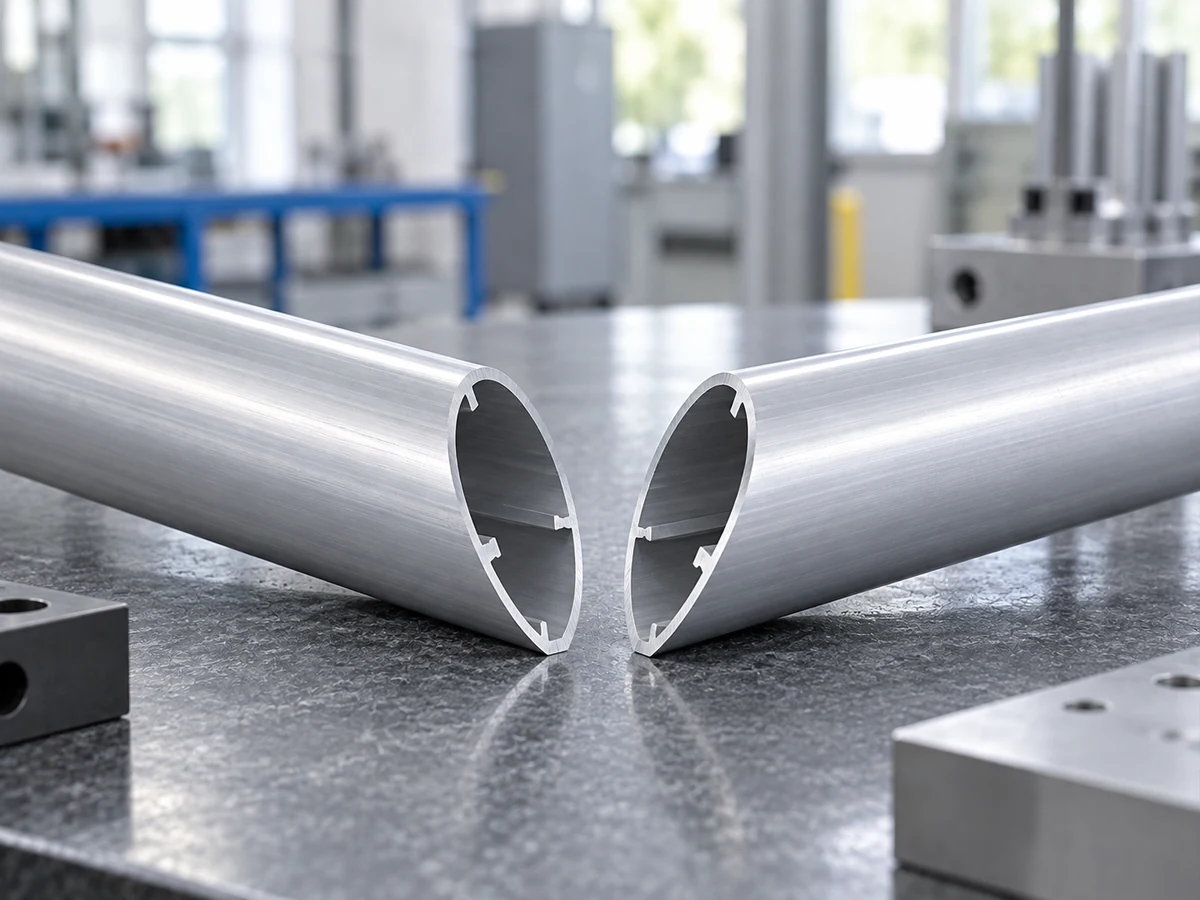
If a thin wall deforms under clamping, the answer may be revised support or a different contact arrangement, not a faster feed setting. If the finished rack has telescoping or folding members, inspect the cut ends against the actual mating design. A machine trial can validate the agreed cutting operation; it cannot validate the complete rack’s folding life or load behavior.
4. Decide what the quotation must include
Compare quotes on the same boundary and the same inspection plan. Ask for the stock range covered by the trial, expected changeover steps between member families, how scrap and first-piece setup are counted, and what evidence will be delivered with the machine. Ask whether length stops, fixtures, blade consumables, guarding, and operator training are included or separately priced. Production rate should be tied to the released part and an agreed measurement method; a generic brochure cycle time is not a rack production commitment.
For recurring rack programs, specify how parts are labeled and separated by revision and handed to the next station. Confirm whether the supplier will provide only a saw, a configured cutting cell, or a wider integration package. If the request includes automated loading, collecting, or sorting, draw those interfaces into the RFQ explicitly. The rack builder still owns the final assembly process and product acceptance unless the contract assigns those duties elsewhere.

5. Send a short, testable RFQ
- Product boundary: name the retained aluminum member, part number, revision, and one of the four supply stages above.
- Material: provide actual profile drawings or samples, wall and finish condition, and expected stock variation.
- Cut requirement: define end geometry, functional datum, length tolerance, burr or edge acceptance, and visible-surface protection.
- Downstream interface: identify connectors, hinges, grids, caps, or other parts that constrain the cut, and who approves their fit.
- Trial and output: agree on sample quantity, measurement records, reject handling, labeling, and the handoff to the next station.
- Commercial scope: separate machine, tooling, fixtures, automation, installation, and training in the quote.
For another product where the same boundary issue arises, see our comparison of aluminum saw supply stages for wind-chime manufacturing. The members and acceptance details differ; reuse the decision framework, not its product assumptions.
Related equipment video
Request a process review: For an aluminum saw for clothes drying rack manufacturing inquiry, send the released aluminum member drawing, actual stock or photos with dimensions, required handoff stage, and inspection criteria through the JiurunCut contact page. We can discuss a trial plan against that specific cutting scope before a machine configuration is proposed.