
Buying an aluminum saw for a metal service center means buying a defined cutting capability within a material-supply business. The machine should connect the stock you actually hold to the cut material your customers order, with a clear route for retrieval, approved cutting, identification and delivery. A saw’s nominal size range alone does not describe that service.
Begin by defining what you will sell. Full-length aluminum stock, straight-cut machining blanks, customer-specific profile lengths and finished fabricated assemblies are different deliverables. Select the saw against the cutting work you intend to perform, and identify any operations that remain outside it. Avoid promising a complete finished component when your proposed service supplies only a blank.
The following purchasing framework is for the stockholder acquiring equipment, rather than a customer choosing an external cutting supplier. It does not claim that one Jiurun machine covers every aluminum bar, tube, profile or plate in a metal warehouse.
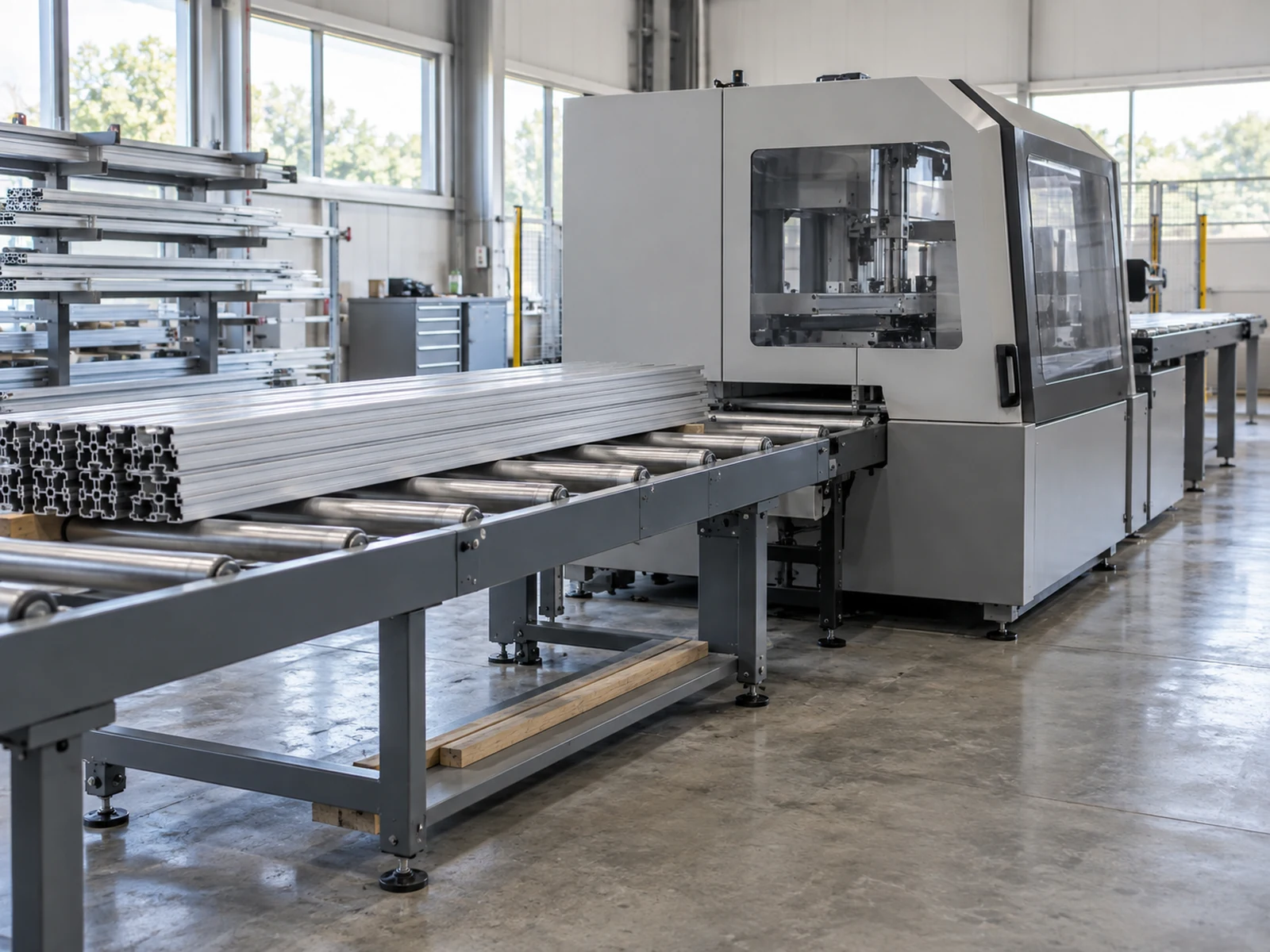
Define the aluminum cutting service you intend to offer
Create a service envelope from actual inventory and customer demand. List aluminum product forms, alloy and temper, incoming dimensions and condition, required output lengths and angles, quantity ranges, tolerance requirements and surface restrictions. Separate a normal service family from requests needing individual review. Your commercial team should know which inquiries can enter the approved process and which still need a technical answer.
Make the distinction between supplied material and later manufacturing visible. A straight-cut bar blank may still require machining; a cut extrusion may still require drilling or notching; a plate rectangle may require a different processing route from a long profile. These differences affect the equipment proposal and the way the customer order is described.
For industry context, Smiths Metal Centres’ own processing overview distinguishes services such as plate sawing, billeting and tube cutting. That illustrates separate processing scopes within a stockholding business. It is not evidence that the same saw or a Jiurun configuration supplies all those services.
Use the service envelope to prepare representative jobs. Include the smallest commercial order you expect to accept, an ordinary repeated order, and the stock or output combinations that challenge your proposal. A list of every possible alloy in the warehouse is less useful than a clearly identified cutting job supported by its material and drawing requirements.
Set the boundary for exceptions. For example, a customer requesting a new angle, an unusually short piece or a protected finish should receive a suitability review before an order commitment. Treat the exception as a new requirement to confirm, rather than allowing a sales description such as “cut to size” to expand the approved machine scope.
Match the equipment to the stock presented at the saw
Warehouse inventory can arrive as individual lengths, bundles, protected profiles, pre-cut stock or plate formats. State which of these actually reaches the cutting station. A proposal for manually presented individual bars is not automatically a proposal for taking material directly from warehouse bundles. Similarly, a profile crosscut machine should not be assumed to provide a complete plate-sizing service.
Ask the supplier to identify the machine and configuration assessed for each approved family. Provide section drawings as well as maximum outside dimensions. Explain permissible workholding contact, required end geometry, minimum and maximum cut lengths and how output is received. Confirm which supports, fixtures and receiving equipment are included.
| Service family | Input and output to describe | Scope question |
|---|---|---|
| Aluminum bar blanks | Actual bar form and condition; required machining blank | Which configuration and evidence cover the approved stock and blank? |
| Cut extrusion lengths | Section drawing, finish restrictions and end requirements | How are the profile, protected faces and separated pieces handled? |
| Pre-cut stock finishing | Actual incoming blank and remaining cut | Can that shorter input be presented and held as proposed? |
| Plate-sized material | Complete plate dimensions and rectangular blank requirements | What plate-specific cutting and handling route is being supplied? |
Separate an equipment family’s capabilities from your quoted configuration. A photograph of a larger feed system or automatic receiving device does not put it in the offer. Request a scope list showing supplier equipment, buyer equipment and any interface still to be resolved. Keep promised machining or downstream assembly separate from the saw purchase.
If your warehouse also stocks steel or other materials, keep their processing requirements outside the aluminum proposal unless separately assessed. A mixed-metal business does not make an aluminum saw a universal metal-cutting machine. Confirm each actual application without borrowing parameters from a different material or machine.
Connect stock retrieval to a released customer order
The saw should receive identified material and an approved job. Define how the stock reference, alloy and temper, relevant lot information, available format and customer order are connected before retrieval. Identify which person resolves missing material information, a disputed size or an unapproved substitute. The machine operator should not have to infer the sales promise from an incomplete picking note.
Record the order’s cutting-stage requirements separately from the warehouse stock dimensions. A request for a finished machining feature may not be a request for the same dimension on a saw blank. Ask the customer or responsible technical reviewer to resolve that distinction before release. Retain the accepted drawing revision and the output inspection basis with the job.
Describe the physical retrieval route in the machine RFQ: storage format, material presentation, preparation before the infeed and any stock remaining after cutting. In its material-handling overview, equipment manufacturer KASTO lists feeding, sorting, separation and internal material movement as distinguishable functions. This supports asking for a defined scope; it does not establish compatibility or integration with a Jiurun saw.
A manually organized warehouse can still have a clear handover. Identify the material, approved job and receiving location even if no automated storage system is purchased. Where digital integration is requested, state the information exchanged and the approval needed. A CNC label does not demonstrate a connection to your inventory or sales software.
Include the person and equipment needed for replenishment in the plan. If a saw waits for warehouse retrieval, its free-running cutting speed will not predict order completion. Ask for evidence that uses the agreed presentation method rather than a demonstration with all stock already prepared at the machine.
Evaluate mixed orders as a fulfilment sequence
A service center commonly needs to complete identifiable orders, not simply make the highest aggregate count of pieces. For the proposed purchase, define the sequence of approved jobs, the changes between them and how each output reaches its receiving location. Include the work that separates customer orders and prevents unresolved parts from being shipped.
Consider an invented example with three released orders. Order A requires 40 blanks of one length, order B requires 25 pieces of a second approved profile, and order C requires 12 longer blanks. The total is 77 requested pieces. Producing 77 pieces in aggregate does not prove that all three orders are fulfilled; each needs its own material, quantity, dimensional approval and destination.
If A is fully accepted, B has 23 accepted and two held for a decision, and C is fully accepted, the result is 75 accepted pieces and two held. Only A and C are complete for the assumed handover rule. This is a deliberately invented bookkeeping example, not a customer case, rejection rate or machine-yield claim.
Use such a sequence to frame a representative demonstration. Specify the stock and parts, order boundaries, expected changes, elapsed-time boundaries and inspection method. Record interruptions and excluded work. A trial of a single repeated blank may help assess that blank, but it does not by itself demonstrate the whole mixed-order service.
Compare ordinary and urgent demand separately. Ask how a changed priority is approved, what happens to the interrupted material and order, and how receiving records remain clear. Do not design a service promise around unrestricted interruptions unless the proposed machine and workflow have actually been assessed for that arrangement.
Define customer handover and remaining-stock records
For each completed order, define the supplied cut material, quantity, identification and required documentation. State the inspection and release point before packaging or collection. Confirm what your service includes and what the customer must still do in later manufacturing. A customer’s production success cannot be guaranteed by an unspecified saw blank.
Ask how output condition will be retained through receiving, movement and packing. Protected extrusion faces, small loose pieces and heavy blanks create different receiving questions. Request a proposal against the actual parts and handling resources, rather than assuming that every separated piece can use the same collection bin.
Define how remaining usable stock returns to your inventory record. Preserve the information needed to decide whether it can serve another approved order. Also identify what happens to held parts or material requiring a decision. A physical remaining length and an inventory quantity should use a stated basis; do not subtract a piece count from a stock-length total.
Make material accountability visible without claiming a particular certification system. If customer requirements call for specific traceability or documents, submit those requirements and confirm how they are maintained. Do not imply that a machine label or an automated part counter creates the required commercial or quality record.
These handovers belong in the equipment comparison because they may require receiving devices, preparation work, records or personnel beyond the base saw. Identify what is included in the machine offer and what the service center must provide. Obtain the actual installation and operating information for the selected configuration, with the responsible reviewers assessing the site arrangement.
Turn the service envelope into an order-routing decision
Consider a fictional service center with three requests arriving together: repeated straight-cut bar blanks, several protected extrusion lengths, and rectangles to be obtained from a full plate. The commercial description might call all three requests aluminum cut to size. The machine purchase should still distinguish the actual stock and processing route behind each request. A crosscut demonstration using prepared bars cannot close the full-plate requirement.
Prepare a row for every proposed service family showing the stocked input, preparation before the saw, cutting-stage deliverable, quality release and customer handover. Mark whether the supplier has assessed that exact route, whether the service center provides a separate step, or whether the request remains outside the initial offer. Do not turn an unanswered row into an included service merely because the machine is described as automatic.
For example, one fictional offer could include a saw and supports for individual lengths that your warehouse staff have already selected and presented. Another could add proposed retrieval and receiving equipment. Neither description establishes a result until its actual interface and application evidence are confirmed. Compare who identifies the correct material, who supplies it at the infeed, what remains after the cut, and who releases the output to the customer order. Price the complete agreed scope rather than silently assuming that the missing work is free.
The order-release decision also needs a boundary for substitution. If the ordered stock is unavailable, a physically similar section is not automatically an approved replacement. State who obtains the customer or technical approval and which job reference changes. A saw selection based on one approved material and section should not become permission to process an unassessed alternative. Retain the original request and the accepted change so that the machine job and the commercial order describe the same deliverable.
Keep an urgent insertion measurable at the order level
Return to the invented three-order example above. Suppose an approved urgent request for eight pieces arrives while order B has two pieces held. List the urgent request as order D with its own material, drawing, quantity and deadline. It does not remove the hold on B or transform B into a completed delivery. If D is accepted in full, the accepted aggregate becomes 83 pieces, but A, C and D are the completed orders under the stated handover rule. B still needs its unresolved decision.
Ask a supplier demonstration to retain the time and scope boundary around that change: the interrupted job state, stock presentation, agreed setup or program change, receiving separation and return to the earlier order. An observed cutting cycle for D alone is a smaller piece of evidence than the elapsed mixed-order sequence. State which measure you are buying against and avoid using a piece counter as proof of complete customer fulfilment.
This exercise can be run on paper before committing to a configuration. Any row needing an unsupported stock form, an unresolved retrieval interface or an unapproved substitute is visible as an open item. The resulting RFQ gives the supplier a bounded service to assess and gives your sales team a clear distinction between an approved offer and a request still awaiting a technical answer.
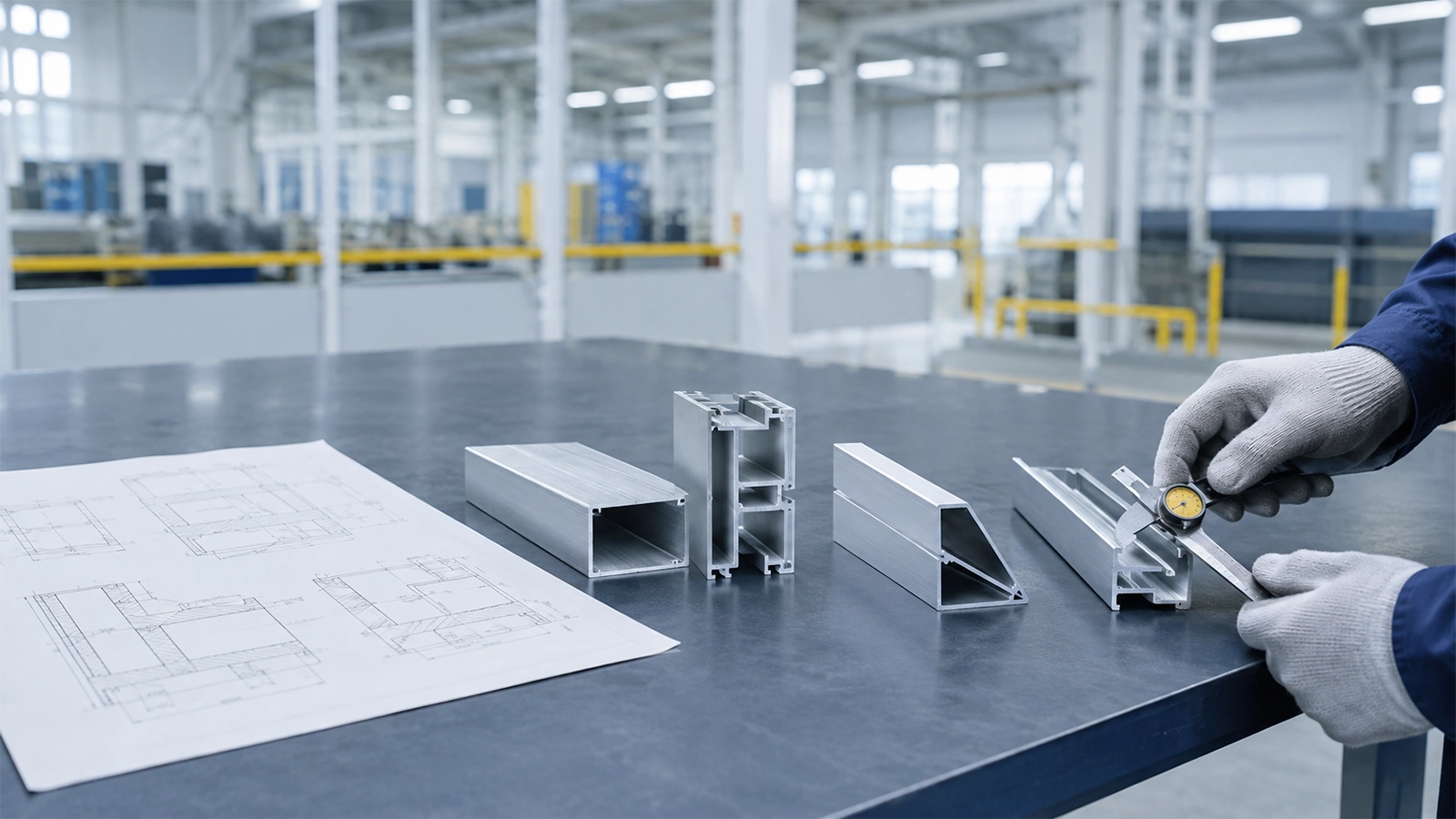
Compare complete proposals against the service envelope
Give competing suppliers the same approved service families, inventory presentation, representative order sequence, receiving requirements and site conditions. Ask each to name the configuration supplied, state exclusions and conditions, and provide matching evidence. Do not compare a base saw price with a complete material-handling system as if both cover the same work.
Keep unsupported items open. An unanswered plate job, stock-retrieval interface or finished-part requirement should not become an accepted promise because another family passed a test. Request clarification or retain that service outside the initial scope. An intentionally limited service that can be supplied is more useful than a broad catalogue claim without a confirmed processing route.
Agree the acceptance record around the jobs you intend to sell. It should identify material and drawing revisions, equipment configuration, measured outputs, order-level completion, elapsed-time boundaries and unresolved items. Feeding repeatability should remain distinct from finished-part quality. Any capacity or staffing statement needs evidence for its actual conditions.
Send Jiurun your aluminum service families, section drawings, alloy and temper, warehouse stock formats, cut lengths and angles, quantities and receiving requirements. Include representative customer-order sequences and site resources. Ask for an industrial saw proposal with explicit model, configuration, application limits and evidence linking your stocked material to the cut outputs you plan to supply.
Use a cutting-stage video to discuss the service scope
This Jiurun equipment video provides cutting-stage context. It does not prove warehouse software integration, fulfilment of the invented orders or suitability for every stock family in a service center.