
An aluminum saw for a materials laboratory should be selected around the specimen route, not a generic promise of a clean cut. A lab may receive long profiles for initial reduction, short coupons for a defined cross-section, or prepared specimens from an outside service. Those are different purchases. Before requesting a machine quote, name the object that arrives, the surface or region the analyst must preserve, and the condition in which the next team will accept it.
Jiurun supplies industrial circular saw equipment for eligible aluminum and other non-ferrous stock. A production saw can be considered for upstream stock reduction when the lab’s method allows a separate downstream preparation stage. It should not be described as a substitute for a metallographic precision cutter, mounting, grinding, polishing, or analysis equipment. The equipment decision starts by separating those roles.
Start with the examination question
Ask the analyst what the test is intended to see: a profile wall, a joint, an end face, a coating, a defect location, or a representative area away from a cut. Record where the region sits on the incoming object and which orientation must be retained. A drawing that says only “cut a sample” does not tell the saw supplier whether it is reducing a long bar, isolating a small location, or producing a surface for direct examination.
For each sample family, write down the incoming form, its maximum and typical handling envelope, the location to retain, the allowable sacrificial margin, the downstream process, and the recipient of the cut piece. Keep the laboratory’s method owner responsible for any specimen preparation or test acceptance rule. A saw quotation can then be assessed against a specific handoff rather than an assumed laboratory outcome.

Separate three possible supply routes
Route A — upstream reduction. The lab receives stock that is too long for its next fixture or service provider. An industrial saw may create manageable pieces while leaving material for later precision sectioning. The RFQ should state the accepted input forms, clamping access, required retained length, identification method, and what happens to the offcut. The output is a prepared blank, not a finished analytical face.
Route B — specialist sectioning. The location of interest is small, delicate, or close to a surface the analyst must preserve. In that case compare dedicated metallographic sectioning equipment against the lab method and specimen holder. Buehler’s precision-cutter category describes sectioning as the start of preparation for microstructural examination and distinguishes precision cutters from later mounting and polishing equipment. That supplier description explains the separate equipment class; it is not a specification for a Jiurun saw.
Route C — outsourced prepared specimen. If the sample mix is intermittent or the lab lacks downstream preparation capacity, specify the needed orientation, identification, and acceptance evidence to a qualified external preparer. Compare the full service turnaround and rework path against owning additional equipment. Do not count an outsourced finished specimen as a saw-cut blank when estimating internal throughput.
Struers lists cutting, mounting, grinding and polishing, and analysis as distinct product groups. That separation is a useful purchasing reminder: a single cutting machine quote does not cover the complete examination route. Neither source validates a particular Jiurun configuration, specimen quality, or test method.
Build a sample-family matrix before comparing saws
Use one row per materially different incoming family rather than a single “aluminum sample” line. A hollow extrusion, a round bar, a thin sheet strip, and a previously machined component have different support and identification questions. For each row, include the stock drawing or a scale photograph, quantity and mix, incoming condition, target region, cut orientation, retained piece and offcut identity, and next recipient. Distinguish frequent families from occasional exceptions so one unusual part does not silently define the whole machine purchase.
Then mark the process boundary for every row: industrial reduction, specialist sectioning, or outside preparation. If a row is undecided, ask the laboratory method owner to resolve it before suppliers promise a capability. A nominal material label, one sample photo, or one successful cut cannot establish that the full portfolio fits a quoted machine.
Compare equipment at the handoff, not by a headline feature
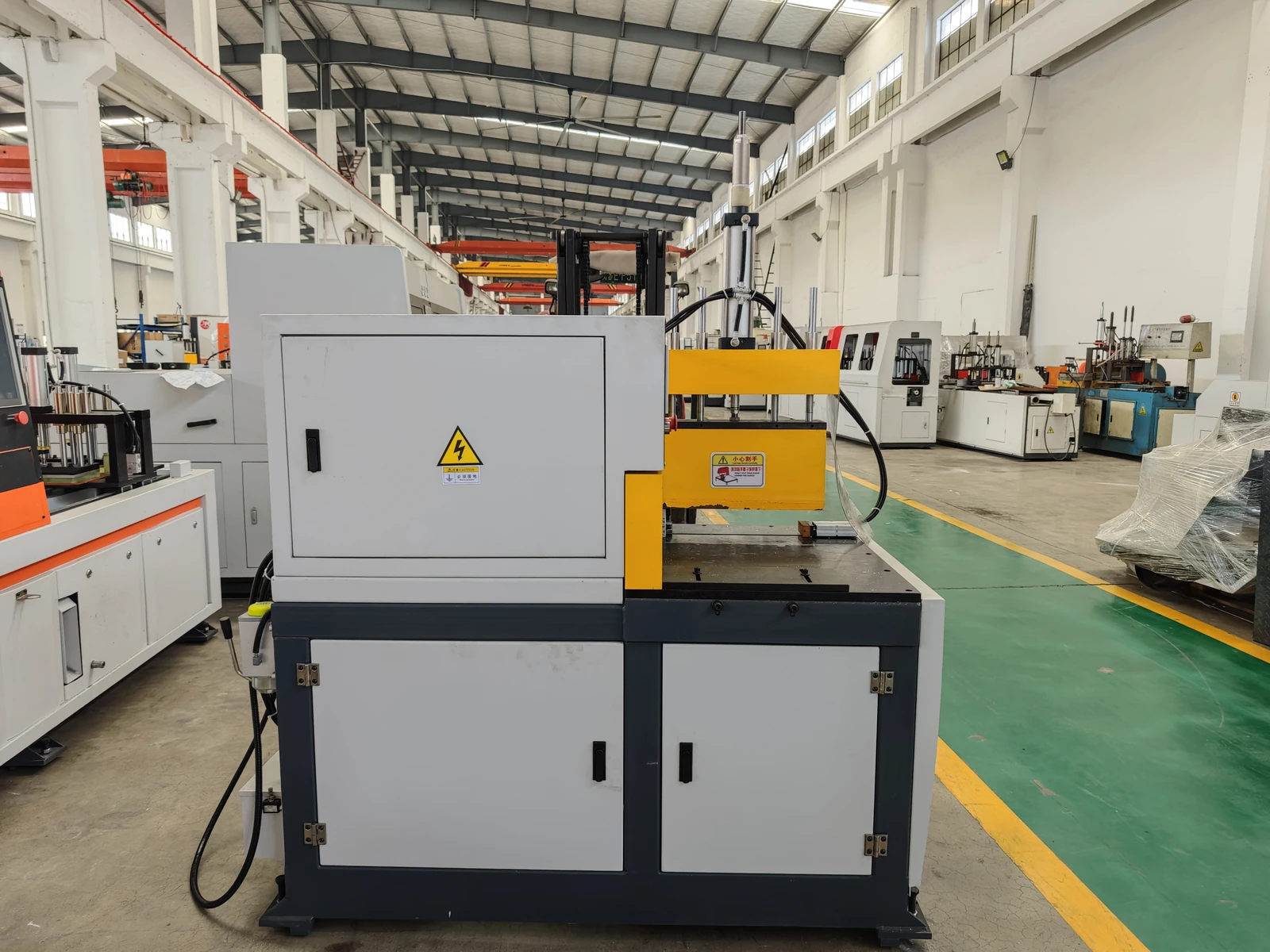
For an industrial saw candidate, request a configuration drawing and a written answer for each retained stock family. Check how the piece is supported before and after the cut, how the required orientation is marked, whether the remaining stock can be reidentified, and where the operator transfers the blank. These are procurement questions, not claims that any pictured machine has a particular fixture or measured cut quality.
For a specialist cutter, compare the lab’s specified specimen envelope, fixturing, consumables, cleaning boundary, and downstream preparation path with that vendor’s documented offering. Keep quoted capabilities tied to the exact proposed model and configuration. Do not copy a number from a different cutter, or convert a feeder positioning claim into finished-specimen accuracy.
Define a fair trial and evidence package
Choose representative incoming pieces from the matrix, including a difficult-to-support form and a routine form. State the accepted starting condition, the region and orientation to retain, the observation points, and who judges the downstream specimen. Ask the supplier to identify the tested machine and fixture arrangement in the trial record. A photograph of a cut face alone cannot prove the condition of an internal region after mounting or polishing.
Record what was actually observed: whether the piece stayed identifiable, whether the requested blank could be handed to the next operation, and which questions remained unresolved. Keep visual observations separate from measurements and from laboratory acceptance. The sample-cutting trial checklist can help structure a saw trial, but the lab must still define its own specimen method and acceptance criteria.
Keep traceability through the route
A short blank can lose the context of the parent stock. Agree on a durable sample ID, orientation reference, lot or heat reference when supplied, and a way to distinguish the retained piece from the offcut. Decide who creates that record at the saw, who checks it at the next station, and how a rejected or recut specimen links back to the original material. If a coating or local feature matters, photograph and label its position before the relevant cut; do not infer it afterward from an unmarked end face.
This handoff matters whether preparation remains inside the lab or goes to an external service. It also makes supplier replies comparable: a machine that can make a blank but cannot fit the required handling and identification route may not solve the buyer’s actual problem.
Aluminum saw for a materials laboratory: seven RFQ questions
- Which incoming sample families and stock forms must the equipment accept, and which are expressly excluded?
- Is the requested output a transportable blank, a precision-sectioned piece, or a prepared specimen ready for examination?
- Which region and orientation must be preserved, and who owns the laboratory acceptance method?
- What parent-stock, retained-piece, and offcut identification must survive the cut and transfer?
- What exact machine, fixture, support, consumables, and downstream steps are included in each quotation?
- Which representative sample families will be observed in a documented trial, and what evidence will the supplier return?
- Who owns training, maintenance, consumables, excluded processes, and support after installation or outsourced preparation?
Send the matrix with the RFQ and require each supplier to mark “included,” “optional,” “external,” or “not evaluated” for every row. That makes scope gaps visible before a purchase order. If the retained portfolio spans both coarse reduction and analytical sectioning, compare a two-stage route honestly instead of forcing one machine to claim both outcomes.
Video: general Jiurun saw equipment
The following video shows general Jiurun saw equipment. It is an equipment illustration only: it does not show this laboratory’s material, a precision-sectioning process, the model or fixture proposed in your quotation, a customer job, a trial, or a measured specimen or performance result.
Choose the route before choosing the machine
An aluminum saw for a materials laboratory is a sensible RFQ only after the buyer defines which work the saw will retain and where specialist preparation begins. If your need is upstream reduction of eligible aluminum stock, send Jiurun the stock drawings, sample-family matrix, retained-length and identification requirements, and the proposed downstream handoff. We can discuss the industrial aluminum cutting equipment range against that stated scope. For precision sectioning or analytical preparation, compare a dedicated specialist vendor or service separately. Contact Jiurun with the matrix and the unresolved boundaries so the reply can state what is included and what needs further evaluation.