
A tray full of curled chips tells you what is easy to see. It does not tell you everything that travels through a duct, settles on a filter, or appears after chip handling. Before connecting an existing unit to a new saw, treat aluminum saw fine dust as a question about the actual waste stream and collection route, not as a guess based on the largest chips.
This guide is for a buyer specifying an aluminum profile sawing station and its collection handoff. It cannot classify your dust, approve a collector, or replace a site-specific assessment by qualified people. The decision is whether the proposed saw, downstream handling, and collector have been evaluated together before the equipment is ordered or reused.
Where aluminum saw fine dust can enter the collection route
Write down which operations the collection system will serve: cutting, chip conveyance, emptying, any drying or reprocessing, and any other machines tied into the same duct. A visible pile of coarse saw chips is not a representative test of material collected at every point. Likewise, a clean-looking cut end does not establish what reached the filter.
The U.S. Occupational Safety and Health Administration (OSHA) explains that aluminum, though it does not burn as a large piece under ordinary conditions, can be explosible when finely divided and suspended in air under the right conditions. That is a reason to investigate the actual particulate. It is not a claim that every aluminum saw produces an explosible cloud or that every installation needs the same collector design. See OSHA’s combustible dust overview.
Trace where chips can turn into fines
Follow the waste from the cutting zone to its final destination. Ask whether the same material is later conveyed, tumbled, dried, emptied, or otherwise disturbed. A U.S. Chemical Safety and Hazard Investigation Board (CSB) investigation into an aluminum scrap system found that transporting and drying chips generated fine particles that contributed to an explosion hazard. That was a scrap-processing operation, not a test of this saw or of your proposed line. Its purchasing lesson is narrower: the condition of chips at the saw does not settle what a downstream system may contain. Read the CSB investigation summary.
For an RFQ, identify the alloy and stock forms, cutting method, any lubricants, expected operating pattern, and each downstream chip-handling step. Ask the site owner and qualified dust-safety specialist how representative material will be sampled and assessed. Do not copy a test result from another alloy, machine, or facility into the approval for this one.
Decide who approves the complete collection route
A fan rating or filter area by itself cannot authorize reuse. The decision must cover the pickup point, duct route, collector, discharge location, maintenance access, and interaction with other connected processes. If the existing system has changed since it was designed, put that change in the review. If the collector supplier cannot identify the material and operating assumptions behind its quote, the quote is incomplete.
Ask for a written, site-specific determination from the responsible owner and qualified specialist on whether the existing equipment is suitable, what modifications or controls are needed, and which local requirements apply. OSHA’s hazard communication guidance discusses the need to identify combustible-dust hazards and control dust-handling equipment; it is guidance, not a universal saw specification. Do not select explosion protection, electrical classification, or collector placement from a blog checklist.
The related article on aluminum saw extraction airflow covers connected-system airflow and resistance. A collector can still need a separate particulate and hazard review even when the airflow calculation appears adequate.
Make the handover test answer the real question
Agree what will be checked before the first production release. The record should identify the released stock, operating setup, actual collection route, accepted material-sampling plan, responsible reviewer, and the approved operating and maintenance conditions. If a later change adds a second process to the duct, changes an alloy, alters chip transport, or moves the collector, the earlier approval should be revisited rather than assumed to carry over.
Also plan how the operator reports unusual accumulation, leakage, or a change in the collected material. Housekeeping and maintenance belong in the handover because the route can change during use, not just at purchase. OSHA notes that settled dust and leaks in dust-handling equipment matter to the hazard review. Never use a clean cut face as a substitute for examining the waste stream.
What the Jiurun video does and does not show
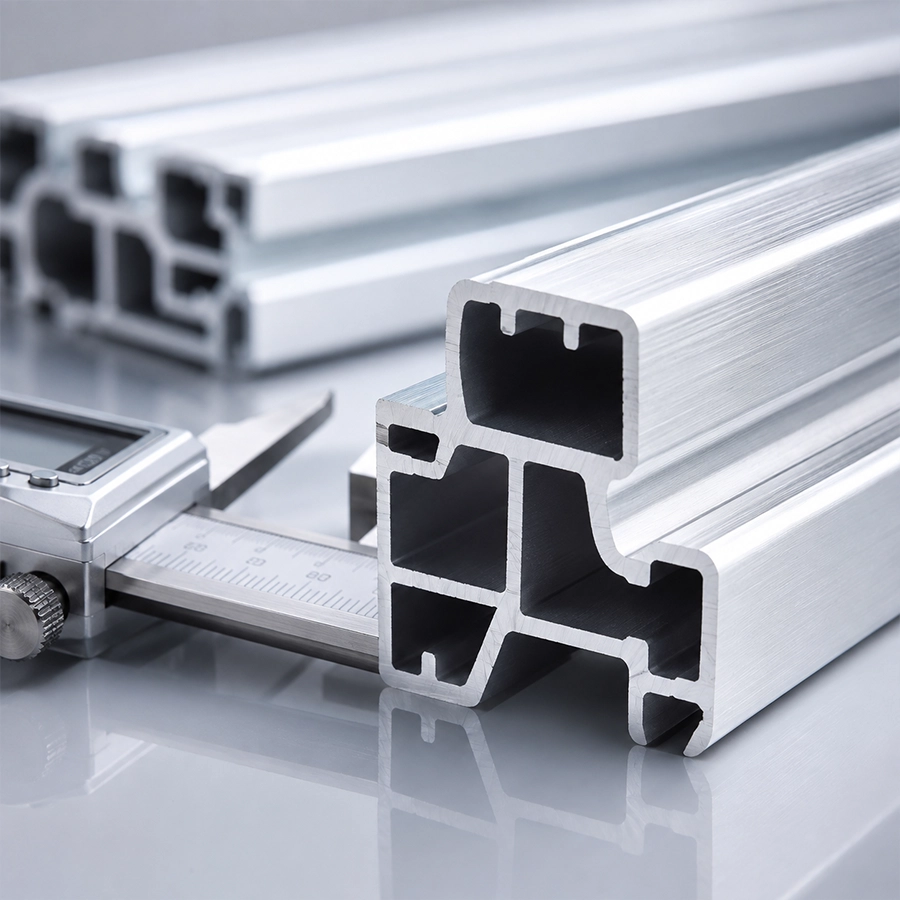
The video below shows aluminum profiles feeding into a Jiurun automatic cutting machine. It is useful for locating the cutting station in a proposed material-flow review. It does not show a dust collector, demonstrate fine-particle generation, identify a specific customer’s configuration, or establish safety performance.
Send a usable collector inquiry
Send the saw supplier and collection specialist the same process description: stock and alloy list, saw operating mode, downstream chip route, proposed shared connections, site layout, and any existing collector documentation. Request a clear division of responsibility for material assessment, collection-system design, installation, and acceptance. The answer should name what has actually been reviewed and what remains conditional.
If you are buying a Jiurun aluminum cutting machine, contact the team with your profile drawings and intended chip-handling route. Ask for the machine-side interface information needed by your site and collection specialist. Confirm the selected machine configuration and collector approval separately before production.