
Aluminum saw condition monitoring is a purchase decision about maintenance information and response, not a promise that a sensor will predict every failure. A useful arrangement identifies the cutting assets in scope, obtains information that can be interpreted in its operating context, delivers an assessed finding to a named person, and records what that person decides. Before requesting a quotation, compare the whole arrangement with the qualified inspection and maintenance route you already have.
This guide is for a plant considering monitoring of an industrial aluminum saw or cutting line. It does not claim that any particular Jiurun model includes condition-monitoring sensors, remote diagnostics or an analysis subscription. The offered machine configuration and any third-party system must be checked separately. Product acceptance still depends on measured cut parts; a machine-health report cannot approve part dimensions or surface condition.
Define the maintenance decision before choosing hardware
Begin with an asset register rather than a dashboard demonstration. Identify the saw, feed equipment, supporting systems, revision and operating location. Ask the responsible maintenance team which decisions are currently difficult: whether to investigate a developing issue, schedule an examination, distinguish an information gap from a mechanical concern, or coordinate work around production. State the cost and consequence of an unavailable asset without turning a generic downtime claim into your own measured benefit.
Set an initial covered-asset boundary. A proposal might assess one rotating drive while leaving other components under the existing maintenance plan. Record those exclusions. A subscription line that merely names a saw does not show which questions will be answered, which components are covered or what evidence a finding will contain. Ask what prior service history and operating records the provider needs. The result is an assessable scope, not an assumption that all faults are visible.
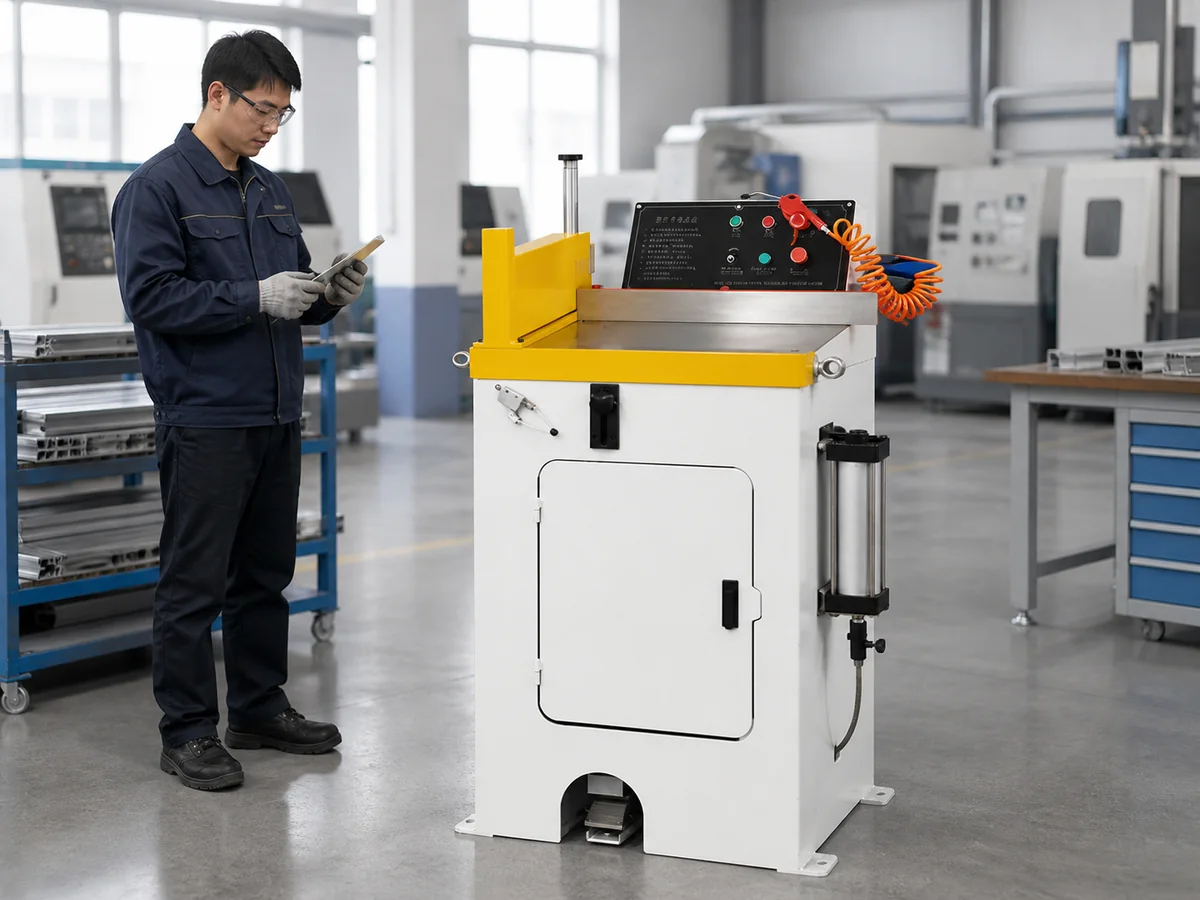
Compare complete routes to the same maintenance handover
Use the same asset list, review period and decision duty when comparing three routes. The first is retained qualified maintenance: documented inspections, service records and investigation by the existing team. The second adds agreed periodic collection and analysis, with a trained collector and a named reviewer. The third may add continuous acquisition and an internal or external analysis service. Each route still needs a person authorized to investigate and close an issue. None should be credited with work it does not include.
| Route | Buyer must establish | Possible missing duty |
|---|---|---|
| Existing inspection and service | Asset coverage, inspection method, records and escalation owner | Information between planned checks |
| Periodic collection and analysis | Collector, operating context, analyst, report and response owner | Collection continuity and interpretation |
| Continuous acquisition and service | Approved interfaces, information quality, analysis, reporting, support and lifecycle | Site investigation and authorized physical work |
For example, a quoted sensor cannot by itself assign a maintenance coordinator. An external analysis service cannot interpret machine information that is absent, misunderstood or outside the accepted scope. SKF describes portable and continuous collection, software and onsite or remote services as distinct categories in its condition-monitoring overview. These are comparison categories; SKF’s claims about its own equipment and outcomes are not evidence of compatibility or performance on a Jiurun saw.
Assess aluminum saw condition monitoring information and context
List each proposed input and who can explain it. A machine control value, an independent measurement and a manual service record are different types of information. Request a joint assessment by the machine provider, monitoring specialist and site team of what is actually available and what connection is authorized. Do not buy an interface on the assumption that every data point in a brochure exists on the offered configuration.
Useful interpretation needs context. Record operating state, current job or product family where relevant, asset configuration, scheduled maintenance and known interruptions. Agree what the provider can and cannot compare across those conditions. A changing value is not automatically a defect. Missing, invalid or interrupted information must be reported as unknown, with an owner for investigating the information problem. A quiet dashboard is not proof of machine health.
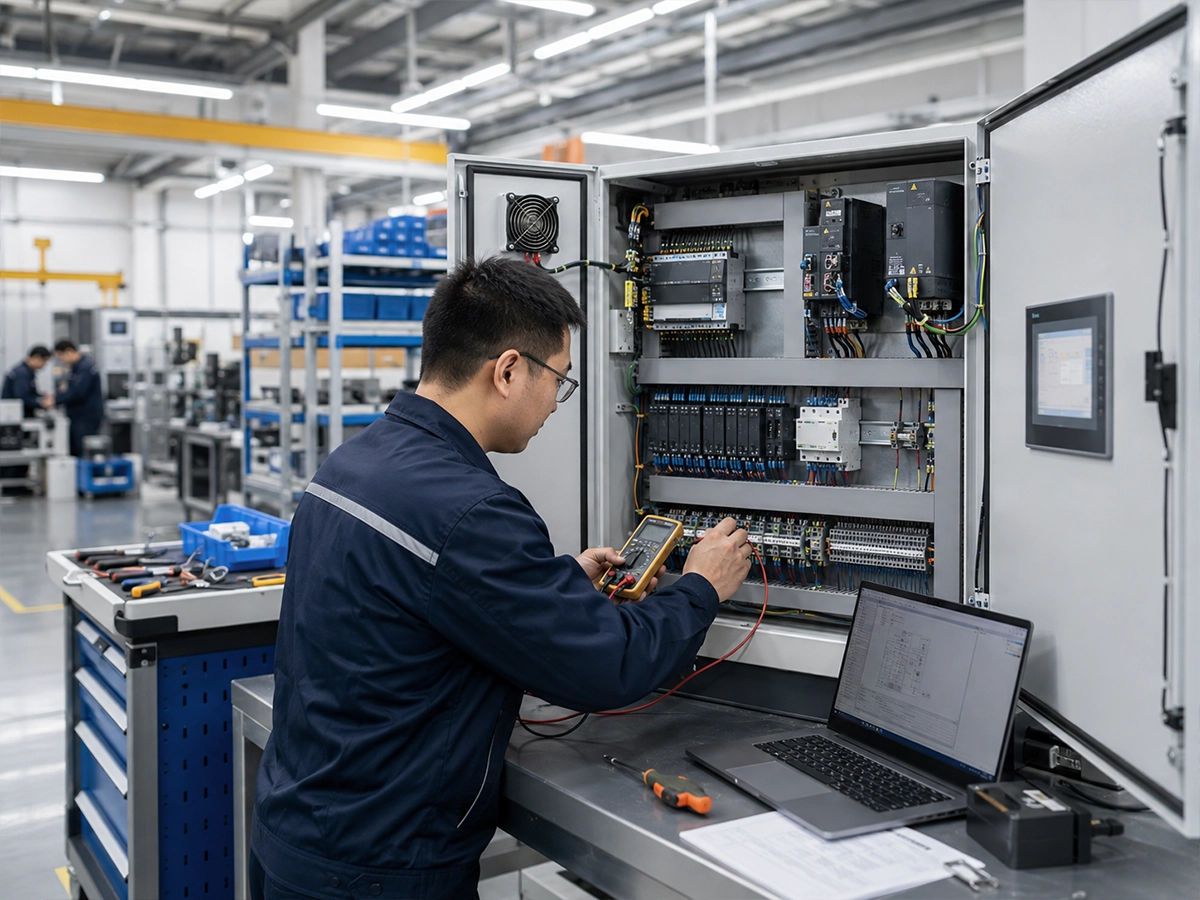
Leave the engineering method to qualified parties. This buying guide does not prescribe sensor positions, wiring, sampling intervals, alarm thresholds or changes to controls. Ask instead for the documented technical scope, installation responsibility, information ownership, cybersecurity review where applicable, and the method for accepting the actual delivered configuration.
Buy a report-to-response process
Specify what reaches the maintenance team. An actionable report should identify the asset, period or event, information considered, operating context, assessment limits and recommended next review under the agreed service. Name the recipient and a backup. Define how the finding enters the site’s work process and how its status remains visible to the responsible people. A colored score alone is not a maintenance handover.
Keep three stages separate: an alert may request attention; an assessed finding may support an investigation; and a qualified owner authorizes any physical intervention. State who performs each stage. A provider may deliver analysis without supplying site access, spare parts, technicians or repair labor. Ask for the escalation path when evidence is inconclusive or a report arrives outside normal staffing hours. Do not turn a notification into a confirmed fault or promise a repair schedule that the supplier has not accepted.
Link the outcome back to records. If the team investigates, record what was checked, the conclusion, the work performed if any, and whether the monitoring assessment needs revision. If the evidence remains insufficient, retain that uncertainty. The value of the arrangement is a repeatable decision trail, not a claim that every later repair validates a prediction. For ordinary physical checks and service planning, see our aluminum cutting machine maintenance checklist; it addresses a different scope from buying a monitoring programme.
Separate advisory information from machine intervention
Ask whether the proposed package only collects and presents information or also claims access to machine functions. These are different scopes. Data viewing, report delivery, remote support and authority to change an operating parameter each need their own documented permissions and acceptance. Monitoring advice should flow through the plant’s established qualified maintenance and safety process. No protective function should be bypassed to produce a demonstration, and a vendor should not deliberately induce a fault for a sales trial.
Document who can see or retain information, who can change asset descriptions or analysis rules, and how access ends when a service changes. If remote help is offered, use a separate access agreement and review the questions in our CNC saw remote-support guide. Remote connectivity is not automatically part of a condition-monitoring purchase.
Price implementation and continuing service separately
A first-year price can hide work that starts after installation. Request separate scope lines for asset assessment, approved acquisition equipment, interface review, installation, commissioning, data mapping, training and documentation. Then price recurring collection or connectivity, analysis, reporting, software support, service review and authorized changes for the same assets and period. Identify the factory staff and resources retained in each option. An externally analyzed service still needs site context, investigation and physical maintenance capability.
Agree the treatment of repaired components, a changed machine configuration, new operating patterns or added assets. Determine whether these changes trigger a fresh assessment, updated baseline, new license or additional service fee. Compare quotations at the same accepted handover, with excluded costs visible. Do not calculate return on investment from another site’s marketing case or a generic percentage of avoided downtime. Use your own maintenance and production records where available, and leave uncertain benefits as uncertain.
Accept the system and the service in stages
Technical acceptance should establish that the authorized acquisition and reporting route has been delivered for the named assets, that unavailable information is handled honestly, that reports reach the right people and that the agreed roles are documented. Service acceptance then checks whether the provider actually performs the contracted reviews, communicates within agreed terms, records limitations and closes agreed issues. A technical connection test is not proof of a continuing diagnostic service.
Agree the test records and conditions with qualified providers before ordering. Distinguish a demonstration based on historical or simulated data from an actual new finding. Record what passed, what remains open and who owns each item. Avoid a universal promise of lead time, detection accuracy or prediction of every failure. The required acceptance criteria depend on the real assets, information and service contract.
Questions to include in the enquiry
- Which saws, supporting assets and components are included, and which remain under existing maintenance?
- What decision will the factory receive, in what report, from whom and how often?
- Which actual data sources and operating contexts have been assessed on the offered configuration?
- How are missing or unreliable data, inconclusive findings and service interruptions reported?
- Who reviews an alert, authorizes investigation, performs physical work and records closure?
- Which installation, software, communications, training and ongoing service items are included?
- How will repaired or changed equipment be reassessed, and what work attracts an additional charge?
- What technical and service evidence must be accepted before the arrangement is considered operational?
Video: general Jiurun equipment example
The following video is from Jiurun Machinery’s YouTube channel and shows general aluminum cutting equipment. It is a visual example of equipment that may have an owner-defined maintenance scope. It does not show a condition-monitoring installation or prove the material, model configuration, customer, trial, diagnosis or performance discussed in this article.
Make the purchase decision from assigned duties
Choose a monitoring arrangement only when the covered assets, usable information, assessed reporting and site response duties form a complete and affordable decision path. If the current qualified maintenance route answers the real questions, retain it until a justified gap is identified. If periodic or continuous monitoring is justified, purchase the full technical and service handover rather than isolated hardware. Send the asset list, offered saw configuration, relevant maintenance questions and current records through our contact page when discussing a Jiurun saw. We can discuss the applicable saw information and configuration; any monitoring equipment or diagnostic service must be separately scoped and verified with its responsible provider.