
Aluminum picnic table cut kits are defined sets of blanks for a particular table and bench design, not a generic pile of aluminum lengths. The buyer may source top planks, seat planks, leg members, braces and connectors from different suppliers. A useful saw quotation states exactly which of those parts will arrive cut, which operations remain downstream, and what the assembler will check before accepting the first batch.
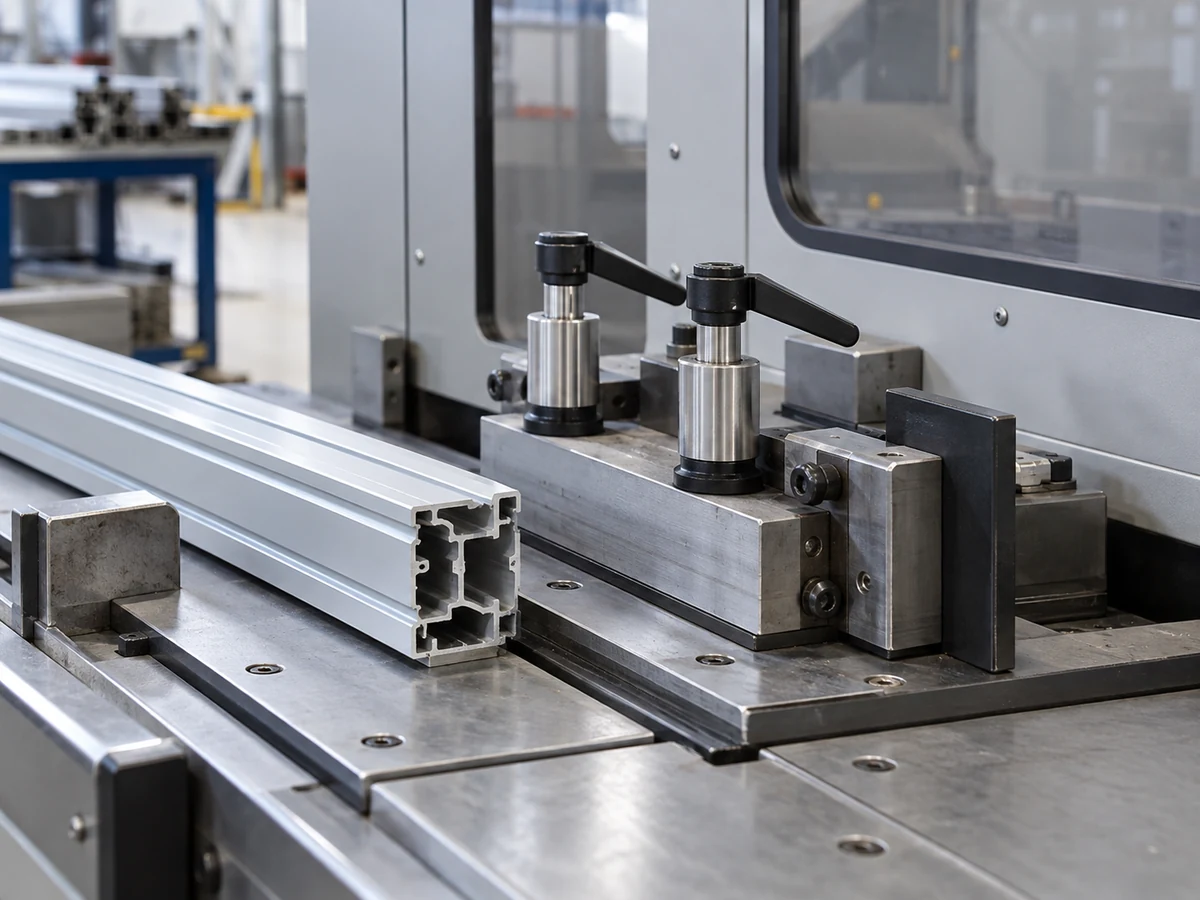
This guide is for an OEM or contract fabricator working from an approved drawing and bill of materials. The photographs below show related aluminum sections and cutting setups from an existing media library. They are illustrations of sourcing decisions, not pictures of the picnic table in this article, a customer job, a Jiurun trial, or evidence of a particular machine configuration.
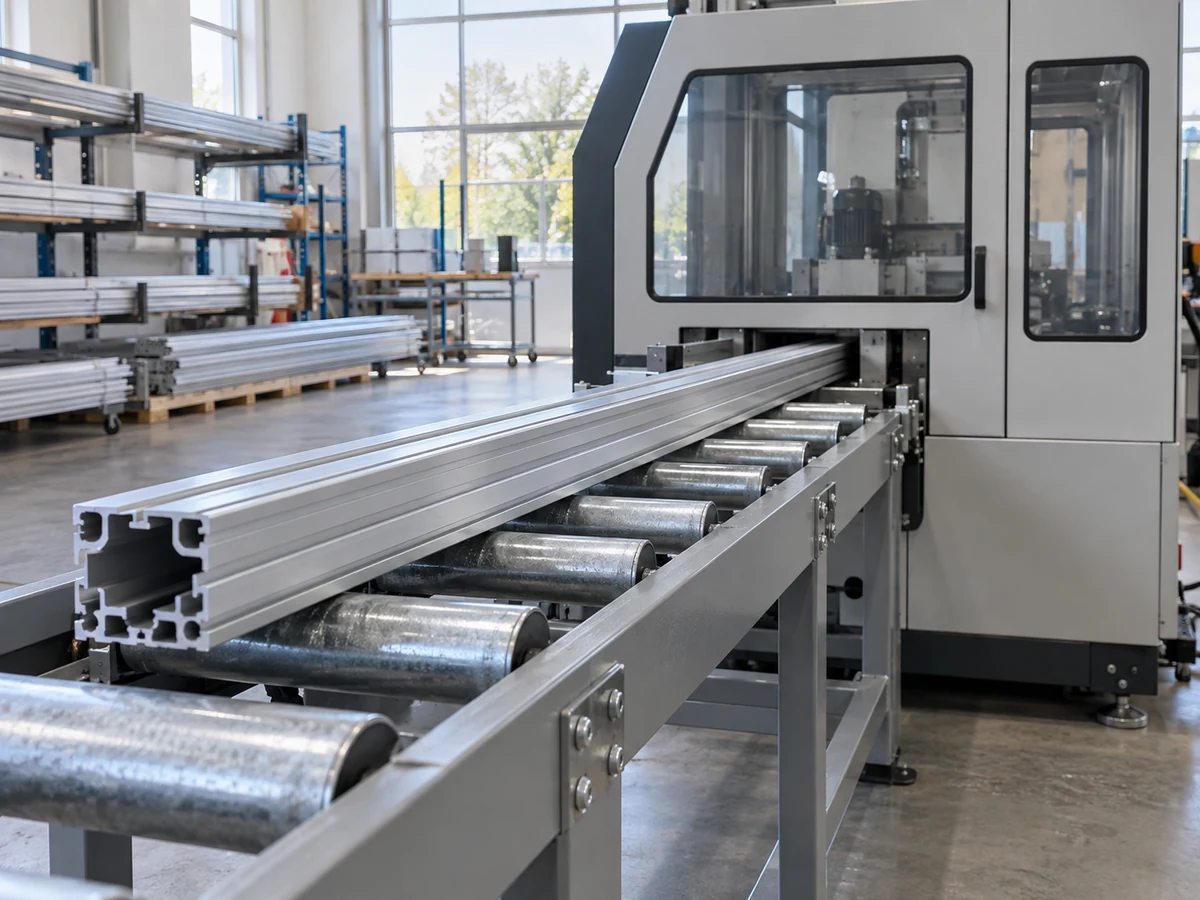
Why the assembly drawing comes before the saw quote
A real product illustrates why the parts should be separated. The Belson Outdoors aluminum picnic table instructions distinguish a frame kit from a plank kit. The Outdoor Aluminum TS-48 assembly drawing separately identifies the table top, seat plank, table frames, seat legs and frame connector. These are examples of their own products, not specifications for a JiurunCut project. Your approved drawing, not either example, controls the purchase.
The Aluminum Association’s processing overview describes cutting extruded stock as a common first fabrication step, with punching, machining, bending or welding possible afterward. Mark that handoff explicitly. A cut-to-length machine quote alone does not include a finished outdoor table, complete hardware, coating, hole pattern or assembly.
Seven RFQ checks for aluminum picnic table cut kits
1. Split the bill of materials into part families
List top planks, seat planks, legs, support bars, braces and connectors as separate part families. Give each family a drawing number, revision, section, alloy and temper where specified, raw-stock condition, annual volume and batch size. Show which parts are supplied as ready-cut blanks and which arrive as welded frames or preassembled modules. A saw supplier should quote only the operations it will actually perform; a furniture assembler can then quote the remaining work without guessing.
2. Identify the actual extrusion and its visible faces
Supply a section drawing and a representative sample for each extruded profile. A wide seat plank may present a very different contact surface from a hollow support member or an angle bracket. Mark visible, touch and mating faces, along with acceptable handling marks and protective film requirements. Do not assume a fixture that holds one section safely will support another. If the input stock has several finishes or profile revisions, keep them as separate quotation lines until their cutting setup is checked.

3. Define length by the drawing datum, not the table size
For every cut blank, give the two controlled end faces, nominal length, allowed variation and measurement method. A nominal six-foot table or bench label is not the cut length of every plank, support or leg. The assembly drawing may also call for end overhangs, unequal member lengths or a different dimension after a later operation. State whether the length is verified before or after drilling, bending, welding or finishing. Provide a first-off drawing or sample that makes the measurement datum unambiguous.
4. Separate straight cuts, angles, holes and edge work
A square end cut, a mitered brace, a drilled fastening pattern and a deburred visible edge are different operations. Assign each one to the machine supplier, fabricator or furniture assembler. If a profile needs a cut near an existing slot or internal web, show the desired end condition on the drawing. Do not infer that a photo of an angle cut proves fit at a frame joint. Ask how the supplier will identify left- and right-hand parts so mirrored members cannot be mixed in the kit.
5. Prove support and clamping on representative stock
Long profiles need stable infeed and outfeed support; thin or hollow sections may need a different contact arrangement. A trial should use the heaviest, widest and most easily marked representative sections in the purchase mix, along with the smallest practical production batch. Inspect how stock is located, how the offcut exits, and whether clamping touches a customer-visible face. Record the agreed fixture, stop, blade and handling route as trial conditions, not as assumed standard equipment for every machine model.
6. Freeze the finish sequence and exposure rules
Specify whether the blank is cut before or after anodizing, powder coating or another finish. Cutting finished stock exposes an end face and may change the edge protection and packaging plan. Cutting raw stock shifts the final visible-edge check to a later stage. Agree who owns deburring, washing, coating, protective film, corrosion review and any repair of handling damage. Do not treat a clean-looking sample photograph as proof of outdoor durability; the material and finish specification must come from the approved product design.
7. Define first-off evidence and kit delivery
Ask for a first-off record that identifies the stock lot, part number, drawing revision, measured length, end condition and any agreed visible-face check. Include photographs of the actual first-off parts only when a real trial has occurred. Define whether blanks ship by part number, by table kit, or by pallet, and how bundles are separated to prevent scratching and part mix-ups. A quotation should name the reject and rework boundary so a missing bracket or wrong-length plank does not become an ambiguous assembly dispute.
A concise RFQ packet the saw supplier can answer
Send one controlled packet: the assembly drawing; an itemized cut list with quantities and revisions; section drawings and material/finish callouts; representative stock samples; required length and end conditions; visible-face rules; the downstream operations owner; a first-off acceptance sheet; and a delivery/packaging plan. Ask the supplier to mark each line as included, excluded or requiring a sample trial. That response is more useful than a broad promise that an aluminum saw can make picnic tables.
If several table styles share the same supply chain, quote the highest-volume style and the most difficult profile as separate trial cases. A result on one style should not be presented as validation of every plank, leg and support family. Revisit the cut list when a furniture design revision changes the joint, finish or part length.
Related cutting-machine demonstration
The following video is from the Jiurun Machinery YouTube channel. It shows a general aluminum-cutting equipment scene. It does not show the picnic table materials, a customer order, this article’s cut kit, a specific model configuration, or performance validation.
Send a drawing for a cut-stage review
For an equipment discussion, compare the documented cut-stage requirements with JiurunCut aluminum profile cutting machines. Send the released drawing, section samples, batch mix, finish route and first-off criteria through Contact JiurunCut. The team can discuss a scoped cutting trial and identify what remains with the furniture fabricator or assembler. A machine recommendation should follow that review, not precede it.