
Aluminum lectern frame cutting is a sensible saw-buying question only when a lectern maker has identified the aluminum members that remain in its own production route. A finished lectern may include uprights, a sloped reading surface, front cladding, a shelf, branding, wheels, electrical accessories and connectors. Those items do not all belong on a circular-saw cut list. Start with the approved assembly and then isolate the profile blanks whose lengths and ends the shop will actually produce.
This guide is for an OEM, exhibit fabricator or component buyer comparing complete lecterns, prepared frame kits and in-house cutting. It does not propose a universal lectern design. The photographs show related industrial aluminum profiles and a saw fixture; none depicts a particular lectern, customer order, validated model configuration or accepted sample cut.
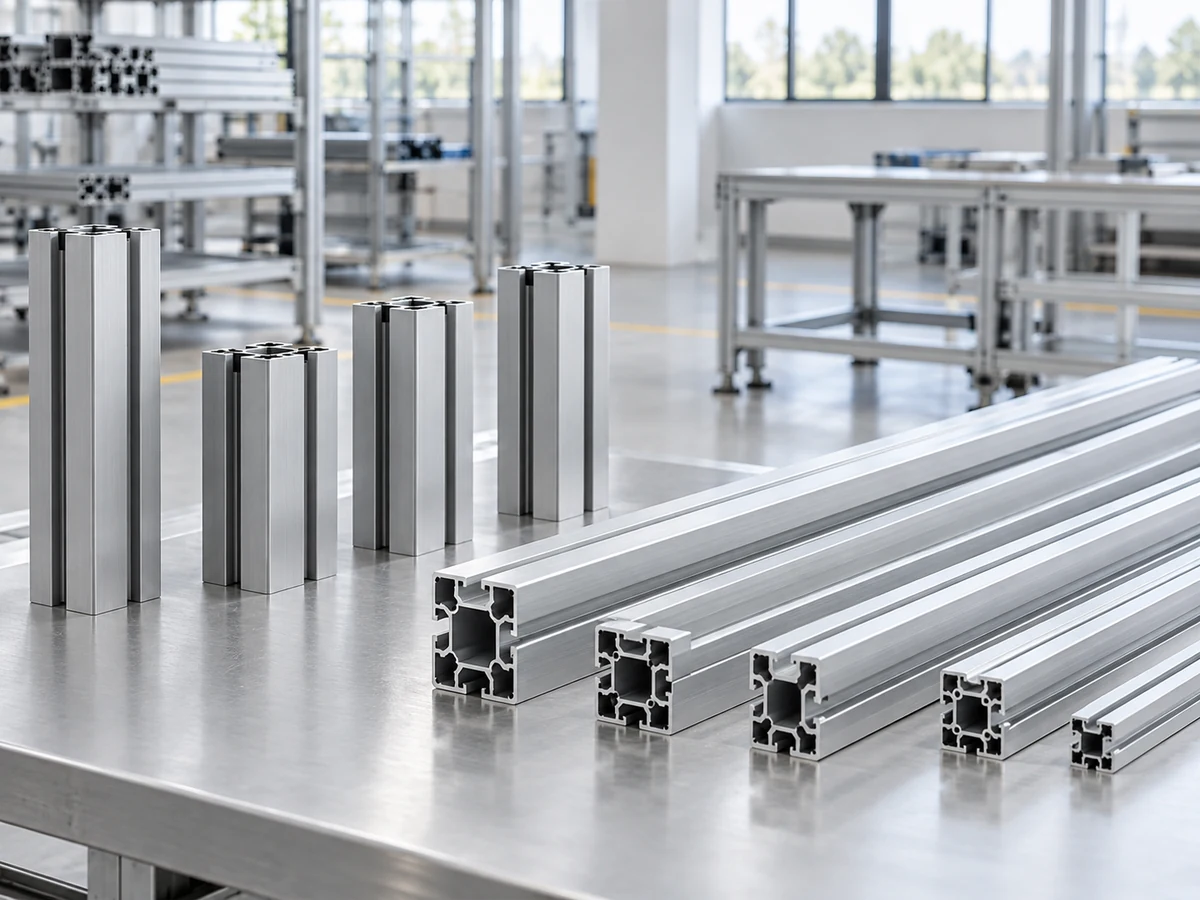
1. Choose the supply boundary before requesting a saw quote
There are several legitimate ways to buy a lectern. MUNK Profiltechnik’s lectern example describes slim anodized aluminum profiles with separate acrylic or sheet-metal cladding, and explicitly offers individual parts, cut-to-size profiles, preassembled modules and complete systems. That is an example of supply choices, not a JiurunCut project or a specification for every lectern. Podium Pros’ aluminum lectern range illustrates a different product emphasis: an extrusion-based structure combined with a reading surface, paper stop, mobility and branding options.
For a small volume, a complete approved lectern or prepared module may be the efficient purchase even if a saw can cut the profile. For repeated custom sizes or an established production line, buying stock extrusion and cutting released blanks in house may give control over changeovers and replacement members. Compare the full delivered and assembly-ready scope, rather than a low price per cut. A saw quotation should not imply that the saw also machines connector holes, installs panels, assembles hinges, wires accessories or approves the finished product.
- Complete system: one supplier owns the fitted product and its approved configuration.
- Prepared frame kit: the supplier delivers labeled lengths and any separately agreed secondary work; the buyer assembles.
- Cut blanks: the saw produces named aluminum members to a released drawing, with later drilling, finishing and assembly assigned elsewhere.
- Raw stock: the buyer also owns the cutting plan, setup and acceptance of each part family.
2. Aluminum lectern frame cutting starts with a member schedule
A drawing of the overall height and width cannot identify every blank. List the left and right uprights, top support rails, lower ties, shelf supports and any front-panel retainers separately. For each line record the profile cross-section and revision, alloy and temper if specified, stock condition, cut length, end geometry, quantity per lectern and annual or batch quantity. Mark any left/right or front/back handed parts. If a rail is an OEM extrusion with a groove or internal web, an externally similar generic section may not accept the chosen connector or panel.
Include a reference edge and an inspection datum on the part drawing. An assembled outside dimension can depend on connector thickness, insertion depth, a top support angle or a panel rebate. It should not be copied into a cutting program as though it were the physical length of every member. Ask the product owner to release the member schedule, not merely a rendering. Use one revision for the drawing, bill of materials and labeled sample set.
A practical RFQ table has columns for part ID, profile ID, finished blank length, end A, end B, protected face, downstream operation and quantity. For example, a top rail requiring a sloping end belongs on a different line from a straight lower tie even when both are cut from the same stock. This distinction determines whether an angle setup, additional handling or a different fixture is needed.
3. Freeze the reading-top and panel interface
The sloped top is a design interface, not an automatic instruction to miter every upright. Some lecterns use a separate top plate attached to straight posts; others rely on shaped supports or angled member ends. The frame drawing must show which component creates the slope, which face locates the top and what the saw must leave for later fastening. If a customer changes the reading surface material or paper-stop detail, check whether the cut-member list actually changes before quoting a new saw operation.
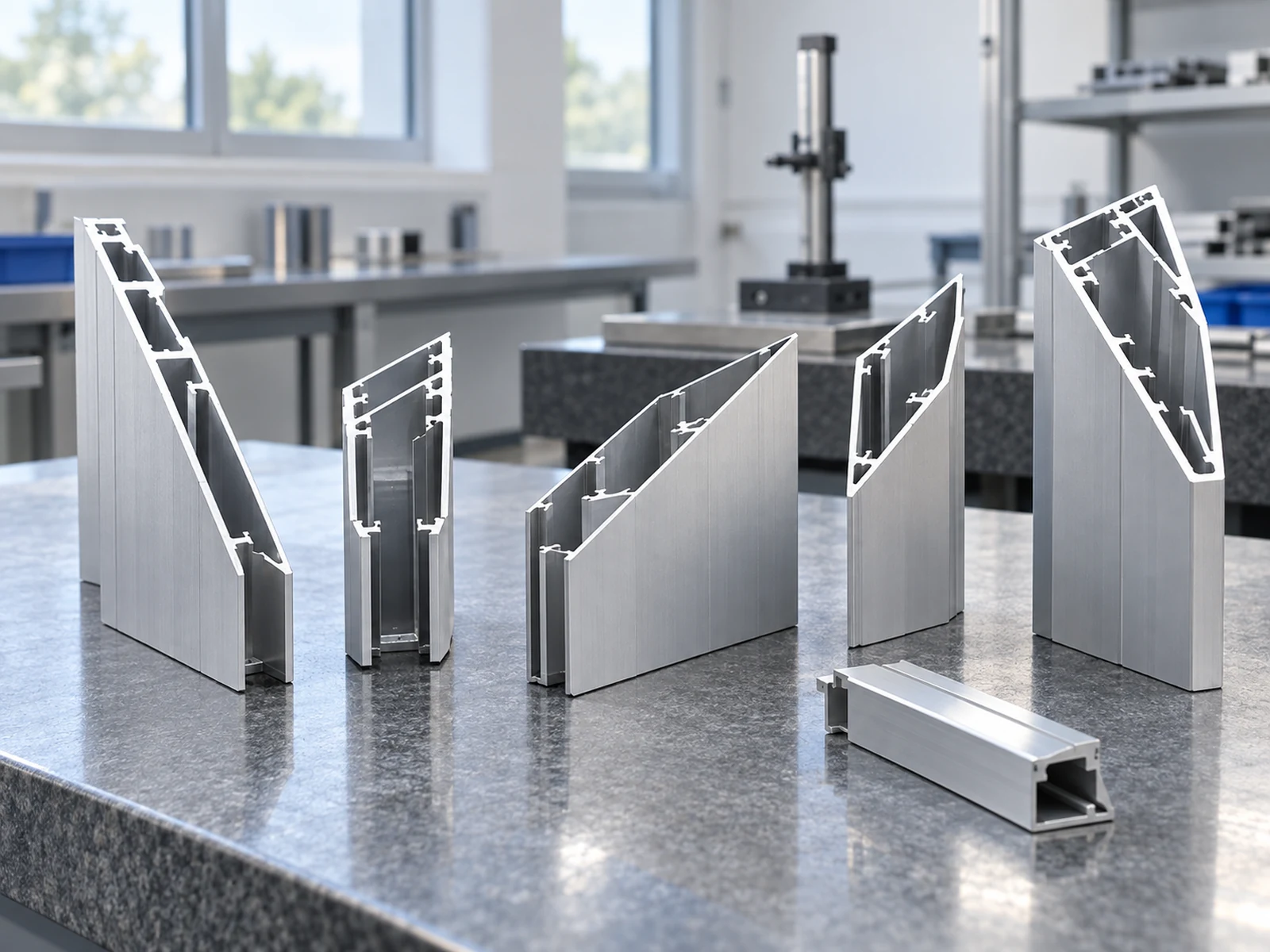
Front panels and branding also change the buying boundary. A profile groove may retain a sheet; a different design may attach cladding with separate hardware. Record the actual panel thickness, insertion method and visible finish with the product owner. Cutting the aluminum rail does not verify panel fit. Logo panels, microphones, power outlets, cable routing and wheel brackets need their own product decisions and, where applicable, separate suppliers. The saw supplier should see these interfaces only to understand which profile faces and ends must remain acceptable after cutting.
4. Make cut quality relevant to assembly
Do not write a generic tolerance into the RFQ and assume it applies to the lectern. Agree where length is measured, how end angle is checked and whether any burr or edge condition interferes with a connector, top plate, cap or panel. If an anodized face remains visible, mark it on the profile drawing and set the permitted contact and handling condition. The assembler should inspect the first cut members in their actual mating relationship rather than judging one isolated blank on the bench.
For a paired upright, compare left and right parts against the same released reference. For a cut top support, verify which end is the datum and which orientation faces the audience. A saw sample can show the resulting length, face and end condition under one approved setup. It cannot by itself establish that the assembled lectern is stable, accessible, electrically safe or ready for public use. Those outcomes belong to the finished-product owner and its applicable design and acceptance process.
5. Review stock support, clamping and handling on the real profile
Before selecting a JiurunCut machine route, send the actual extrusion cross-section and the shortest and longest blanks. A slender T-slot upright, a broad cladding rail and a shaped top support may demand different locating faces. The JiurunCut aluminum profile cutting machine overview describes a drawing-led review of section geometry, orientation, support, clamping and surface protection. It does not publish a universal capacity or accuracy that can be transferred to this lectern without a confirmed configuration.
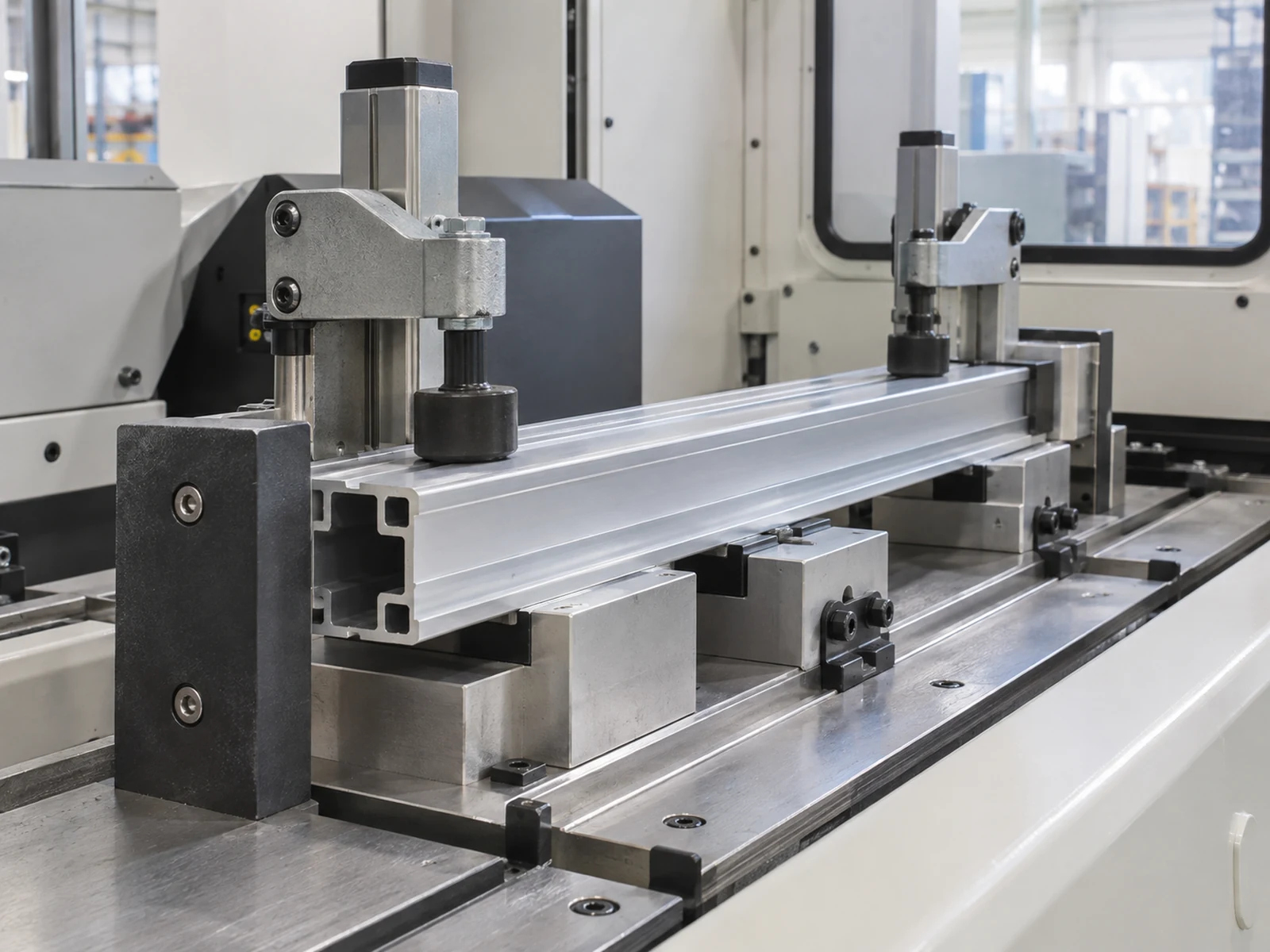
In a trial, identify the surfaces that can be clamped, the supported stock span and the route taken by the separated piece. Check whether a small top support moves, twists or picks up a mark when the clamp releases. Record what happens at the longest and shortest specified blanks and after a profile-family change. If angled ends are required, include both hands of the part and inspect the mating orientation. The trial plan should state the measurement method and who signs off each criterion before anyone treats the result as representative.
Related JiurunCut equipment video
The following video from Jiurun’s own channel is a general illustration of an aluminum saw and stock handling. It does not show this lectern, its material, a chosen machine configuration, a customer trial or verified cut quality.
6. Compare the total production route, not only the saw cycle
A frame shop can underestimate the work after the cut. Count stock handling, setup samples, cutting, edge review, labeling, protection, secondary machining, finishing, packing and assembly checks. Separate profile waste and rework from the purchased connectors, panels, top and accessories. A batch with several lengths may be dominated by changeovers and sorting rather than blade travel. Conversely, a repeat family of identical uprights may justify a more automated feeding discussion if the finished output and collection route are defined.
Use a side-by-side decision sheet: complete system price; prepared member kit price; outsourced blank-cutting price; and in-house route cost including fixture, operator, inspection and scrap. State the same delivered boundary for all four. A supplier offering cut-to-size stock may be a better choice for infrequent special lecterns; a saw is easier to justify when the same approved profile families and member schedule recur. Do not infer a payback period from nominal machine speed without validated batch data.
RFQ checklist for a lectern-frame saw decision
- Approved assembly drawing, profile cross-sections and revision identifiers.
- Member IDs, left/right identity, quantities and physical blank lengths.
- End A and end B geometry, angles and inspection datum for each member.
- Visible anodized or coated faces and permitted fixture contact zones.
- Stock lengths, batch mix, annual volume and expected design changes.
- Connector, top, panel and accessory interfaces kept separate from saw work.
- Downstream drilling, tapping, finishing and assembly owner.
- First-article sample plan, measurement method and acceptance sign-off.
- Packaging and labels that let assemblers find matched members.
- Site utilities and material handling information for a machine proposal.
Frequently asked buyer questions
Can a saw supplier quote from a finished lectern photo?
A photo helps explain the product, but it does not identify the extrusion cross-section, actual cut lengths, hidden connections or post-cut operations. Send the member drawings and a marked assembly interface. Treat any machine suggestion before that review as preliminary.
Do all sloped lectern tops need angled aluminum cuts?
No. The slope may come from a separate top support or bracket while the uprights remain square cut. The approved product drawing must identify the component responsible for the angle. Do not add a miter operation because the finished top looks sloped.
Should panel installation and branding be included in the saw RFQ?
Only if the supplier explicitly offers those operations as a separate scope. The saw quotation should identify the aluminum blanks it produces, while the complete product or assembly quotation covers the additional interfaces and responsibilities.
Send a cut-member package for review
If you manufacture lecterns and expect recurring aluminum blank production, send JiurunCut your profile drawing and member schedule. Include the shortest and longest parts, any angled ends, visible faces, batch pattern and inspection method. Jiurun can review a suitable feeding, support, clamping and cutting direction against that actual job. The final machine configuration and performance commitments belong in the project-specific quotation after engineering review.