
Honeycomb panel edge extrusion cutting begins with an assembly decision, not a saw setting. A panel can receive a solid frame, a channel, a tube frame, another closeout, or no separate aluminum member at all. First ask the panel designer which edge construction is specified. Only then can a cut extrusion blank be defined.
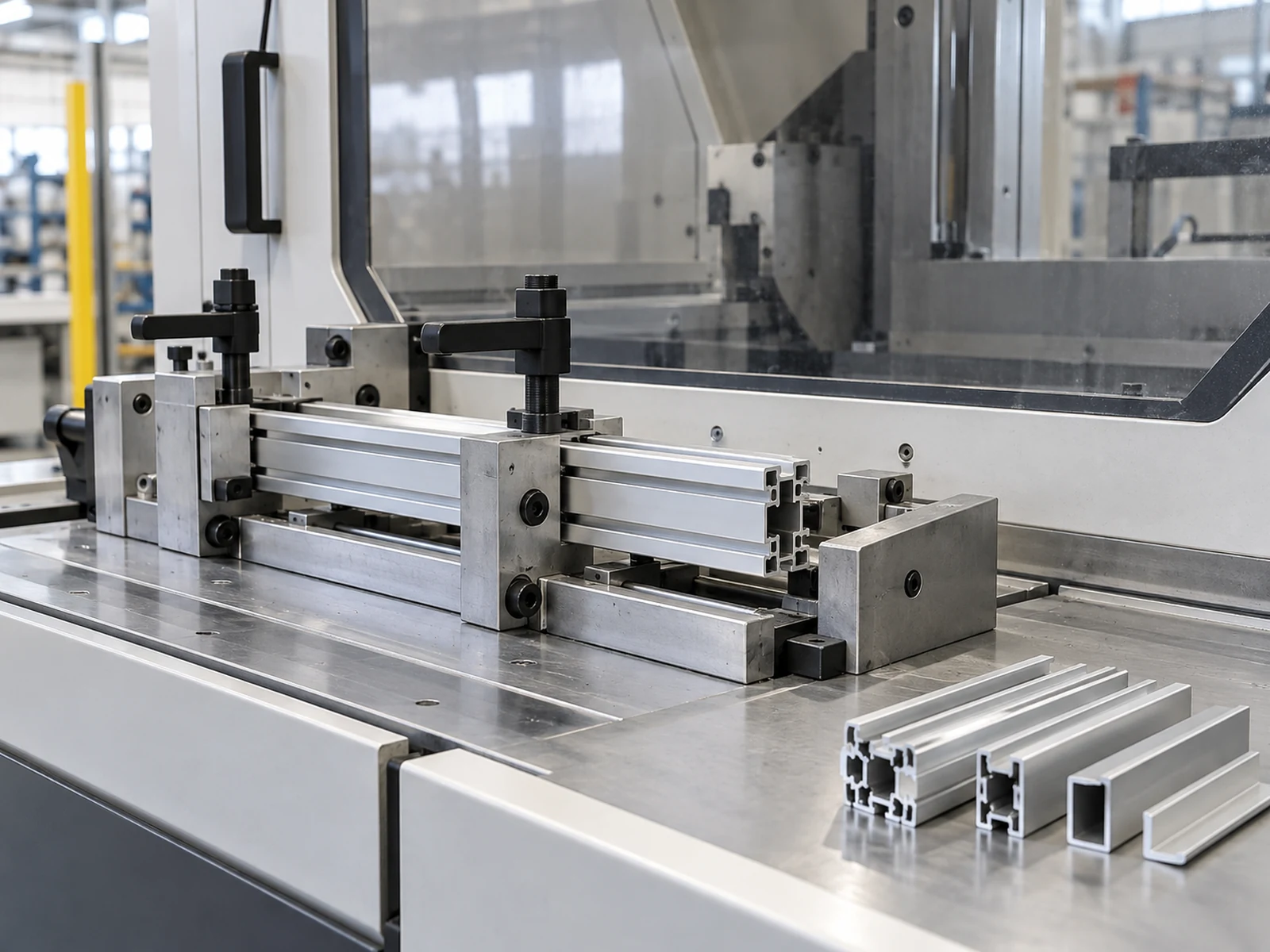
The cover photo shows related aluminum frame members only. It does not depict a honeycomb panel, the specified edge profile, or a validated assembly.
This guide is for buyers and panel fabricators sending a separate aluminum edge member to a saw supplier. It distinguishes the panel’s finished size from the member’s cut length and identifies the information needed for a useful trial. It does not prescribe a universal closeout, bond detail, or acceptance tolerance.
Confirm whether a separate cut member exists
Edge treatment depends on the panel design. Kerr Panel’s closeout examples include a solid aluminum frame, a legs-out channel, an aluminum tube frame, and nonmetal alternatives. Those are different constructions, not interchangeable names for one extrusion. Some are incorporated during panel fabrication; others are added later. The panel maker owns that decision and the associated bonding, sealing, and structural checks.
If the specification calls for a separate extrusion, request its actual cross-section drawing and a sample length. Note which face contacts the panel, where adhesive or other joining features belong, and which side will remain visible. A generic U-channel photograph cannot establish those details.
Keep panel dimensions separate from member cut length
A nominal panel width may describe the finished outside, the core, the skin, or the clear opening. It is not automatically the saw length of an edge member. The drawing should identify the reference face and the cut endpoints for each member. For a corner joint, define whether the length is measured between short points, long points, square ends, or a part-specific datum.
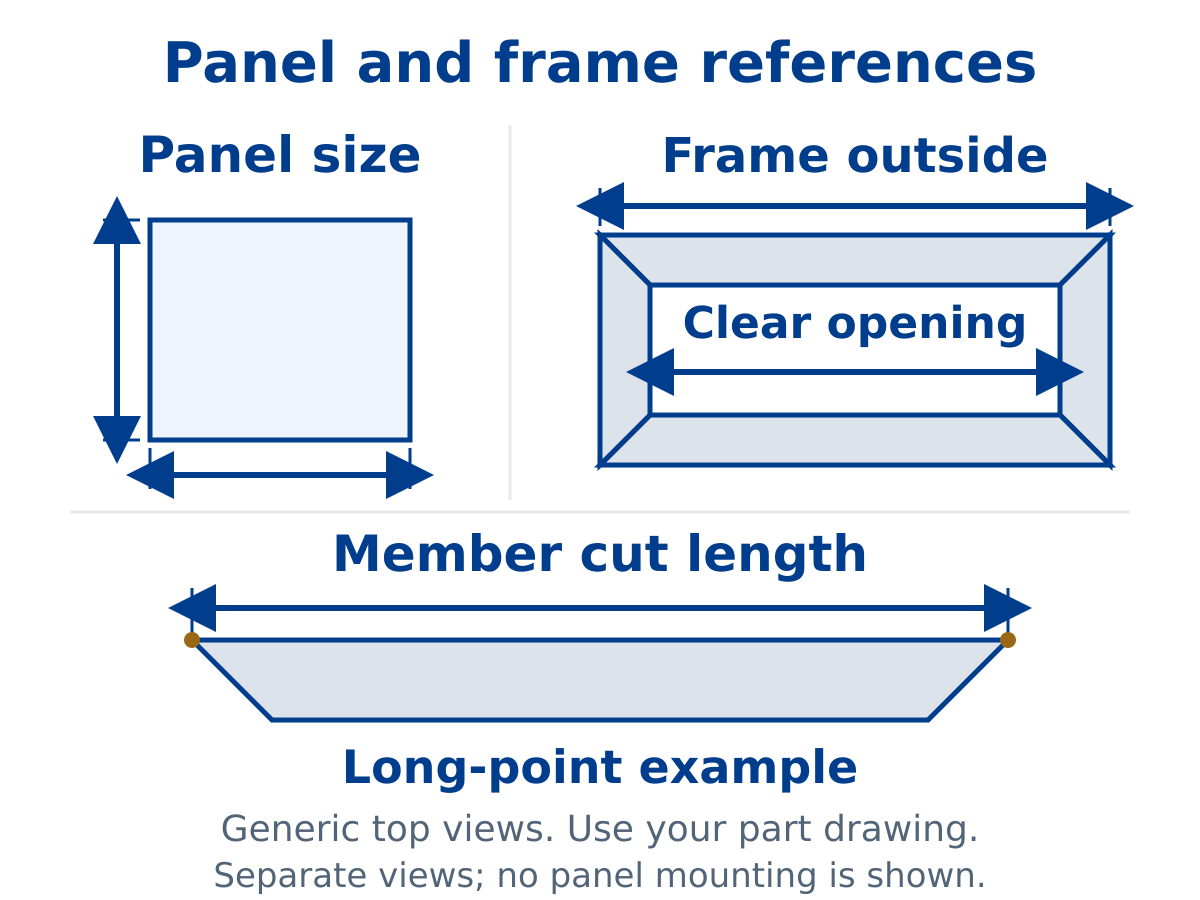
For an RFQ, attach a simple view marking the panel outside, the edge-member section, the chosen datum, and the intended joint. Add a length list per unique member rather than one overall panel dimension. That lets the saw supplier quote the operation actually requested.
Describe how the profile will sit in the saw
Open legs, thin walls, and multiple cavities can present different contact surfaces to a clamp or support. Identify the protected cosmetic face, the permitted clamp zones, the feed orientation, and any wall that must be supported near the blade. State whether the member may be rotated between cuts. These are trial inputs, not claims that one fixture works for every edge design.
The Aluminum Extruders Council’s fabrication overview notes that extrusion cutting is often followed by deburring and that saw choice depends on cut geometry and requirements. For an edge member, specify where burrs are unacceptable: a seating surface, a visible edge, a corner interface, or a later assembly station. Ask for the actual profile and finish to be included in a sample cut.
Honeycomb panel edge extrusion cutting: define the end condition
A square end, miter, coped corner, or later-machined end may require a different sequence. The saw-cut blank may deliberately retain stock for a downstream operation. Mark the final versus interim length and say who will make any holes, notches, or adhesive preparation. If panel fabrication can trim the assembled edge later, document that sequence instead of assuming every member needs a final-length cut first.
A practical first-article check is to compare the cut blank with the member drawing and then let the panel fabricator check the assembled fit. Record orientation, length datum, end angle, visible-face condition, burr location, and any deformation at the clamp. The panel maker must separately validate the actual bond, sealing, and finished-panel requirements. A clean saw cut alone does not prove them.
What to send for a meaningful quotation
- Panel assembly drawing showing the selected edge construction and who fabricates each stage.
- Actual extrusion cross-section, alloy and temper if specified, finish, and a physical sample.
- Member-by-member cut list with datum, length, end form, quantity, and any later trim allowance.
- Permitted clamp faces, protected cosmetic faces, and burr or deformation limits that matter to assembly.
- One representative corner or joint detail, plus the acceptance method and responsible party.
For the larger panel conversation, see our aluminum honeycomb panel RFQ guide. This article addresses the separate extrusion cutting operation after the panel’s edge design has been chosen.
Related aluminum-profile cutting view
The Jiurun video below shows a related aluminum-profile saw in operation. It is an equipment view only; it does not show this honeycomb-panel edge member, an approved configuration, or a performance test for your panel.
Send Jiurun your edge-member drawing and cut list. Include a sample extrusion and the panel maker’s end and seating requirements so we can discuss a relevant saw-cut trial. Contact our team with the actual part information.