
Aluminum gangway extrusion cutting should be quoted against a released list of straight members, not the overall length of a finished walkway. A marina gangway can include side beams, cross-members, decking, guardrails, transition plates, hinges, rollers, connections and site-specific supports. Some of those parts are sawn extrusions; others need machining, forming, welding, assembly or engineering. The buyer’s first decision is therefore where the saw-cut blank ends and who accepts the completed access structure.
Real manufacturers illustrate different routes. Atlantic Aluminum describes welded frames with optional handrails, kick plates, decking and custom hinges. MAADI Group describes engineered, weld-free gangway kits with separate transition, guardrail, deck and roller options. Hallsten’s gangway specification calls for shop drawings and separates extrusions, decking, rails, wheels, welding and site work. These are examples of complete manufacturers’ systems; none is a drawing, trial or capacity claim for Jiurun equipment.
1. Choose the supply route before writing a saw RFQ
There are at least three sensible buying routes. A waterfront owner may order a fully engineered, installed gangway from a specialist. A fabricator may order an approved component kit and assemble it. An OEM may buy or cut released extrusion blanks and retain the downstream work. A cutting machine belongs in the third route only when the OEM actually controls stock, member drawings, inspection and production volume. Compare the landed cost and responsibility of the routes before asking what saw is fastest.
For a blank-only RFQ, list the handoff explicitly: material received as stock, sawn to the approved member length, identified and packaged for the next station. Do not bundle an accessibility, structural load, corrosion, welding or site-fit promise into that scope. The qualified designer and gangway manufacturer remain responsible for those decisions.
2. Separate side members, cross-members and deck pieces
Ask for a bill of members with part ID, drawing revision, quantity per gangway and delivered condition. Side stringers can be long structural profiles, cross-members may have different sections and joints, and deck slats can be another material and geometry altogether. Guardrail stock, toe plates and transition plates should each have their own route. A page showing an aluminum gangway does not prove every visible member is made from the same alloy or cut in the same machine setup.
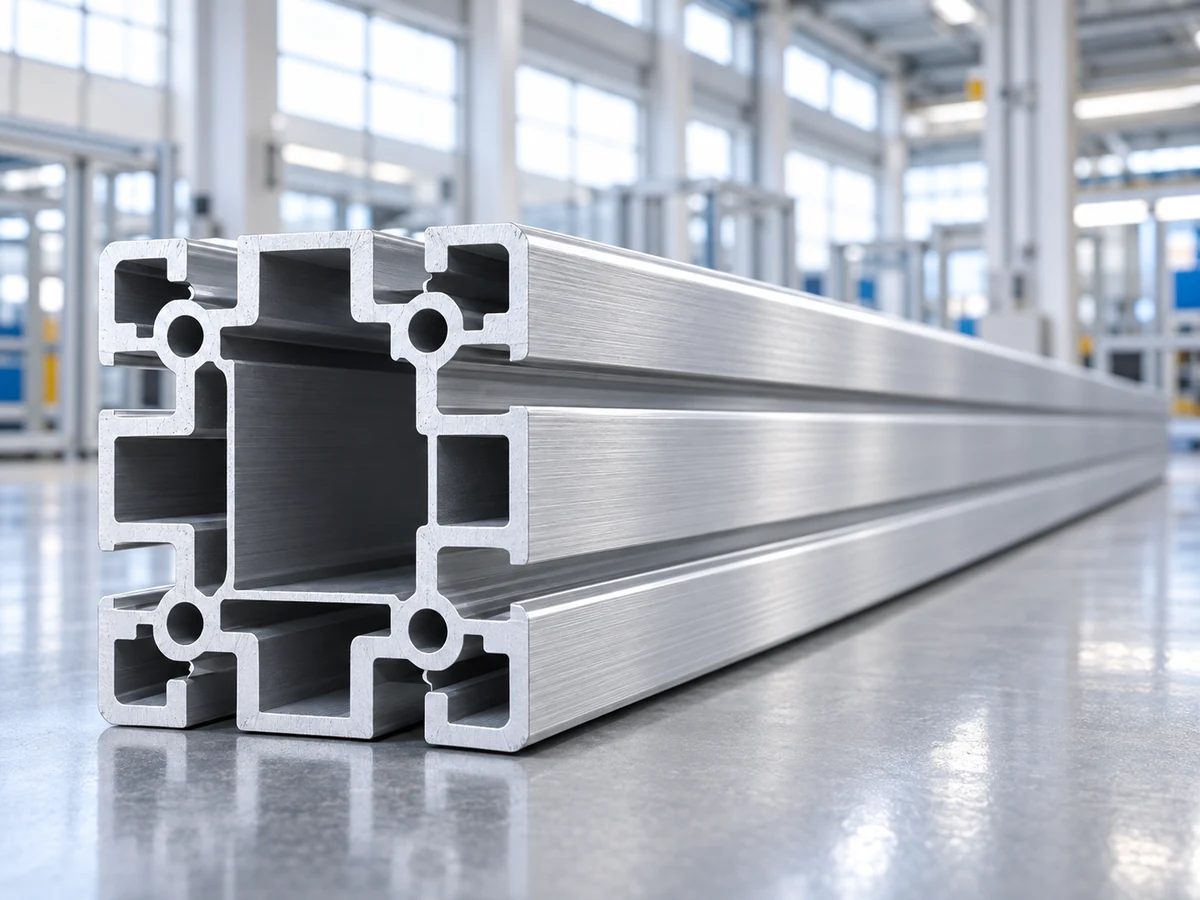
The released drawing should identify each cross-section, alloy and temper, stock specification, nominal stock length, wall or flange features, visible surfaces and finish sequence. If the material arrives with a protective film or anodized finish, specify how cut faces and contact marks will be accepted. If welding or finishing follows the saw, the blank acceptance standard still needs to be written separately from the finished appearance standard. Do not copy a manufacturer’s section size or alloy into another project by assumption.
3. Put a datum and end condition on each member
A length alone is ambiguous when an end is angled or when a fitting changes the finished assembly dimension. Give end A and end B distinct callouts: square or planar angled cut, angle reference, long-point or short-point dimension, orientation and permitted burr. Show which face is the measurement datum. If a handed pair is required, identify left and right parts rather than assuming a saw operator will infer the mirror image from an assembly drawing.
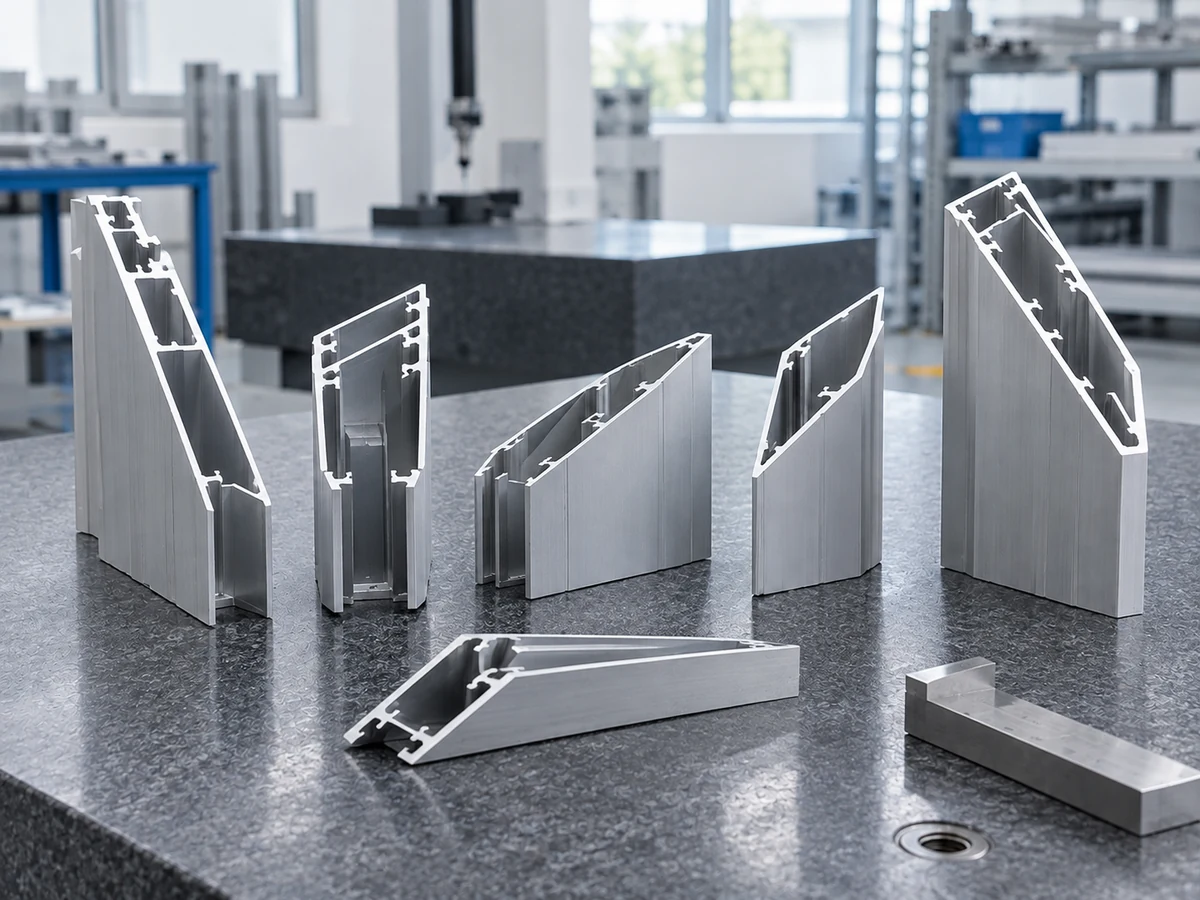
Do not ask a circular saw to create features outside its operation. Bolt holes, notches, slots, contour coping and transition-plate fabrication belong in their own process scope unless the proposed equipment and supplier have actually been qualified to perform them. Where a joint requires a flat angled end, bring the approved joint detail and one representative part to the sample review. The angle and length tolerance are design inputs, not values to borrow from another project or from a general machine brochure.
4. Test support and clamping with the released stock
Long gangway members can be awkward to feed, carry and inspect. Provide the actual bar length, section weight, straightness condition, maximum released part length and available floor space. The stock must be supported without rocking or twisting as it enters the saw, and the part must be supported as the cut completes. A machine description alone cannot establish the required feed path or whether the buyer’s stock fits it.
Clamping should be evaluated against the actual section. An open channel, hollow profile or thin flange can move or mark differently under contact. Identify allowable clamp faces and any protective layer, then trial the most demanding section and length rather than only a convenient short sample. Ask the equipment supplier to explain how cut-off handling and remnant length will be measured for the approved batch. Do not promise a yield percentage before stock lengths, kerf, trims and discard rules are known.

5. Approve a first-off part and the downstream fit check
The first-off plan should name the stock batch, drawing revision, machine setup and member ID. Measure the specified length and angle from the correct datum, inspect the cut face and burr, and check any appearance or deformation limit. Record the result before releasing the rest of the batch. If the extrusion supplier, die, finish, joint detail or drawing revision changes, decide whether another first-off is needed.
A fabricator may also need a dry fit of a pair of side members and cross-members at the next station. That downstream fit is useful feedback, but it does not replace structural calculations, weld qualification, accessibility review or on-site installation checks. Hallsten’s specification, for example, treats shop drawings, fabrication and site conditions as separate responsibilities. Keep each acceptance record with its owner.
6. Quote complete kits and protect identification
A batch price should state quantities of every unique part, prototype versus production releases, approved stock length, trim allowance, remnant ownership, inspection frequency and packaging unit. If one gangway needs two matched side beams and many repeated cross-members, quote the complete kit count and spare policy rather than a vague total of cuts. Mark member ID, handedness and revision so pieces do not get mixed between gangway lengths or waterfront projects.
Long members need a transport plan. Agree how parts will be bundled, supported and protected from edge damage, and whether the buyer wants cut faces deburred before packing. If the finish is visible, specify the acceptable contact marks. A post-cut packaging problem can erase the value of a good first-off sample. Clarify whether decking, hardware, wheels, plates and rail fittings are bought parts, fabricated elsewhere or included in the same delivery; they should not silently enter a saw-only quotation.
7. Compare machine routes against a representative mix
For an equipment decision, send the supplier the longest side member, the smallest or most delicate section, any angled end, expected lot sizes and changeover frequency. Ask which operations the proposed route covers, what tooling and support are included, and which samples must be tried on the buyer’s actual extrusion. A single attractive sample is not enough if the production mix contains different sections and datums. Compare manual loading, automatic feeding and angle-cutting options only against that real mix and available space.
Keep the commercial comparison honest: machine purchase and operation, fixture and blade changes, scrap, inspection, handling and downstream rework all affect the route. A complete engineered gangway or approved kit may still be the correct purchase when the buyer does not own the design and fabrication stages. Sawing is a component process, not a substitute for design approval.
Video: a general extrusion cutting equipment example
The following video comes from Jiurun Machinery’s own channel. It shows an aluminum cutting equipment example. It does not show a gangway member, the stock or fixture described here, a marine customer trial, an approved machine configuration or achieved structural performance.
Aluminum gangway extrusion cutting RFQ checklist
- Identify the responsible designer, approved drawings and whether the purchase is a complete gangway, kit or loose blank.
- List each side member, cross-member, rail and deck piece with its own ID, revision, quantity and delivered condition.
- Give each approved extrusion section, alloy, temper, stock length, finish and allowable clamp faces.
- Define end A and end B, length datum, planar angle, handedness, tolerances and burr or appearance limits.
- Separate saw cuts from holes, slots, welding, decking, wheels, plates, installation and structural acceptance.
- Agree a first-off and any downstream dry fit, plus batch labels, packaging and change control.
- Supply representative stock and volume for an equipment trial before deciding a machine route.
To discuss a cutting route, compare the approved member list with JiurunCut’s aluminum cutting machine range. Send the current cross-sections, drawings and batch quantities through the contact page. A responsible proposal starts with the actual stock and handoff requirements, then an agreed sample test where needed; the illustrations and video above are not project evidence.