
Aluminum frame brackets need a complete order description. Identify the exact bracket for the selected profile system, its actual material and finish, and the hardware included in the supplied item. A photograph of a similar corner is not a purchase specification.
The phrase can describe a bracket used on an aluminum frame without identifying the bracket’s own material. It can also leave unclear whether the price covers one loose bracket, a complete fastening set or a package of several items.
A useful order line has three anchors
- The bracket’s full supplier reference.
- The frame drawing and profile identity it belongs to.
- The exact supplied contents and quantity unit.
On this page

1. Identify the aluminum frame brackets by full reference
Start with the frame drawing and its current revision. Locate each bracket on the assembly view and connect it to the supplier’s exact part reference. If the drawing uses several bracket types, keep separate lines for them.
Use the component drawing to identify the bracket’s shape and connection arrangement. Preserve the profile manufacturer, series and section references that the proposed joint uses. A broad “corner bracket” label leaves too much for the receiving team to infer.
As a primary catalog example, Bosch Rexroth’s Aluminum Framing 9.0 catalog separates bracket variants and sets by their listed references and slot combinations. This illustrates why the exact row matters; it does not approve a bracket for a different supplier’s extrusion.
Keep the selected row and dimensional drawing with the order file. If the supplier suggests another part, ask it to identify the differences against the specified joint before the substitution is accepted.
Our T-slot nut compatibility guide addresses the nut and slot interface. The bracket order still needs the whole specified connection, including the parts and arrangement around that interface.
2. Read the bracket’s own material and finish
Keep the frame-member material and bracket material in separate fields. The cited catalog lists diecast aluminum for some bracket entries and diecast zinc for another. A shared aluminum-frame application does not make every connector the same material.
Copy the supplied component’s actual material description from its documentation. Ask for clarification when a quotation uses only a broad phrase such as “metal bracket” or “aluminum-system accessory.”
Retain the specified finish and appearance requirements. The Rexroth catalog also distinguishes its painted designLINE versions and identifies materials for fastening items and covers. Preserve the actual offered variant rather than choosing it from a similar color in a photograph.
For a frame with exposed corners, identify the visible faces on the assembly drawing. State which surfaces require an agreed appearance and which records define that requirement. Keep decorative finish expectations separate from the connection’s technical assessment.
If the frame has a particular operating environment, describe it in the application brief. Ask the responsible system supplier to review the complete material and finish combination. Do not assign corrosion performance from the bracket’s color or from the aluminum profile alone.
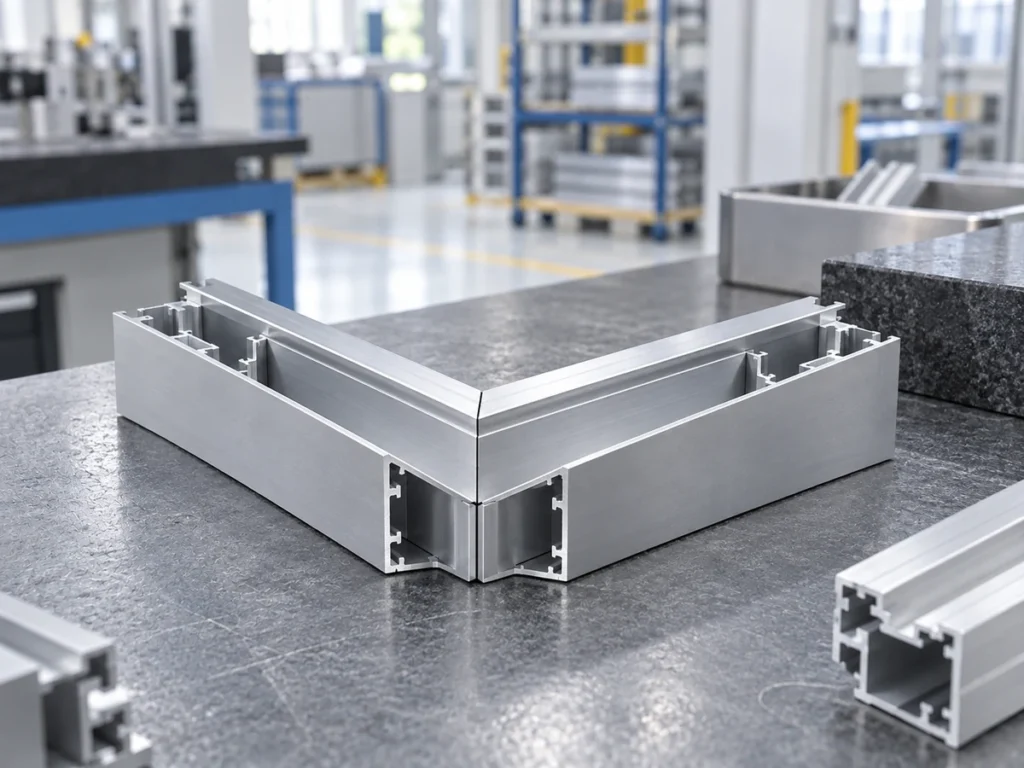
3. Check whether the quotation covers a bracket or a set
Read the delivery scope alongside the part number. In the Rexroth example, bracket-only and set entries are listed separately, and the sets identify included fastening material. Keep that distinction when comparing prices or receiving deliveries.
Ask the supplier to itemize the supplied components for the actual selected reference. Record which fasteners, intermediate pieces, covers or other specified items are included and which need separate order lines.
Keep the quantity unit explicit. A request for “24 brackets” and a quotation for “24 sets” can mean different delivered contents even when the intended corner count is the same.
Do not count a package as one installed connection unless the documented contents support that meaning. Preserve the supplier’s pack quantity and the project’s required installed quantity as separate entries.
Use the approved assembly list to calculate the required hardware. Keep optional spares apart from the planned frame demand, and identify any bracket variants that cannot be interchanged.
At receipt, reconcile the delivered references and contents against the confirmed order. A correct bracket body does not complete a supply package when another agreed item is missing.
4. Connect the joint drawing to the finished profile members
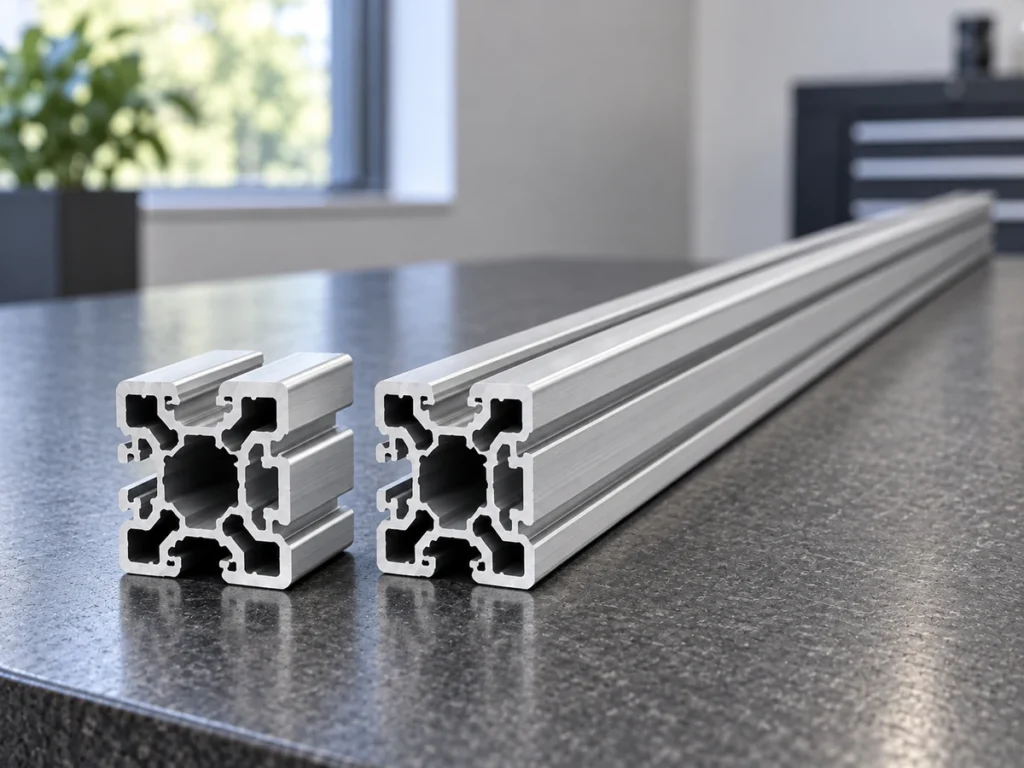
The cutting team needs the actual profile identity, finished member length and defined end requirements. The assembler needs the connection arrangement. Link the two records so a change in the joint does not disappear inside an older cut list.
Show which profile faces and ends belong at each connection. Where the drawing specifies handed or differently oriented members, preserve those identities through sorting and packing.
Identify any connector preparation that occurs after sawing. Ask the design and manufacturing teams to distinguish a cut blank from a finished member ready for its specified joint.
The cited catalog’s bracket section includes positioning features and relevant accessories. Their existence supports checking the selected component documents; it does not prescribe a machining or assembly step for another system.
Use the actual supplier’s instructions to establish the assembly method. This article provides purchasing and drawing checks, with no universal bolt length, tightening value or instruction to modify bracket features.
For the complete delivery plan, the aluminum frame-kit guide explains how to keep member identities and set contents together. A bracket line is one part of that larger handover.
5. Close the application review for the actual joint
Keep the component selection connected to the frame’s intended function. Ask the responsible designer or system supplier to confirm the specified joint against the actual arrangement and loading requirements.
If a quotation includes a capacity statement, request its defined direction, configuration and supporting reference. A number for one component or arrangement should retain its original scope.
Identify the approved connection and applicable documentation before accepting a substitution. Price and availability are useful commercial information, while application acceptance needs its own decision.
Record the reviewed drawing revision and supplied component references in the handover. This lets procurement, manufacturing and assembly use the same agreed connection instead of three similar-looking versions.
An invented clarification of an incomplete order
Imagine a fictional order line that says “24 aluminum frame corner brackets.” The supplier replies with a painted bracket-only item. The project’s assembly list requires a specific unpainted set with identified fastening items.
Before accepting the quotation, ask the supplier to match the full specified reference and list its supplied contents. Resolve the finish and package differences in the order description.
| Unclear entry | Needed definition |
|---|---|
| “Aluminum frame bracket” | Full component reference, actual material and selected finish. |
| “24 brackets” | Bracket-only or complete set, included items and quantity unit. |
This example identifies information gaps. It supplies no actual bracket recommendation, capacity result or customer case.
Questions buyers ask
Does an aluminum frame require an aluminum bracket?
Use the approved system and component specification. The frame description alone does not identify the connector’s material.
Does the same outside bracket size prove compatibility?
Check the exact profile, bracket and fastening arrangement in their component documents.
Does cutting the members complete the connection?
Keep the specified downstream preparation, hardware and assembly work visible in the delivery scope.
Explain the frame-member job in your cutting inquiry
Send JiurunCut the profile drawings, member list and intended connection layout. Keep aluminum frame brackets and downstream preparation identified so the cutting proposal addresses the actual members.