
Aluminum extrusion straightening belongs to the material-manufacturing route, while cutting turns accepted stock into specified part lengths. Keep those two scopes clear when ordering profiles or evaluating a saw: accurate cutting does not independently approve the shape of the incoming material.
For stretch straightening, organize the purchasing review around three handovers: the extrusion plant’s process, the delivered stock and the finished cut parts. Each stage needs its own identity and acceptance requirements.
On this page
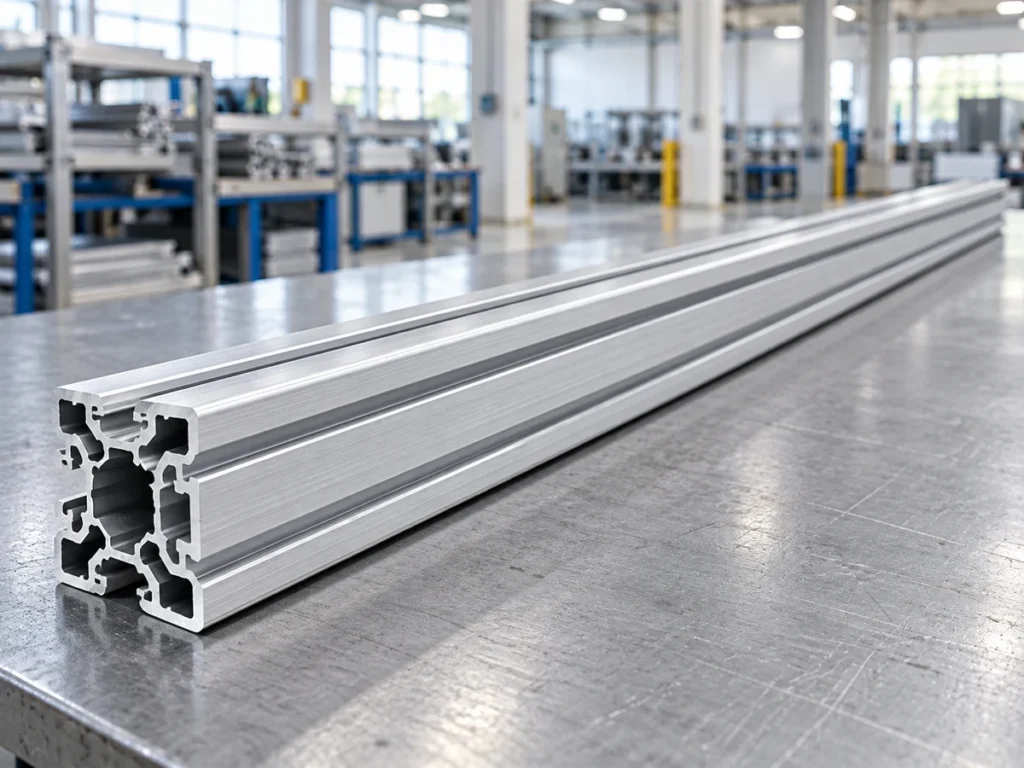
Aluminum extrusion straightening in the manufacturing route
Hydro’s extrusion-process overview places a stretcher after cooling. Its described route then proceeds to sawing, aging and subsequent finishing or fabrication.
Use that sequence to ask where the delivered item enters your own manufacturing plan. Are you buying extrusion stock after the supplier’s complete route, or a component that still has an agreed later operation? State the answer in the order.
For a machinery example, GRANCO CLARK’s stretcher overview describes stretching as a post-quenching operation. It notes that insufficient and excessive stretching can create different product-quality problems.
This establishes why the extrusion specialist must control the process. It does not provide a universal stretch amount for a profile, nor instructions for correcting delivered stock in a cutting workshop.
Handover 1: let the extrusion plant define its process
Give the supplier the actual section drawing, material requirement and intended delivery form. Include thin walls, open features and other section details needed for its manufacturing assessment. Keep the drawing revision visible in the quotation.
Ask the extrusion supplier to describe the relevant route and process responsibilities. Where stretch straightening is included, have that specialist confirm how it controls the operation for the offered section and supplied material condition.
GRANCO CLARK identifies different jaw designs and recipe controls in its equipment description. Those examples support a question about the plant’s actual configuration; they do not prove that any specific equipment or setting is suitable for your profile.
Presezzi’s extrusion-table overview likewise lists a stretcher as a separate unit from the downstream finishing saw. The distinction helps a buyer identify the operation being quoted.
Keep specialist decisions with the plant’s responsible process team. This guide specifies no stretching force, percentage or recipe. Ask for confirmation of the delivered requirements rather than instructing an operator to adjust the process from a general article.
Handover 2: define the stock that is accepted for delivery
Write the supplied-stock requirements separately from the eventual cut-part drawing. State the section identity, alloy and complete supplied condition, usable stock length and applicable dimensional requirements.
Ask the supplier to identify any ends or areas excluded from the usable length. Confirm the actual delivered scope rather than assuming that every part of a production length is available for a finished component.
Where the plant removes heads or tails, ask how its delivery record reflects the resulting usable stock. Keep the removal scope separate from the customer’s subsequent cutting allowance. Avoid counting the same end allowance twice.
Do not infer a stress-relieved temper solely from the fact that a stretcher appears in the route. Use the complete specified designation and supporting material records. Our 6061-T6, T651 and T6511 buying guide explains why the full supplied condition matters.
Agree how the delivered geometry will be assessed. Identify the length, reference surfaces and condition used for the inspection. Keep the agreed method connected to the supplied-stock requirement, not an informal observation from a photograph.
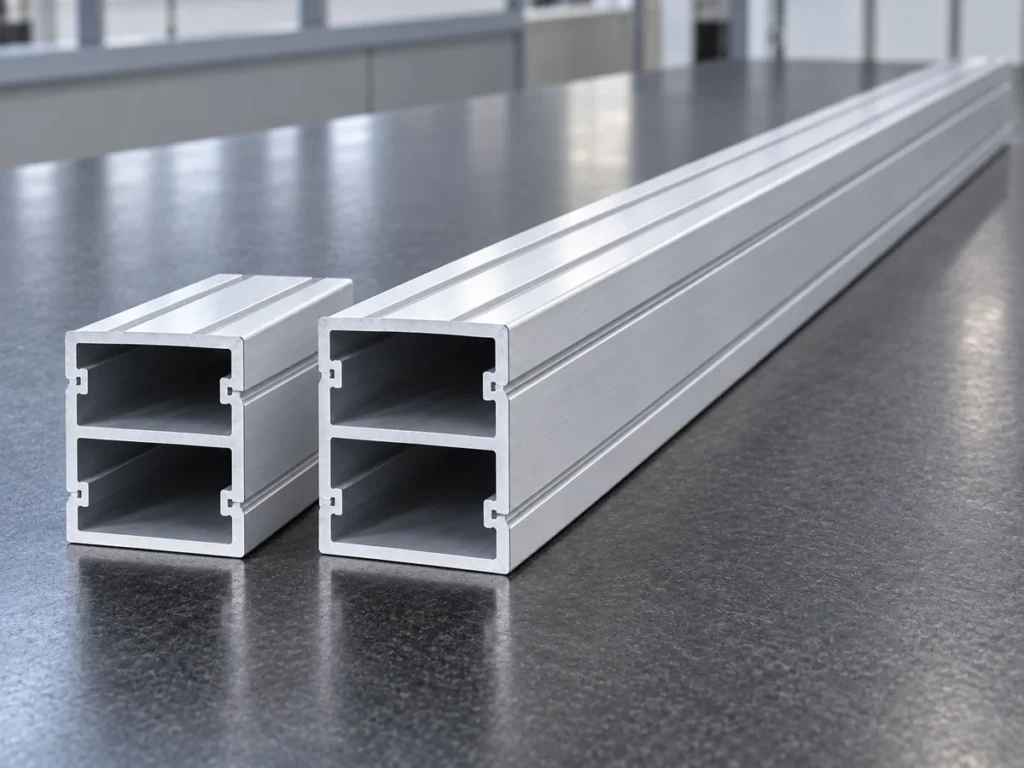
Handover 3: release finished cut parts against their own drawing
Once the stock is accepted for the agreed scope, issue the controlled cut list. Identify finished length, reference face, angle and quantity for each member. Keep the cut-part definition traceable to the material batch.
Review the actual incoming stock during a representative cutting trial. Record the material identity and condition, then evaluate the finished parts against the agreed drawing requirements. Keep those results separate from the extrusion plant’s process record.
Our extrusion-straightness review guide covers measurement conditions and material limits before sawing. Use it for the inspection discussion; it does not replace the plant’s process control.
If a supplied member or cut part does not meet its requirement, identify the affected delivery stage before deciding on correction. An issue in long-stock geometry and an error in finished cut length require different investigations.
| Handover | Acceptance record |
|---|---|
| Plant process | Offered section, material condition and responsible manufacturing review. |
| Delivered stock | Usable length, agreed geometry and batch-linked inspection. |
| Finished parts | Controlled cut list, reference faces and actual part inspection. |
This is an editorial purchasing checklist. It includes no stretcher settings, universal geometry limits or actual inspection results.
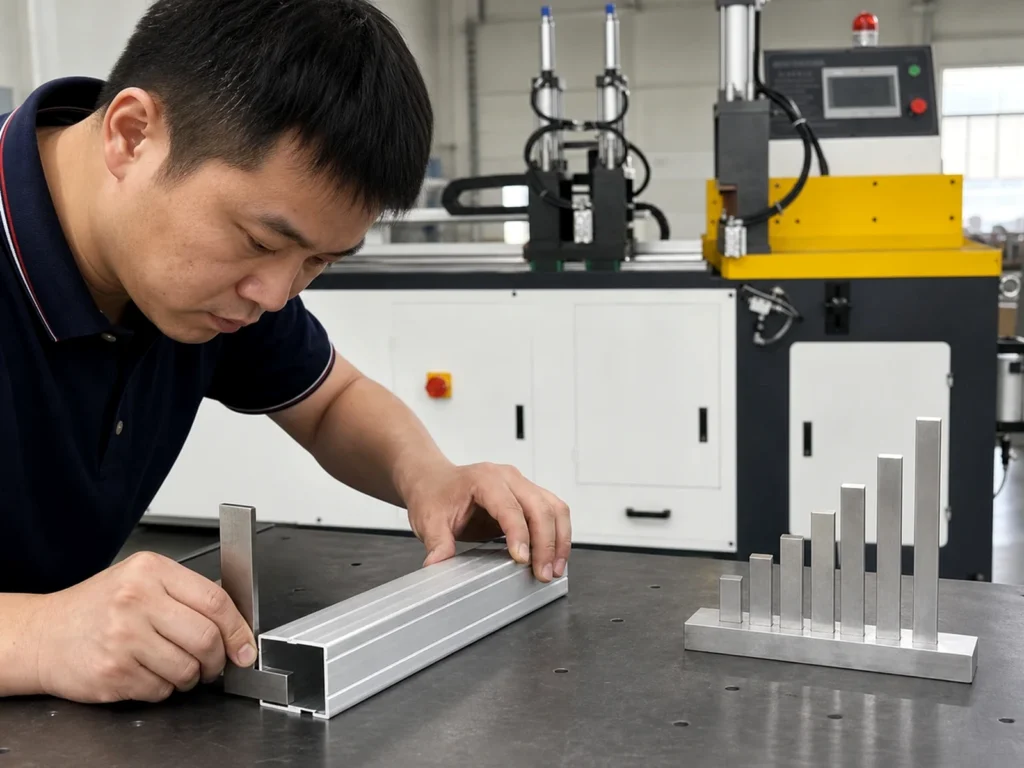
Handle a proposed correction or material change
Have the responsible material supplier and engineering team review any proposed correction. Record the operation, delivery-stage effect and evidence required to approve the result. Do not assume a manual workshop adjustment is equivalent to the original plant route.
If the supplier proposes a different material condition or stock arrangement, return that change for approval before cutting the batch. Keep the revised requirement and affected part identities together so the production team uses one version.
Send JiurunCut the profile drawing and accepted stock condition to discuss the cutting stage. Include the relevant aluminum extrusion straightening and usable-length information from the extrusion supplier.
Questions buyers ask
Can a saw replace an extrusion stretcher?
They have different roles. Confirm the incoming-stock geometry with the extrusion supplier and the cutting requirements with the saw supplier.
Does a stretching operation prove the complete temper?
Use the specified material designation and supporting records. Do not infer the delivered condition from a process name.
Can the whole production length be assumed usable?
Ask the supplier to define usable delivered length and any excluded ends in the order.
What makes an aluminum extrusion straightening requirement reviewable?
Connect the actual section and material to the plant review, delivered-stock acceptance and finished-part requirements.