
Aluminum coupling hub blank cutting is a purchasing decision about a defined metal workpiece, not a promise that a saw can supply a finished coupling. The buyer may retain the first cutoff from approved aluminum stock, purchase cut blanks, purchase machined hubs, or buy an assembled coupling. Each route transfers different work, inspection and product responsibility. A useful saw RFQ starts by naming the exact stage that leaves the cutting cell and the stage the next operation accepts.
The distinction is visible in real product catalogs. Lovejoy describes its AL jaw coupling as two aluminum hubs plus an elastomer spider. Ruland describes an individual aluminum jaw-coupling hub with specified bore and clamp style. These examples establish that a hub and a complete coupling are different buying units. They do not tell us that either manufacturer starts with a saw-cut solid bar, uses a Jiurun machine, or accepts a particular blank allowance. Only the buyer’s released process route can establish those facts.
1. Name the accepted unit before comparing prices
Write one line for each bid: “identified as-cut aluminum blank,” “machined aluminum hub to revision,” or “complete coupling including the specified second hub and insert.” Do not compare a low price per saw blank with a price for a finished bored, keyed or clamped hub. A finished hub may need turning, milling, drilling, deburring, surface treatment, gauging and traceability that the saw quotation does not include. The actual drawing and manufacturing plan decide which operations apply; the list is a boundary check, not a claim that every hub needs them.
For a two-hub coupling, count accepted sets as well as individual pieces. A batch with plenty of one hub size and too few of the mating hub is not a complete set. Record part number, drawing revision, hand or bore variant if applicable, required quantity per assembly, and the receiving operation. If the plant buys the entire coupling, ask the supplier which components, fit and inspection records are included. This prevents an attractive cut-piece cycle time from being presented as coupling output.
2. Prove which incoming stock is actually released
A catalog picture of a cylindrical hub does not identify its original stock. Some approved routes may start from solid bar; others may specify an extrusion, casting, forging, near-net blank or a bought semi-finished component. The saw proposal must use the route that the buyer has released for that particular hub, not a convenient substitute. Ask for the material specification, temper or condition where applicable, stock diameter and tolerance, straight length, surface state, supply lot identity, and any restrictions on changing the stock source.
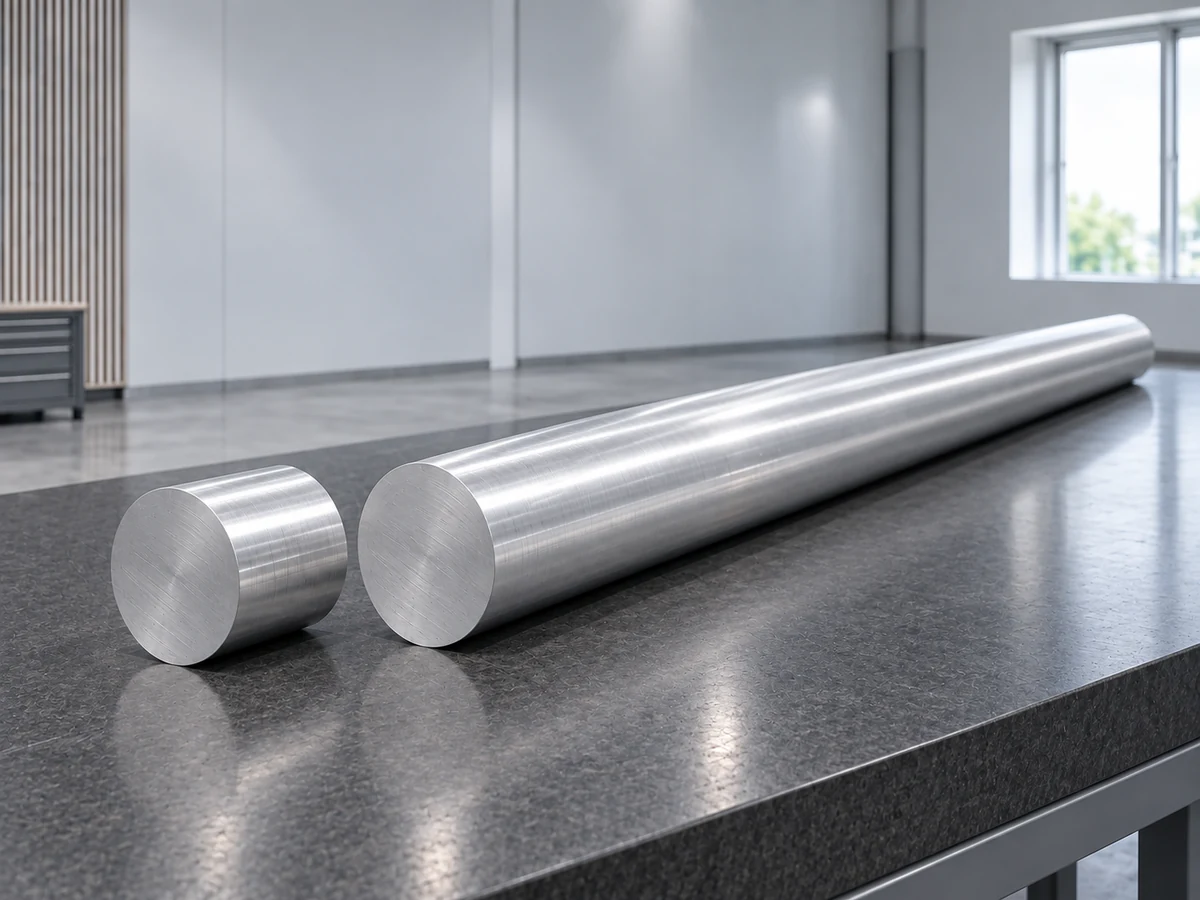
If solid bar is the approved input, the buyer should supply actual sample stock and a drawing of the required saw blank. Record the face used for cut-length measurement and the machining allowance that the downstream owner requires. The allowance is a drawing-and-process decision; do not infer it from the finished hub’s overall length or from a generic saw brochure. A short example blank cut from a different alloy or diameter cannot establish the chosen route.
3. Separate saw geometry from finished hub geometry
On the RFQ drawing, distinguish the saw blank’s cut-end location and length from the finished hub’s bore, jaw, keyway, clamp and assembly dimensions. A saw may produce a straight cutoff for a released route. It does not create the finished bore or prove that two hubs and an insert will meet the coupling maker’s requirements. Mark the blank reference faces, maximum stock diameter, minimum useful blank length, end-condition expectations and any downstream stock-removal allowance.
Include remnants and short pieces in the feasibility discussion. A stop or feed mechanism that handles the normal bar may still require a different outfeed, catch or manual procedure for the last piece. If several hub variants share stock, show the length mix and changeover pattern. Do not use the largest catalog hub as the sole trial piece if a small, short blank is the actual handling limit. Where a casting or near-net input is approved instead of bar, the buyer may have no retained bar-cutting work at all.
4. Trial the actual stock and a recorded setup
Have the supplier explain how the chosen stock is supported, located and clamped, what blade and feed arrangement is proposed, where the cut piece leaves the cell, and which setup changes between approved diameters. Request a trial matrix with the largest and smallest released stock, shortest and longest required blanks, representative lot condition, and any surface that must be protected. Record the fixture and blade used for each result. A machine video can show general motion; it cannot validate the buyer’s real bar, blank, end face or production rate.
The next image shows a hollow round tube in a saw fixture. That is deliberately a different stock form from a solid-bar candidate: its wall and clamp contact are visible. It illustrates why the buyer must disclose the true cross-section and trial it. The pictured fixture is not a proven setup for a solid coupling-hub blank, and its apparent diameter should not be treated as an RFQ specification.

5. Accept first-off blanks at the right boundary
Agree the first-off record with the downstream machinist before the saw trial. It should identify material lot and stock form, part and revision, selected setup, cut-length datum, measured length and end condition, visible damage, sample sequence and the receiving owner’s decision. Ask for several pieces across the sequence when repeatability matters. Separate incoming stock defects from saw marks and from damage after outfeed. If the end face is to be machined later, state the blank acceptance criterion rather than applying a finished-face requirement prematurely.
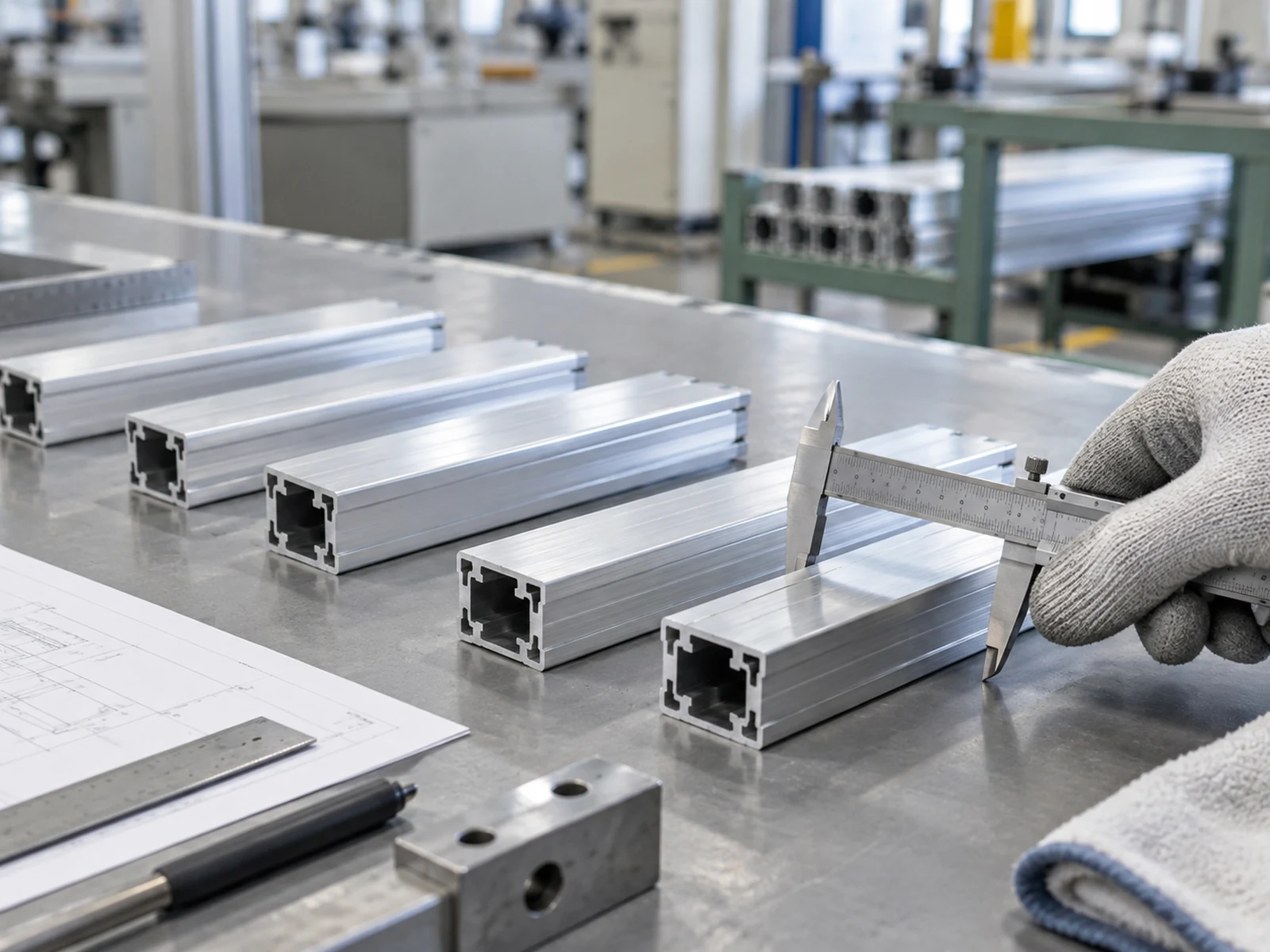
Do not call a visually clean cut an approved hub. The finished component’s bore fit, key or clamp feature, concentricity, assembly fit, torque capacity and service behavior require the product owner’s own route and evidence. The saw supplier should report only what was measured on the released cut blank. The next photo is a generic extrusion measurement scene, useful for illustrating a documented receiving check; it is not evidence of this article’s hub dimensions.
6. Compare the whole route, then write the saw RFQ
For retained cutting, total the approved stock purchase, end loss, setup, blade and fixture cost, loading, inspection, segregation, scrap, maintenance and downstream machining needed to reach an accepted hub. For bought blanks, add supplier qualification, delivered identity, incoming inspection, shortages and any remaining machining. For finished hubs or complete couplings, define exactly which bores, clamp parts, inserts, certificates, packaging and acceptance records are included. Compare cost and lead time per accepted hub or coupling set over the same demand period; do not compare dissimilar units.
Send each machine bidder the released blank drawing, true input-stock drawing and sample, diameter and length range, part-family volumes, variant changeovers, required protected surfaces, first-off acceptance criteria, inspection method and who owns the downstream operations. Ask for the complete cell scope: infeed, support, fixture, blade, outfeed, short-piece procedure, utilities, operator tasks, training, spares and trial evidence. An automatic aluminum cutting machine page can introduce equipment categories, while the sample-cutting trial checklist helps structure the actual stock test. Neither replaces the buyer’s released hub drawing.
7. Use the equipment video as context, not qualification
The Jiurun Machinery video below shows a separate aluminum-cutting machine scene. It helps a buyer understand general equipment motion and material handling. It does not show the solid bar, hub blank, fixture, tolerance, customer order or accepted trial for this article. Ask for a witnessed run on the released stock before assigning the proposed cell a production figure.
Aluminum coupling hub blank cutting: the purchase decision
Retain saw cutting only if the plant owns a released cut-blank specification, an approved input-stock route and enough receiving control to use the output. Otherwise, buying identified blanks, machined hubs or complete couplings may be the cleaner boundary. Send JiurunCut the stock and blank documents if you want to discuss a representative aluminum saw trial. The coupling designer and manufacturer remain responsible for finished-hub geometry, assembly and service validation.