
Airport luggage trolley frame cutting starts with a choice about what the factory will actually make. A terminal operator can buy a complete passenger trolley, an approved cart builder can buy prepared frame members, or that builder can cut released aluminum stock in house. These purchases are not interchangeable. A saw delivers a defined blank; it does not deliver the brake, basket, wheels, nesting behavior, assembled strength or accepted finished trolley.
Public product descriptions illustrate the boundary without defining anyone else’s drawing. Handle-iT’s Trafficker trolley describes a tubular aluminum frame, a stainless basket and a reverse-brake system. Innovi’s airport trolley family lists aluminum frames with different handle forms, including a covered aluminum handle and flat aluminum handles, alongside separate baskets, panels, castors and brake parts. Those are different manufacturers’ finished products, not Jiurun projects or compatible part schedules. Their overall sizes and capacity claims cannot be turned into saw lengths or a machine performance guarantee.
Decide the accepted supply stage first
If the buyer wants deployed terminal trolleys, request a finished-cart offer with the applicable model, accessories, spares and acceptance documents. If the buyer owns a released cart design, it can decide whether to buy prepared frame members or retain only stock cutting. A prepared member may include bends, holes, weld preparation, coating and identification that a straight stock cut does not. Compare quotes at the same receiving stage. The price of a cut blank cannot be compared directly with a tested, assembled trolley.
This guide concerns passenger luggage trolleys used landside. It does not specify a towed airside baggage cart or an aircraft unit load device. When an existing fleet needs a replacement member, the cart owner should use the applicable maker’s part and maintenance route; copying a photographed frame is not a released manufacturing instruction.
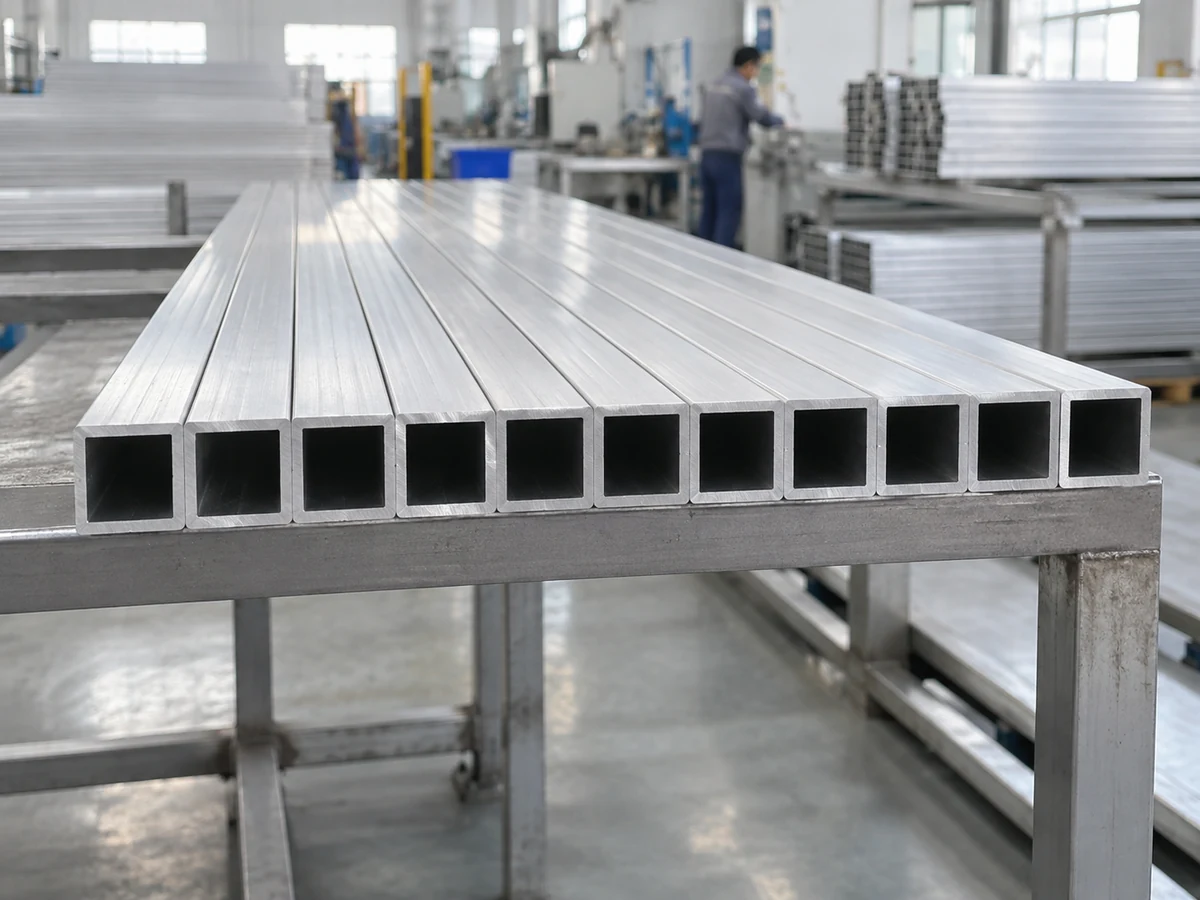
Airport luggage trolley frame cutting: eight RFQ checks
1. List each released frame member and its process route
Start from the cart builder’s controlled bill of materials and drawings. Separate base rails, uprights, push-handle pieces, braces and panel supports only where the actual design uses them. Mark which parts are straight cut stock and which are purchased, bent, formed, welded or machined elsewhere. A finished trolley’s outside dimensions do not reveal an individual blank. Do not assume that all visible silver parts are aluminum: baskets, brake rods, castor brackets, covers and panels can follow different supply paths. Ask the responsible engineering team to approve the member schedule before quoting a saw.
2. Specify the actual incoming stock
For every retained cut family, provide the released extrusion or tube section, material, temper, finish, incoming length and permissible cosmetic contact surfaces. A tubular frame may use round, rectangular, shaped or proprietary members; the supplier examples above do not define your section. Record whether a handle is straight, pre-bent, covered or attached through a molded joint. If bending or coating happens after the saw, state the stock condition at cutting and the allowance required by that downstream operation. Keep revision and supplier changes visible so a substituted section is not mixed into an accepted cart build.
3. Define the cut blank’s datum and joint interface
Show the measurement datum, finished blank length range, end geometry and any later trim allowance on the component drawing. Identify whether the end meets a welded joint, a mechanical connector, a castor mount or another member. A miter or face angle must come from the released joint drawing, not from a photograph of a finished trolley. Where a curved handle or formed frame is supplied, distinguish its straight preform length from a post-forming trim. A cut trial should be judged against the blank drawing; the assembled cart must have its own fit and functional checks.
4. Test support and clamp contacts on the real section
Ask the saw supplier to review the longest incoming stock, the shortest accepted output and the transfer path into and out of the blade zone. Long thin-wall pieces may shift without support; a clamp can dent or mark an exposed surface. Define a protected face, allowable contact pads, stop position and rejected mark criteria for each representative section. Run a trial only with released stock or an approved equivalent identified as such. A video of another aluminum profile can show equipment operation but cannot validate this cart’s fixture or finish.
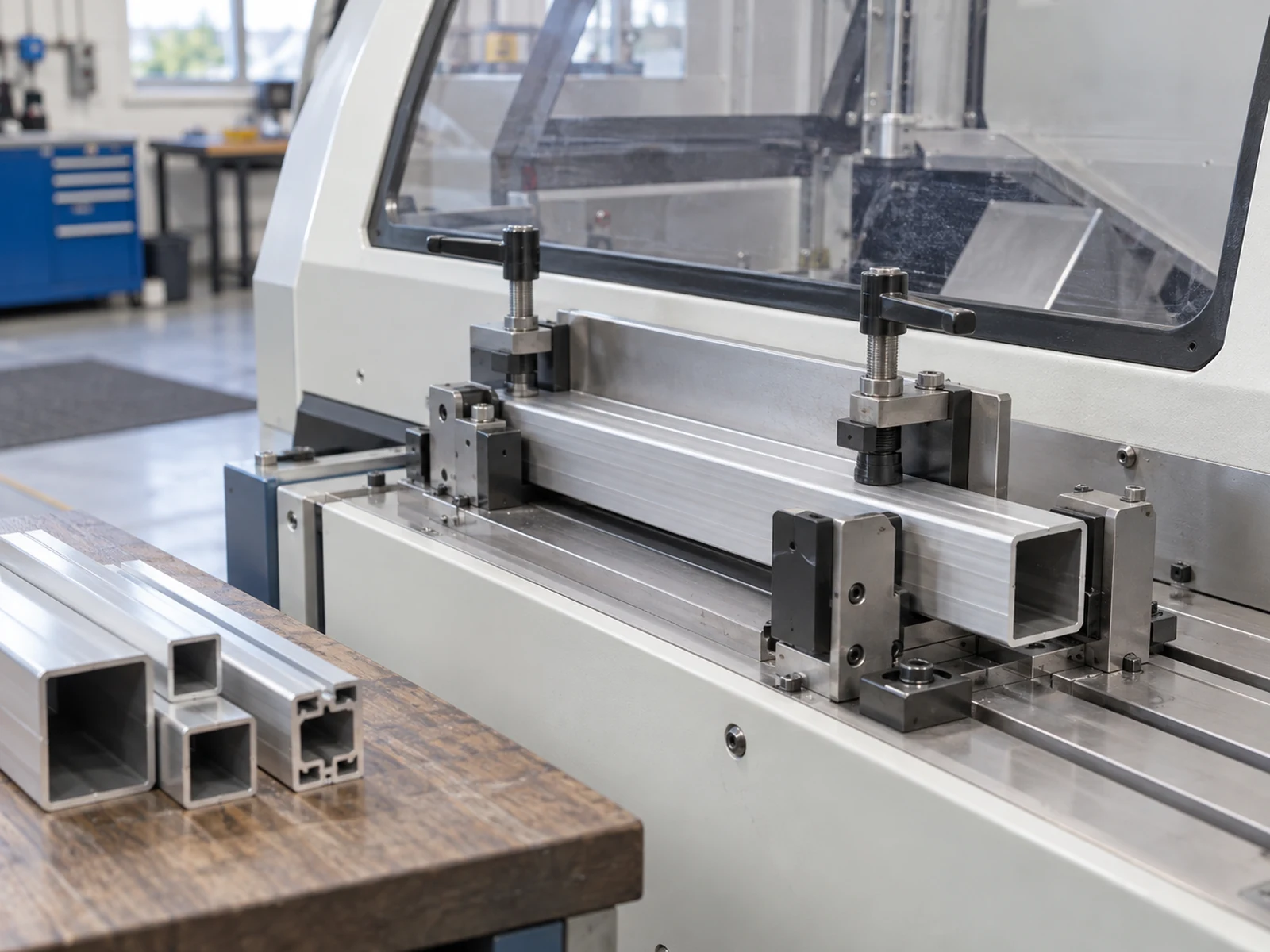
5. Separate first-off blank acceptance from cart performance
Record the first-off piece against its stock lot, drawing revision, machine program and operator setup. Check the dimension from the named datum, end squareness or specified angle, burr condition, wall movement and visible-face damage. The responsible receiver then checks whether that blank can enter the next controlled process, such as bending, joining or assembly. None of those measurements by themselves proves cart load capacity, brake action, nesting clearance, stability or service life. Those finished-cart questions belong to the cart maker’s product verification and the purchaser’s acceptance criteria.
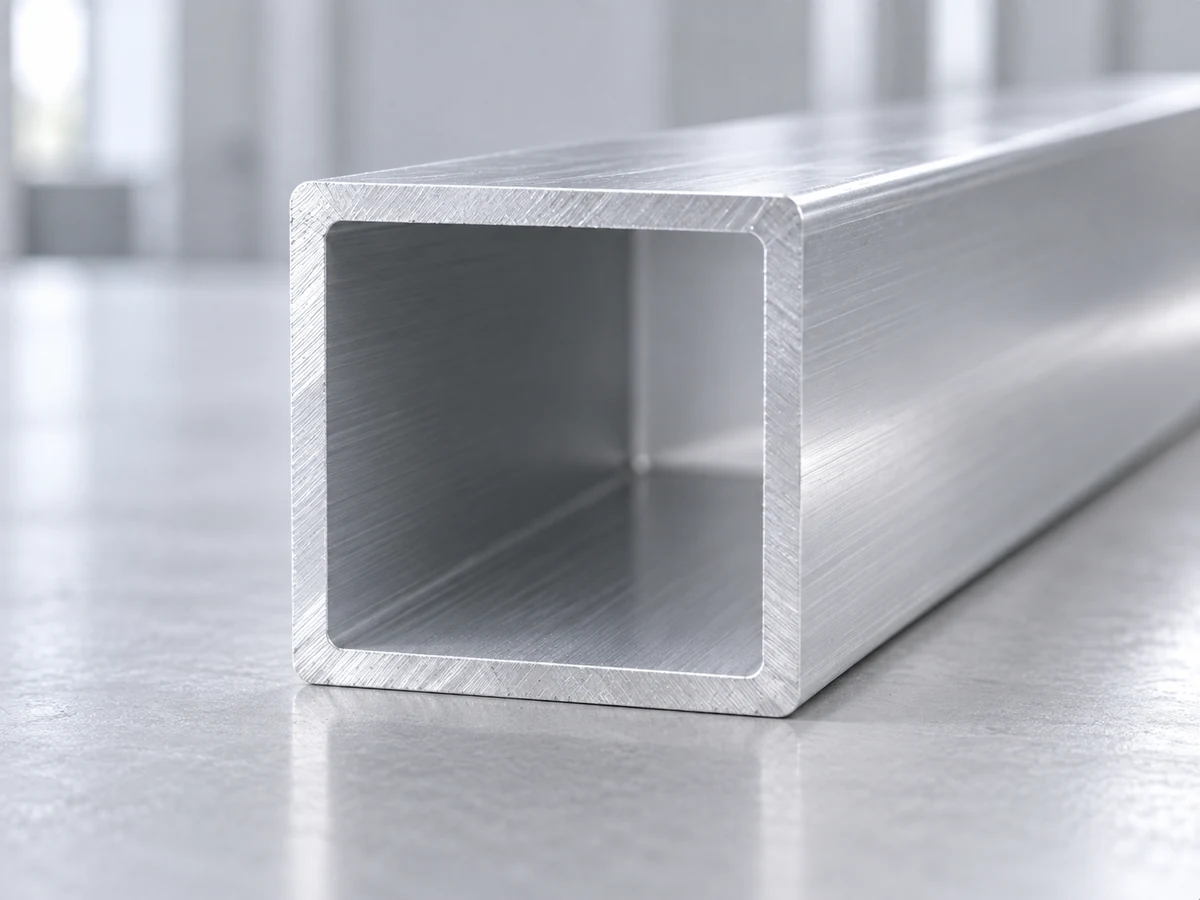
6. Protect handle, brake and panel interfaces
The handle and brake are not merely visual details. On a finished cart, handle position can be tied to a brake actuation path, while panel supports, basket connections and castor mounts consume space around frame joints. Ask the cart engineer to mark the interface zones that must remain available after cutting and later forming. Do not shorten a frame member to make a panel fit or rework a brake connection without an approved drawing change. A saw RFQ should state these interfaces as downstream constraints, not pretend the cut itself verifies their function.
7. Release complete member sets with traceability
One trolley may use visually similar left and right members, different handle variants and separate parts for its base and uprights. Identify handedness, quantity per cart, model variant, finish, lot and revision when cutting and packing. Label a set so the receiver can distinguish a missing member from a wrong member. Keep rejected and trial pieces out of production kits. If the supplier changes a profile or the cart maker revises a joint, agree how existing cut inventory will be segregated and dispositioned before another batch is made.
8. Compare total accepted cost, not only saw cycle time
For an in-house route, count stock purchase, setup, trial pieces, cutting, inspection, rejected material, labeling, packing and the remaining bending, joining and product testing. For a prepared-member purchase, include supplier qualification, receipt checks and the operations still retained by the cart maker. For complete carts, use the finished-unit price and its model-specific supply terms. Demand mix matters: a batch of one repeated member family differs from many cart variants and frequent changeovers. No generic saving percentage follows from the public examples or from a machine clip.
Send a useful drawing package to the saw supplier
- Released frame-member schedule with part numbers, drawings, revisions and quantities per cart model.
- Actual aluminum section, material, temper, stock finish and incoming lengths for every cut family.
- Blank datum, length and end-angle range, downstream forming allowance and first-off criteria.
- Protected surfaces, acceptable clamp/support contacts, longest stock and shortest part.
- Receiving stage, trial sample owner, kit labeling, batch mix and expected production volumes.
- Which basket, panel, wheel and brake operations remain outside the saw scope.
Jiurun supplies industrial circular-saw equipment for aluminum and other nonferrous stock. A recommendation for a trolley-frame member requires the buyer’s released section and acceptance conditions. Review the aluminum-profile cutting equipment category for machine families, then arrange a representative review rather than selecting a model from generic imagery.
Related machine view
The Jiurun JR-455Q video below is a related view of aluminum-cutting equipment from Jiurun’s own channel. It does not show this trolley frame, its material, fixture configuration, customer, first-off result, load or brake performance.
Next decision
If the organization simply needs passenger trolleys for a terminal, compare complete carts and service support. If it is an authorized cart manufacturer retaining aluminum frame production, send Jiurun the released member drawings, stock and first-off criteria for a cutting discussion. A separate guide to cutting finished aluminum profiles can help frame surface-handling questions, but the trolley program’s approved member and assembly requirements remain the deciding documents.