
Airport baggage conveyor side guards are system parts before they are cut lengths. A buyer may receive an attractive quotation for straight aluminum profiles while the drawing actually calls for a complete guarded curve, a proprietary connector, or a different material. Decide which straight members are released for separate supply before asking a saw vendor to price them.
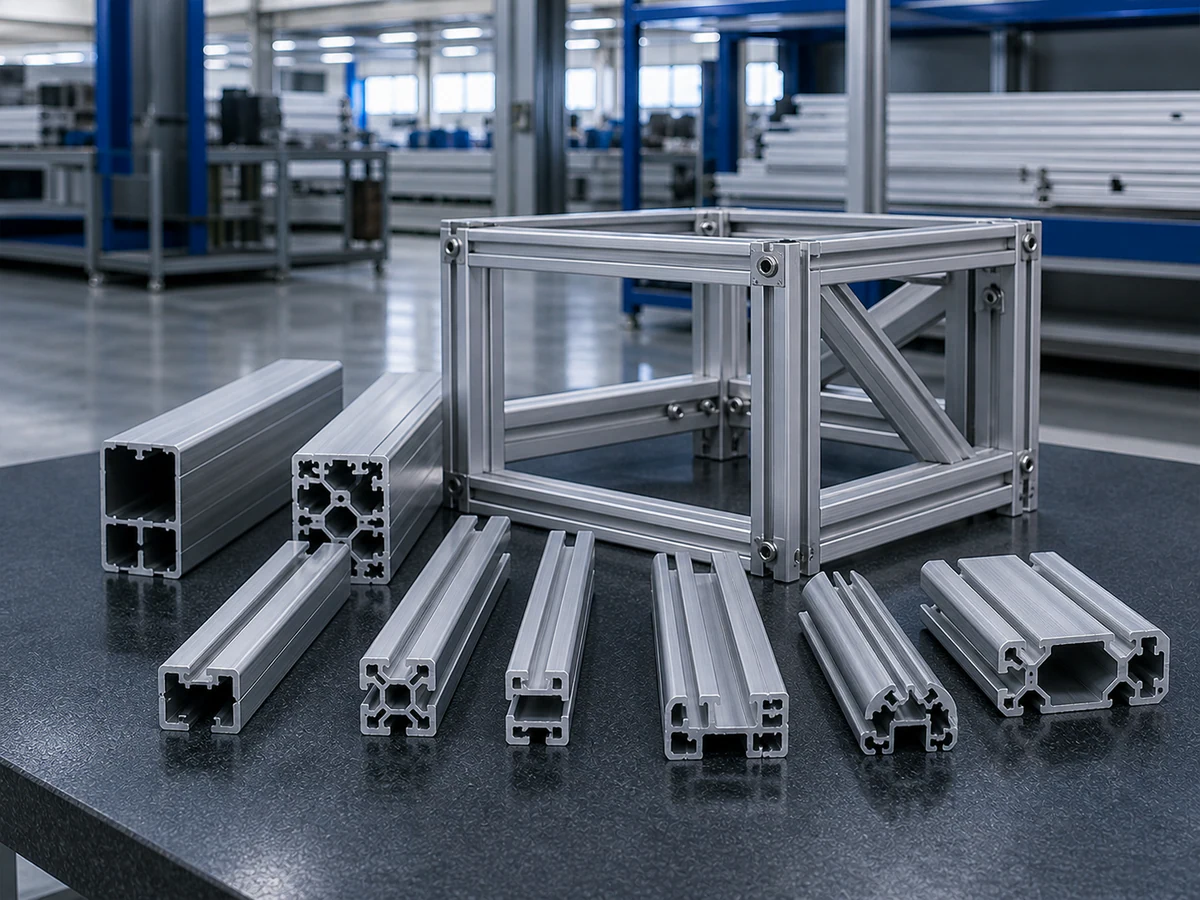
The distinction is real. A TRANSNORM airport curve datasheet describes a baggage-handling curve with a steel side guide in its standard configuration. Separately, Interroll’s side-guide catalog lists aluminum and polymer guide options, plus holders, connectors and end caps for its conveyor range. These are examples of different systems, not interchangeable parts or proof that an aluminum guide fits a named airport installation. The featured image shows a related industrial conveyor guide, not an airport installation or approved project part.
Airport baggage conveyor side guards: approve the system boundary
Mark every proposed guide location on the conveyor layout: straight run, curve, merge, transfer and terminal end. For each location, record the system maker, drawing revision, guide material, section identity and who approves a replacement. If the approved curve is supplied as an assembly, price it through that assembly route. A straight-cut extrusion quote should cover only the members that the system owner has explicitly released as separate aluminum parts.
Define what the saw hands over
A saw can make an identified straight blank to an agreed length and end condition. It does not establish the installed guide path, bracket positions, connector fit, corner geometry or baggage-flow acceptance. Ask the system owner for the exact section drawing and revision, input stock condition, datum, finished length basis, end-face requirement and any finish-protection requirement. Record whether holes, end caps, brackets and joining hardware are included elsewhere in the purchase.
For example, Interroll lists a connector at the transition between modules and an end cap whose contour is intended to prevent products being caught. That catalog illustrates why a clean cut end alone is an incomplete interface decision. The actual airport project’s approved connector, cover and transition must come from its own system documentation.
Review the joint as a system interface
Walk the proposed straight member from one end to the other on the layout. Which adjacent guide does it meet? Who controls the installed gap and alignment? Which component covers the exposed end? Where does the guide attach to the conveyor structure? For airport baggage conveyor side guards, the integrator should approve the installed geometry and any baggage or tag snag assessment. Do not convert a generic catalog dimension or a saw trial into an airport acceptance limit.
For a curve or transfer, request the approved assembly or a system-specific drawing package. Do not bend, splice or substitute a straight aluminum profile merely because the stock section looks similar. The material and shape decision belongs to the system designer; the cut supplier should quote only the released members and any expressly approved downstream preparation.
Trial the disputed straight member, if one is released
Where the integrator confirms a separate straight aluminum guide, use its real section and a representative length for a cutting trial. Check how the section is supported and clamped, which face acts as the datum, whether the finish and visible edges are protected, and how the end condition is inspected. Then give the cut piece to the integrator for the specified holder, connector and neighboring-module fit check. Record those two outcomes separately: cut-part conformity and installed system acceptance.
Ask for a quote that can be compared
- Identity: system and location, member number, drawing revision, approved material and profile.
- Cut scope: quantity, stock form, datum, finished-length and end requirements, finish protection and inspection record.
- Other supply: holders, connectors, caps, drilled features, curved assemblies and installation, each named as included, supplied by another party, or unresolved.
- Release: who accepts the cut part and who separately approves the installed guide at a straight-to-curve or module transition.
For airport baggage conveyor side guards, compare offers only after all bidders use the same handover point. A low price for bare straight blanks cannot be compared with a complete approved side-guard assembly without adding the missing components and acceptance work. For broader straight-rail purchasing choices, see our blank versus mount-ready guide discussion; for a changeover trial, see the side-guide kit trial article.
Equipment video: general cutting context
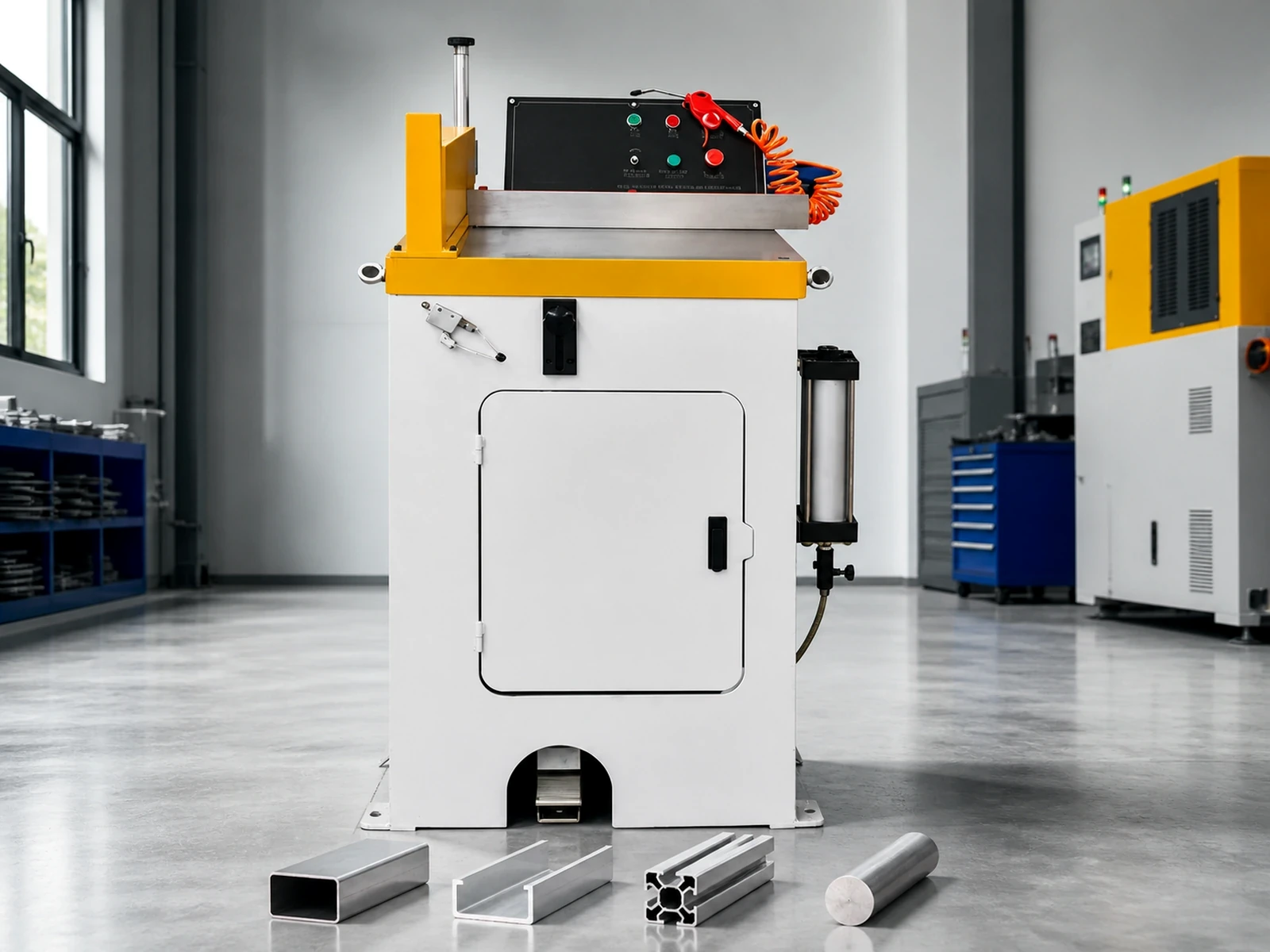
The following video from Jiurun Machinery shows an aluminum cutting machine in operation. It is a related equipment demonstration, not an airport baggage line, an approved side guard, a trial of the specified material, or evidence of installation performance.
Buying decision: approve the system design for airport baggage conveyor side guards first, then ask the saw supplier to price the released straight cut member. If you have an approved drawing and need a cut-scope review, send Jiurun the section, quantities and handover requirements.