
Air knife mount rail cutting starts with a released machine-side support drawing, not the nominal length of the air knife. The compressed-air device and its articulated mounting kit are separate purchased assemblies. A saw-cut aluminum cross rail can carry an approved bracket only after the integrator has specified its section, span, end joints, fastener interface and line position. These seven RFQ checks give the buyer a practical way to compare a cut-member quote with a complete air-knife installation without confusing the two.
For context, EXAIR’s mounting-system instructions show how the vendor bracket is fitted to an air knife and how position and the number of supports depend on the actual device. That document describes EXAIR’s own products; it is not an approval of a JiurunCut rail, a universal bracket pattern, or a machine frame. The manufacturer’s air-knife installation sheet also treats air supply, adjustment and cleaning as device-system matters. The machine integrator must validate these interfaces.
1. Define the item you are buying
An air knife may be supplied with its own stainless mounting arm, hardware and pneumatic connections. The aluminum member in this RFQ is a separate cross rail, post or support that belongs to the buyer’s machine frame. Ask whether the quote is for raw stock, saw-cut blanks, drilled rails, an assembled support, or a complete installed device. A saw quote should name the exact exit condition. It should not imply that the air knife, mounting kit, hoses, regulator, guarding or commissioning are included.
The integrator should provide a part number and drawing revision for every rail and upright. If a purchased vendor mounting system already spans the installation, do not invent a new aluminum component merely to use a saw. Conversely, if a machine-side rail is required, identify who owns its loads, deflection, vibration, alignment and connection to the parent frame. The cut supplier can quote an approved member; it cannot approve the structural design from a photograph.
2. Locate the air knife before setting the rail length
The air-knife length, effective air span, conveyor width and aluminum rail cut length can all be different. The vendor bracket may need clearance beyond the device ends, while the machine rail may terminate at a side post or a connector. Record the working side, travel direction, mounting height, bracket location and adjustment envelope in the machine layout. Then issue a dimensioned rail drawing with a cut-face datum and the required length at that datum.
Indicate whether the same rail serves left- and right-hand installations. A member that looks symmetric can still have a cable or hose exclusion zone, a preferred slot orientation, or a bracket offset. Capture any positions that must remain accessible for adjustment and maintenance. The cutter should not infer bracket spacing or pneumatic clearance from the air-knife catalog length; those belong to the integrator’s released layout.
3. Release the section and connection details
Provide the actual extrusion cross section, alloy and temper, surface condition, stock length and supplier tolerance. Mark which faces support the bracket, which slot or drilled feature carries its fastener, and which ends join the surrounding frame. A generic T-slot profile family is insufficient when a mount must seat on a particular face. If end plates, gussets, anchors or tapped ends are required, identify them as separate operations or bought components.
Confirm that the vendor bracket hole and fastener pattern is being taken from the exact selected kit and its current instructions. EXAIR’s universal kit, for example, is a distinct assembly with its own application limits. Its details must not be copied to another air-knife model or treated as a universal dimension. The machine builder should approve any adapter plate and its load path before a rail is cut for production.
4. Set up the saw around the real profile
For air knife mount rail cutting, the saw trial should use representative incoming stock, the intended profile orientation and the proposed support and clamp contacts. Long sections need support on the infeed and outfeed so the cut does not pull or mark a mounting face. A slotted or hollow profile may need a different contact arrangement from a solid bar. Request a stopped setup view and identify surfaces that must not be clamped, scratched or contaminated.
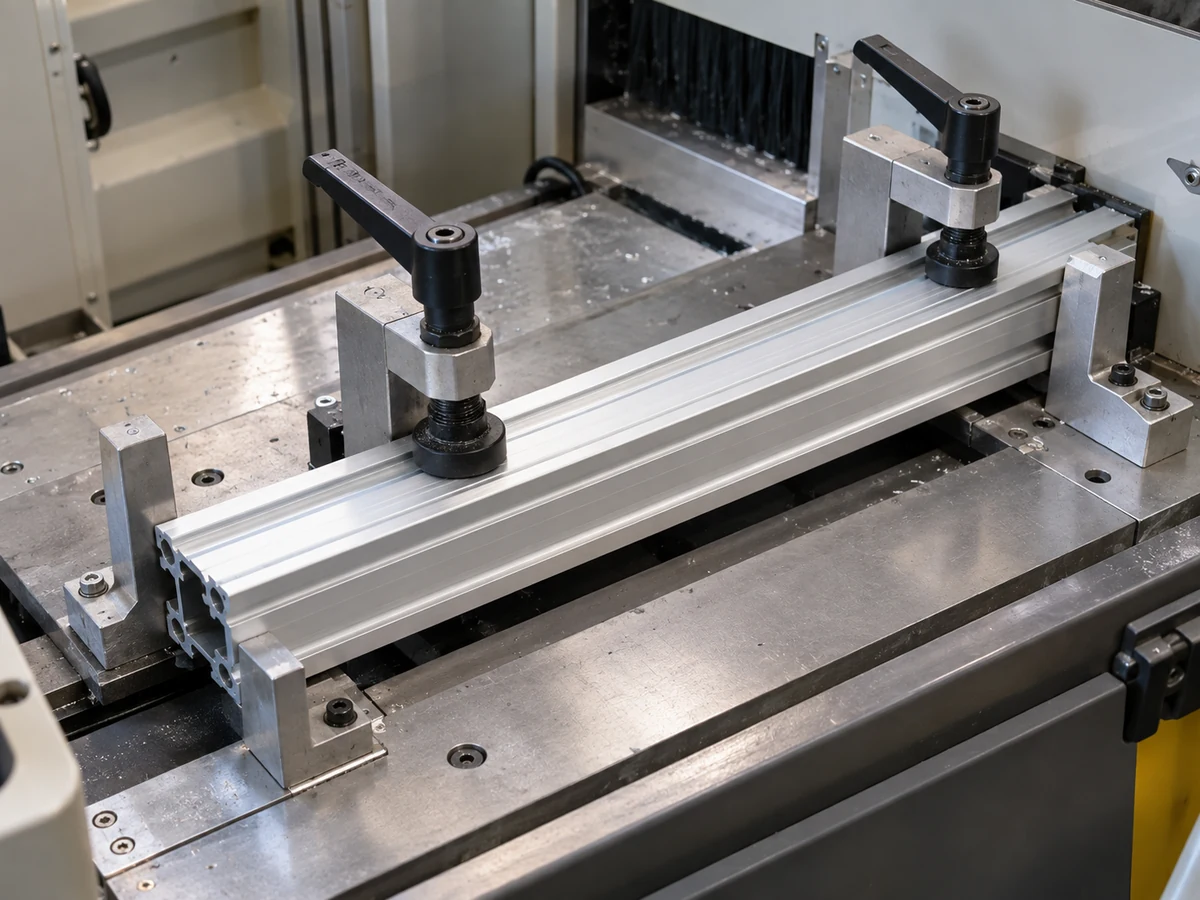
Separate the trial’s saw work from later drilling, tapping, deburring, washing and frame assembly. If a bracket seat or fastener hole is made after cutting, do not count a manually adjusted assembly as evidence that the cut blank was repeatable. State the sample quantity, first-off check and acceptance decision before repeating the order. Where a finish is applied later, define which marks are acceptable in the as-cut state and who evaluates appearance after finishing.
5. Specify blank-level acceptance
Use drawing-specific limits for cut length, end condition, perpendicularity where it matters, burr condition, surface damage and part identification. The inspection method and datum should be agreed with the person who assembles the support. Keep incoming extrusion defects separate from cutting effects. A bracket fit demonstration can be useful when the approved kit and adapter are available, but record whether the test uses the as-cut blank or a part that has had secondary machining.
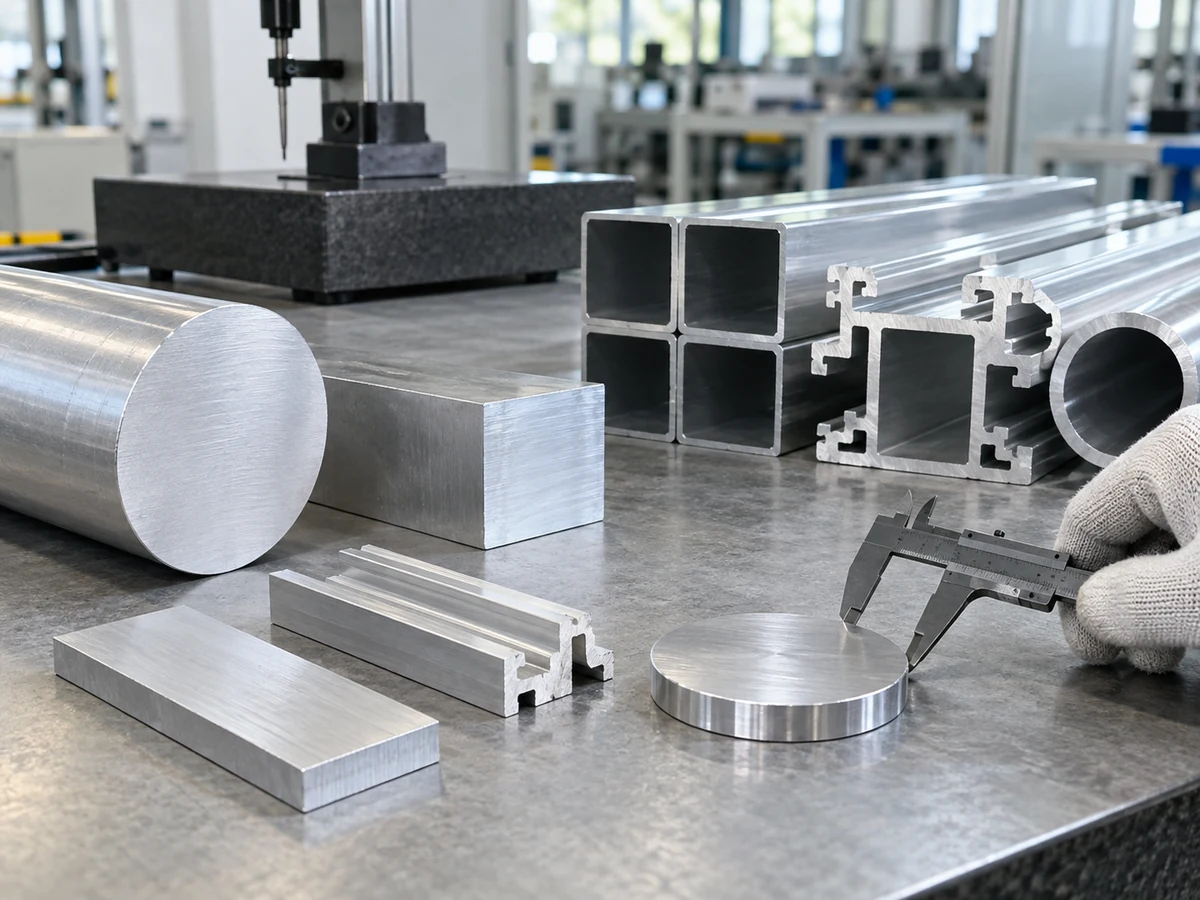
The OEM still has to verify final device position, air-jet coverage, air supply, noise, guarding and safe access. A passed blank inspection does not establish drying, blow-off or static-control performance. The supplier should report only the cutting observations actually recorded; the application engineer should document finished-line acceptance separately.
6. Keep the video in its proper role
A machine demonstration can help a buyer see how an aluminum profile is fed and cut, but it does not qualify the cross rail in this RFQ. The video below is from Jiurun’s own channel and shows a general aluminum-profile cutting process. Ask for a trial on your released section when setup or surface contact is a critical purchase condition.
Jiurun’s channel video illustrates a general saw process. It is not an air-knife rail trial or proof of a specific section, mounting kit, machine configuration, customer result or air performance.
7. Compare quotes at the same handoff stage
Send every bidder the same drawing revision, quantity by length, section and stock condition. Ask them to state whether they supply the extrusion or cut customer-supplied stock; whether setup, first-off samples, deburring, drilled features, packaging and scrap allowance are included; and who pays for a changed drawing. If the machine uses multiple parallel air knives, keep their rails and bracket references separate so a mixed kit cannot be mistaken for one repeated part.
| RFQ field | Buyer should provide | Supplier should return |
|---|---|---|
| Rail identity | Part number, revision, section and length datum | Quoted member and stock basis |
| Interface | Approved bracket and machine-frame drawing | Cut-only or added-feature scope |
| Trial | Sample quantity and acceptance method | Recorded setup and first-off observations |
| Delivery | Length mix, labels and packaging rule | Batch plan, exclusions and lead time |
The useful quote is the one that gives the integrator a traceable set of acceptable aluminum cut blanks at a defined handoff. It should leave enough information to test a chosen air-knife kit without pretending the cut member itself proves air-jet behavior. If you have a released section and cut list, send JiurunCut the drawing and length mix for a scoped discussion of saw support, first-off checks and batch delivery.