
Acoustic panel aluminum frame cuts start with a controlled system drawing because the cut blank is only one input to the finished assembly. The fabric retention detail, absorber, mounting method, joint hardware and acoustic test belong to the approved panel system. If a buyer sends only a finished outside size to a saw supplier, the quote may assume the wrong profile, miter reference or kit count. Use these seven checks to turn an approved panel drawing into a cut-member RFQ and a meaningful saw trial.
Commercial systems vary. SWAL describes aluminum-profile frames used with acoustic insulation and stretched fabric; ACR shows wall, partition and ceiling variants with distinct profile families. Those examples establish why the buyer must specify the actual system. They do not define Jiurun machine compatibility, an acoustic rating or a universal frame section.
1. Freeze the approved panel system before naming a cut blank
Start with a controlled drawing revision for each wall, ceiling or freestanding panel. Identify whether the supplier receives only straight extrusions, saw-cut members, drilled and deburred pieces, a bagged frame kit or a complete acoustic panel. The saw supplier should quote only the operations inside its scope. Put fabric grooves, corner keys, suspension rails, infill and certification in the panel owner’s drawing package. A cut length that fits one textile-retention profile may be wrong for another even when the outside panel dimensions match.
2. Identify each profile by cross-section and protected face
Send a section drawing, material and finish specification, sample extrusion and part number for every perimeter rail and crossmember. Mark the fabric-retention edge, visible face, mounting side and any screw channel. Do not substitute a visually similar extrusion without the panel owner’s approval. A quotation should state which section was trialed and which remains untested, especially if one order mixes shallow wall frames and deeper freestanding frames.

3. Put the length datum and corner geometry on every part
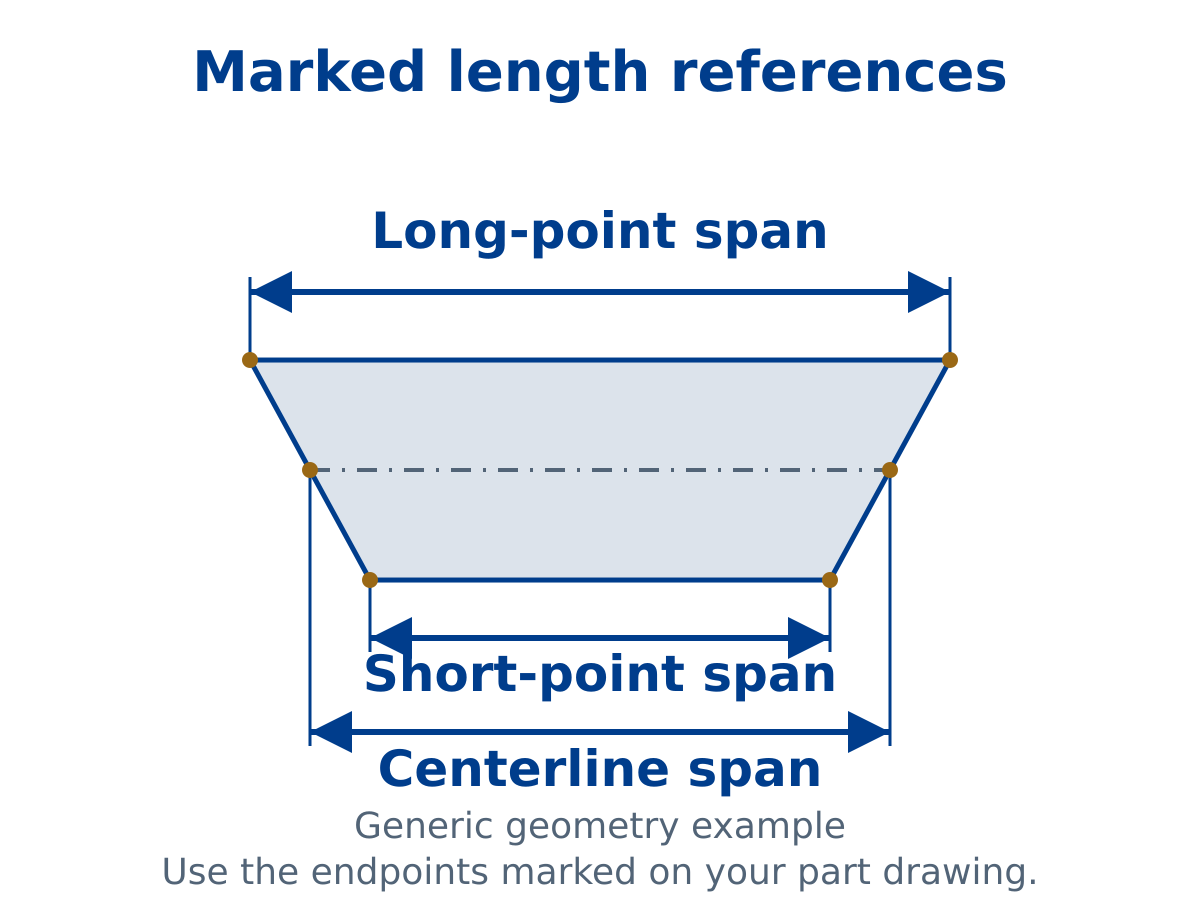
A nominal outside panel size is not a saw instruction. For a mitered member, state the angle convention, finished length reference, orientation of the long and short points, end-to-end tolerance and whether the dimension is before or after coating. For a square-cut member, define the end datum and any clearance for corner hardware. Include a left/right mark where members are handed. Ask the panel designer to sign off the assembled opening, not merely the loose part length.
4. Separate saw-cut acceptance from panel performance
Inspect the cut blank for length, angle, burr, finish damage, section deformation and the agreed mating-corner fit. Define inspection instruments and sampling with the buyer. Acoustical absorption, fire classification, fabric tension and installed appearance require system-level evidence from the responsible panel supplier; a clean saw cut cannot establish them. Keep any prototype fit check clearly labelled as a sample assembly rather than a certified acoustic or safety test.
5. Trial the real section and support the delicate edges
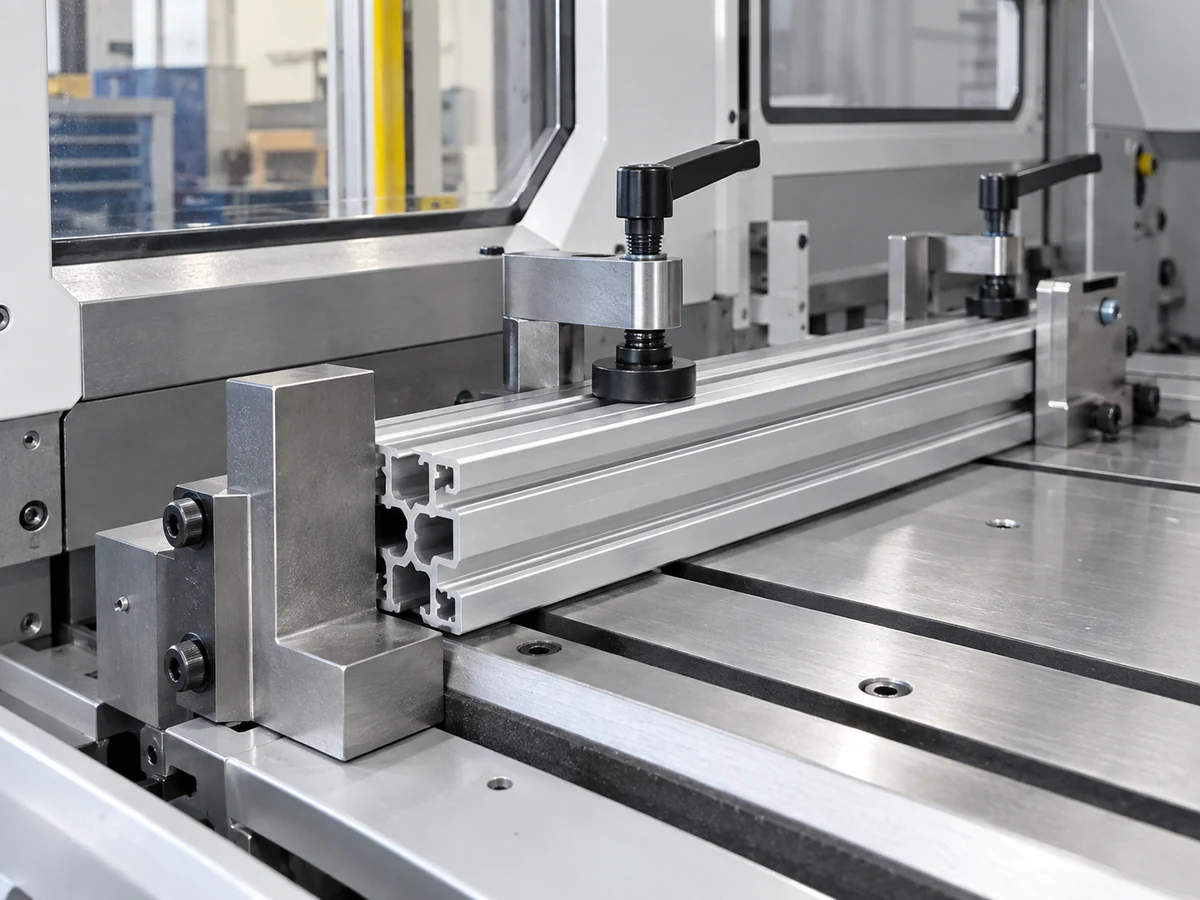
Use the specified extrusion and finish for a witnessed trial. Record where the profile contacts the saw fence, clamp and outfeed support. A thin fabric lip or narrow screw channel can distort if clamped as though it were a solid bar. Test the longest and shortest required members, any miter direction, and the planned batch size. The resulting settings are trial conditions, not a blanket machine capability claim across all panel profiles.
6. Choose the saw workflow from the approved mix
If all members are straight 90-degree blanks, prioritize reliable locating, support, repeatable feeding and clear part identification. If the approved joint calls for miters, review an angle-saw workflow against the actual section and corner detail. Batch size, changeover frequency, left/right orientation and handling length matter as much as a catalog angle range. Ask for a trial record before choosing automatic or semi-automatic feeding; do not infer finish quality or throughput from a short equipment video.
The video below is a Jiurun channel example of an industrial angle-saw workflow. It shows equipment operation only. It does not show the acoustic-panel profile, an approved configuration, a customer project, a qualifying trial or verified performance for this RFQ.
7. Release a labelled kit, not an anonymous pile of blanks
For each panel size, supply a bill of cut members with drawing revision, quantity, orientation, finish, corner type and destination kit. Decide who performs deburring, drilling, corner assembly and protective packing. Match the first accepted sample kit to its measurements, then preserve traceability in production bundles. This is especially useful when several visually similar panel dimensions share one factory order.
Acoustic panel aluminum frame cuts: RFQ package
For acoustic panel aluminum frame cuts, a useful package contains the approved assembly and cross-section drawings, physical profile sample, finish and protected-face marks, cut list with length and angle datums, required quantity by kit, acceptance and inspection criteria, and the proposed sample-trial schedule. State separately who owns acoustic, fire and installed-system approvals. Jiurun can discuss the saw operation against these inputs; a quote should not be mistaken for validation of the complete acoustic panel.
Frequently asked questions
Can the outside panel size alone determine all four member lengths?
No. Corner construction, profile depth, joining hardware and the stated miter datum determine the member schedule. Obtain the panel maker’s approved cut list or a signed calculation from its drawing.
Does a smooth miter prove acoustic performance?
No. It can be one workmanship check on a cut blank. Acoustic performance depends on the assembled, installed system and its relevant test evidence.
What should a saw trial record include?
Record the exact extrusion and finish, drawing revision, cut orientation and target dimensions, workholding contacts, measured sample results and any visible damage. Retain the trial sample and agreed acceptance decision.
Have a drawing set ready? Contact Jiurun with the profile section, cut list and sample quantity to discuss a scoped cutting trial. For broader partition-system purchasing context, see our office partition saw guide.