
An aluminum saw cabinet heater is a purchase option that needs four named interfaces. “Cabinet heater included” is not a complete line item in an aluminum saw quotation. The buyer still needs to know which enclosure receives it, what calls for heat, where its power comes from when cutting stops, and how the supplied assembly will be checked. Those four interfaces determine whether competing offers describe the same deliverable. An enclosure-heater catalog page is evidence about that component; it is not evidence that a particular JiurunCut saw includes the component or is suitable for a particular workshop.
1. Specify the aluminum saw cabinet heater package
For the aluminum saw cabinet heater, start with an enclosure schedule for the exact proposed machine. Is there one electrical cabinet or more than one protected control space? Ask the machine supplier to mark the heater location on the as-offered cabinet drawing and name the make and part number, mounting hardware, controller, protective device, and any fan that belongs to the option. A priced “heater” may mean only a loose component; installation, controller and wiring can be separate. The acceptance unit is the finished cabinet assembly, not the bare heater.
Rittal’s enclosure-heater page describes a heater, its supplied terminals and fasteners, and recommends a thermostat for precise temperature control or a hygrostat for condensation control. That is useful component context. It does not determine the heater size, placement, control method, or suitability for an unnamed saw. Ask the machine builder to make those choices for the quoted cabinet and actual site conditions.

2. Name the control signal, not just the wattage
Two offers can list a heater and behave differently. One may use a temperature controller; another may switch on relative humidity. Schneider Electric’s anti-condensation heater FAQ describes manual and thermostat control for its specified cabinet application. Rittal separately recommends a hygrostat for condensation control. These are examples of control arrangements, not a universal recipe for an aluminum saw. The RFQ should ask which arrangement the proposed machine actually uses, what the sensor measures, where it is mounted, what settings are documented, and whether the buyer can see a status or fault indication.
A watt rating alone does not show whether the heater will operate at the right time. Likewise, a temperature display on the HMI does not prove that it reads inside the enclosure or commands the heater. Ask for an as-built wiring and control description. Do not infer the settings from a generic catalog or transfer them between cabinet designs.
3. Trace the power boundary through shutdown
For an aluminum saw cabinet heater, the most consequential ambiguity is often a schedule question: what happens to the heater circuit when the saw stops cutting, when the normal machine stop is selected, and when the site switches off power at the end of a shift? The buyer should describe those actual operating periods to the supplier. Request a marked circuit boundary that shows whether the proposed heater can be energized under each state, which supply and protection serve it, and what site work is required. An offer that assumes a separately maintained supply has a different scope and running cost from an offer whose heater is unavailable after the main supply is isolated.
This is a specification and handover question, not an instruction to defeat isolation or keep an unsafe circuit live. Only the machine builder and qualified electrical personnel should approve the electrical design and safe service procedure. The earlier shutdown-environment review explains why the site must describe the period after production. This article asks for the specific heater circuit and control evidence if that option is proposed.
4. Witness the delivered function without overclaiming
Before factory acceptance, agree what will be inspected: the installed part number, location and clearances, controller identity, protective device, wiring record, and any supplier-defined functional check. At the agreed acceptance point, qualified personnel can demonstrate the controller calling for heat and the installed heater responding under a documented test condition. Record the condition, measured or indicated state, observer, machine serial number, and any deviation. A brief test proves the described response at that moment; it cannot establish that the complete saw will be free of condensation over every future shutdown and season.
At site handover, compare the cabinet and circuit against the accepted drawings after field wiring or enclosure modifications. If the buyer changes the workshop schedule, ventilation, or power-off practice later, the previous acceptance evidence does not silently cover the new condition. Ask the supplier to define who reassesses it. For the broader enclosure boundary, the control cabinet protection guide covers penetrations, seals, heat removal and assembled-cabinet claims.
Compare quotations on one four-column record
| Interface | Ask the supplier to state | Evidence to retain | Open question if omitted |
|---|---|---|---|
| Installed hardware | Exact cabinet, heater, mounting and associated parts | Marked layout and bill of materials | Is the line item a loose part? |
| Control | Sensor, controller and documented operating logic | Control description and settings record | What actually calls for heat? |
| Power during stops | Supply and protection in each stated machine and site state | Approved circuit diagram and site responsibilities | Will it function during the relevant shutdown? |
| Acceptance | Inspection and witnessed functional check | As-built record and deviation list | How will the delivered option be verified? |
This record helps compare a heater option against a facility-managed environment without treating either as automatically sufficient. It also makes a hidden installation or electricity line visible before the purchase order is released.
Machine video: what it can show
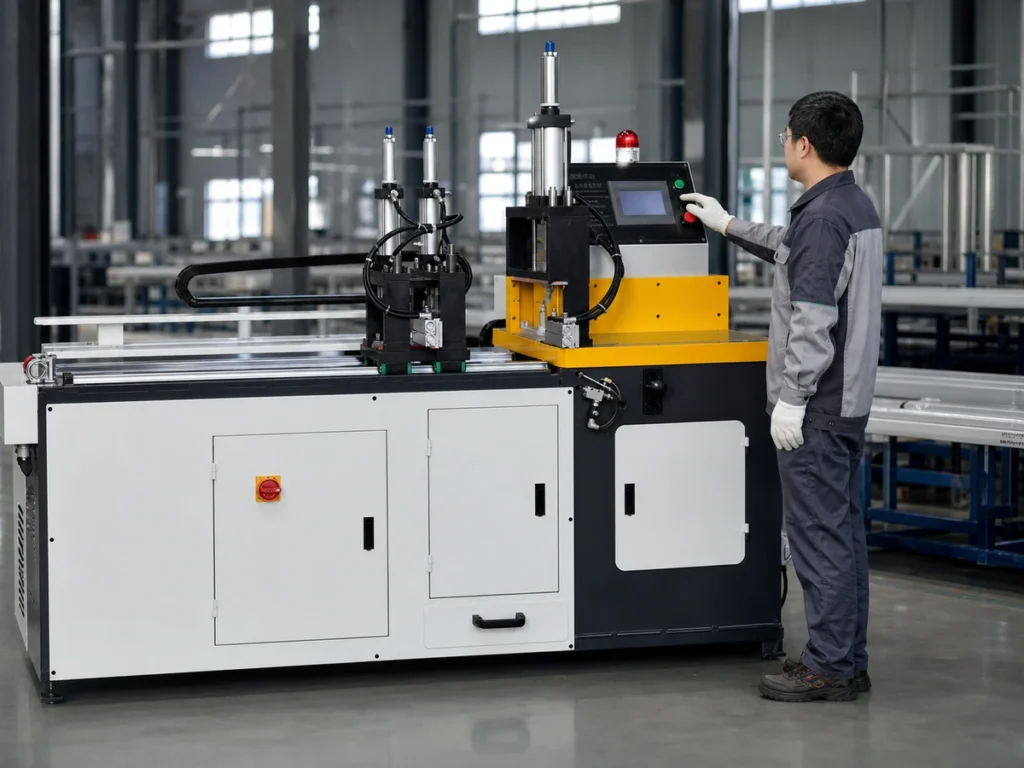
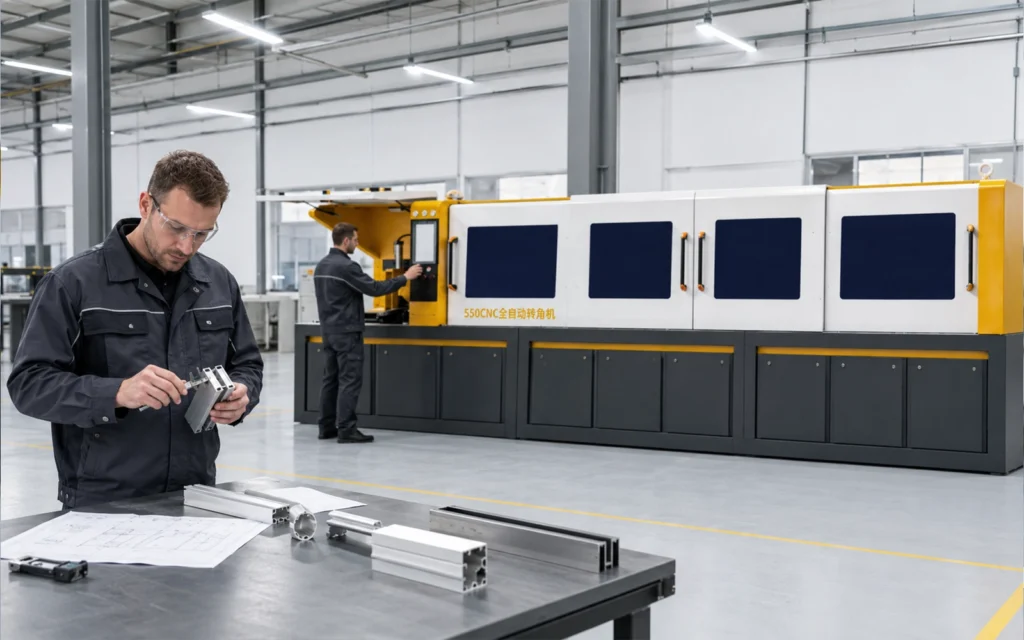
A Jiurun machinery video can illustrate an enclosed automatic aluminum-saw cutting process and the physical machine category. It does not show a cabinet heater, controller logic, off-shift power state, condensation test, or the configuration offered to your site. Ask for those items in the actual quotation and acceptance package.
Send a useful cabinet-heater RFQ
Tell JiurunCut the profiles and cutting duty, machine location, cabinet exposure, occupied and unoccupied schedule, and what the site will do with electrical power after a shift. Request the exact proposed enclosure and heater package, approved control and supply boundary, installation responsibilities, and witnessed acceptance record. Send the purchase conditions to JiurunCut so the response can address the actual machine proposal. No heater availability, model fit, protection rating, environmental suitability or performance is established by this article.