
An aluminum saw scrap bin scale can make a mass record easier to capture at every bin change. But the useful purchasing question is narrower: which decision will that number support? If a tote receives short tails, chips, rejected parts and even usable cut lengths before someone weighs it, a precise display cannot tell you how much scrap came from one job. Define the collection boundary first, then decide whether the weighing point belongs beside the saw.
Start at the bin swap, not the scale display
Walk a normal production shift and follow material after the cut. Identify where saleable parts go, where a short end goes, and whether chips or rejected pieces enter the same container. Record when the bin is changed and who closes the record. If one container spans two jobs or alloys, its net mass is a combined number unless the operator weighs and closes it at the changeover. A scale cannot reconstruct that split afterward.
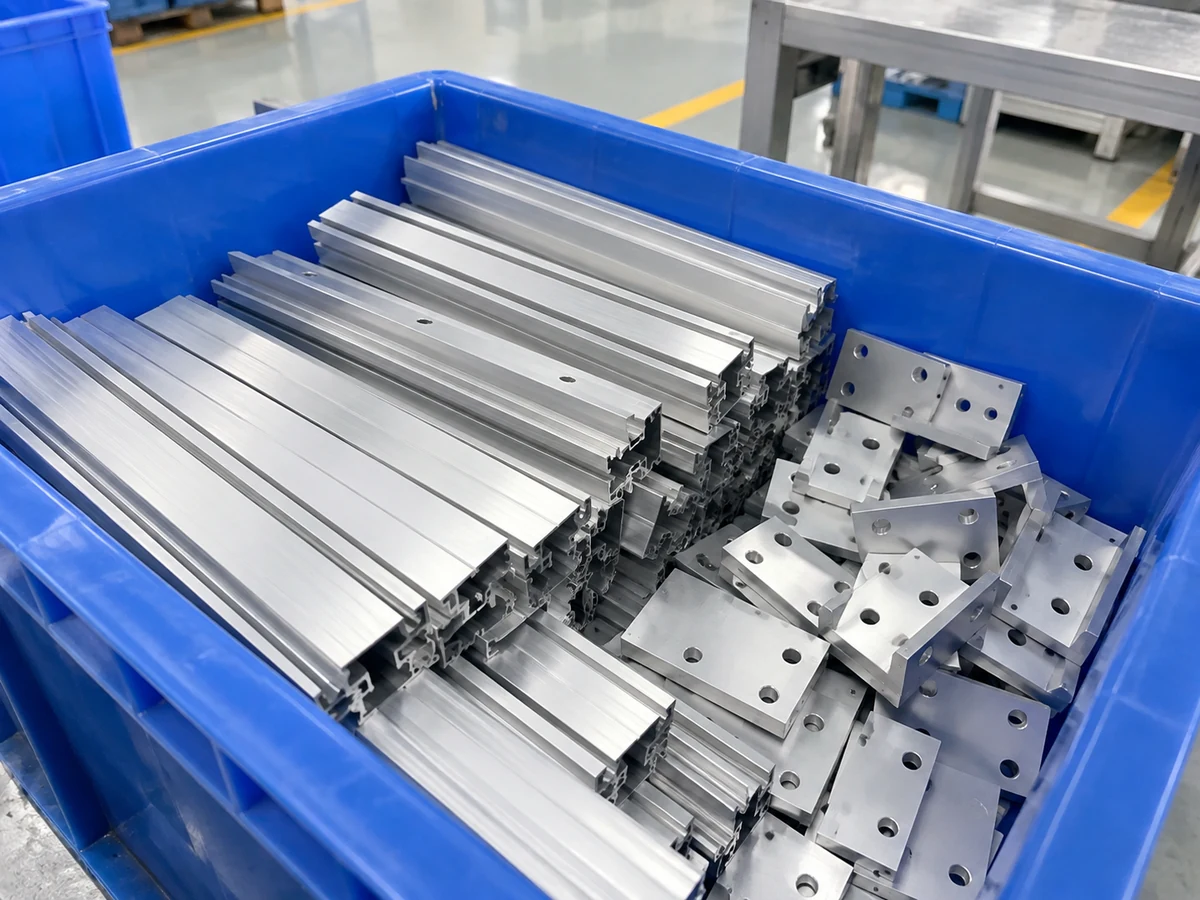
The image used as this article’s featured image shows an aluminum-profile container with different cut lengths and other pieces. It is a related illustration of why the contents of a bin matter; it does not show a scrap scale, a Jiurun weighing configuration, or measured scrap from a customer job.
Build a record that survives a changeover
For internal scrap accounting, specify the minimum record before asking for hardware: container identifier, empty-container tare, gross mass, calculated net mass, job or lot, alloy when known, time of closure, and the person who confirmed the swap. Keep an exception field for mixed material or a late addition. When the same bin is reused, its tare should be checked under the actual handling method rather than assumed from a catalogue label. The NIST weighing and scales guidance is a useful reference for distinguishing gross, tare and net quantities.
Separate the mass record from a yield claim. A bin total alone does not prove that every short tail was collected, that its alloy was identified correctly, or that a cutting program met its target. The Aluminum Association’s recycling overview explains why sorting aluminum scrap by alloy matters. If alloy segregation is part of the buyer’s objective, define the labels and changeover procedure as carefully as the weighing device.
What inline weighing changes
There are two practical routes. With a periodic floor-scale route, an operator removes a filled bin, weighs it at a controlled station and enters the result against the lot. The saw needs a clear bin identity and a handoff step, but no integrated weight reading. With an inline route, a weighing point sits in or near the scrap collection path and a bin-change event can be tied to a weight record. That may reduce manual transcription when bins change often, provided the handling route keeps the load stable and the data can be associated with the right job.
Neither route is automatically better. Count the actual bin swaps, time spent moving and recording each bin, mixed-material exceptions, cleaning access, maintenance ownership and the effort of connecting a weight record to the shop’s existing system. Ask the machine and scale suppliers to show how a normal swap works with guards, access and material flow in place. Do not infer that a pictured saw already includes a scale.
Witness the collection path and an exception
During a supplier trial or acceptance visit, use your own profile and bin procedure. Watch one ordinary bin change and then a change from one job or alloy to another. See whether the operator can identify the container, close the first record, clear remaining material from the transfer path and start the next record without guessing. Introduce a plausible mixed-bin exception and ask where it appears in the record. A screen showing a weight is less useful than a traceable sequence of physical steps.
Put the information boundary in the quote
If you request an aluminum saw scrap bin scale, describe the decision it must support: for example, internal net scrap mass by job at each closed bin swap. Ask the supplier to state the bin and load arrangement, tare method, displayed and exported fields, how the record is linked to a job, what happens after a mixed-bin exception, and who maintains the weighing system. Request the proposed scale’s rated capacity, resolution and calibration documentation for the actual configuration rather than accepting an unspecified accuracy promise. If weights will be used for commercial settlement, check the applicable measurement requirements separately.
If a floor scale and disciplined bin log give the buyer the information needed, an integrated scale may add cost and interfaces without changing the decision. If frequent swaps and manual entry make the record unreliable, an inline option deserves a witnessed trial. The acceptance result should be a complete, correctly attributed record from your normal swap, not a generic display demonstration.
Related equipment video
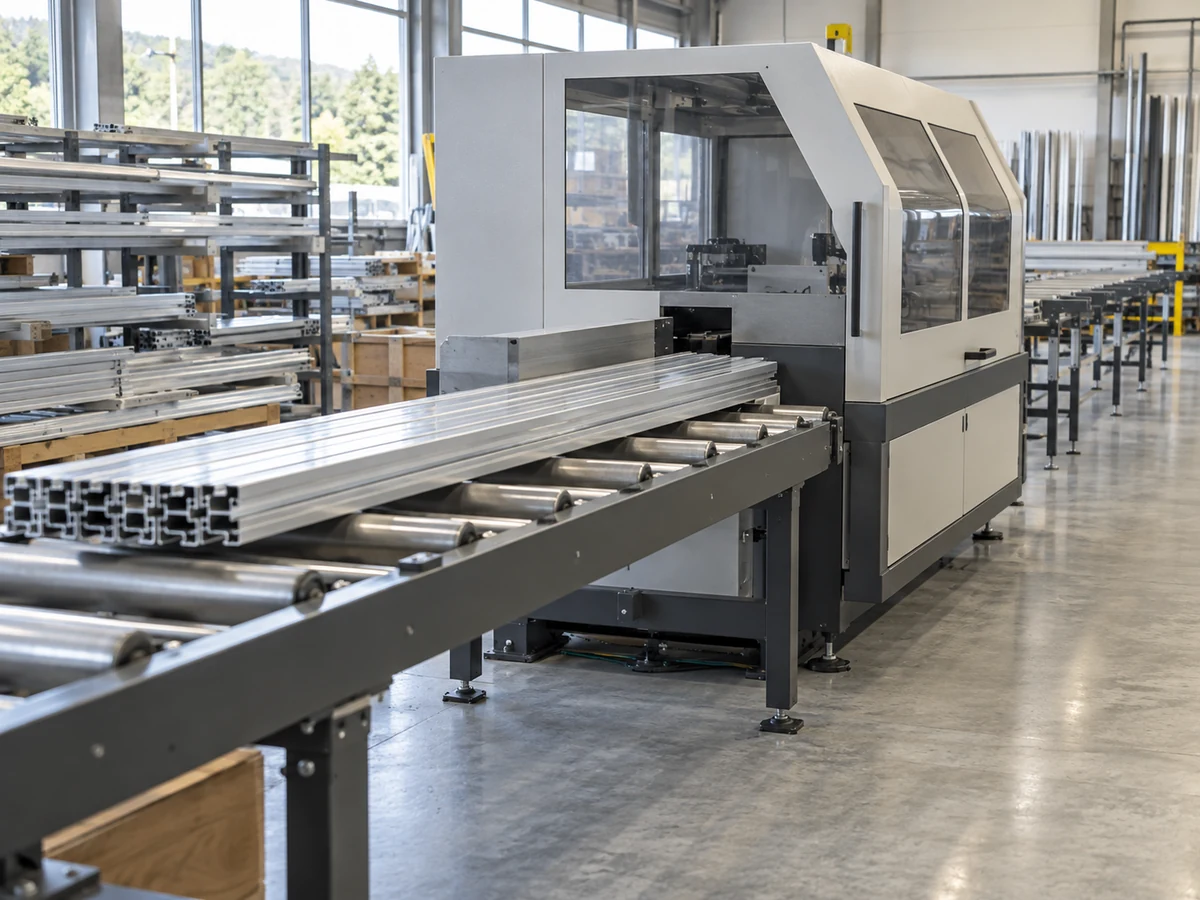
The Jiurun Machinery video below shows an automatic aluminum saw and feeding operation. It is related equipment footage only. It does not demonstrate a scrap-bin scale, the alloy or job accounting method described here, a particular machine configuration, or a measured performance result.
Ask for a test built around your bin
Send the expected profile mix, scrap categories, bin dimensions, typical swap points and the decision you need the mass record to support. Contact JiurunCut to discuss a saw-side material-flow review and whether a separate or integrated weighing route is worth testing. Any proposed weighing function and its evidence should be confirmed for the specific quotation and trial.