
A bright line appears on the top face of a freshly cut aluminum extrusion. A camera above the outfeed can see that line—if the part passes under stable light with the face exposed. It cannot tell you whether a hidden internal rib has a burr. Before buying an aluminum saw outfeed camera, define the defect, the visible surface, and the decision the image must support. That short exercise can prevent a camera quotation from becoming an untestable promise of “100% inspection.”
Start with one rejectable defect, not a camera model
Take one accepted cut part and one rejected part from the same released profile family. Mark the exact feature that separates them: a scratch on a designated face, a chipped corner, a missing hole, a wrong end orientation, or an out-of-range length. Record who approved the limit and how the present inspection method reaches its decision. A vague requirement such as “check quality” gives a vision supplier no stable target.
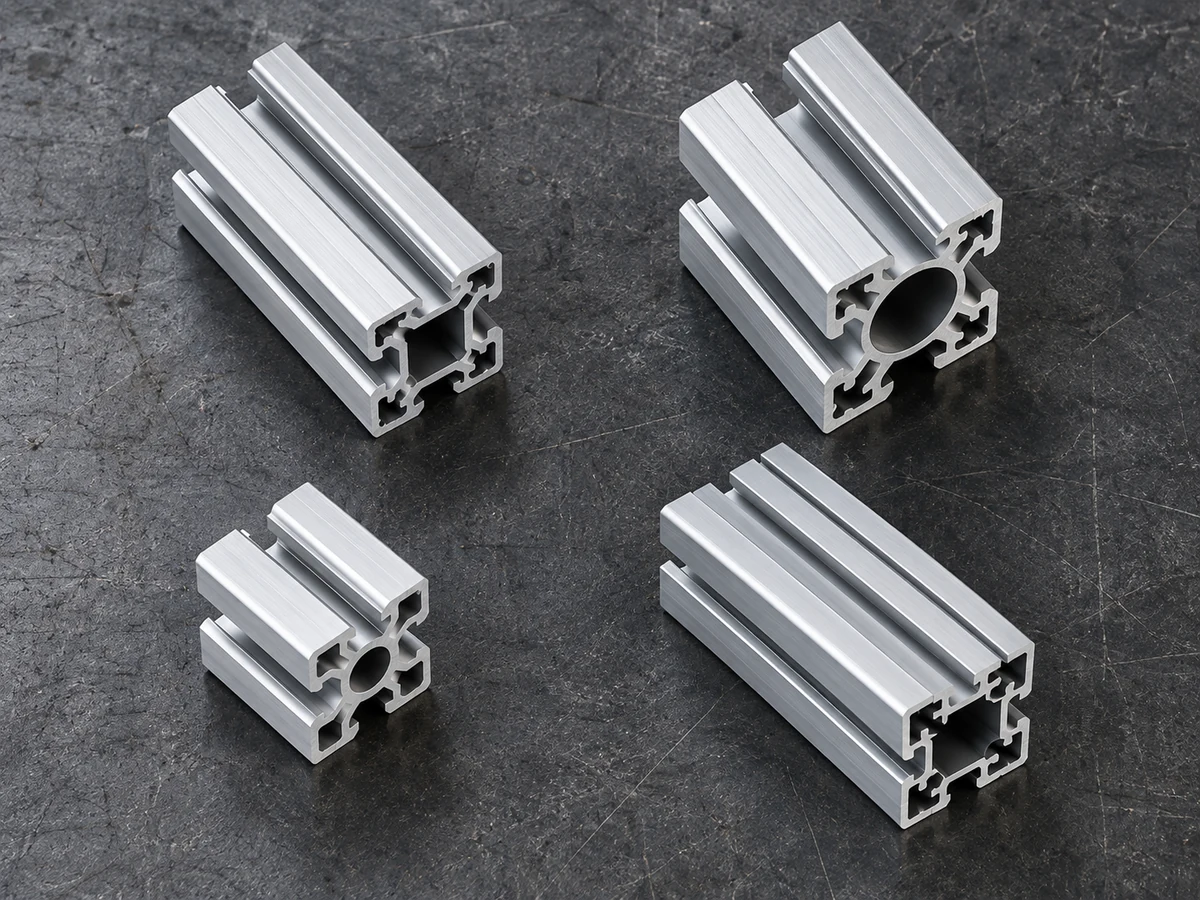
Now ask whether the feature is visible at the proposed camera station. A top-view camera may see the upper face and silhouette while the underside, cut face, and internal channels remain hidden. A second view, part rotation, a 3D method, or a separate bench check may be needed. Keyence’s explanation of 2D and 3D vision describes the depth limitation of a 2D image. It does not establish a specification for this JiurunCut saw or for your part.
An aluminum saw outfeed camera needs a defined field of view
Show the saw supplier and vision integrator where each part will be at the instant of inspection. Include the shortest and longest released lengths, profile orientation, roller gaps, transfer speed, part spacing, and any handoff into a bin or conveyor. An aluminum saw outfeed camera can only judge what is presented consistently. If a short part drops before the proposed view, or a long member twists as it crosses a roller, the quotation needs a presentation change as well as an optical choice.
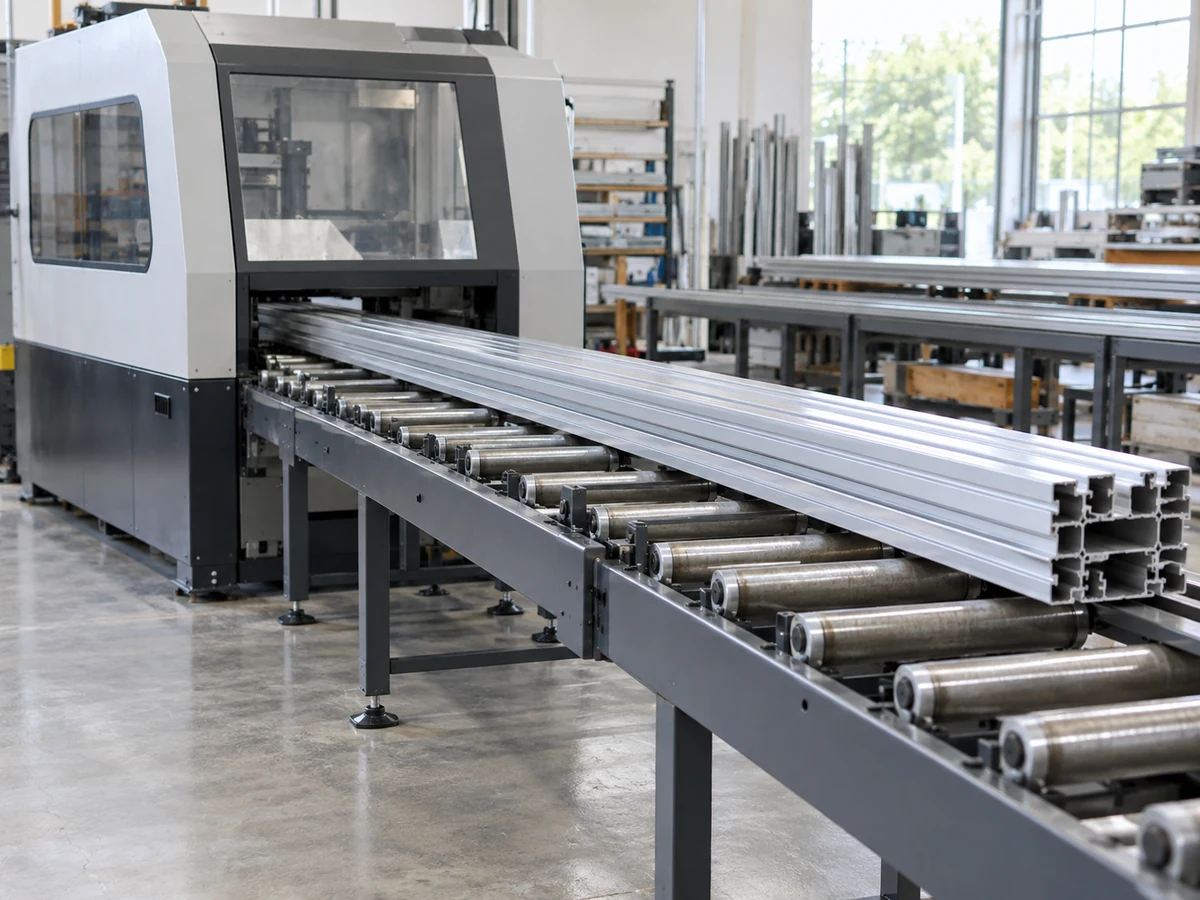
Mark on the layout where chips, cutting fluid, hand contact, and changing ambient light could alter the image. Decide whether inspection occurs before or after cleaning. The camera vendor should propose lighting, shielding, lens access, and a cleaning interval for the actual site. Keyence’s lighting guide explains why illumination geometry must suit the surface and feature: glare and shadows can change what a reflective aluminum face appears to contain.
Separate what the image sees from what the buyer accepts
An aluminum saw outfeed camera may flag a visible mark, but that mark is not automatically a reject. The approved drawing or appearance standard must say which face matters, what size or kind of mark is unacceptable, and how a borderline part is handled. Likewise, a clear top-face image does not prove cut length, end squareness, burr height, or a concealed cavity. Keep those characteristics on a separate gauge or inspection route unless the proposed vision method is demonstrated against an agreed reference.
Ask the integrator to return a characteristic-by-characteristic answer: camera view, image criterion, reference method, accepted/rejected sample set, and the disposition of an unreadable image. Include normal variation in extrusion finish, alloy appearance, protective film, and cut orientation if those occur in the released workload. This is narrower than the whole inspection-cell buy-or-retain decision: it tests whether a particular image can make a particular decision at the saw exit.
Witness a trial that can fail the camera proposal
Run approved good parts, known rejects, and borderline samples through the proposed presentation path. Do not select only still, clean pieces on a bench if production parts move on rollers. Have the quality owner review both false accepts and false rejects against the reference method. Save sample identity, camera image, station conditions, and the reason for each disputed decision. If the image cannot resolve a required feature, record that limit and keep the feature in another inspection step.
Also witness what happens when the camera cannot decide: a blocked lens, missing part, failed trigger, or lost link to the reject device. Define whether the part is held, diverted, or sent to manual review and who can release it. The machine, camera, conveyor and reject mechanism should have separate ownership and interface drawings in the offer. Do not treat a camera demonstration as proof that the complete line has been accepted.
What the JiurunCut video shows
The following video from Jiurun’s own channel shows a related automatic aluminum cutter and a profile moving on its feed path. It is useful for discussing where a part could be presented for a later inspection step. The footage does not show an outfeed camera, the proposed optical setup, a customer sample, a specific acceptance rule, or detection performance.
Send the defect sample with the saw inquiry
If you are comparing a saw-only route with a saw plus vision route, send JiurunCut the released profile drawings, length range, expected outfeed arrangement, and one clear example of the defect you want to catch. Ask for the saw-side part presentation and interface limits in writing. Have the vision supplier and your quality owner agree the camera view, reference method, sample trial, and reject handling before anyone prices “automatic inspection” as a complete solution. Contact JiurunCut with the cut-part brief to start that bounded review.