
Bicycle rim extrusion cutting starts with a route question: where does the stock become an individual hoop blank? A cut that is sensible on a straight extrusion may be at the wrong point, or even the wrong geometry, for a line that forms first and trims later. Ask the rim maker for the actual sequence before specifying a saw, a stop length, or a cut-end acceptance limit.
An aluminum rim profile can begin as an extrusion, and a finished rim may be formed into a hoop. Those facts do not establish one universal order of operations. AMSpec shows bicycle rim extrusion profiles; the Aluminum Extruders Council describes bending extrusions into bicycle rim hoops. The decision here is the interface between those operations, not a claim that a generic saw trial proves a ride-ready rim.
Bicycle rim extrusion cutting begins with the process route
Start with the released profile drawing and a simple process map. Mark extrusion supply length, any straight-stock cut, roll forming, hoop trimming, end preparation, joining, and subsequent inspection. Identify which company owns each step. The map should show the exact station under consideration and the form in which material reaches it.
The Aluminum Extruders Council explains that extrusion fabrication can begin by cutting as-extruded lengths and can include subsequent bending. That is a useful starting point, but not a bicycle rim prescription. A published rim manufacturing patent describes one method in which material is rolled and then cut. Its disclosed route is evidence that the order can differ; it does not describe every manufacturer’s line.
If stock is cut while straight, the buyer can discuss feeding, support, repeatable straight length, and the quality of the ends handed to forming. The straight length must come from the rim maker’s forming and joining plan, including any trial allowance. A finished wheel diameter alone is not a valid straight-stock saw setting. Forming changes the relationship between the starting length and the final joint, and the actual profile and process govern the result.
If the profile is rolled before trimming, the workpiece presented to the cut station is curved. Workholding, access to the cut line, and end presentation differ from straight-stock feeding. A machine demonstrated only on straight bars cannot be assumed to handle a rolled hoop. Request an actual workpiece and fixture review before treating either machine type as suitable.
Let the joint define what the cut end must support
The joint is a downstream interface, not merely the place where two visually square ends meet. Hayes Bicycle describes pinning, sleeving, and welding as rim joining methods. Each can call for different end preparation and different acceptance checks. The rim manufacturer must state which method and end specification apply; this article does not supply an allowable gap, burr height, or welding preparation for an unprovided design.
Separate a saw’s measurable output from a completed joint. At the cut station, the trial may record the specified length, end location, visible burrs, profile distortion, and repeatability under the agreed setup. After forming and joining, the rim maker checks the properties that belong to those operations. A clean saw face is useful information, but it cannot by itself certify hoop roundness, joint integrity, or the finished wheel.

Look at contact points on the real profile
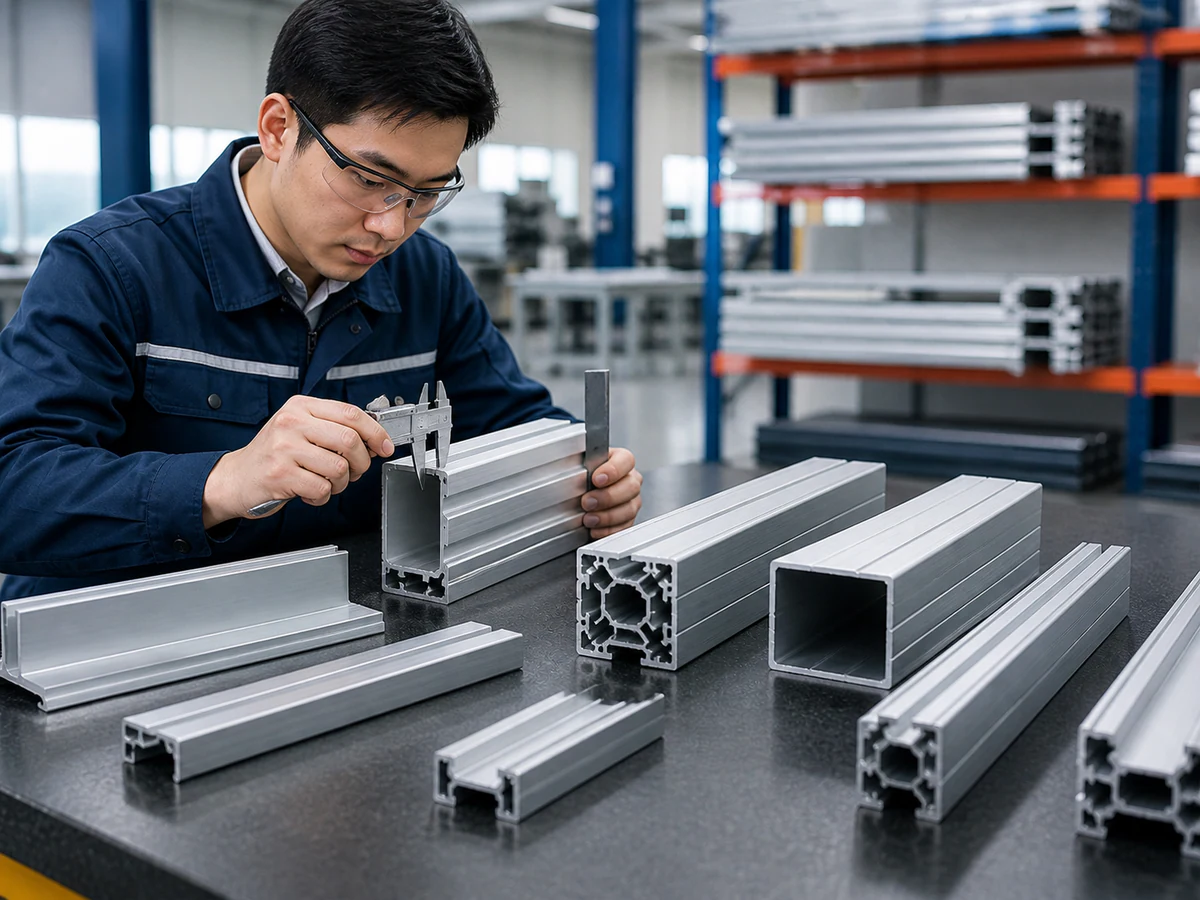
Rim sections are shaped for their own design and can include thin areas and features that make clamp contact consequential. Do not infer safe clamp pressure or blade choice from an outside width alone. Put the actual extrusion section drawing beside the proposed support and hold-down arrangement. Mark the surfaces that may be contacted and the features that must remain clear. Then trial the real material under a documented setup.
Inspect both the cut and the profile after clamping. A length reading can pass while a local wall or edge has moved. If the profile is already curved, determine how the fixture locates the cut plane without forcing the workpiece into a false position. Ask the process owner to define the inspection datum and where measurements are taken; avoid mixing a straight-stock datum with a formed-hoop datum.
The video below shows a Jiurun aluminum cutter and its cutting area. It is an equipment illustration only. It does not show this bicycle rim stock, a rim-specific fixture, a qualified cut, or a performance result for the route discussed here.
Use a trial that follows material downstream
For bicycle rim extrusion cutting, a useful trial starts with a named hypothesis: for example, “Can this setup cut our released straight rim stock to the pre-forming requirement without unacceptable profile movement?” The rim maker supplies the profile, stock condition, cut-stage drawing, required quantity, and acceptance method. The saw supplier records the machine, blade, fixture, feed setup, and measured cut results. Neither party should turn a generic demonstration into an unsupported rim capability claim.
Carry trial pieces through the next operation that matters. For a pre-forming cut, compare the recorded cut results with forming and joint preparation on those pieces. For a post-forming trim, inspect the curved-piece location and the joint-ready ends using the rim maker’s method. If a problem appears downstream, the traceable setup and part IDs help distinguish a cutting issue from forming or joining variation. The acceptance decision remains with the product and process owner.
Release a cut-stage brief, not a wheel-size label
Before requesting a quotation, send the released section and material information; state whether the part is straight or formed when cut; identify the joining method and who prepares the ends; list the cut-stage dimensions and inspection datums; and describe the trial quantity and downstream acceptance owner. If these are still open, request a process discussion and a sample trial scope rather than a guaranteed cycle time or finished-rim tolerance.
For a wider bicycle component sourcing decision, see our guide to choosing an aluminum saw around the component route. For this narrower rim decision, send Jiurun the released extrusion section and cut-stage brief. We can discuss the saw operation and a sample setup against those inputs; the rim maker retains approval of forming, joining, and finished-product requirements.
Sources: AMSpec rim profile; Aluminum Extruders Council, fabrication; Aluminum Extruders Council, bending; Hayes Bicycle, rim joining technology; US7555838B2 process disclosure.