
A dry cut bay becomes wet a minute after the saw stops. The immediate question is not which valve to buy. It is whether the liquid came from the nozzle tip, a line connection, a coated part, or chips already in the enclosure. An aluminum saw MQL nozzle drip needs a timed observation and the actual lubrication-system drawing before anyone treats it as a component failure.
This guide is for a saw already equipped with a minimum quantity lubrication (MQL) system. Jiurun machine variants and third-party MQL packages differ; neither a product photograph nor a general saw video establishes the plumbing on your machine. The decision here is how to document a post-stop symptom, request the right service information, and release a clean cutting process after authorized work.
Trace an aluminum saw MQL nozzle drip from the stop event
Record the last normal cut and the exact point at which the cutting command, lubricant command, and compressed-air supply each stopped. “After shutdown” can mean after the blade retracts, after the automatic cycle finishes, after the control is switched off, or after the pneumatic supply is isolated. Those are different events. A stain found at the start of the next shift cannot establish when the liquid first emerged.
Observe from outside the guarded area during the normal cycle. Note whether fluid appears only at the nozzle outlet, at a hose or fitting, on the workpiece, or below the cut zone. Photograph the location with the machine identification and time. Do not reach into a cutting area to perform a live leak search. If inspection or adjustment exposes a person to unexpected movement or stored air pressure, follow the machine-specific isolation procedure; the UK HSE maintenance guidance explicitly calls for releasing stored energy such as compressed air before maintenance.

Locate the liquid before naming the fault
A small amount left at a nozzle outlet after delivery stops is a different observation from a line that keeps feeding lubricant. A wet part is different again: the part may have picked up fluid during the cut. Wipe and identify the inspection surface under the approved safe procedure, then repeat the observation on a known cycle. Do not infer a check-valve defect solely from a mark in a chip tray.
| Observed location | Question to settle | Useful evidence |
|---|---|---|
| Nozzle tip | Does a finite residual drop end, or does fresh liquid continue to arrive? | Time-stamped sequence after the same stop command; nozzle identification. |
| Line, fitting, or manifold | Is the joint wet before the nozzle or only after fluid runs back along the exterior? | Safe, isolated inspection images and the lubrication schematic. |
| Part, fixture, or chip tray | Was fluid deposited during the cut, transferred by chips, or released after the stop? | Before-and-after condition at the same marked location. |
For an aluminum saw MQL nozzle drip that repeats at each stop, compare the same marked location over several identical cycles. This separation prevents an unnecessary replacement. For example, an unchanged puddle after the next cycle may be old fluid, while a growing drop at the nozzle after each stop is a repeatable post-stop symptom. The observation must be made with the correct oil, stock, program, and normal operating settings; changing those variables while diagnosing destroys the comparison.
What a no-drip claim does and does not prove
Manufacturers use different methods to reduce post-stop delivery. DropsA describes a MiQueL control that draws oil back from the delivery line when powered down. An SKF LubriLean brochure lists no dripping after shutdown as a feature of its described external MQL system. These examples show why the system identity matters; they are not proof that another system, or a particular Jiurun saw, has oil-retraction hardware or the same shutdown behavior.
Ask the supplier for the lubrication-unit model, delivery principle, circuit diagram, approved oil, line layout, and the maker’s normal stop sequence. A reservoir, air-assisted nozzle, metering unit, and check or shutoff device may be arranged differently. Do not specify a replacement valve from an article photograph. Compare the serial number and revision of the installed package with the approved parts list before an order.
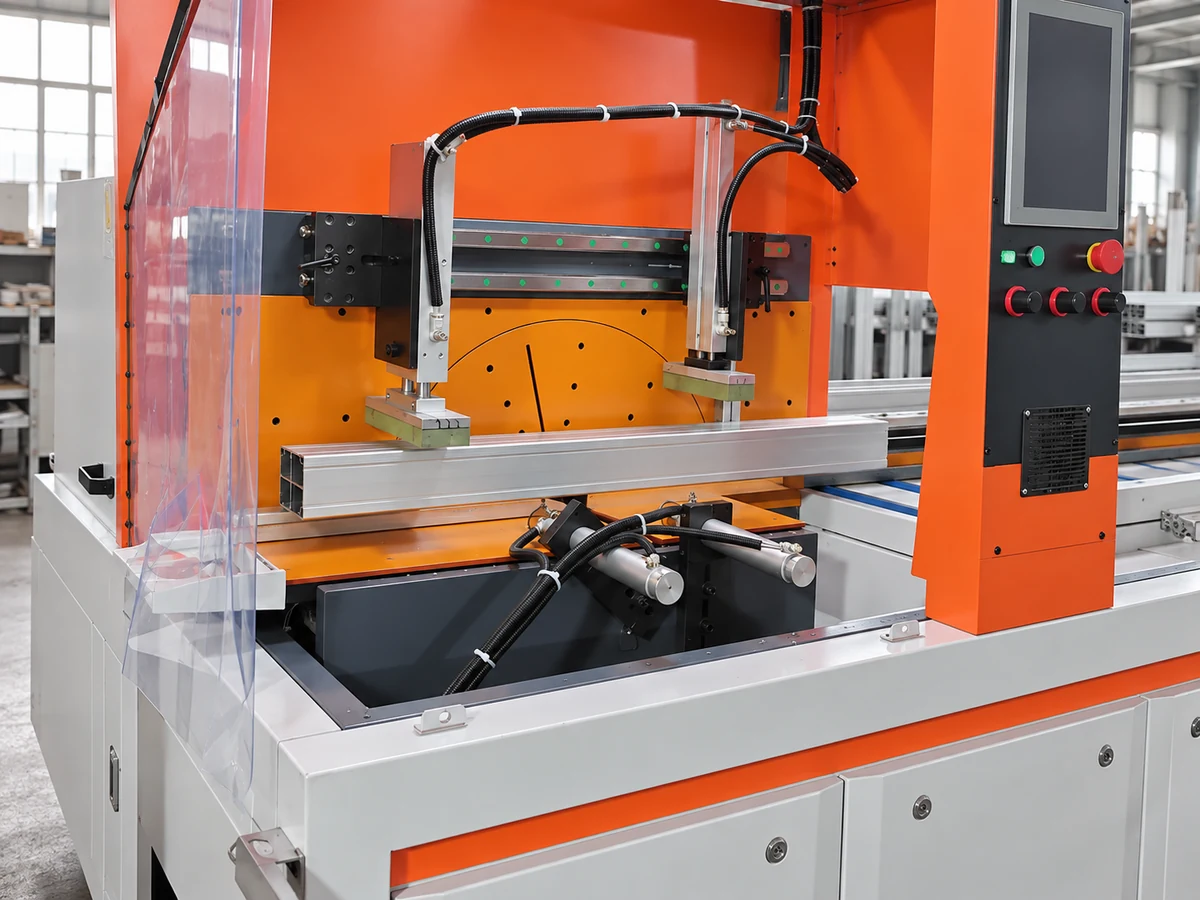
A service request that a technician can use
Send a concise event record, not simply “oil leaks.” Include the saw model and serial number, MQL unit identification, nozzle and line identifiers if available, lubricant product, most recent service or fluid change, and whether the symptom appeared suddenly or grew over several shifts. State the stop event and elapsed time to the first new drop. Add safe photographs of the suspected origin and the marked part or fixture surface. Do not send a video of a worker bypassing a guard to recreate the fault.
Ask the equipment or MQL supplier to classify the observation against that specific unit’s design. Possible service paths include correcting an external connection, checking delivery control and its command, or inspecting a system-specific anti-drip function. These are diagnostic branches, not a universal repair recipe. A technician should follow the relevant manual and the site’s energy-control procedure before opening fluid or air lines.
The same scope belongs in a purchasing request. A quote for a complete lubrication unit and a quote for a nozzle, line, valve, or fitting are not interchangeable. Require the exact approved part number and revision, compatibility with the installed system, what is included in the kit, and who will commission and verify the repair. If the unit is a third-party addition, identify which supplier owns the interface between the saw cycle and the lubrication command.
Release the saw with an observed stop, not a promise
After authorized service, run a controlled normal cycle with the same approved material and settings used to reproduce the symptom. The acceptance record should state the operating condition, the stop command, observation duration, and whether the nozzle, fittings, fixture, part, and chip tray gained new fluid. Compare photographs taken from the same safe viewpoints. Record whether lubrication reached the intended cutting point during operation as well as what happened after the stop; eliminating a post-stop drip by starving the cut is not a sound release.
Inspect accepted cut parts for the finish and downstream handling requirements in the actual job specification. If a customer needs a dry surface for bonding, coating, or packing, define the permitted residue and inspection method in the order or process sheet. An apparently dry sample from a different extrusion or a single short cycle does not establish repeatability across the production run.

The following Jiurun channel video shows a related guarded aluminum-saw cycle. It does not show this article’s MQL circuit, a post-stop drip, the listed machine images, or a repair result. Use it only to understand the kind of cutting station at which a stop-event record would be made.
What to send with a Jiurun inquiry
If you are specifying a new aluminum saw, ask whether the quoted configuration includes MQL at all, and request the lubrication-unit make, controls, approved oil, maintenance access, and shutdown behavior in writing. If you are diagnosing an installed machine, send the serial numbers, timing record, safe photographs, sample stock, and the specific part-cleanliness requirement to JiurunCut. The aim is a machine-specific response and a witnessed release criterion, not an assumed zero-drop promise from a generic video.
Source boundary: DropsA and SKF describe their own lubrication products; HSE addresses maintenance isolation. None of those sources verifies a Jiurun model’s MQL option, a photographed installation, a customer job, or the cause of any observed drip.