
Two aluminum slide blanks can have clean, square ends and still bind when the moving member enters the base. The cut face is only one part of the job. For dovetail slide extrusion cutting, a buyer must decide what the saw supplier is being asked to deliver: cut stock, components ready for later fit work, or a complete slide that already moves to an agreed acceptance standard.
That distinction matters before a saw trial. A short demonstration can show how stock is supported, located, clamped and cut. It cannot, by itself, establish how the dovetail faces will mate after machining, finishing, bearings, adjustment and assembly. A purchase order that says only “square cut aluminum slide, fit to be checked” leaves the most consequential acceptance question without an owner.
Find the surface that actually controls the slide
On a dovetail assembly, the base and moving slider meet along their length. The saw produces an end face across that length. A square end is useful for a specified length or an end-mounted feature, but it does not measure the shape, finish or clearance of the running surfaces. The buyer should mark these as separate drawing features instead of using one “good cut” label for both.
A real manufacturer example makes the distinction concrete. LG Motion describes its UniSlide as made from precision aluminum extrusions, with its dovetail base surfaces subsequently machined and lapped and low-friction polymer bearings fitted to the slider. This describes LG Motion’s product, not a universal process specification for every dovetail design. It shows why the extrusion and the saw-cut blank need not be the final fitted slide.
Start with the released assembly drawing. Identify the base and slider, their sliding faces, any separate bearing or gib, the mounting face, and the part features at each end. If the customer supplies only an extrusion section drawing, ask whether it defines raw stock or a completed sliding component. If the sliding interface is finished downstream, name that operation and the organization responsible for it.
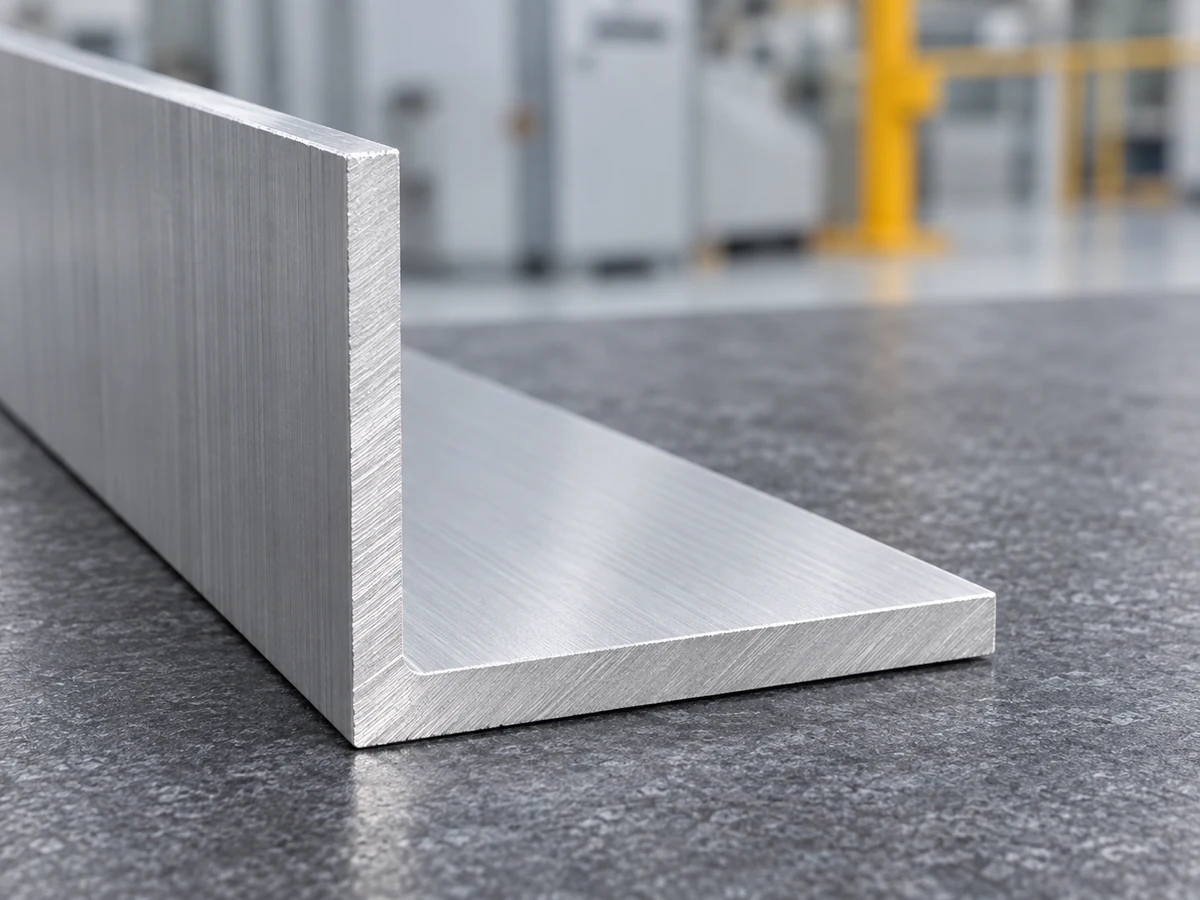
The header image shows conveyor side-rail sections as a related comparison of extrusion cross sections. These are not dovetail parts, a customer project, or evidence of a slide-fit trial.
Dovetail slide extrusion cutting: test the saw blank
The saw can be assessed against requirements tied to the actual supplied stock and released blank drawing. Those may include a length measured between specified end faces, a stated end angle, permissible burrs at an edge that will later mate or mount, and visible damage from supporting or clamping the extrusion. The values, measurement method and sample quantity must come from the buyer’s drawing or an agreed trial plan. They cannot be inferred from a machine video or another application’s tolerance.
The Aluminum Extruders Council’s cutting and forming guidance notes that extrusion cutting is commonly followed by deburring and, for more complex parts, machining. It also explains that burr removal depends on the part and process. For a dovetail blank, therefore, a buyer should state whether the saw stage merely limits burr formation, performs an agreed deburr, or hands the cut edge to a later operation. The answer may differ between an end that accepts a stop and an edge adjacent to the running interface.
Do not declare the sliding face acceptable from an end-face photograph. Inspect the actual location of any burr or chip and ask whether it reaches the future contact path. Conversely, do not demand a completed fit test from a supplier whose scope ends at a cut blank unless a mating component and an agreed assembly method are part of the order.
Write three separate handoff points
A useful quotation identifies the object at each handoff. The first may be an extruded length. The second may be a saw-cut blank. The third may be a finished base, slider or complete slide. A drawing revision and inspection record should travel with the object being accepted, rather than letting the word “slide” silently change meaning between supplier and receiver.
- Extrusion stock. Is the actual section, alloy, temper, finish and length suitable as the input? Request the approved section drawing and representative stock state.
- Saw-cut blank. Are the specified cut length, end geometry and edge and handling conditions met? Request marked first pieces, the measurement method and a cut-edge review against the blank drawing.
- Finished slide. Do the completed mating members move and locate as the assembly requires? Request receiver-approved fit, travel, mounting and functional checks on the actual matched parts.
This is a scope map, not a claim that any Jiurun model supplies all three objects. If the saw supplier offers only machine equipment, its quote should describe the proposed cutting setup and agreed trial evidence; the buyer’s production organization or its component supplier remains responsible for later processing and assembly unless a separate contract says otherwise.
This also prevents a misleading comparison of two offers. A price for blanks cut to length cannot be judged against a price for matched, machined and assembled slides without normalizing the scope. The buyer should ask who supplies extrusion stock, who owns the datum for cutting, who removes edge defects, who machines or finishes the ways, and who accepts final movement. Those ownership answers determine which test evidence belongs in the saw RFQ.
Trial the blank before asking it to prove the assembly
Bring an approved section drawing and pieces of the actual incoming stock to the equipment discussion. Show the proposed cutting datum on the cross section. Where the profile has a thin lip or a functional running face, identify surfaces that must not be crushed, scratched or used as an unapproved clamp contact. Specify which end is the reference for length and whether a stop, fastener or cover will later use that end.
During a representative cut, record how the stock is supported before the blade, where it is clamped and what happens to the short piece after separation. Mark a first piece and a later piece from the same setup. Measure the agreed saw outputs on each. Inspect the cut edge at the end features that actually matter to the next operation. A clean image of the front of a machine cannot replace these observations on the buyer’s own profile.
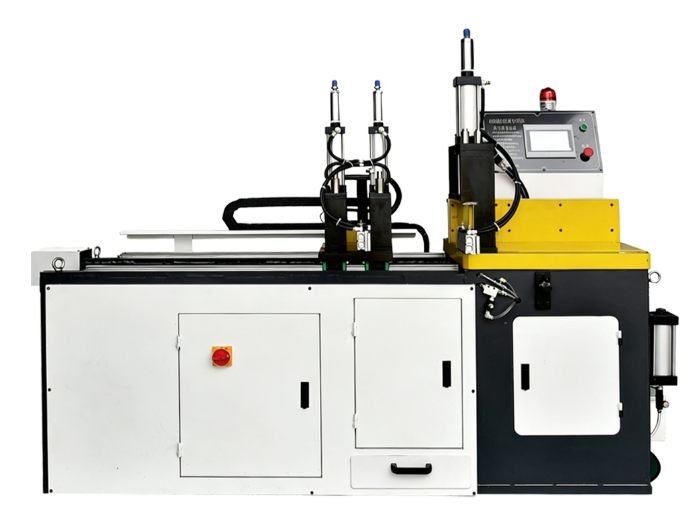
The Jiurun Machinery video below shows a JR-455Q semi-automatic aluminum cutter and its equipment area. Use it to frame questions about the actual feed and clamp arrangement a supplier would propose. The footage does not demonstrate a dovetail extrusion, a particular workholding design for this article, a matched slide assembly or a measured result. Machine selection remains subject to the buyer’s stock and a supplier-confirmed test.
When the blanks go to machining or assembly, give the receiver the relevant first-piece record and the location of any permitted remaining stock. Only then can the receiver decide whether its own finishing and mating checks pass. If final movement is the acceptance target, trial the actual base and slider after the specified downstream steps; do not back-calculate that result from saw squareness alone.
Put the decision into the inquiry
An actionable inquiry can be short, provided it names the handoff clearly. Send the extrusion section and finished assembly drawings as distinct revisions. Identify the supplied stock state, cut length reference, quantity, required end condition and protected faces. Mark which operation will produce the running surfaces and who will inspect slide movement. Ask the saw supplier to respond only to the cutting stage it can demonstrate on the actual material, including any proposed support or special clamping that requires approval.
For related but different workholding procurement, see our guide to preserving a temporary gripping zone on aluminum dovetail blanks. That article concerns whether material can be removed before an accepted fixture route uses it. The decision here is where a cut extrusion blank stops and a fitted sliding assembly begins.
If you are evaluating a circular saw for dovetail slide extrusion cutting, contact JiurunCut with the approved section, actual stock and the cut-blank acceptance requirements. Ask for a profile-specific support and cutting assessment. Treat downstream machining, bearing selection and final slide fit as separate work until the responsible supplier and the completed assembly evidence are agreed.