
A damaged rail on a named canoe and a new OEM trim program lead to different orders. The repair route starts with the maker’s approved replacement and fitting instructions. The OEM route starts with a released section and a cut-part schedule. Neither route can turn the boat’s advertised overall length into a saw setting. This guide covers canoe aluminum gunwale cutting only after the aluminum member itself is identified.
First decide whether there is a cutting order
- Known-model repair: record the maker, model and year or revision; request the approved part and installation sequence.
- Released OEM blank: provide the section drawing, hull-contact and exposed faces, side, finish, later operations and cut list.
- Unresolved trim design: settle the joint, forming and attachment responsibilities before buying cut lengths.
Canoe makers do not all use the same hull-edge rail. Nova Craft’s gunwale guide describes different trim materials across its hull families. Northstar describes a proprietary two-part aluminum system that sandwiches the laminate. Those are model-specific examples, not interchangeable profile specifications.
For an existing canoe, record the maker, model, hull material and revision or year before ordering a replacement. For an OEM design, release an end-view drawing of each rail component. Mark the hull-contact face, any mating lip or flange, the exposed finish face, side orientation and hardware interface. A generic U-channel with a similar outside width is not a substitute for that drawing.
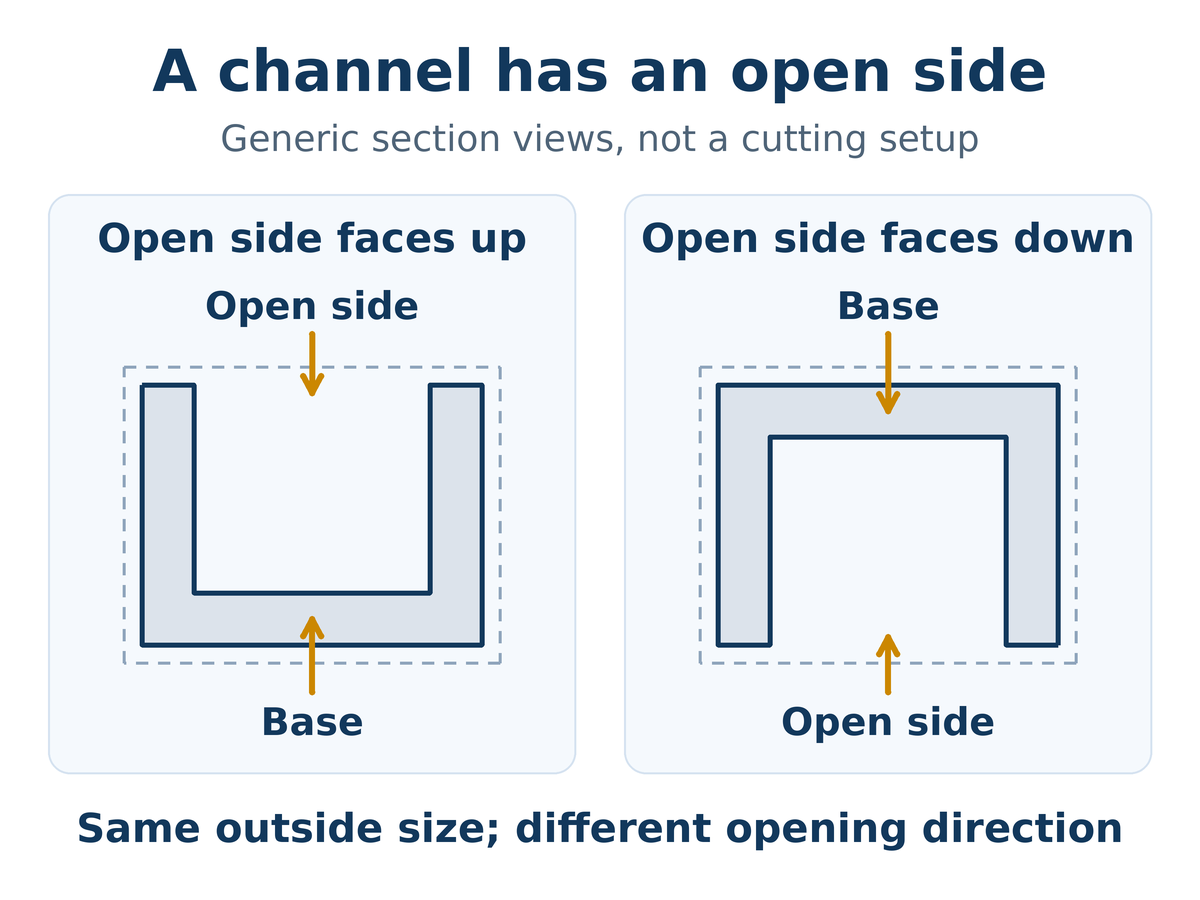
A saw blank is one stage in a fitted rail
Keep three lengths separate in the work order: incoming stock, saw-cut blank and the final fitted rail. The last may be established only during the maker’s approved forming and installation process. Specify where the blank is measured, its end allowance and which party controls final trimming. A published hull length is a useful product description, not a cutting datum.
Port and starboard parts may need separate identification even when the profiles look alike. Mark orientation and the bow or stern end where the released drawing requires it. If the system uses two mating pieces, describe both sections and their assembly order. Any proposed splice, shorter shipping segment or material substitution needs design-owner approval before the saw program changes.
An older Wenonah owner’s manual illustrates replacement steps involving rivets, fitting and matching holes. It is an example of how much happens after a saw cut; use the current instructions for the canoe being repaired. Nova Craft’s repair information also lists gunwale replacement and original parts. A repair buyer should start with the maker’s approved part information rather than reverse-engineering a worn rail from one photograph.
Trial the actual section without marking its fit faces
A slender profile needs infeed and outfeed support, especially as the cut-off separates. Tell the cutting supplier the incoming stock length, section envelope, shortest finished piece and protected finish faces. Mark surfaces that a clamp may touch. A trial with the actual released section should show whether the stock remains located and whether the mating flange or exposed finish is damaged.

Inspect the first blank for the right section and revision, length from the stated datum, specified end angle or squareness, burr condition and visible handling marks. If the rail will later be formed or drilled, the design owner should say which edges may be deburred and which faces must remain intact. A “clean cut” request without those limits leaves too much to interpretation.
Diagnose three different first-off failures
A first-off is useful only when its failure points to the next responsible operation. Keep the accepted drawing and the actual member beside the hull-edge fit check:
- The installed rail appears short: compare the measured saw blank with its drawing datum, then check whether the design allowed for final fitting.
- The flange will not seat: check the released section, orientation and mating pieces before changing length.
- Attachment holes miss: identify who marks and drills them, and whether that operation used the approved reference face.
Seat or thwart attachments, rivet holes, access openings, end caps and joining hardware should each have an owner in the process plan. None is proved by a square saw end. The maker also owns approval of the completed hull, including any structural or on-water claims. The cutting supplier can document the blank, cut quality and agreed handling only.
A good cut can still be the wrong side
State whether the order is a matched port/starboard set, straight stock for later fitting, or individually labeled cut members. Mark part number, revision, side, cut status and quantity on each bundle. Separate visible finished faces and protect ends so transport does not undo an accepted first-off. Keep samples and rejected pieces apart from production stock.
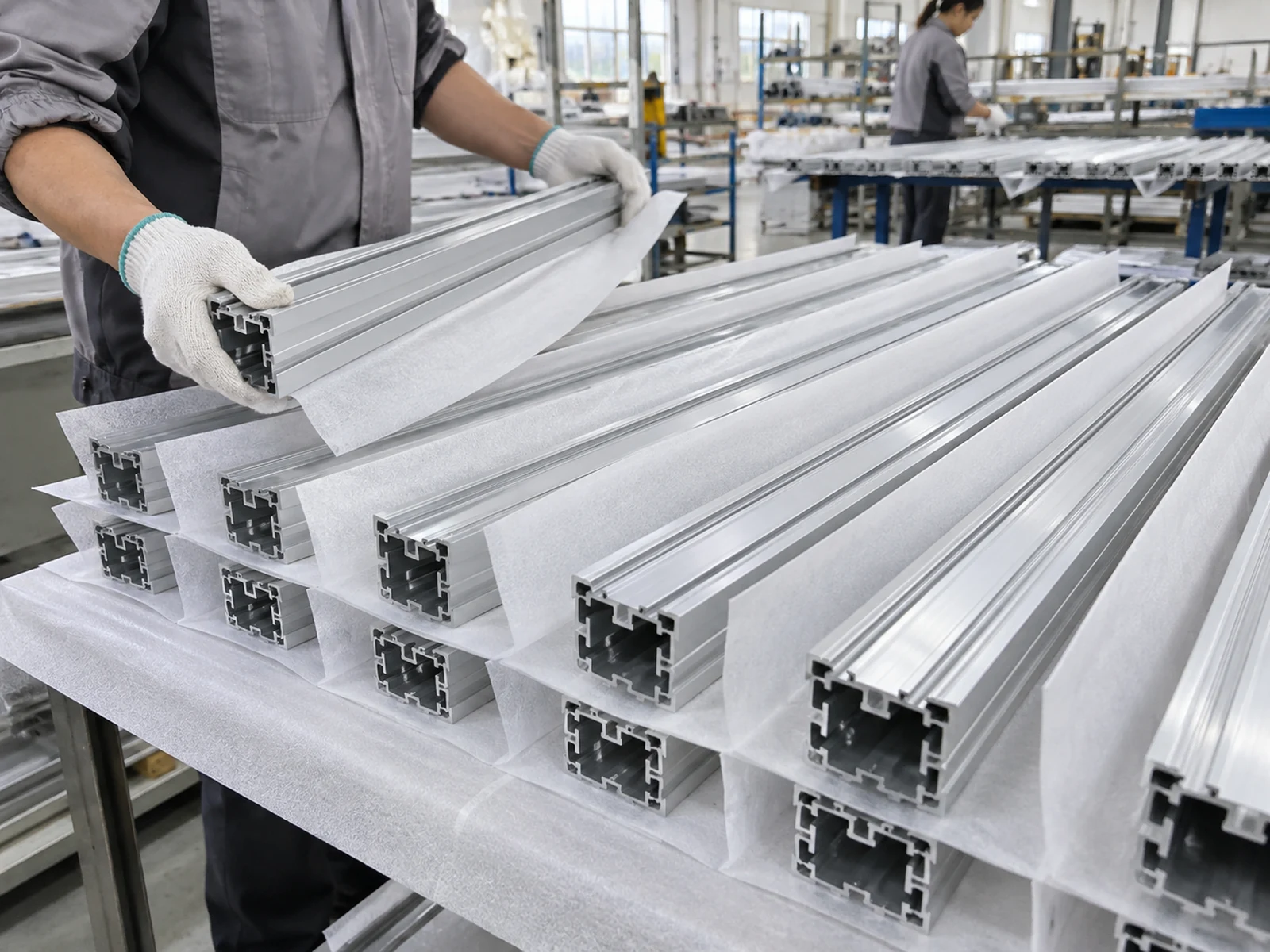
What the saw demonstration can establish
This playable video is from Jiurun Machinery’s own channel. It shows a general aluminum-profile sawing workflow, not a canoe, an approved gunwale fixture, a customer repair or verified performance for this material.
Repairing one identified canoe? Obtain its maker-approved replacement and fitting procedure. Running a released OEM trim family? Send Jiurun the section drawing, side-specific blank list and first-off limits for a saw-process discussion. Compare outside cutting with an in-house saw only after the actual section mix, setup changes, inspection work and packing time are known. The canoe designer or responsible repairer approves the finished hull-edge system.