
Marine sliding cabin door track cutting starts with a door system, not a loose length of aluminum. A straight cut can still leave the cabin entry door binding if the top and bottom tracks, moving train, rollers and installed clearances were specified as separate parts. An OEM or repair buyer should first identify the approved track family and who owns the final door fit. Then a cutting supplier can quote the defined straight blanks and first-off checks without being asked to certify a complete marine closure.
A real single sliding cabin entry door track set distinguishes the top track, bottom track, bottom train, roller trucks and fasteners. Its seller notes that lengths are customer specified and that some replacement hardware differs by generation. A companionway sliding door manufacturer describes an integrated track and roller system within a finished door. These are examples of different supply boundaries, not interchangeable specifications for a Jiurun saw or for every boat.
Image note: The article images show related aluminum stock, straight-extrusion feeding and cut-end review. They do not show an approved marine door track, this article’s customer project, a replacement-kit fit test or verified marine performance.
Decide what the cutter is actually supplying
Draw a line between a cut blank and a functioning entry system before requesting price. A blank may be a straight upper rail, lower rail or train profile cut to an approved drawing. A complete system also requires compatible trucks or rollers, shims, door panel, stops, seals, mounting holes, deck interface and final adjustment. The door-system owner or installer must release these interfaces. A saw supplier can check a cut face and length against agreed references; those checks alone cannot prove that the door slides smoothly after installation.
For a repair, identify the original door and track generation before buying a nominally similar extrusion. The FPMarine example separates center and offset trains and calls out different truck sizes. That is a useful reminder to compare a physical sample or approved section drawing with the mating components. Do not infer compatibility from outside width alone.
Seven marine sliding cabin door track cutting checks
1. Release the exact top, bottom and train profiles
Attach a drawing revision, section view and a clearly identified physical sample for each extrusion being cut. Label upper track, lower track and train separately even if two pieces look alike. Record material and finish only when the system owner has actually approved them. If a replacement kit uses a shim or a different roller family, keep that decision with the kit supplier; a cutting quote should not silently substitute a profile.
2. Give every length its own datum
State whether length is measured end to end on the raw blank, from a hole center to an end, between installed stops, or from the door opening after field measurement. Mark which end is datum A, whether ends are square, and whether any left and right pieces differ. Provide a cut list with quantity by length and revision. A single overall opening width is not enough to derive top-track, bottom-track and train lengths.
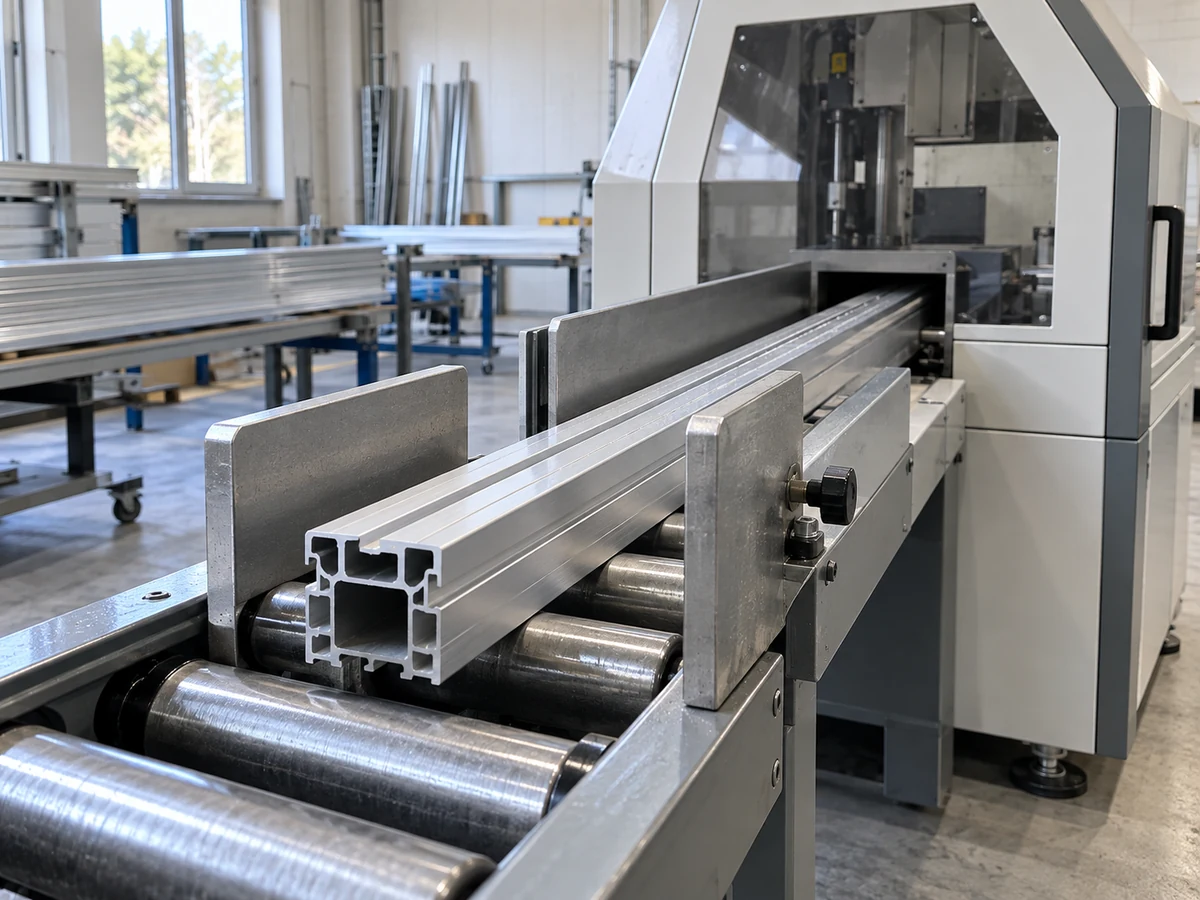
3. Identify the contact faces that must survive clamping
On the section drawing, mark the surface that runs against a roller or slider, the visible face and any seal or fastener channel. Tell the cutter where a clamp may bear and where marks are unacceptable. A trial should use the released profile and support method, since a thin flange or open edge can move under pressure. Do not translate a generic machine demonstration into a clamp force or tolerance promise for this part.
4. Separate saw work from later holes and fitting
List holes, countersinks, end stops, shims, drainage openings and installation trimming in a separate operation column. If the purchase is for straight saw-cut blanks only, state that these are excluded. If the shop must drill, machine or deburr a local feature, provide its coordinates and inspection method. This prevents a low blank price from being mistaken for a finished rail-kit price.
5. Define the cut-end condition at mating points
Specify the allowed burr, sharp edge, squareness and finish damage in terms the buyer can inspect. A train that stops against a cap, a track that meets a return, or a visible end near the cabin entry may each need a different acceptance call. Use a first-off sample to check the actual profile, not a generic aluminum coupon. Set aside any weather seal or corrosion claims for the party approving the whole assembly and its finish.
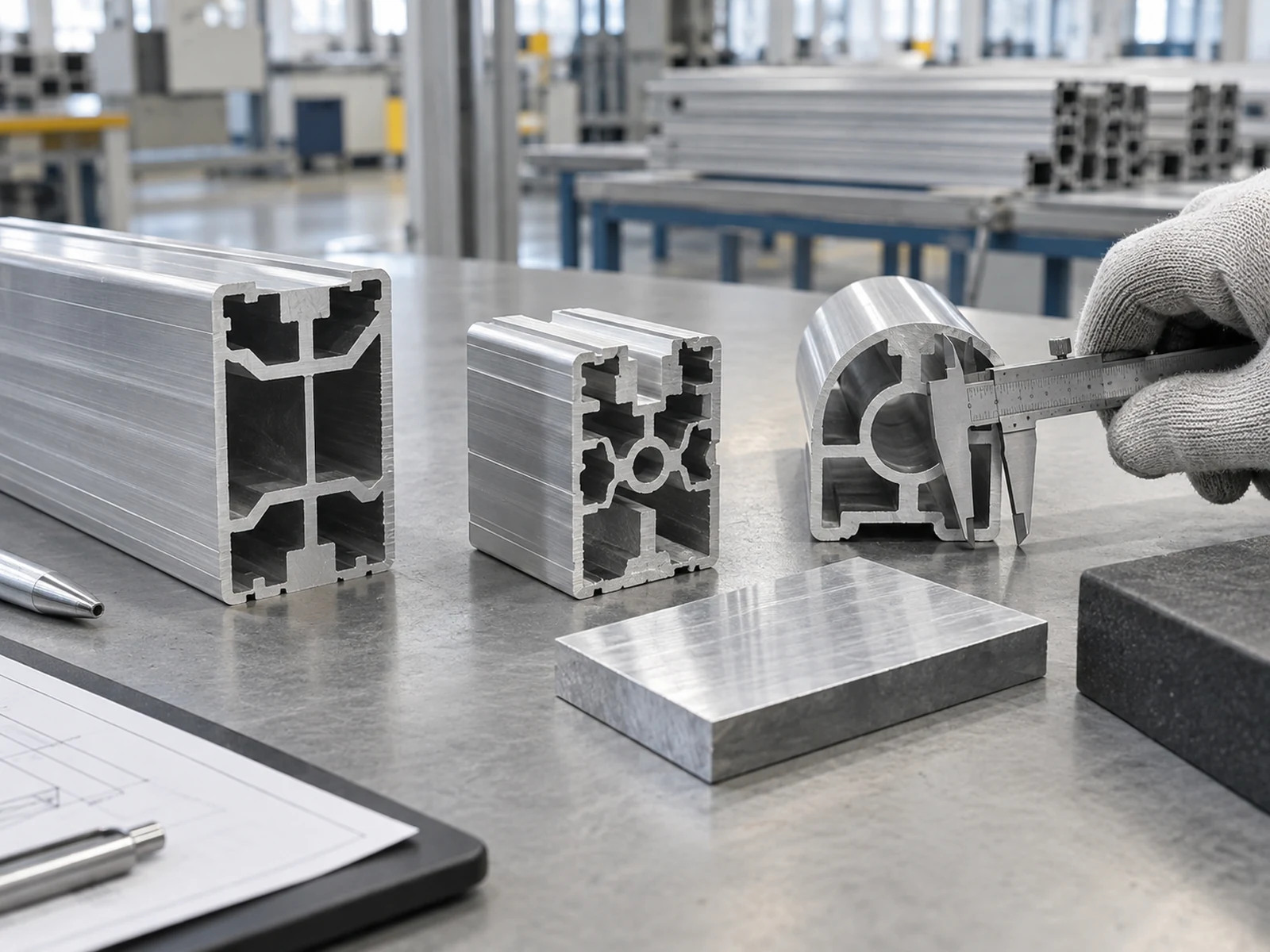
6. Agree who performs the first assembly fit
Ask the system owner to assemble one top and bottom pair with the intended train and trucks. Record whether the door moves through its travel, clears the opening, reaches its stops and leaves the intended seal contact. If the fit fails, separate length, section, roller, shim and installation causes before revising the cut list. A cutter’s first-off approval should cover its own part dimensions and end condition; the door builder signs off the assembled function.
7. Pack and label matched sets
Track blanks are easy to mix when several doors share a similar profile but differ in length or handedness. Specify labels by door, upper/lower/train role, drawing revision and finish batch. Protect sliding and visible faces against rubbing in transit. For repair work, also label any part that must be held until field fit. The cut list and packing list should reconcile so an installer does not have to identify parts by guesswork.
Factory cutting or field fitting?
Factory cutting is suitable when the door-system owner has released reliable dimensions, the extrusion is straight and repeatable, and one approved first-off can govern a batch. Field fitting may be needed when an existing opening, deck, shims or previous modification cannot be captured confidently before removal. The buyer can also split the route: order deliberately oversize approved blanks, then have the installer perform and document final trim. In that case, distinguish the factory blank length from the final installed length and assign responsibility for the final cut.
Do not treat this choice as a claim that every marine door can be processed on the same saw. The profile section, length, support, cut orientation and finish determine whether a representative trial is needed. Bent, curved or assembled door structures require a separate review from straight track blanks.
Example of a clear purchase packet
For a pair of sliding cabin entry doors, an OEM could send three released section drawings, separate top, bottom and train cut lists, a sample of each extrusion, mating roller and shim information, datum-marked length drawings, visible-face marks and first-off acceptance forms. The saw supplier would quote the straight cut members and any explicitly requested finishing operations. The door builder would verify the first assembled set with its own rollers, stops, seals and deck interface. This example defines responsibilities; it is not a report of a Jiurun customer order or trial.
The same distinction helps avoid overlap with deck hatch frame cuts, where hinges, acrylic and the deck opening drive a different fit check, and with boat rub rail cuts, where a hull protection system has its own insert and joint details.
See the cutting equipment in a separate context
The following Jiurun video shows a general aluminum extrusion cutting machine. It does not show this marine track material, an approved top/bottom profile, a matched roller kit, a customer trial or proof of door performance.
Frequently asked questions
Can the bottom track be cut to the same length as the top?
Only if the released door drawing says so. Mounting position, returns and the train or stop arrangement may change the required length and datum.
Does a clean cut prove that replacement rollers will fit?
No. Roller and train compatibility belongs to the approved track family and the door-system owner. Check the mating components with a first assembly fit.
Who approves a field-trimmed rail?
The repair or installation owner should define the final datum, record the trim and accept the installed door. Factory first-off evidence covers only the factory-supplied blank and named operations.
Request a cut-blank review
If you have released straight-track drawings, profile samples and a defined first-off plan, contact JiurunCut to discuss the cutting portion of the RFQ. Send the mating roller and finish requirements as context, and name the party responsible for complete door fit. That keeps the quote tied to inspectable cut members rather than an unverified marine-system claim.