
Portable dance floor aluminum edge trim should be quoted as part of an approved floor system, yet a cutting RFQ often arrives as a list of aluminum lengths. That list is not enough. Panel edge members, perimeter transition strips, corner pieces, and locking interfaces may use different profiles and different end details. A saw can produce a clean individual part while the assembled floor still has a gap, a reversed lock, or an unfinished exposed edge.
This guide helps a dance-floor manufacturer or parts buyer turn the approved floor design into a useful aluminum cutting RFQ. It covers what to identify, how to plan the first-off cut, and what to inspect before a batch is released. It is a sourcing checklist, not a specification for any manufacturer’s proprietary floor system.
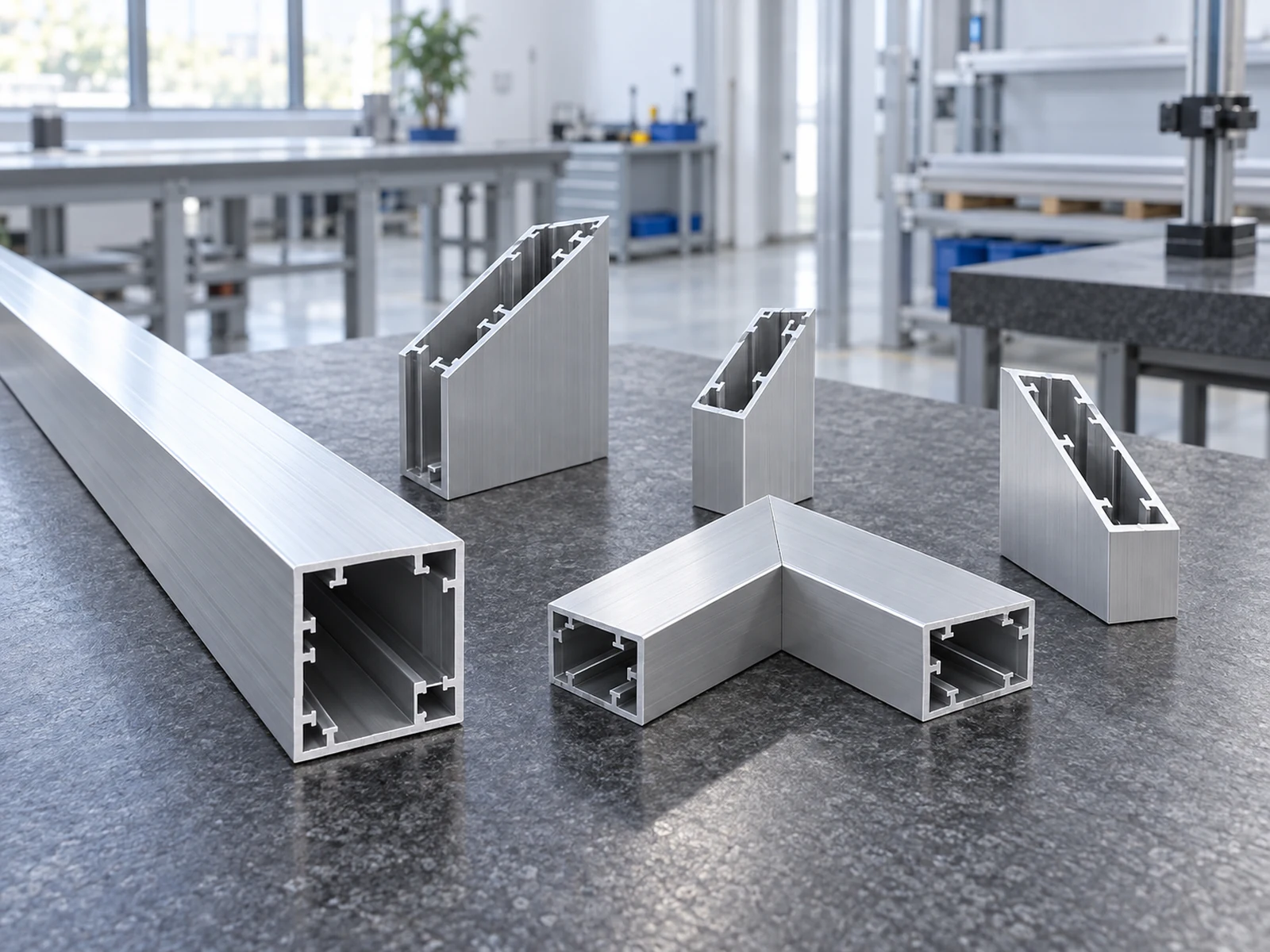
Begin with the approved floor system, not a generic trim angle
Two manufacturer examples show why the drawing matters. McCourt describes its Ovation portable floor with anodized extruded aluminum panel and perimeter trim, tongue-and-groove panel edges, and cam locks. Palmer Snyder describes its EventXpress floor with anodized aluminum trim and an optional polyurethane corner that interlocks with the center edge trim, removing the need for a mitered trim corner in that option. These are examples of different interface decisions, not interchangeable dimensions or a claim that JiurunCut supplied either product.
First identify the floor family, revision, panel size, finish, and the exact interface drawing. Ask whether the quoted item is a panel frame extrusion, a tongue or groove edge, a perimeter ramp, a corner element, or a locking carrier. The words “dance floor trim” can describe several incompatible parts.
Separate the cut list by function and end condition
For each unique extrusion, issue a section drawing and a part-level cut list. A panel edge might meet another panel; a perimeter ramp meets the room floor; a corner may be an aluminum miter, a molded connector, or another approved joint. These positions do not necessarily share the same finished length or saw angle. Record the function before grouping parts by stock profile.
- Panel frame or edge: identify the face that sits against the panel core, the visible face, tongue or groove orientation, and the location of any lock cutout or hardware datum.
- Perimeter transition: identify the floor-facing lip, walking edge, slope direction, and where the transition terminates at a corner.
- Corner solution: mark the approved connector type and whether the aluminum ends are square, mitered, or cut to another drawing-defined shape.
- Handed parts: show left and right orientation on the drawing and in the packing list. Mirrored parts can look similar on a loose bench.
Do not convert a finished outside dimension into a saw length by assumption. The correct datum may be the panel core, the extrusion shoulder, the lock centerline, or the exposed trim tip. Put the measurement points and tolerance on the approved print.
Make the RFQ testable before selecting a saw setup
A useful request gives the cutting team enough information to decide how the section can be supported and held. Send a profile cross-section, alloy and temper if known, wall thickness, raw stock length, finish condition, cut lengths and quantities by part code, required angles, visible surfaces, tolerance datum, burr criteria, and sample acceptance method. Include the mating panel and lock details if a joint must be evaluated. If the lock aperture or drill feature is made in a separate operation, say so; a saw quote should not silently include it.
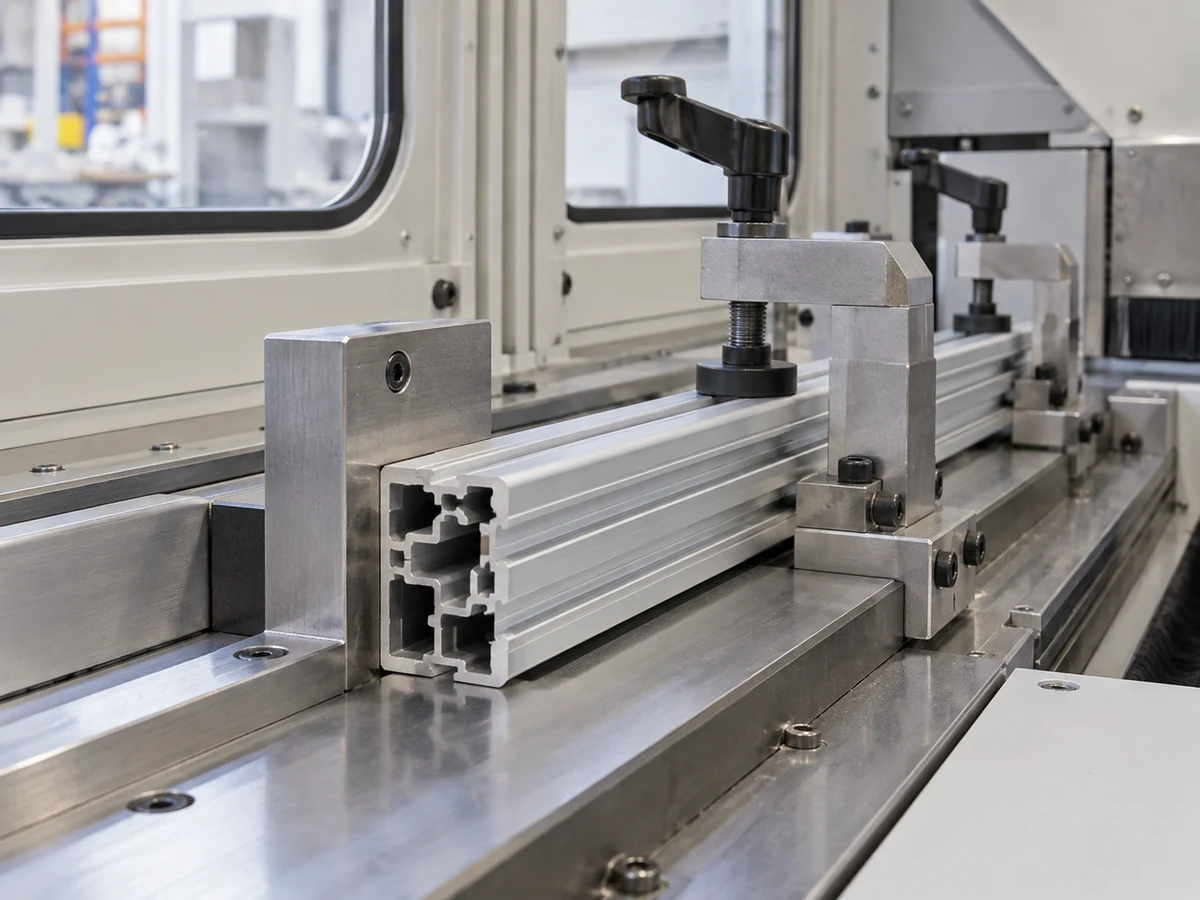
Ask the supplier to state which faces will contact guides and clamps, how the sloped or thin edge will be supported, and how the visible anodized face will be protected. An unfixtured thin lip can flex or mark even when a heavy frame section nearby is stable. The actual extrusion, orientation, fixture, blade, and inspection plan should be reviewed together before any capacity or cycle claim is made.
Use a first-off assembly check, not just a tape measure
Before production, cut a small first-off set that includes the actual straight member, each distinct end condition, and the relevant corner or mating part. Measure the lengths from the print’s stated datum and inspect angle, squareness, burrs, visible-surface marks, and whether any thin flange has distorted. Record the result by part code and drawing revision.
Then dry-fit the sample with the approved panel and locking hardware. Check whether the tongue enters the groove without force, the lock engages in the intended direction, the perimeter transition sits as designed, and the corner leaves no unintended opening. A dry fit can expose a datum or handedness mistake that a standalone length reading cannot. Obtain the floor manufacturer’s acceptance criteria for installed gaps, edge condition, and safe transition; do not invent universal limits from another product.
If an optional molded corner replaces mitered aluminum, compare that option’s bill of materials and saw list separately. The point is to cut the correct approved assembly, not to optimize a miter that the selected system does not use.
Protect the finish and label kits by installation position
Anodized trim is often a visible and handled surface. Agree on a protective film or separator strategy before quoting the batch. Keep long ramps, short edge members, right-hand pieces, left-hand pieces, and corner components in distinct labeled groups. Labels should carry the part code, revision, length or cut condition, quantity, and intended edge position. A count by total pieces alone can hide a missing corner or a swapped handed piece.
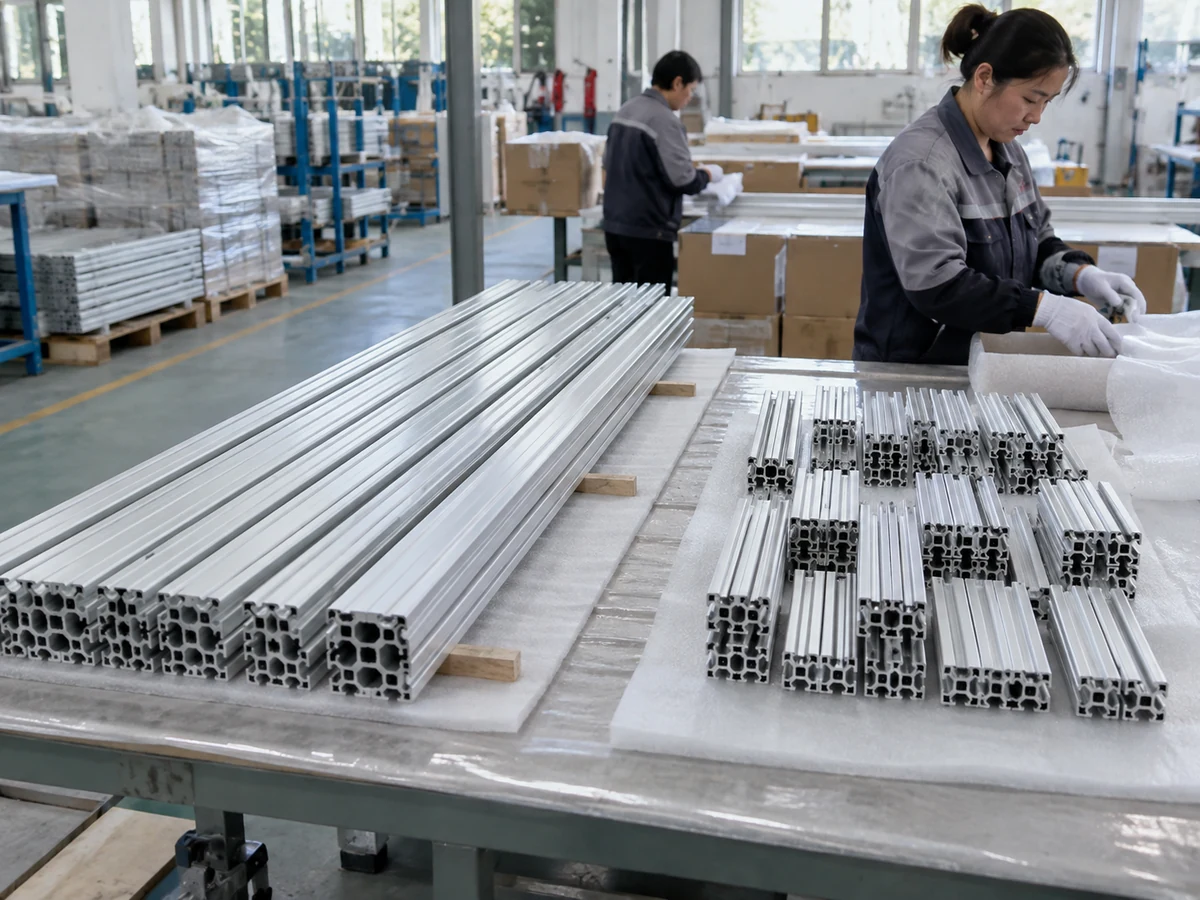
For a modular floor, the final question is whether the arriving parts form complete installation kits. Ask for a sample pack-list layout and a first-off photo set before approving the full cut quantity. If pieces are to be transported repeatedly, agree on separators and handling marks with the floor maker rather than assuming a one-time shipping standard is sufficient.
Portable dance floor aluminum edge trim: 6 RFQ fields
| Item to send | Why it changes the cut or acceptance check |
|---|---|
| Floor system and drawing revision | Prevents mixing different panel, lock, ramp, or corner designs. |
| Extrusion section and finished surface | Defines support, clamp contact, and cosmetic protection. |
| Part code, length datum, angle, handedness, and quantity | Separates visually similar members with different installed positions. |
| Approved lock, panel, and corner sample | Allows the first-off assembly to be checked against the real interface. |
| Dimensional and visual acceptance criteria | Turns a clean-looking cut into a measurable pass or fail decision. |
| Kit and packing map | Helps prevent missing or interchanged perimeter pieces at installation. |
What JiurunCut can review from your drawing
JiurunCut makes industrial aluminum circular-saw cutting equipment. The appropriate machine and fixture direction depends on the real extrusion, part length mix, cut angles, finish, and output plan. Share the approved section print and a representative sample so the cutting route can be assessed; a machine model or numerical cutting result should be confirmed only after that review. You can compare JiurunCut machine directions and send the drawing for an engineering discussion.
Video context: This playable video is from JiurunCut’s own YouTube channel and shows an aluminum cutting machine. It is a general equipment view, not a dance-floor trim trial, an approved fixture for this project, or evidence of a particular result.
Common buying questions
Can one saw program cut every aluminum piece in a portable floor?
Only if the approved part drawings, section orientation, end conditions, and fixture requirements allow it. Start by separating panel edges, perimeter transitions, and corner parts; then assess which part codes can share a setup.
Should every exposed corner be mitered?
No universal rule applies. The selected floor system controls the joint. Palmer Snyder, for example, offers a corner option that eliminates mitered trim sections. Quote the approved assembly rather than a guessed corner treatment.
What is the most useful sample approval?
Approve both the measured cut parts and a dry fit with the real panel and lock. Record the approved revision, visible-face condition, and kit labels so the same criteria can be used for the batch.