
Cold room sliding door rail cutting is a different purchase from cutting the door-leaf frame. The upper rail carries the movement path, while brackets, rollers, a wall guide, stops and the door leaf make up the wider system. An RFQ that says only “cut the aluminum rail to length” leaves the buyer and saw supplier guessing which section, joint, end and handling details belong in the price. This guide turns those decisions into a release-ready cut-part package.
Intertecnica’s SM20 X manual sliding system describes an anodized aluminum rail supplied in two sections, and separately identifies a wall guide, hook and strike, door stopper and anti-derailment features. That is an example of a real system boundary, not a drawing or performance claim for a Jiurun customer. ASSA ABLOY’s food-care sliding chiller door is offered as a complete unit with an installation frame and notched aluminum rail. The correct saw scope depends on the buyer’s approved system drawing.
Buy the rail segment, paired set or complete system deliberately
First decide what arrives at receiving. A cut-rail order can contain bare, individually identified rail blanks. A paired set can contain two numbered segments from one approved profile family, with the joining operation assigned to the door-system builder. A complete sliding-door package also includes the carriage and guide components, seals, door leaf, installation frame and system approval. The cutting supplier should quote only the work it is actually asked and qualified to perform. A cut end does not establish track continuity or cold-room sealing.

The existing cold-storage door frame cutting guide addresses the wall or leaf-frame members. Here the purchasing object is the sliding rail path above the opening. Do not combine their cut lists just because both use aluminum extrusions.
Cold room sliding door rail cutting: approve section and segment map
Send the current rail cross-section drawing or controlled profile reference, alloy and temper if specified, finish state on arrival, stock length and allowed substitutes. Mark the top, rolling face, wall-facing side and any section feature that the clamp must avoid. The supplier must be able to distinguish the travel surface from a nonfunctional outside face. If the actual hardware system uses a two-section rail, issue a segment map showing the identity and target length of each piece, joint location, end orientation and whether both ends are factory-cut or one end is intentionally left for field trimming. A single overall opening width is not a substitute for this map.
The buyer should also identify the datum from which each length is measured: physical cut end, reference face, bracket centerline or another controlled feature. Show which organization owns mounting holes, notches, slots and the final joint treatment. A saw-only quote should not quietly include drilling, machining or installation decisions. If the hardware supplier provides a pre-notched rail, clarify whether the saw will cut before or after those features exist.
Prove the locating and support method on the actual profile
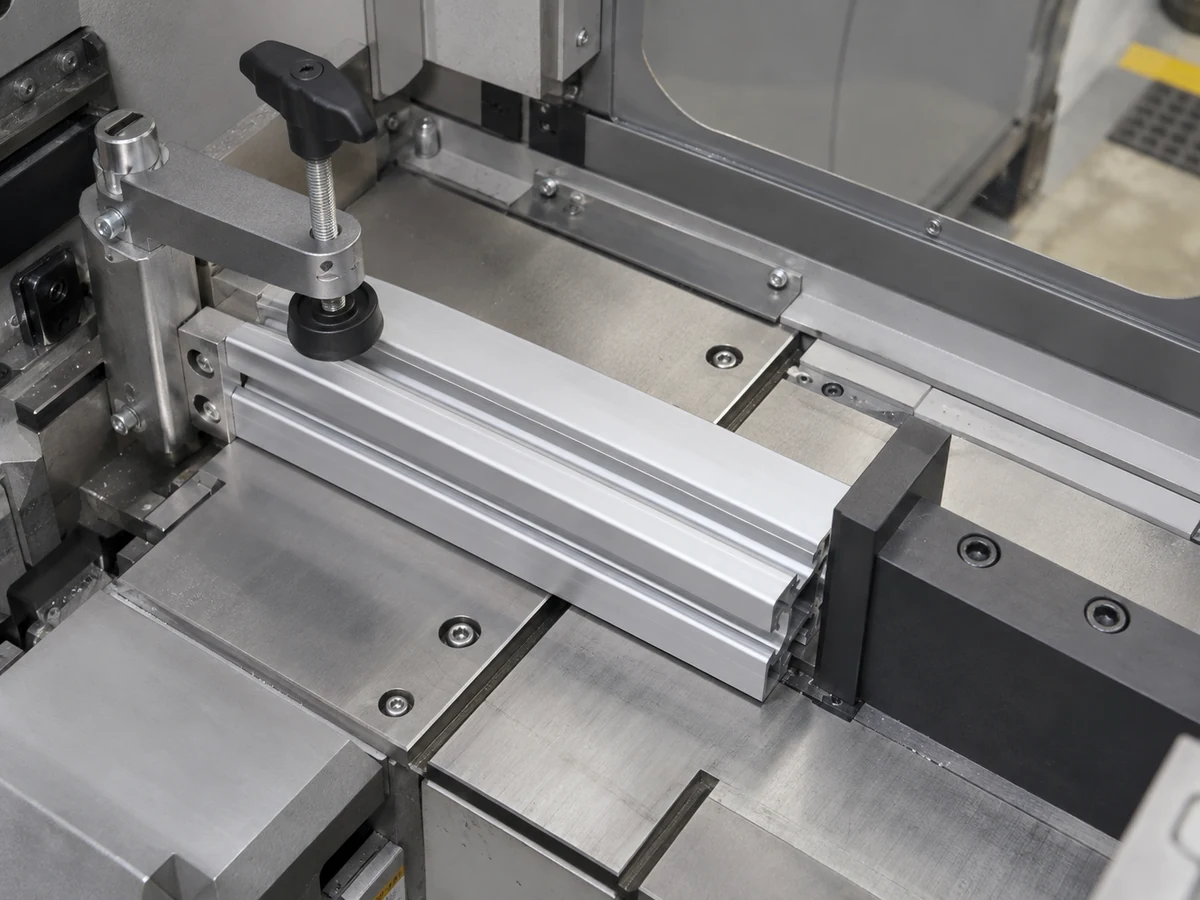
Anodized faces, open channels and long slender sections create practical fixturing questions. Ask the saw supplier to show the approved contact faces, lateral stop, support span and orientation for the released extrusion. The objective is a repeatable cut without crushing a channel lip or marking a visible face; it is not a promise that any pictured fixture fits this rail. Agree how the first piece will be compared with the buyer’s drawing before a batch starts. Where a shorter offcut has less support, treat it as a separate handling condition rather than assuming the long-stock setup transfers unchanged.
Keep track geometry and system acceptance separate
The cut-part inspection plan should name the characteristics the saw supplier can verify: segment length from the released datum, end squareness or angle where specified, visible burr condition, local section damage and finish marks at agreed faces. Use the drawing’s tolerances and inspection method, not generic numbers from another door system. Record first-off results for each rail identity and each materially different setup. Package the two segments under the same opening and revision so receiving can trace the pair.
The door-system builder then checks the joined rolling path, carriage clearance, stops, anti-derailment parts, wall guide, hand of opening and installation fit with the actual hardware. Fermod’s manual sliding-door system illustrates why guide and cover details vary by system. A clean saw cut alone does not verify smooth travel, rated door loading, temperature performance, sealing, food-area suitability or site compliance. Those tests and approvals remain with the responsible system supplier and installer.
Put these fields in the rail-cutting RFQ
- Approved rail drawing, revision, section orientation and permitted material or finish substitutions.
- Door system and opening identifier; rail segment A/B identities, quantities, cut lengths and end/joint map.
- Length datum, cut-angle and burr/finish acceptance criteria from the controlled drawing.
- Input condition: bare stock, anodized stock, pre-notched rail or customer-supplied system component.
- Explicit owner for notches, holes, joining, roller path, stops, wall guide, covers and final installation.
- Representative first-off sample, inspection record and disposition authority before batch release.
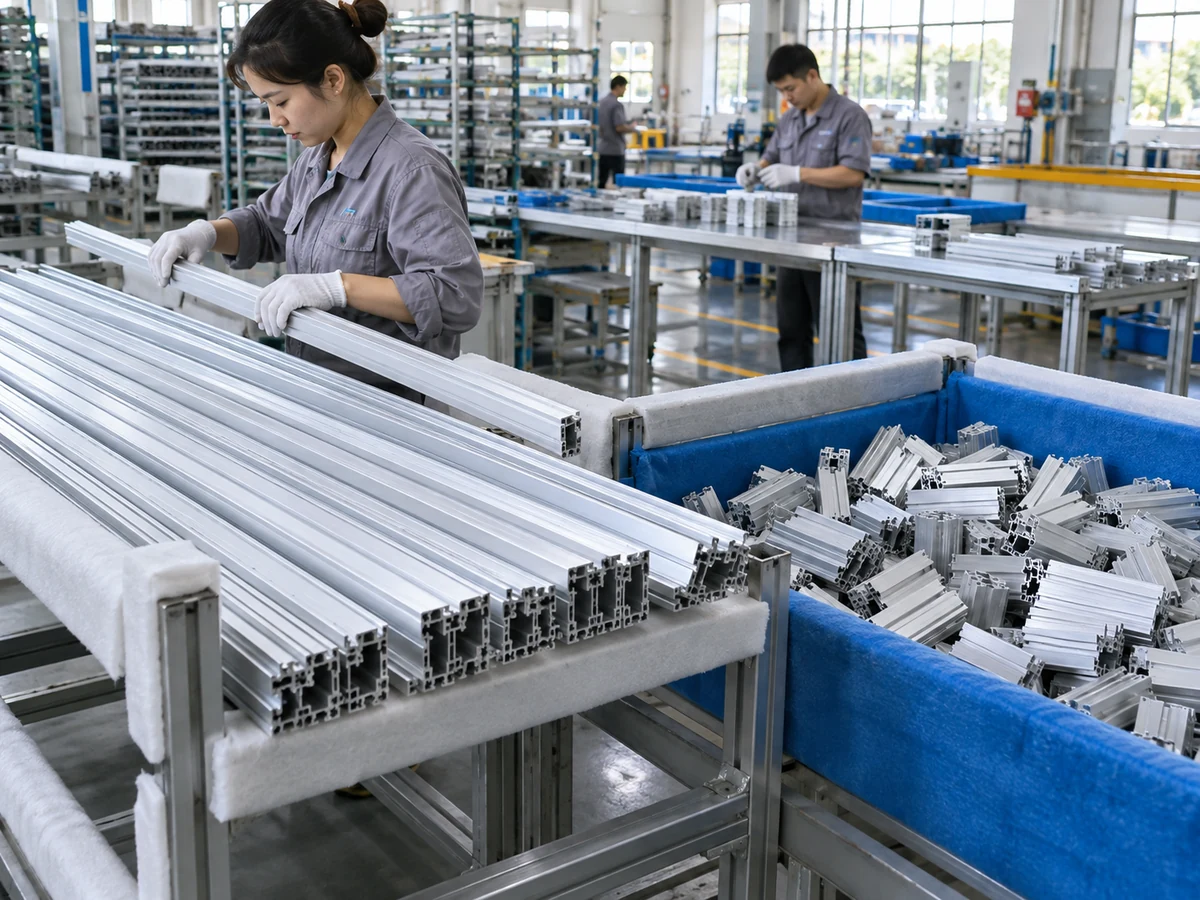
- Protection and label scheme that keeps matched rail segments together through transport and receiving.
For cold room sliding door rail cutting, a useful quote response states exactly what is included, what drawing was used, what first-off evidence will be supplied and which work stays with the door-system builder. If a supplier proposes another rail profile or a one-piece replacement for a released split-track design, request engineering approval before pricing it as equivalent.
Related Jiurun machine view
Send the drawing before choosing the saw
For a practical machine discussion, send Jiurun the approved upper-rail cross-section, stock and segment lengths, cut-end map, finish condition, batch mix and first-off criteria. We can review the cutting and fixturing questions against that package and identify what still needs the door-system supplier’s approval. Contact JiurunCut with your rail-cutting RFQ; do not use a general machine video or a sample photo as a substitute for your released drawing.