
Projection screen case cutting begins with a purchase boundary: is the factory buying an approved aluminum case blank, a fabricated headbox, or a complete retractable screen? A finished screen also contains a roller, surface, operator or motor, brackets and service access. A saw can prepare the specified extrusion; it cannot establish the safety, performance or installation approval of the assembled product. This guide helps an OEM buyer release a case cut list and a meaningful saw trial without mistaking the extrusion for the finished screen.
The distinction matters because the visible screen width, the roller length and the overall case length can be different measures. The exact relationship belongs to the selected system drawing. For example, Da-Lite’s Advantage series offers a case or box only, a complete screen, or a surface, roller and motor assembly. Those are different procurement routes, not interchangeable names for a single saw-cut part.
Choose the case supply route before specifying a saw
First identify whether the screen is manual, electric, surface mounted or recessed. This does not determine the case material by itself. Ask for the actual manufacturer’s approved section and bill of materials. A case-only order may include an extrusion, separate fascia, endplates, mounting features and access parts. A complete screen order may already contain those items and may not justify separate in-house cutting. A buyer who orders bare case stock must also decide which supplier fabricates holes, knockouts and endplate interfaces.
Draper describes its Acumen E electric screen with an extruded aluminum case, removable fascia and floating mounting brackets. Its installation instructions distinguish the case, fascia, motor wiring access panel and electrical knockouts. These examples show why access and attachment features belong in the case drawing. They do not provide the dimensions or fabrication instructions for another manufacturer’s extrusion.
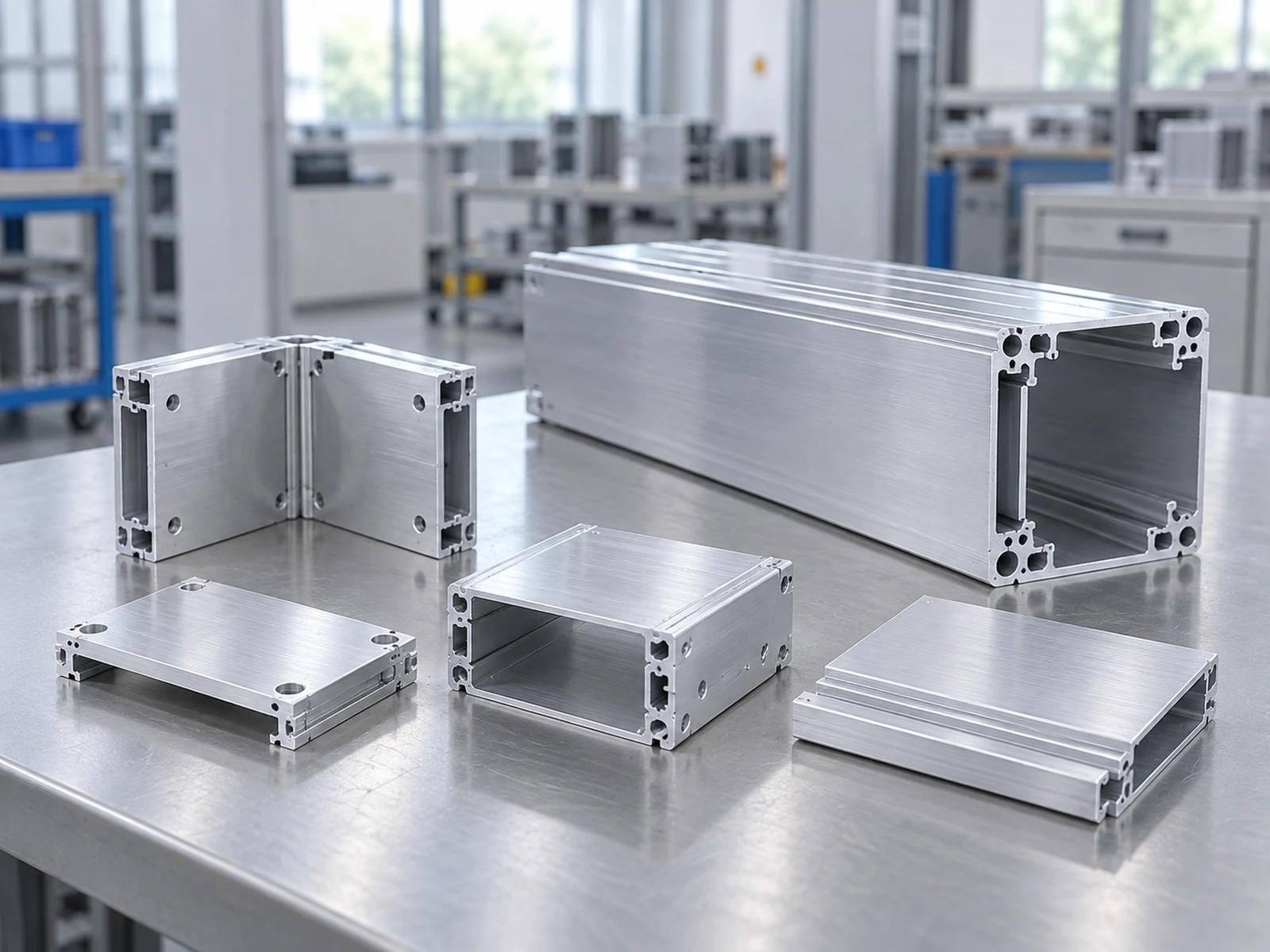
Projection screen case cutting: name each datum
A useful cut drawing identifies the case spine, removable fascia and any other separately cut extrusion. For each member, give the finished length, cut angle, measurement endpoints and tolerance on the approved part print. Mark the front and top faces and the left and right end orientation. If an endplate seats inside the extrusion, state whether the measured case length includes it. If a fascia overhangs the spine, release the two lengths independently. Do not infer both lengths from the projected image width.
Mounting channels and access openings require equal care. State whether brackets slide along a channel or attach at fixed positions, and whether a cut end must preserve room for a stop, endplate fastener or service tool. On an electric unit, locate any wiring entry and access panel from the approved electrical and mechanical design; a plain saw blank is not an electrically finished case. On a recessed unit, establish which visible flange or closure edge is protected and which work is completed at the ceiling installation stage.
The drawing should also identify any prefinished surface. A powder-coated or anodized case may need a different protection and inspection route from a raw extrusion. Agree on whether the shop cuts before finishing or cuts a finished profile, and what edge condition is acceptable afterward. Do not assume a cut face receives the same finish as the original extrusion.
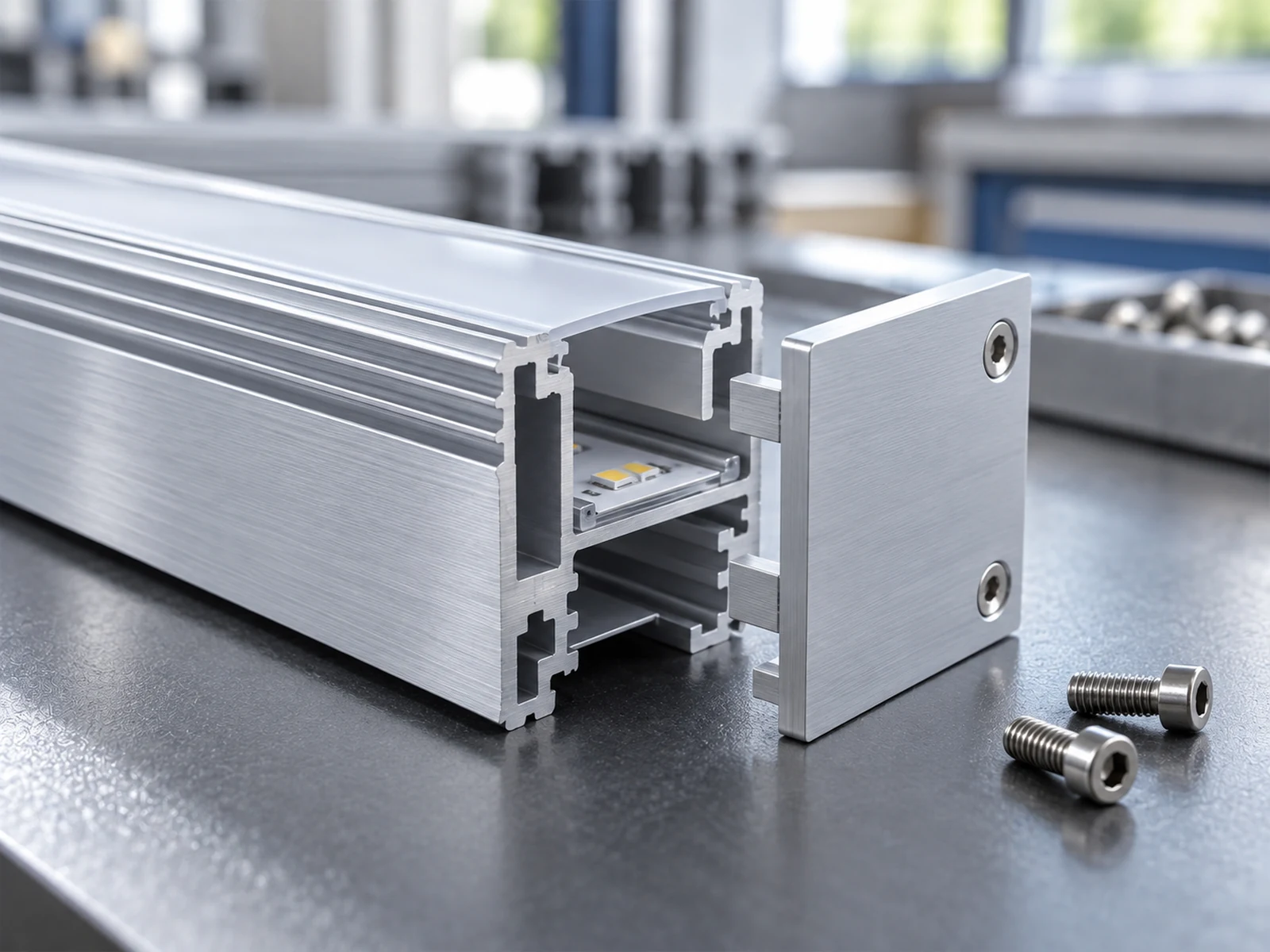
Plan the long-profile trial around the real cross-section
Long case extrusions need stable infeed and outfeed support so the section does not tip, twist or drag its visible surface across a hard contact. A trial should use the approved extrusion and a representative stock length, not a convenient short bar with a different section. Inspect the maximum and minimum case lengths in the planned product family. Verify that the machine’s working envelope, feed method and support arrangement handle both without relocating a reference face mid-batch.
Clamping is profile-specific. Identify strong contact zones on the section drawing and keep clamps away from a delicate fascia lip, bracket channel or thin cavity wall. If the case spine is asymmetric, mark its orientation before feeding. Ask the saw supplier to show how a first-off piece is located and how the same datum is retained after a cut. A visibly clean edge is useful, but it does not by itself prove the fascia will clip on or a bracket will slide freely.
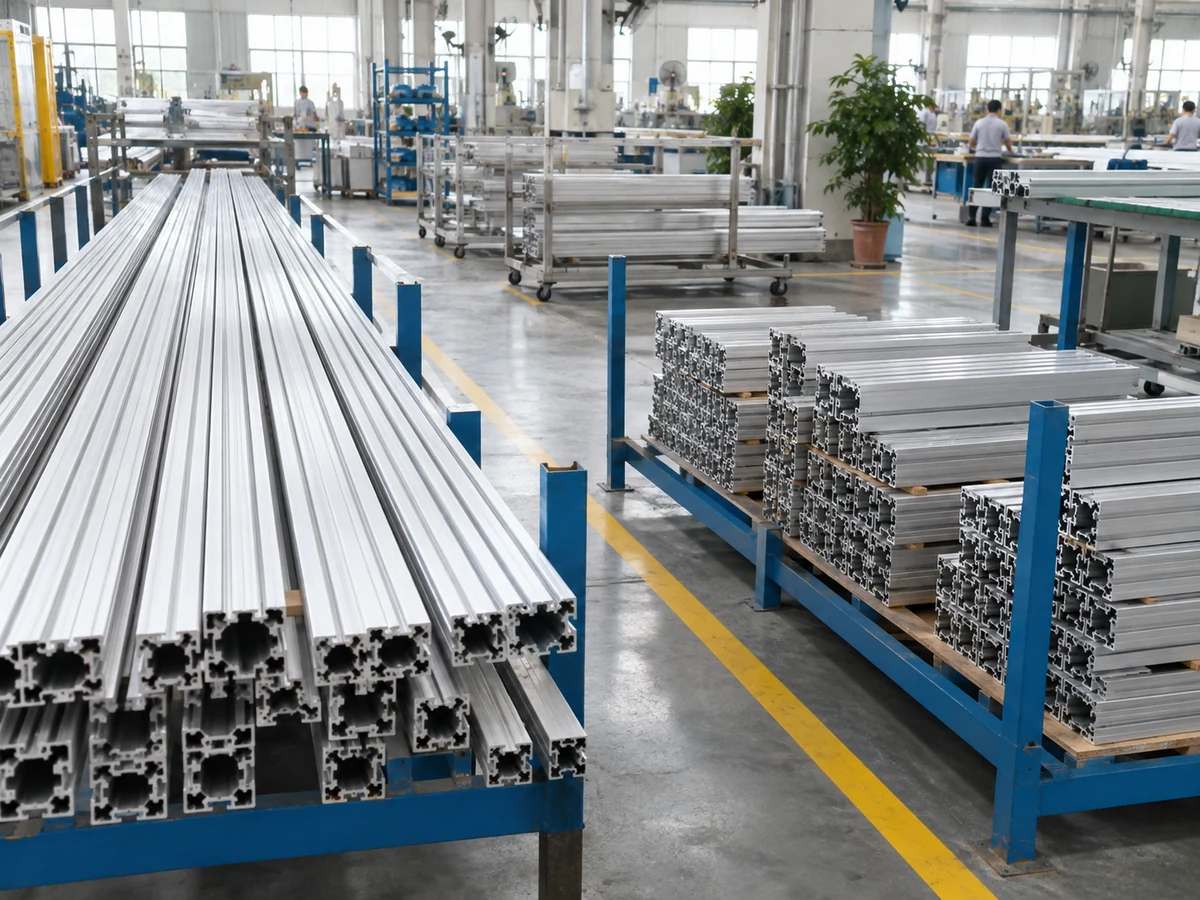
Make first-off acceptance an assembly check
Before approving a production batch, cut a small set that represents the shortest and longest released case variants. Record the stock ID, drawing revision, cut program, reference face and measured end-to-end length. Inspect end squareness or the specified angle, burrs inside access slots, coating damage on visible faces and any deformation of the bracket channel. Then bring the approved endplates, fascia and brackets to the bench for a dry fit. A cut that passes a ruler check can still obstruct a clip, screw or service opening.
Separate the remaining acceptance responsibilities. The screen assembler verifies roller and surface clearance, motor or spring installation, wiring and operating function. The installer verifies structural attachment, level, ceiling opening and site requirements under the chosen manufacturer’s instructions. The cutting equipment supplier can help assess the extrusion and cut plan, but should not certify the completed screen or building installation from a generic machine video.
What to include in the RFQ
Send the approved case and fascia cross-sections, alloy and temper if specified, finish, stock lengths, annual and batch quantities, shortest and longest blanks, measured length datum, left/right orientation and cut-end criteria. Add endplate and bracket drawings, the location and owner of holes or knockouts, packing method for visible surfaces, and first-off parts to be assembled. State clearly whether the quote is for bare saw-cut blanks, fabricated case members or a complete case kit. If the screen manufacturer requires a proprietary case or will sell a finished unit, compare that route before investing in a separate cutting operation.
A useful machine trial should return the measured samples, the accepted reference-face and clamp plan, a note on surface protection, and an explicit list of operations still outside the saw. Do not ask for a generic accuracy promise that is disconnected from the actual profile, fixture and acceptance drawing.
Related Jiurun equipment view
The Jiurun video below is a related aluminum-cutting machine demonstration. It does not show a projection-screen case, the proposed model configuration, a customer trial or proof of fit. Use it only to frame questions about feeding, fixture access and handling before the approved extrusion is reviewed.
For a different product architecture, our fixed projection-screen frame cut guide addresses a perimeter member kit rather than a retractable headbox. If you have a released case extrusion drawing and cut list, send the section and first-off requirements to JiurunCut for an equipment-fit discussion.