
Aluminum returnable rack frame cutting should begin with an approved rack drawing, not a photograph of a finished shipping rack. The buyer needs to know which straight members are actually aluminum, which pieces will be cut at this station, and what the receiving fabricator expects to receive. A saw can prepare member lengths; it cannot by itself establish a rack’s transport rating, part protection, stacking behavior, or suitability for a return loop.
That boundary matters because a returnable rack is a packaging system. PakFab lists steel and aluminum racks alongside custom dunnage, while Morrison describes contact points, retention, handling and empty-return needs as part of its rack design work. Those sources show why a frame cutting RFQ must identify the approved material and the separate protection package. They do not establish that any particular Jiurun saw, aluminum profile, or sample in this article is approved for a shipping program.
1. Confirm the aluminum returnable rack frame cutting scope
Ask the rack owner for the released configuration and revision. Is it a fixed rack, a collapsible design, a wheeled dolly, or a mixed fleet? Does the approved drawing specify aluminum extrusions, square tube, or another member form at all? Many returnable racks use steel; a saw quotation for aluminum should not silently substitute materials. Mark each candidate aluminum member on the drawing: base rail, upright, cross member, brace or replaceable rail. Identify the stock supplied to the saw and the accepted state after cutting.
A practical first decision is the make-or-buy boundary. Compare three offers for the same rack revision: straight cut members delivered as a labeled kit; prepared members with later holes, joints or surface work; and a complete rack with dunnage and validation. The saw investment belongs only to the retained cutting scope. Do not compare a bare cut-part price with a complete, qualified shipping rack price and call the difference a machine saving.
2. Build a member schedule a saw supplier can quote
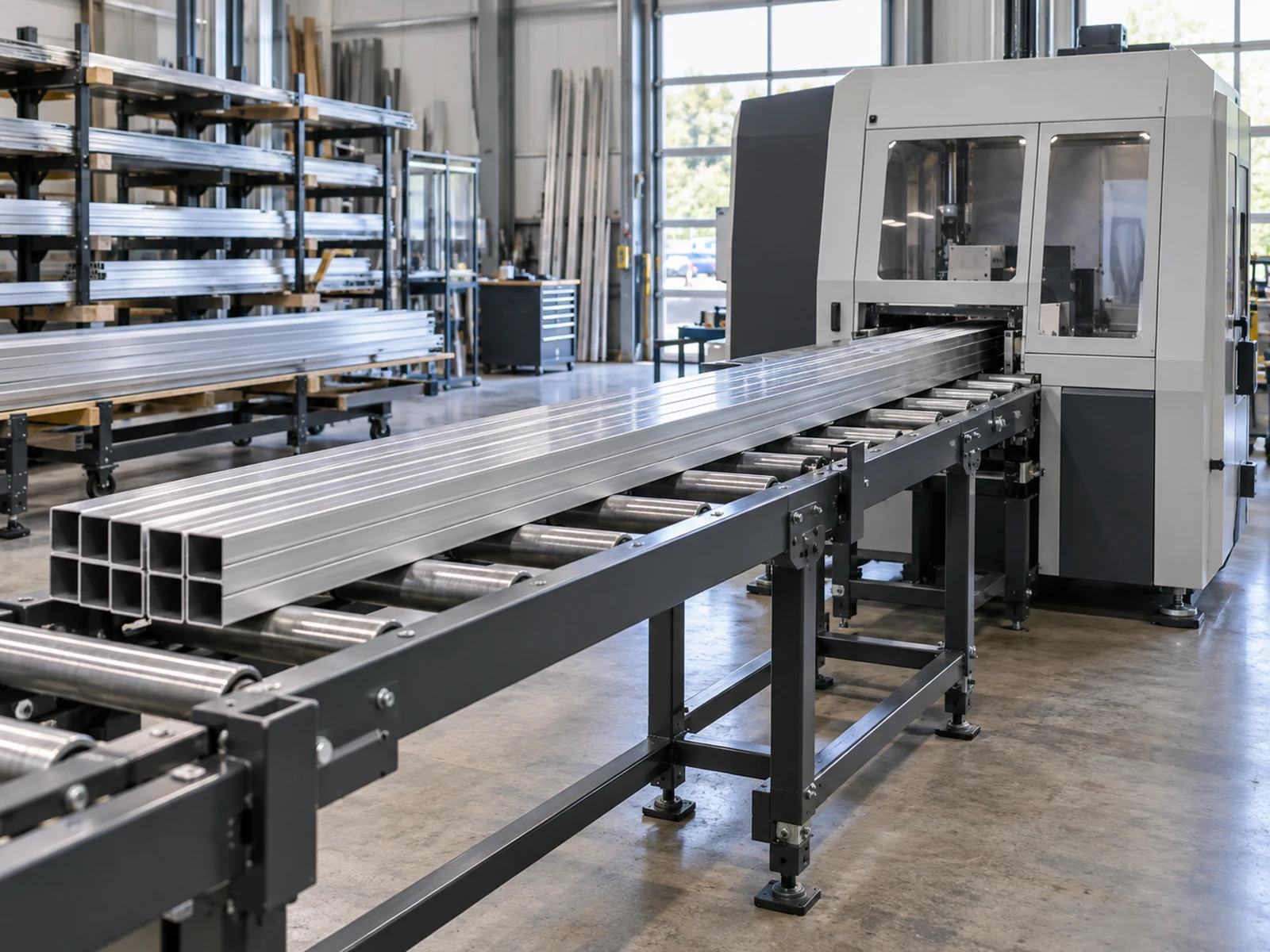
For each retained aluminum member, record a part number, revision, profile drawing, alloy and temper if specified, incoming stock length, required cut length and the datum used to measure it. Add the quantity per rack, expected rack mix per period, end geometry, visible or contact-sensitive surfaces, and the next receiving operation. A nominal rack outside length is not a member cut length: connector gaps, joint preparation, feet, corners and purchased fittings can change it. If those details are not released, request a controlled sample and a drawing decision before a capacity quote.
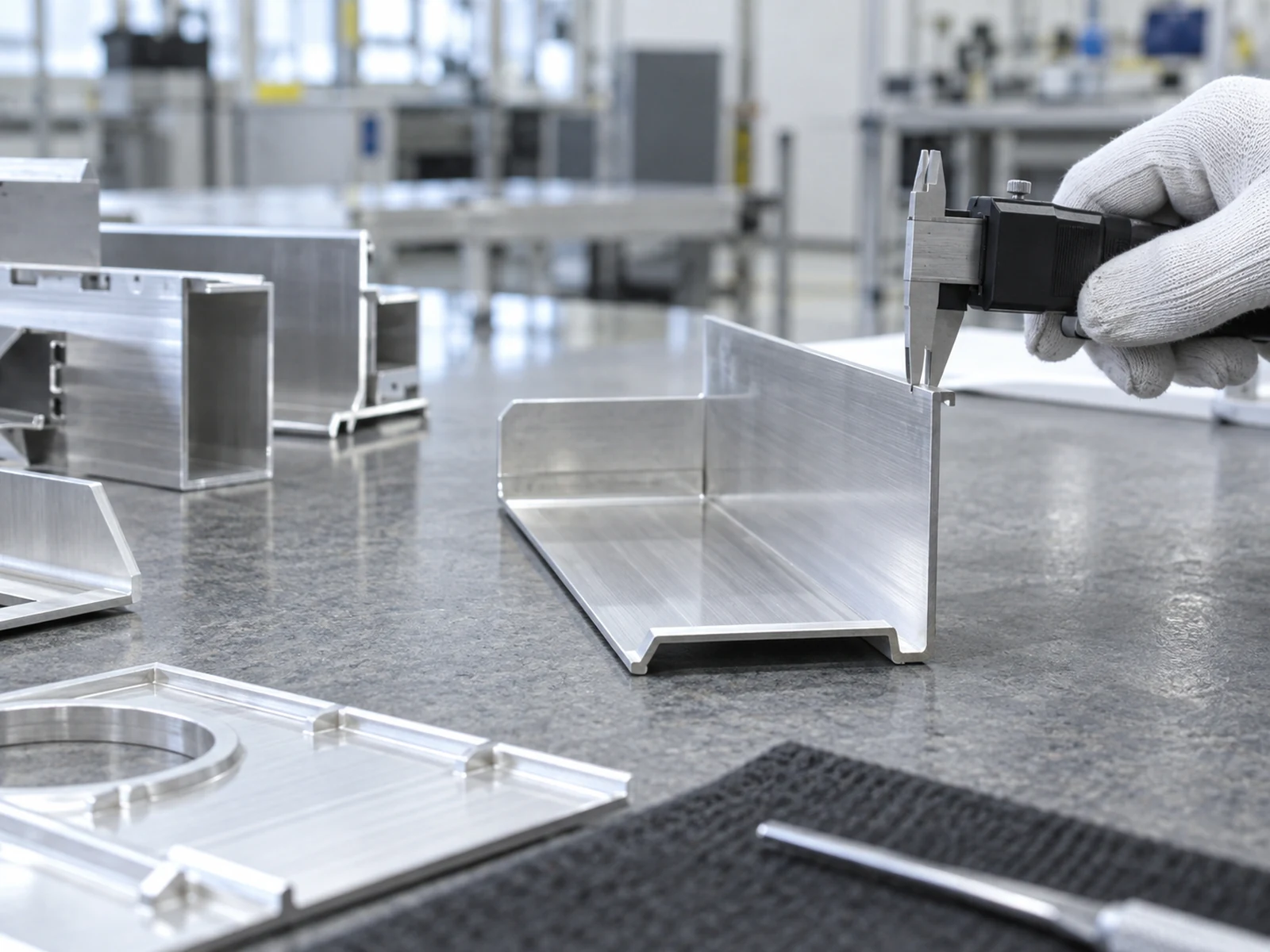
Separate square-ended and mitered members. Show any asymmetric profile orientation and which face must remain protected. Record whether the finished cut requires a specified burr limit, end squareness, length tolerance or edge condition. Use the customer’s actual acceptance drawing; do not copy a generic tolerance from a saw brochure. If drilling, milling, welding, fastening or deburring is needed after the cut, name the operation and owner. The RFQ should tell the saw supplier what comes out of the saw and what remains downstream.
3. Keep dunnage and part contact outside the cutting claim
The rack frame and its dunnage solve different problems. Foam, urethane, molded supports, fabric cells and other inserts may be designed around the shipped part. The aluminum frame may carry those elements without being the approved contact surface. Ask which parts touch the load, where retention is achieved, and whether a replaceable insert covers a frame member. Do not infer that a clean-looking aluminum cut end is acceptable against a painted, glass or machined part.
For the saw comparison, include the interfaces that cutting can affect: member length, location of a later dunnage mount, joint gap, orientation marks and cut-end handling. Leave contact-force design, protective material selection, transport testing and pack approval with the rack or packaging authority. This prevents a buyer from treating cut quality evidence as proof that the finished rack protects its contents.
4. Plan for replacement members and fleet revisions
Returnable racks circulate, wear and sometimes need repair. Decide whether the saw will supply new-rack production only or also replacement members for an existing fleet. A replacement rail is useful only when its revision, joining features and downstream work match the rack being repaired. Track old and new configurations separately, especially when dunnage positions or mating parts change. A single length label is not enough to prevent the wrong member entering a repair kit.
Ask the receiving fabricator to define kit completeness. For a four-upright rack, for example, are all four accepted uprights supplied together, or are loose pieces received and counted individually? If two rack variants share a profile but differ in cut length, mark and segregate them at the saw handoff. The cost model should use accepted member kits and replacement demand, not just theoretical blade cycles.
5. Run a representative cut trial with a narrow acceptance question
A useful trial uses the actual released stock form, the longest and shortest requested lengths, any difficult profile orientation, and the specified end condition. Record feed support, clamping contact, first-off measurement, repeat measurements and handling of accepted pieces. Ask the receiving fabricator to check whether sample members fit the intended downstream joints and kit. A successful saw trial supports a cut-process decision; it does not certify the assembled rack for load, vibration, stacking, forklift handling or transport.
Request evidence that can be checked later: drawing revision, stock lot identity, cut list, measured samples, reject count, accepted count, edge photographs and the receiving party’s disposition. If the saw supplier shows a different profile or machine in a video, treat it as a process illustration until the specified sample is tested. The Jiurun Machinery channel video below demonstrates a general aluminum-profile cutting machine view, not this rack material or a customer approval.
Video scope: general Jiurun aluminum-profile cutting equipment footage. It is not evidence of the rack design, profile, dunnage, approved model setup, accepted trial or performance claimed in this guide.
6. Compare the complete receiving cost
Build a cost sheet for the same rack revision and delivery state. Include approved raw stock, inbound handling, offcuts, blade and labor cost, inspection, identification, protected packing, downstream joint preparation, assembly, dunnage, rack validation and repair logistics where applicable. Count accepted rack kits after the next operation, not merely pieces exiting the saw. Include the floor space and people needed to move long stock, keep variants separate and receive finished cut members.
For an existing operation where the central issue is moving already-cut parts from a saw into returnable racks, see our separate saw outfeed transfer guide. This article concerns the manufacture or replacement of the rack’s own approved aluminum frame members.
7. Send this RFQ package before requesting a recommendation
- Released rack and member drawings with revision control, material identity and quantities per rack.
- Actual aluminum stock samples, longest and shortest cut lengths, end geometries and acceptance criteria.
- Cut-kit delivery state, downstream joint and dunnage responsibilities, and the receiving inspection owner.
- Expected new-rack and replacement-member mix, lot sizes, shift pattern and rejected-piece treatment.
- Photos or samples of the existing feed, handling and storage route, with space constraints.
Next step: send the approved member schedule and representative stock to JiurunCut for a cut-process discussion. Ask for a trial plan against your drawing and a scope-specific quotation. Keep final rack engineering and shipping approval with the authorized rack owner.