
AV cabinet aluminum post cutting is a drawing-release decision before it is a saw purchase. A structural post may locate the top, base and side panels while also carrying adjustable shelf hardware. A length taken from the finished cabinet height alone can therefore be wrong: connector engagement, end caps, a visible finish, door clearance and the shelf support path all affect the blank that should be cut. The buyer needs one approved post drawing and a small representative assembly before comparing machine or cut-part quotations.
An independent example is Salamander Designs’ modular Synergy AV cabinet system. Its product description says extruded aluminum support posts and connectors form a modular structure, with posts also supporting panels, shelves and drawers. Doors and rear panels interface with that structure. This is an industry design example, not a Jiurun customer, a Jiurun-cut component or a dimensional drawing for another cabinet. A buyer must use their own approved profile and assembly specification.
Identify what the aluminum post locates
Start with an exploded view of one cabinet variant. Mark the post faces that establish the exterior width, depth and height. Then mark every connection to a top or base panel, a side or rear panel, a door hinge, a shelf bracket, a drawer support and any rack accessory. A profile that looks like an ordinary square extrusion can have very different functional faces. The cut should preserve the intended face orientation and the usable length for each connector or accessory.
Do not turn a marketing dimension into a cut length. Overall cabinet height may include a top, base, foot, cap and connector allowance. The post blank length should come from a dimensioned part drawing that states the measured datum at each end. If a cabinet family offers several heights, widths or shelf arrangements, give every post variant its own part number and revision. Otherwise a stock bar cut for one configuration can be mistaken for a visually similar part in another.
Release the section, finish and mating details together
For AV cabinet aluminum post cutting, the extrusion specification should identify the approved cross-section, alloy and temper where the cabinet designer has specified them, the surface finish, and the orientation of every slot or mounting face. If a post is anodized or coated, specify whether the cutter receives finished stock or whether finishing follows the cut. A visible end, scratch-prone face or exposed edge may require a different handling and packaging rule from an internal structural member. The saw quotation should not silently assume a substitute extrusion because the outside dimensions appear similar.
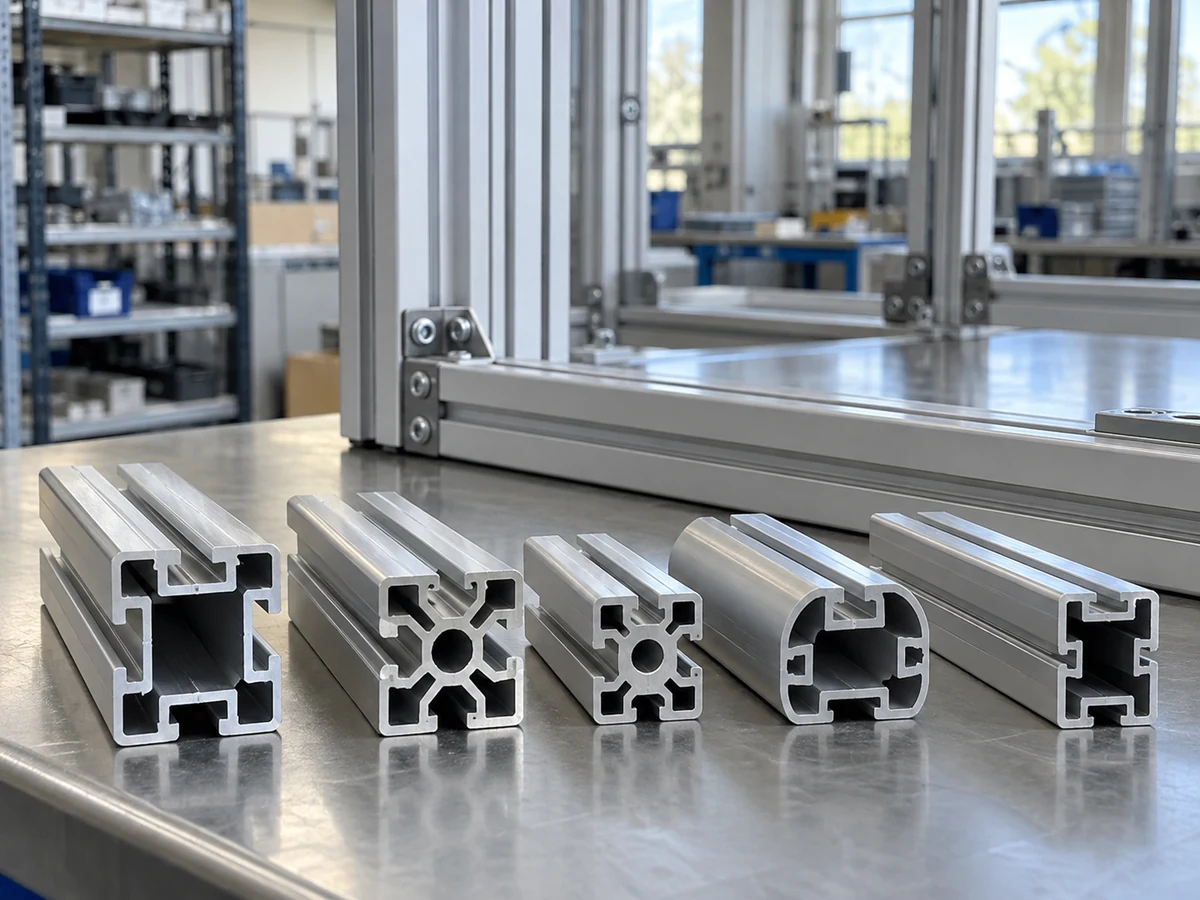
Ask the designer to show how the connector engages the post end and how shelf or panel hardware is retained. A connector may require a clear bore, a particular slot position, a tapped end or a machined feature. Sawing makes a length and a cut face; drilling, tapping, milling, coating and final assembly are separate operations unless the quotation explicitly includes them. Keep those operations as separate rows so a low cutting price is not confused with a complete finished post.
Set the shelf, door and panel datums before cutting
Choose a common assembly reference, such as the approved base seating plane, and describe where the top panel, shelf carrier and door opening are measured from it. For an adjustable shelf, the critical question may be the unobstructed adjustment range and bracket engagement rather than a fixed shelf pitch. For a door, check hinge position, swing clearance and the gap to an adjacent panel. For a removable rear panel, check the service opening and its fastener path. A cut post cannot prove these fits by itself; they must be tested with the actual mating parts.
Include a small interface table on the drawing or RFQ: post face and direction; mating component and revision; design datum; required clearance or fit criterion; operation responsible for that feature; and inspection method. Record any finish-facing side and which end is top. This matters when posts are visually symmetric but have different end preparation or accessory features. The cabinet designer must approve the interface values; a saw vendor should not invent clearances from a photograph.
Build a post cut schedule that can be quoted
For each post blank, state the profile ID and section drawing, finish state, finished cut length, length tolerance, end squareness or angle requirement, burr and visible-surface acceptance, quantity per cabinet, batch quantity and label. Identify the length measurement datum explicitly, including whether an end cap or subsequent machined face is excluded. If a long stock bar yields several cabinet variants, ask for a nesting plan and a remnant rule. A supplier should say whether it may mix revisions or finishes in one cutting batch.
Ask for separate prices for raw extrusion, saw cutting, secondary machining, deburring, finishing, inspection, packaging and scrap. This lets a buyer compare a finished-post supplier with a shop that offers only saw-cut blanks. For a small prototype family, buying approved finished posts may avoid setting up a dedicated cutting process. For repeated, drawing-controlled variants, in-house cutting may make sense when stock identity, setup, inspection and downstream operations are understood. Compare the complete route and the value of traceable first-off evidence, not a headline cuts-per-hour number.
Use a representative saw trial and first-off assembly
Before buying a machine or releasing volume cutting, present an actual approved section to the saw supplier. The trial should show how the post is supported and clamped without deforming a functional slot or marking a visible face. Identify the stop or feed datum, the blade and feed arrangement used for that material, how the cut piece is supported, and where chips can collect. Request measured samples across the distinct lengths and end conditions in the order. A result on another aluminum shape does not establish the finish, fit or tolerance of this post.
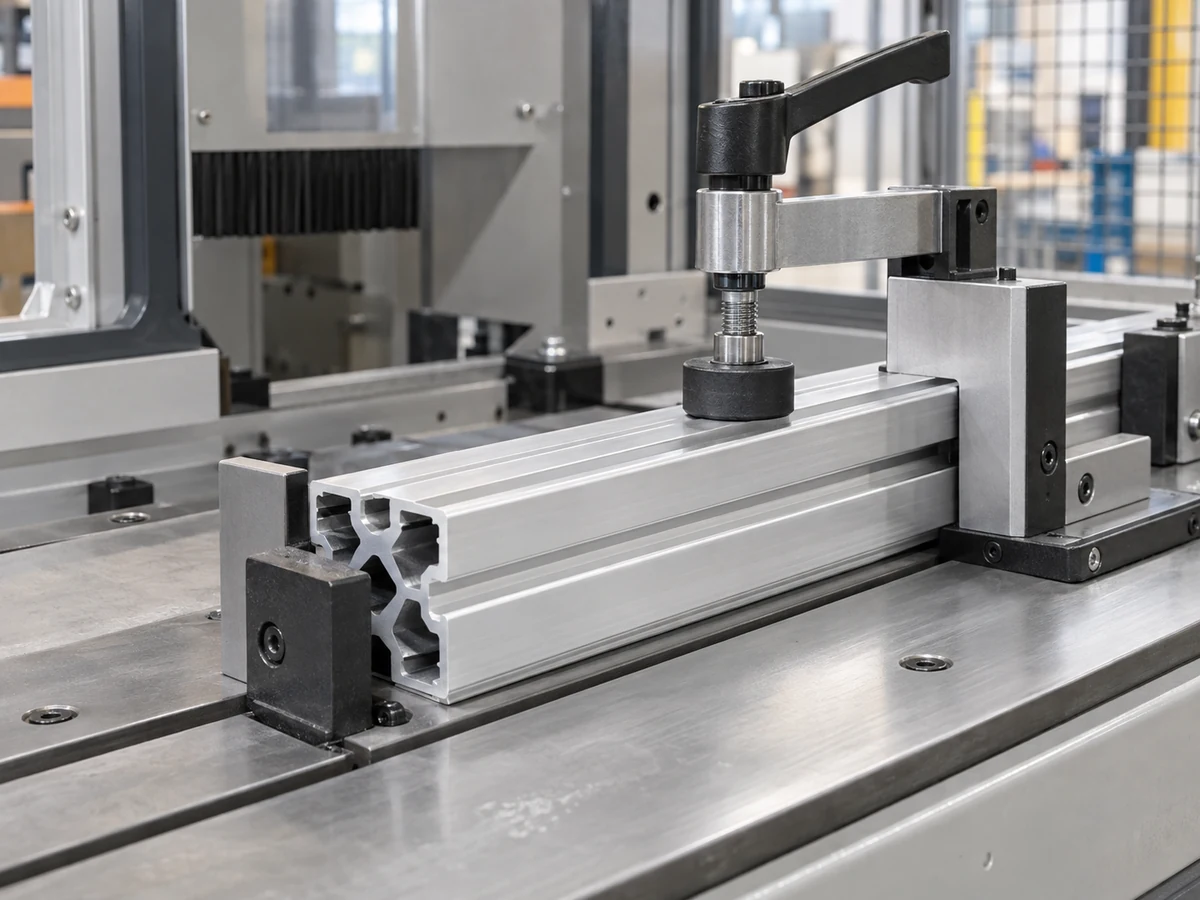
Then assemble a first-off corner with the approved connectors, one top or base panel, a representative shelf support and the door or rear-panel interface where those parts are in scope. Measure the post blank against its drawing first; test the assembly against the cabinet drawing second. If an interference appears, record whether it comes from post length, end condition, connector position, panel size or another operation. Do not lengthen or shorten the saw setting to hide an upstream design issue. Keep the approved sample and revision with the batch record.
For a related but different manufacturing boundary, see our server-rack frame cutting guide. It separates saw-cut members from later mounting geometry. Our control-cabinet depth-change guide shows why panels and doors must be checked against a released frame revision. Neither guide supplies dimensions or test results for an AV furniture post.
AV cabinet post RFQ: the release checklist
- Attach the current cabinet assembly and post drawings with revision IDs and the intended configuration.
- Identify each approved aluminum section, finish, stock form, cut length, quantity and top/bottom orientation.
- Mark the connector, panel, door and shelf-support interfaces on the drawing, including datums and clearance criteria.
- Separate sawing from drilling, tapping, other machining, finishing and assembly in the quoted scope.
- State how visible surfaces, cut ends and finished posts must be protected and labeled.
- Request a representative cut trial, measured first-off pieces and an assembly fit check using actual mating components.
- Ask how stock nesting, remnants, revision changes, inspection records and batch acceptance will be handled.
Send Jiurun the approved post section drawing, finish and blank length range, batch size, end conditions, tolerance and first-off criteria through the contact page. We can discuss an aluminum cutting workflow and what a representative saw trial should measure. The AV cabinet designer remains responsible for connector compatibility, shelf support, panel fit, structural load and finished-product validation.