
Shower chair adjustable leg tube cutting starts with a deceptively small question: where does the cut end sit relative to the height-adjustment pin and the foot? A round aluminum tube can be the right nominal length yet still fail to telescope smoothly, accept its tip, or place a pin hole at the intended height. For an OEM buyer, the useful purchase unit is a drawing-controlled tube blank or prepared leg member, with its next assembly interface identified. A sawed blank is not a finished or approved shower chair.
As a public product example, Drive Medical describes an aluminum shower chair with height-adjustable push-pin legs and suction-style feet. That is Drive Medical’s product information. It shows why a leg tube, adjustment mechanism and foot are separate interfaces; it does not identify a Jiurun customer part, machine setup, material grade or validated chair design. Your released drawing and product owner must define those details.
Start with the adjustable leg assembly, then mark the saw boundary
Sketch the exact leg stack before requesting a cutting quote: upper frame socket, outer tube, sliding inner member if present, pin or button, collar, and foot. Some designs combine these functions differently, so do not copy a catalog silhouette into a process specification. Mark every item supplied by the tube cutter, every later operation, and the party that approves the completed chair. A quote for straight cut blanks should not silently include drilling, swaging, bending, coating, tip installation or product testing.
For each leg part number, state whether the saw receives raw tube, a prefinished tube, or a tube with holes already made. This order changes how a length error is measured. If the pin hole exists before cutting, the hole may be the governing datum. If holes are added later, the cut end or an assembly shoulder may control the drill fixture. Put the operation sequence on the RFQ rather than asking the supplier to infer it.
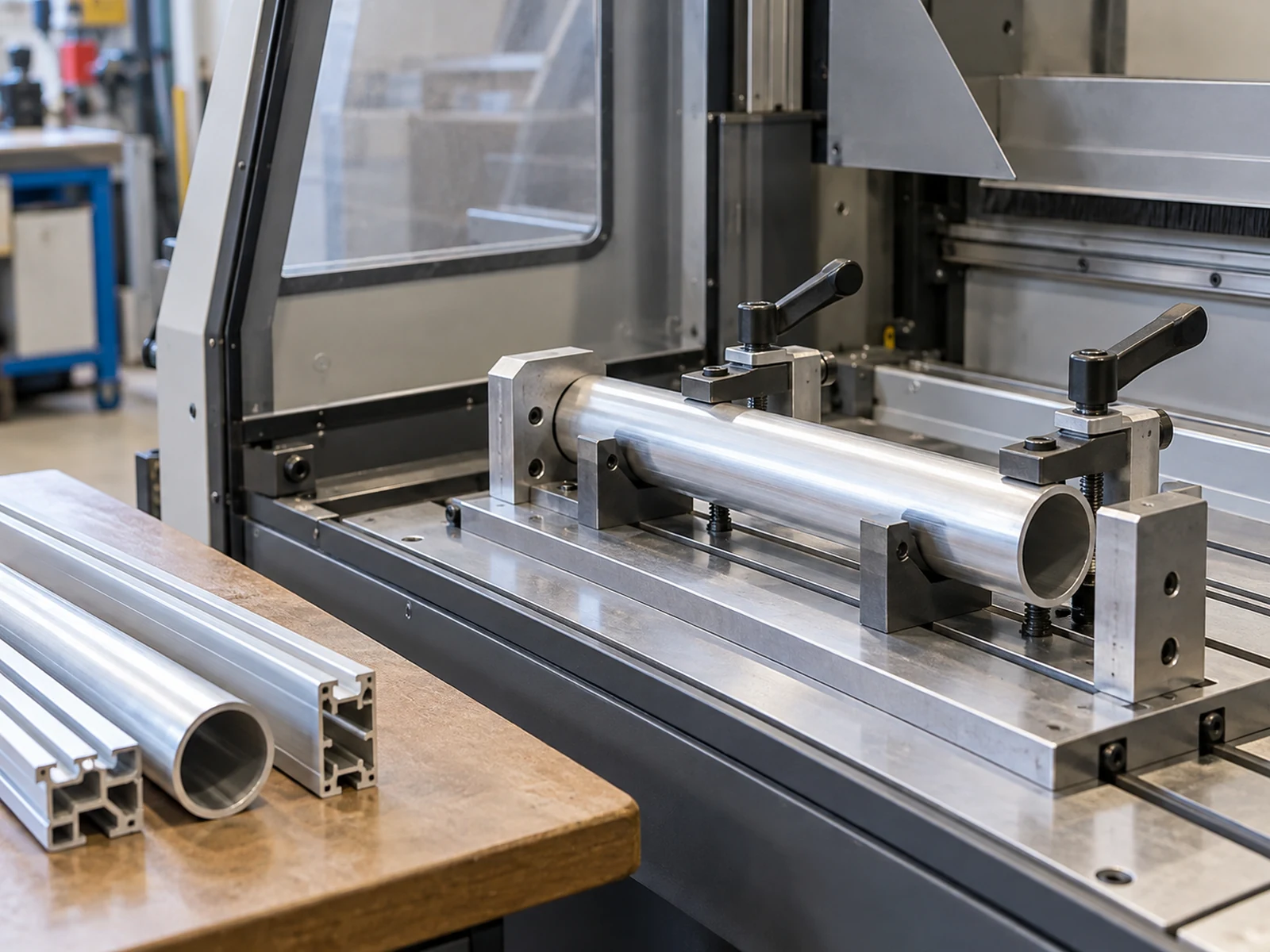
Shower chair adjustable leg tube cutting: freeze the pin-to-end datum
A common drawing gap is to call out overall tube length while leaving the pin-hole relationship to an assembly note. For an adjustable leg, ask which feature is inspected first: the cut end, the center of the first or last adjustment hole, the tube shoulder, or the contact face under the seat. Define the datum and direction of measurement on a part drawing. If both ends are cut, specify which end is the reference and whether the other can be trimmed. Include the required tolerance from the released drawing; a generic saw accuracy claim cannot substitute for it.
Give the supplier a simple measurement map: stock outside diameter and wall, blank length, end squareness or angle if relevant, hole-center-to-end distance when applicable, and the surface area that must remain free of clamp marks. The saw may control only the blank length and end condition; it may not control a hole drilled elsewhere. That distinction prevents a cutting quote from promising an assembly result it cannot verify.
For telescoping parts, separately identify the outer member’s internal clearance and the inner member’s outside envelope, including finish thickness and local deformation. Cutting pressure can distort thin-wall stock if the work is poorly supported, but suitability is a trial finding on the actual profile and fixture. Ask for a representative cut and a simple mating check with the approved counterpart. Do not assume that nominal catalog tube dimensions establish a sliding fit.
Give the foot or tip its own end-condition check
The bottom end may receive a molded foot, suction-style tip, or a different purchased insert. The chair OEM should specify which interface is used and what the incoming cut must allow: insertion depth, edge condition, burr removal, and an inspection method. A tube that passes a length gauge can still scrape an insert, fail to seat fully, or leave a sharp lip. Define acceptable edge condition in the buyer’s drawing or sample approval. If a protective finish is applied after cutting, define who checks fit after that finish, not only before it.
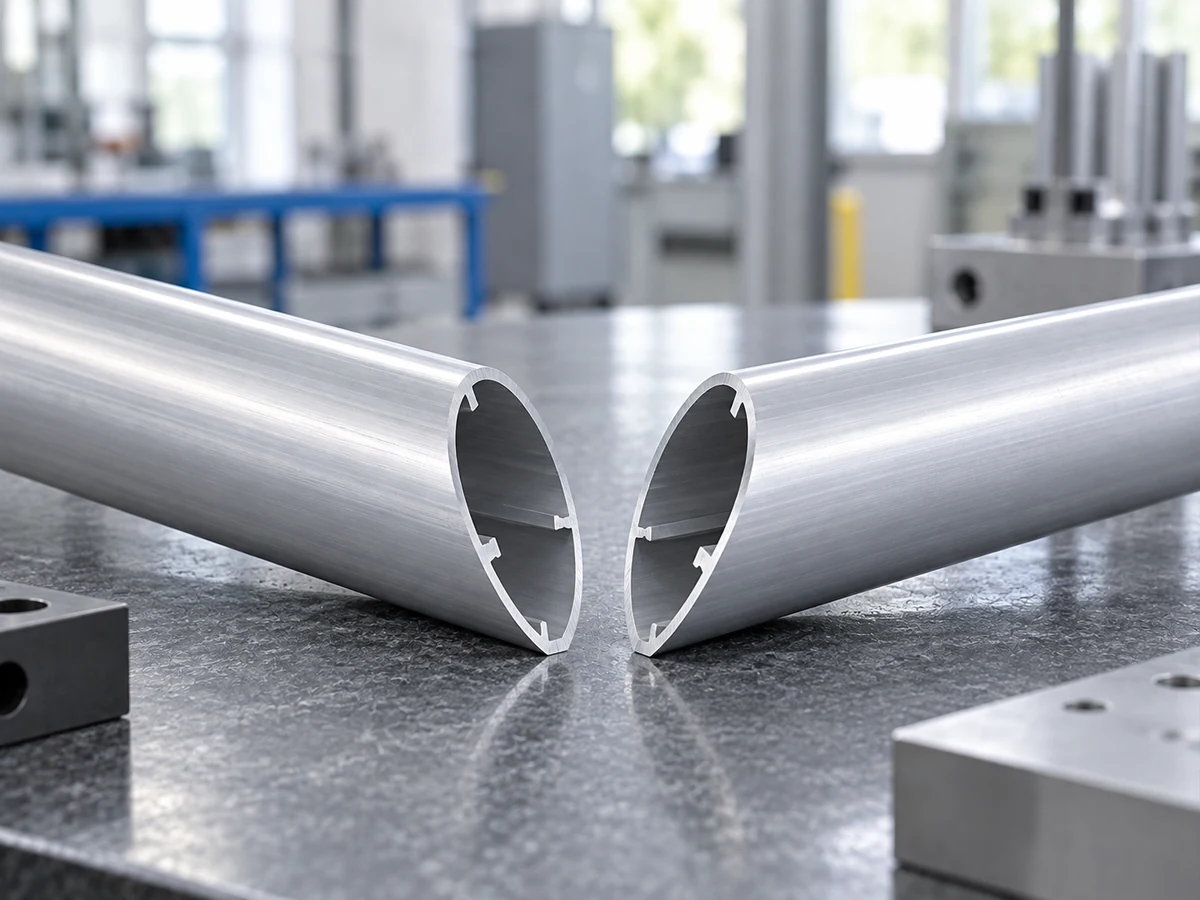
A photo can prompt a useful discussion about end geometry, but it cannot certify the chair’s foot interface. The image below shows a different oval extrusion and angled ends. It is included only to make the point that end shape must be read from the part drawing; do not use it as a shower-chair tube specification.
Run a first-off trial around the mating parts
Before choosing a machine or a cut-part supplier, send representative stock from the approved drawing revision. Include at least one mating inner or outer tube, the actual pin mechanism, collar and foot if those interfaces are part of the buyer’s acceptance. Ask the cutting supplier to show the support path, locating contact, clamp pressure, blade approach, outfeed handling and first-off inspection. A trial with an unrelated solid bar or thicker tube cannot resolve a thin-wall leg fit.
Record the first-off result in separate columns: measured blank length; end squareness or specified angle; visible burr and deformation; surface marks; sliding or socket engagement; pin movement where the mating part and hole operation are available; and foot seating. Mark each item as controlled by cutting, controlled by a later operation, or controlled by the finished-product owner. If the saw cannot be tested with the actual mating parts, state that limit in the quotation instead of marking the fit approved.
After the first cut passes, check a short run at normal loading, not just one hand-picked piece. Keep accepted count, rejected count, cut-to-cut handling time, changeover time and any rework separate. The same fixture may behave differently as stock length shortens or when operators change a stop. Define how a change in tube supplier, drawing revision or finish triggers another first-off check.
Compare the right purchasing routes
Buy completed leg members when a supplier can own cutting plus specified secondary operations and provide inspection records at the agreed boundary. Buy cut blanks when the chair OEM already owns drilling, finishing and assembly and can inspect the incoming tube. Cut in house when mix, volume, changeover and traceability justify the equipment and labor. Compare each route on the same accepted leg-member unit, not on machine cycle time alone.
For an in-house saw comparison, include feed support for the actual tube length, a fixture that does not damage the finish or collapse the wall, cut-end collection, burr control, measurement method, operator handling and changeover between leg variants. Request a demonstration with your own stock and state the acceptance criteria before watching it. The specific machine selection depends on those tested inputs, not on the product name “shower chair.” For a broader discussion of tube supply boundaries, see our separate medical walker tube-cutting guide; the leg datum and foot-fit questions here remain specific to this application.
Equipment video: related saw scene, not chair validation
The following public video is from Jiurun’s own YouTube channel. It shows a JR-455Q semi-automatic aluminum cutting machine as a general equipment scene. It does not show the shower-chair leg discussed here, its material, pin-hole datum, foot, approved process configuration, customer project, cut tolerance or product performance. Use the scene to plan questions for a trial with your own released tube and mating parts.
A concise RFQ packet for adjustable leg tubes
- Released drawing and revision for each tube part, plus the approved mating tube, pin or button, collar and foot drawings or samples.
- Alloy, temper, outside and inside dimensions, wall, finish state and stock length for the actual incoming material.
- Cut blank length and tolerance, datum feature, end orientation and any pin-hole-to-end relationship controlled at this stage.
- Specified burr, edge, deformation and cosmetic acceptance at both ends; clarify whether finishing occurs before or after cutting.
- Required trial quantity, first-off measurements, mating checks, inspection frequency and lot traceability.
- Handling and packing rules that keep tube variants separated and protect the surfaces used for sliding or tip engagement.
- Clear supply boundary: cut blank, prepared leg member, or complete assembly, with ownership of every secondary and finished-product approval step.
Questions buyers often ask
Can a saw supplier approve the whole shower chair?
No. A cutting trial can show whether a specified tube blank meets agreed cut and handling criteria. The chair OEM remains responsible for assembly, stability, load-related requirements, labeling and any applicable product validation.
Should the hole position be measured from the cut end?
Only when the released drawing makes that end the datum. If the hole is made before cutting, the hole may instead govern the cut. Agree the sequence and inspection datum before quoting.
What if a tube is the right length but the foot does not seat?
Check the end burr, local deformation, finish thickness and insert geometry against the approved mating parts. Record whether the problem belongs to the cutting step, a later finish, or the purchased foot; do not solve it by changing nominal length without drawing approval.
Need a tube-cutting trial? Send your released leg-member drawing, actual tube sample and mating interfaces through JiurunCut’s contact page. We can discuss a representative cutting demonstration and the exact blank-level checks you want to see before a machine recommendation.