
Golf push cart frame cutting begins with a question the finished cart cannot answer: which approved aluminum members will arrive at the saw as straight stock? A folding golf trolley contains a frame, hinges, wheels, handle, bag supports and hardware. Its consumer dimensions and folded size do not specify any saw-cut blank length. An OEM or authorized fabricator needs a member schedule before it can compare a bought component kit with an in-house cutting cell.
This guide defines a purchasing and trial boundary for aluminum blanks. It does not assume that every golf push cart uses round tube, that any named product is made on Jiurun equipment, or that a saw-cut sample proves a complete cart safe or durable.
Use the finished cart to map interfaces, not cut lengths
Bag Boy describes the Quad Pro as a folding four-wheel push cart with a powder-coated aluminum frame, wheels, storage and bag attachment. Its Nitron Swivel adds a swiveling front wheel and an auto-opening mechanism. These published product descriptions establish why a complete cart is a multi-part assembly; they do not disclose raw extrusion sections, member drawings or manufacturing cut tolerances. Treat the examples as market context, not as Jiurun customers or approved machine applications.
Obtain the OEM bill of materials and the current drawing for each retained frame member. Mark whether the purchased item is a finished cart, a prepared frame kit, a straight cut blank, or a longer stock length for in-house processing. A quote for “one cart” cannot be converted into a quote for “one cut” without that boundary.
Separate straight members from shaped and purchased components
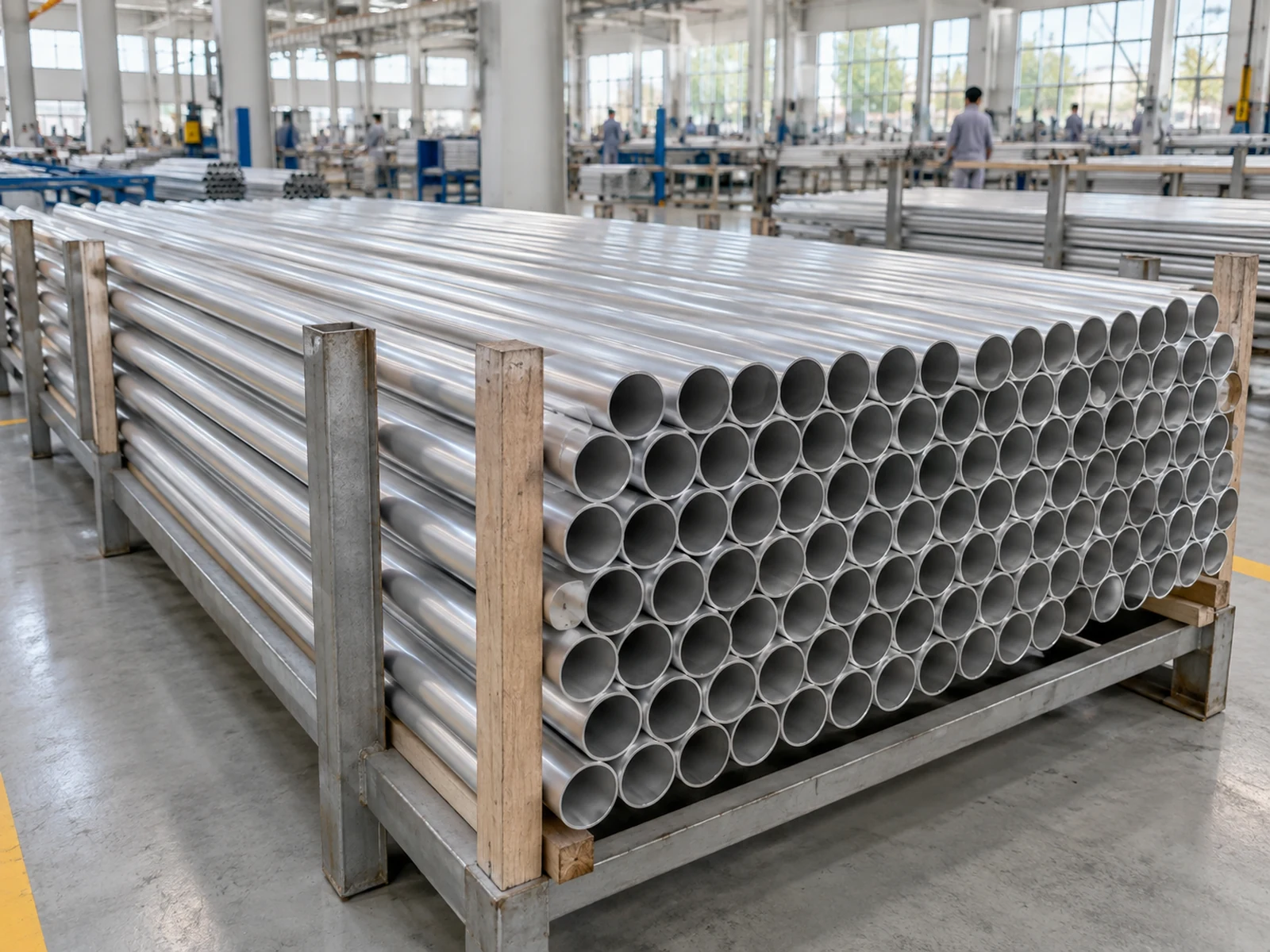
A saw cell can be assessed for released straight aluminum blanks. It should not be assumed to replace tube bending, end forming, drilling, machining, hinge installation, powder coating or cart assembly. Some members may arrive already bent or finished; others may be purchased as complete assemblies. Put each route on its own line in the RFQ. If the drawing calls for an extrusion rather than round tube, the section and holding plan must change with it.
A useful member schedule names the drawing number and revision, member location, stock section, alloy and temper if specified, finish state, incoming length, required blank length, cut angle, orientation marks, quantity per cart and expected batch mix. Where those values are unknown, label them “OEM to confirm” rather than inventing a dimension from a product photograph.
Golf push cart frame cutting: define the blank datum
For each straight member, identify the surface or end used as the length datum and the receiving operation after sawing. A handle tube that later receives a bent section or an insert may need an allowance; a member that goes directly to a prepared hinge interface may need a different end condition. Record which end is the first cut, whether a mill end must be cropped, and who owns subsequent trimming or machining. Specify cut length and tolerance at the blank stage, not the folded cart size.
Then give the saw supplier the actual minimum and maximum stock lengths, cross-section envelope, wall thickness, stock straightness range and surface condition. These inputs govern feed support, clamp contact and protected handling. A catalog machine model, nominal blade diameter or broad “aluminum cutting” label alone does not establish compatibility with the released part.

Make a first-off trial reproduce the planned handoff
When the input is an approved straight round tube, the trial should use that section and its actual finish state. Ask for the stock support and clamp approach to be shown before cutting. Inspect first-off blank length from the stated datum, cut-face condition, visible ovalization or dents, burrs at both sides, and any damage to faces that must remain cosmetic. Keep the measurement method and acceptance limits supplied by the OEM; do not substitute a generic precision claim.
Run representative short and long blanks from the same released section and record the result by member ID. If several frame members share stock, compare their batch sequence and offcut plan; if they require different sections or finishes, treat them as separate setups. The trial record should identify the stock lot, drawing revision, machine setup, inspector and disposition of any rejected blank. A visually tidy cut is only one data point.
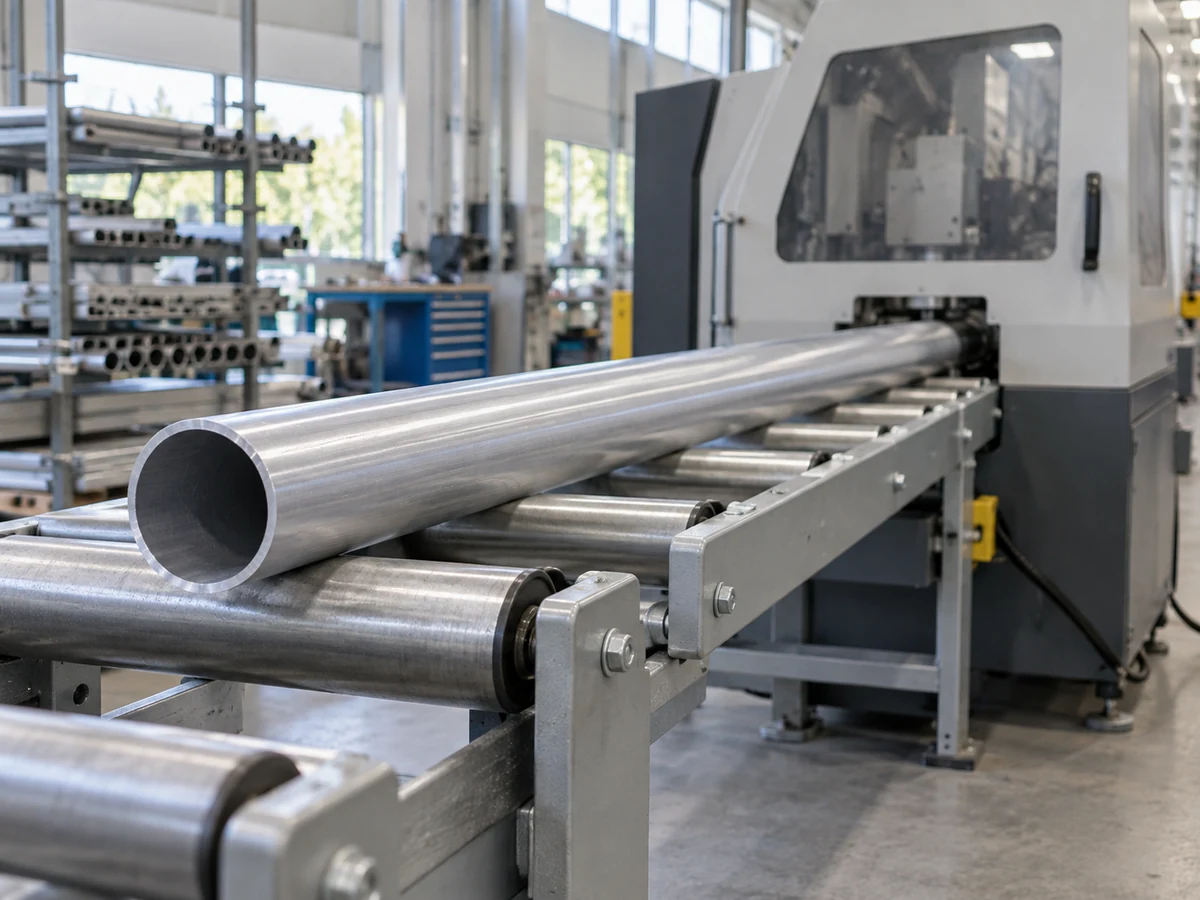
Watch a general aluminum cutting equipment view
The video below is from the Jiurun Machinery YouTube channel and shows aluminum profile feeding and cutting inside a guarded saw setup. It is a general equipment/process illustration. It does not show a golf push cart part, an OEM-released section, a cart-frame trial or verified output for this RFQ.
Keep finish, folding and cart approval in their own scope
If powder coating follows the saw cut, the coating supplier and OEM still own surface preparation, coverage and appearance acceptance. If stock is already coated, confirm whether sawing is permitted and how a newly exposed end is handled. The saw trial cannot establish wheel alignment, hinge life, brake function, folded clearance, bag retention or whole-cart stability. Those require separate product-level checks owned by the cart manufacturer.
For golf push cart frame cutting, this boundary also protects the buyer from an unhelpful machine comparison. A fast single cut on clean stock may not represent setup changes, lot variation, finish protection or accepted parts per shift. Ask suppliers to state which conditions were actually demonstrated and which remain assumptions for the production plan.
Seven checks to put in the RFQ
- Identify the cart OEM or authorized fabricator and attach current member drawings, revisions and approved stock specifications.
- State which items are straight saw blanks, which are bought prepared parts, and which need bending, machining, coating or assembly elsewhere.
- List each blank length, datum, end orientation, angle, tolerance and later operation allowance.
- Provide actual section dimensions, wall thickness, incoming length, lot mix, finish state and cosmetic faces.
- Define first-off and repeat inspection methods for length, cut face, burrs, distortion and visible handling marks.
- Request a support, clamping, guarded cut, outfeed and batch-change trial on the approved section, with documented limits.
- Name the receiving team and keep folding, wheel, brake, bag-fit and complete-cart validation outside the saw acceptance.
Next step: send JiurunCut your released straight-member schedule and sample acceptance sheet. Include the current drawings, stock condition and required handoff stage. The team can discuss a suitable cutting-trial direction for those inputs; this article does not certify a machine for any specific golf push cart.