
Platform screen door aluminum frame cutting begins with a deceptively simple question: what, exactly, must leave the saw? A platform screen door is a system with doors, fixed sections, interfaces and controls. The saw station can supply a defined aluminum blank; it cannot settle how that blank fits, operates or is accepted in the completed installation. For an OEM or authorized fabricator, the useful purchase specification is therefore a member-by-member handoff, not a generic request for a machine that “cuts screen door frames.”
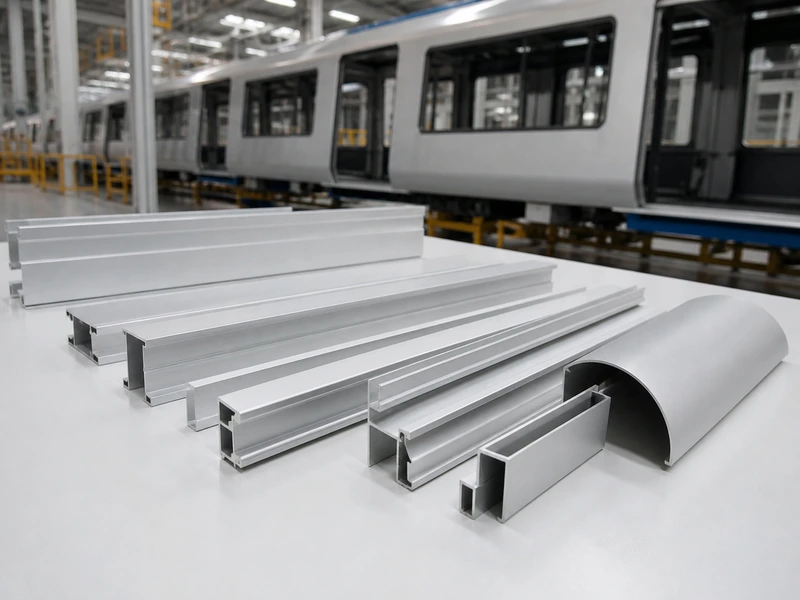
That boundary matters because platform screen door designs vary. Knorr-Bremse describes platform screen doors as station systems, while Portalp lists an aluminum or steel four-sided frame for one of its door systems. Neither source defines the cut list for someone else’s design. Use the released drawing and bill of materials from the responsible system owner to decide whether a particular member is aluminum, where it is used and what the cutting supplier must deliver.
Platform screen door aluminum frame cutting starts with the member schedule
A machine quotation is hard to compare when the RFQ says only “aluminum frame.” An upright, a door-leaf member, a fixed-panel member and a cover can have different sections, lengths and end treatments. Some may not be aluminum at all. Ask the design owner to identify the exact members in scope, then issue a schedule that a saw operator and an incoming inspector can both read.
- Identity: member or part number, assembly or module reference, and drawing revision.
- Stock: actual extrusion section drawing, material and condition specified by the owner, straightness and surface-protection requirements, and supplied stock length.
- Cut instruction: finished blank length, permitted length variation, cut angle and its convention, and which end is the primary datum.
- End condition: burr and edge requirements, any face that must remain protected, and whether later machining or joining owns the final end treatment.
- Handoff: inspection method, lot traceability, labeling, pairing or kit sequence, packaging, and the receiver of the blanks.
Put open questions next to the affected member number. A single tolerance or finish note copied across the whole schedule may hide a different requirement on a mating part. If the latest drawing changes a length or a reference face, freeze the old release and issue the replacement clearly before the next cutting batch.

Define the section orientation and cutting datum
The same nominal length can become two different parts if an asymmetric section is turned over, mirrored or referenced from the wrong end. Mark the visible face, groove side and end orientation on the released section view. For angled cuts, state whether the angle is measured from the member axis or from a face, and indicate the handedness. A sketch of the part at the saw and in the receiving assembly can remove a surprisingly expensive ambiguity.
Next, decide where the length measurement starts and ends. Is it the long point of a miter, the short point, or a square-cut face? Is the blank measured before or after a later machining step? Does the buyer expect the saw to hold a dimension across the full section, or only at a nominated reference edge? These are drawing decisions. The saw supplier should demonstrate the agreed measurement method on the actual section rather than substitute its own convention.
A useful first-off record
For each released member family, a first-off record can capture the part number and revision, stock identification, orientation photo, stop or feed datum, blade and fixture setup, measured length and angle, end-face observations, inspector and disposition. Record how the measurement was taken, not just the number. If a piece fails, retain its identity and record what changed before repeating the check. The acceptance limits come from the customer drawing and agreed inspection plan; no universal saw accuracy figure replaces them.
Check support, clamping and the exposed end
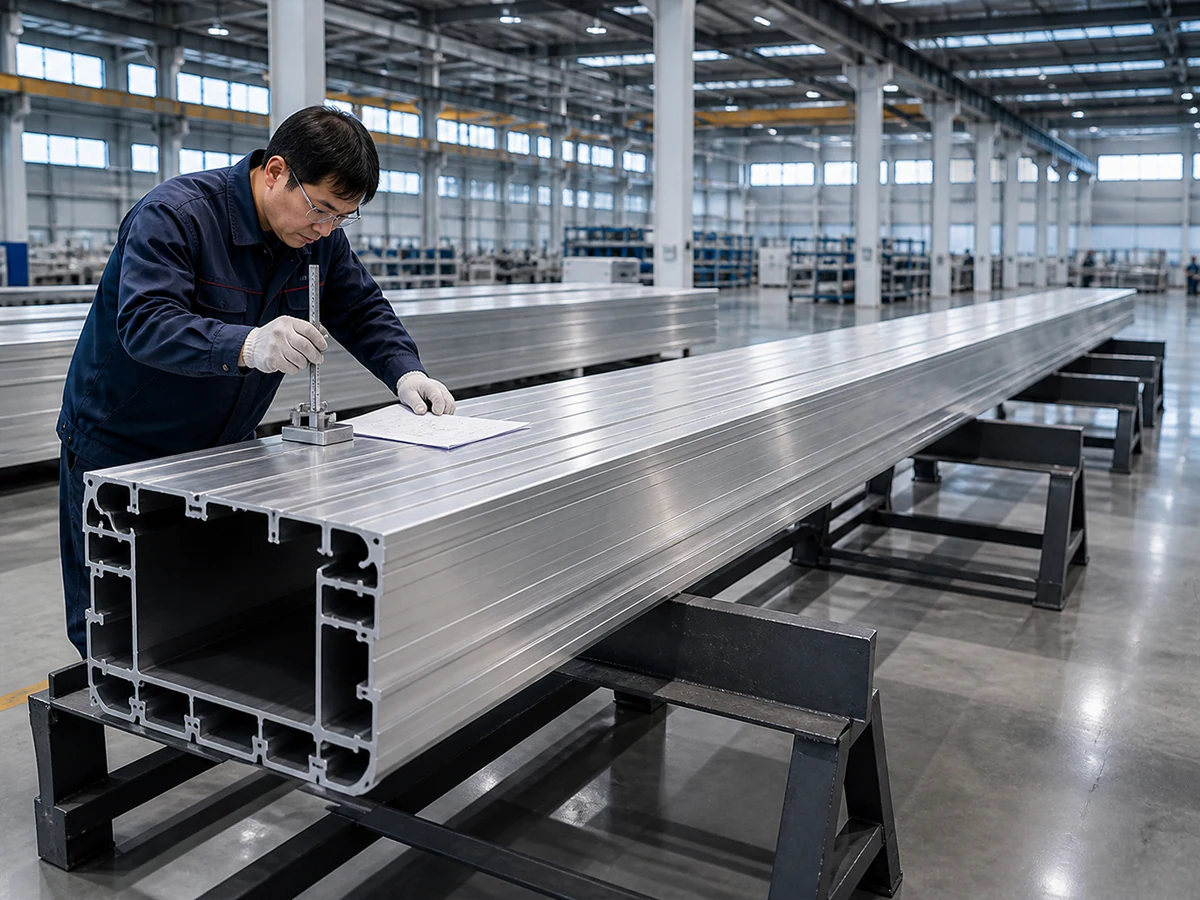
Long or thin-walled extrusions can be difficult to control when the incoming stock, infeed support and outfeed support do not share a stable reference. Before selecting a saw, show the supplier the real cross-section and the range of stock lengths. Ask where the clamps contact the profile, how the unsupported end is handled, and whether a groove, lip or visible face could be marked. A drawing alone may not reveal how the stock behaves under clamping.
Specify the cut-end inspection in terms the receiver can use. A buyer may need a clean mating face, a controlled burr condition, chip removal from cavities, and protection against scratches during stacking. Other operations may own drilling, milling, coating or assembly; do not make the saw station promise their results. If the end will later be concealed or re-machined, say so. If it remains visible, define the visual standard and handling method explicitly.
One practical test is to run the actual customer section through the proposed feed, fixture and support arrangement, then inspect the first pieces against the released drawing. A video of a different profile can show a feed path, but it does not prove that a platform screen door member fits the clamps or meets its dimensional and cosmetic requirements.
Keep blank identity through kitting and packing
The cut may be correct and the handoff still fail if left and right members are mixed, revisions are combined, or a finished face is damaged in a bundle. Define the label on each piece or bundle: part number, revision, cut length where useful, lot, quantity, orientation and destination kit. Where the assembly relies on matched members, describe the pairing rule and whether substitutions are allowed.
Packaging should follow the profile and the receiving workflow. Separate parts that can rub against one another, protect sensitive ends and visible faces, and keep labels readable after transport. At goods receipt, the OEM should be able to reconcile a bundle to the cut list without guessing from the cross-section. The saw supplier’s quality record ends at the agreed blank handoff; system fit, door behavior and installation acceptance remain with the responsible system parties.
A focused RFQ for the cutting supplier
Send enough information to make an equipment discussion specific. The supplier can then propose a saw and a trial plan around the parts that actually matter, rather than around the largest number on a catalog page.
- Provide the released section drawings and a member schedule, with revision control.
- Mark material, stock condition, length and angle ranges for each family.
- Identify primary datum faces, handed parts and visible or protected surfaces.
- State the buyer’s length, angle, burr and appearance acceptance criteria.
- Describe incoming stock form, maximum stock length and required feed or outfeed space.
- List planned downstream machining, finishing, kitting and inspection owners.
- Ask for a sample-run plan using the real sections and a documented first-off review.
- Request a traceable packing and labeling plan for the cut blanks.
When comparing offers, ask each supplier to identify which member families its proposed setup covers, which fixtures or supports are assumptions, and which questions remain for the drawing owner. A supplier who flags an unresolvable datum or an unsupported profile deserves a clear answer before price or cycle-time estimates are treated as comparable.
Related machine demonstration
The following Jiurun Machinery channel clip shows a general long-member feed path and guarded sawing equipment. It is an equipment illustration only. It does not show the platform screen door sections, customer project, approved setup, cut trial or measured performance discussed above.
Frequently asked questions
Can one saw quotation cover every platform screen door frame member?
Only after the member families, material, section envelope, length range, angles and end requirements are known. A system label does not establish that every part uses the same stock or fixture. Separate the parts a proposed setup can handle from those needing another process.
What should be checked before cutting a production batch?
Confirm the released revision, stock identity, orientation, datum and first-off acceptance method. Inspect actual sample pieces for length, angle, end condition and visible-face handling against the buyer’s requirements. Keep the result tied to the member number and setup used.
Does a successful blank inspection approve the door system?
No. It confirms only the properties included in the agreed blank inspection. Assembly fit, controls, installation and whole-system acceptance require separate verification by the responsible OEM and project parties.
Discuss the actual members
For platform screen door aluminum frame cutting, send Jiurun the current section drawing, member schedule, stock lengths, end requirements and first-off criteria. We can discuss a practical cutting and support setup around those inputs. For a broader rail-profile trial workflow, see our rail transit aluminum extrusion saw trial guide. To start the machine discussion, contact JiurunCut.