
Aluminum panel stiffener cutting should begin with the approved panel system, not a generic length request. A stiffener behind an aluminum composite panel is a separate metal part with its own section, finish, bonding or fixing face, and inspection boundary. A saw supplier can demonstrate a cut blank; that trial cannot approve the panel design or the installed facade. This guide gives buyers seven RFQ checks that keep those responsibilities clear.
Use the current project drawings, panel supplier instructions and system approvals for the actual assembly. The examples below explain how to specify and inspect an aluminum saw cut. They do not give universal stiffener sizes, spacing, adhesive choices, structural calculations or fire performance.
Contents
- 1. Confirm the panel system and approved stiffener
- 2. Identify the incoming aluminum stock
- 3. Define the cut blank and length datum
- 4. Protect the fixing face in the saw fixture
- 5. Separate sawing from downstream work
- 6. Approve a traceable first-off set
- 7. Compare quotations at one handover stage
1. Confirm the panel system and approved stiffener
Ask for the named panel product, assembly type, system revision and stiffener schedule. Is this a tray panel with a rear stiffener, a face-fixed arrangement, or a different construction? Who designed the stiffener section, locations and attachment method? A factory should not substitute a convenient aluminum angle for a released section because the drawing seems similar. The attachment face and distance to the panel can change with the system.
The ALUCOBOND processing guide illustrates aluminum stiffeners and bonding/fixing arrangements for its panel constructions. A separate ALPOLIC system listing describes aluminum stiffeners within a specific listed wall assembly. These sources show why the released system matters; they are not interchangeable instructions or a general prescription for this article’s parts. Obtain the supplier’s current details and any project approvals before requesting cut samples.
Give the saw vendor the actual stiffener drawing and a labeled physical sample. If the fabricator buys complete prepared stiffeners instead of cutting stock, the RFQ should first confirm whether an in-house saw is needed. Keep the panel designer’s structural, bonding and fire-safety approval separate from machine selection.
2. Identify the incoming aluminum stock
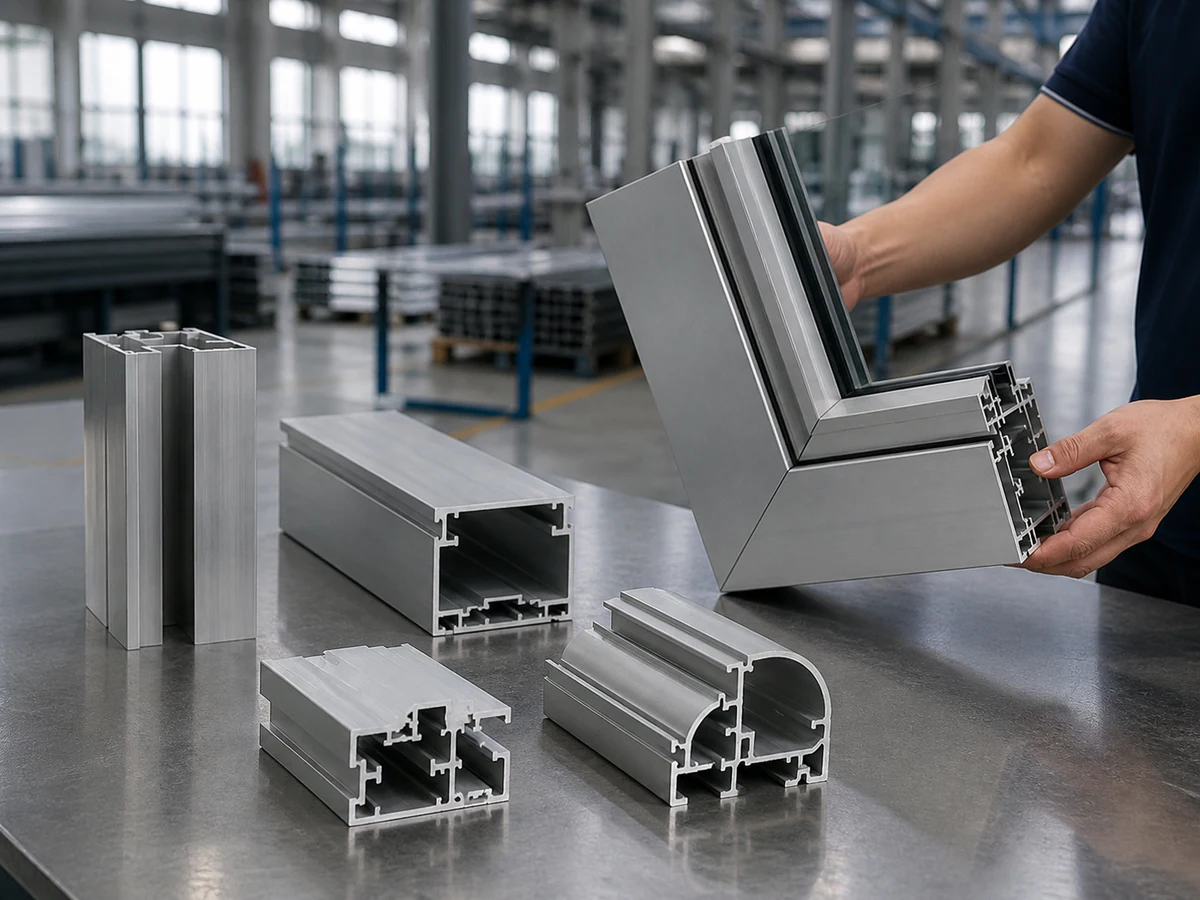
List the profile code, alloy and temper only as specified by the drawing or purchasing record. Add the measured section envelope, wall or flange thickness where relevant, extrusion length, straightness limits, coating state and visible surface restrictions. If several suppliers provide nominally similar material, separate their samples until the approved cross section and surface condition are confirmed. A saw setting proven on one profile does not automatically qualify another.
Ask whether the stock arrives mill finished, anodized, powder coated, primed or otherwise prepared. That matters at the fixture: a mark on a hidden surface may be acceptable under one drawing and unacceptable on the future fixing face under another. The machine quotation should identify any contact pads, nests or protective surfaces used during the trial. It should also state whether those items are included in the offered configuration.
3. Define the cut blank and length datum
Specify the handover part. Is the requested output a simple saw-cut stiffener blank, a piece with holes or slots made later, or a fully prepared component ready for attachment? Put these states on separate RFQ lines. A cut-to-length price cannot be compared with a prepared-member price without accounting for the missing work.
On the cut list, show a part number, drawing revision, quantity, stock code, cut length, allowable deviation, required end angle and measurement datum. Identify whether the dimension is overall length, distance between square end faces, or a feature-to-end reference. If the stiffener has a return, nose or unequal legs, mark which face rests against the saw stop and which end is left or right. A nominal 90-degree cut is not enough if the wrong side was referenced.
Request a small drawing or marked sample for each orientation. Keep installation dimensions with the approved panel drawing rather than asking the saw operator to derive a cut length from panel width alone. The panel’s fold, edge clearance, attachment pattern and thermal movement provisions may affect the released schedule, but those are design inputs from the responsible parties.
4. Protect the fixing face in the saw fixture
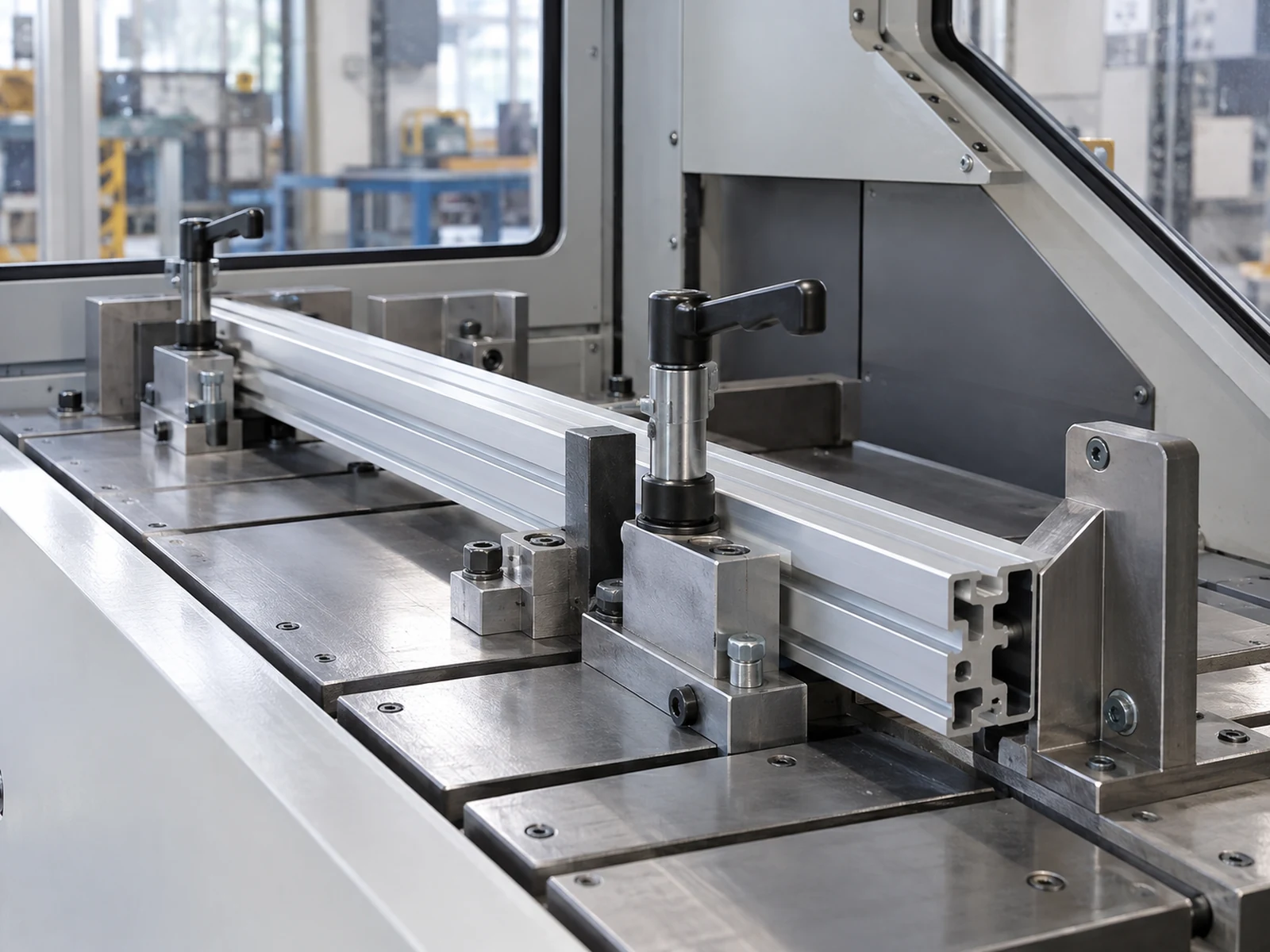
For aluminum panel stiffener cutting, a repeatable length is only useful if the section stays located without crushing a thin flange or damaging a critical surface. Ask the operator to demonstrate a stopped setup first. Look at the infeed reference, jaw faces, hold-down contact, blade clearance and outfeed support. Confirm that a clamp does not press on a small return lip simply because it is the easiest surface to reach.
Use the actual stock length and finish for a trial. A short sample may sit securely while a long extrusion twists or lifts at the unsupported end. Check whether the future adhesive or fixing face contacts the machine, and whether any residue, scratch, burr or deformation would need a separate downstream review. This article does not define an adhesive-ready surface; follow the approved system’s preparation requirements.
5. Separate sawing from downstream work
Record every operation after the blank leaves the saw: deburring, cleaning, hole making, slotting, corner preparation, bonding, riveting, curing, labeling and panel assembly as applicable. State who owns each step. The saw vendor may supply a repeatable blank while the panel fabricator controls surface preparation and attachment under the approved system. Do not ask a saw trial to prove the bond or final panel stiffness.
Where a stiffener interfaces with a bent tray edge, insert plate or bracket, specify which feature is present on the incoming stock and which is added later. The ALUCOBOND guide shows examples of sections and fixing arrangements, but the buyer must use the current released detail for the actual assembly. If a drawing changes after trial, review the saw datum and fixture again rather than quietly retaining the earlier acceptance result.
6. Approve a traceable first-off set
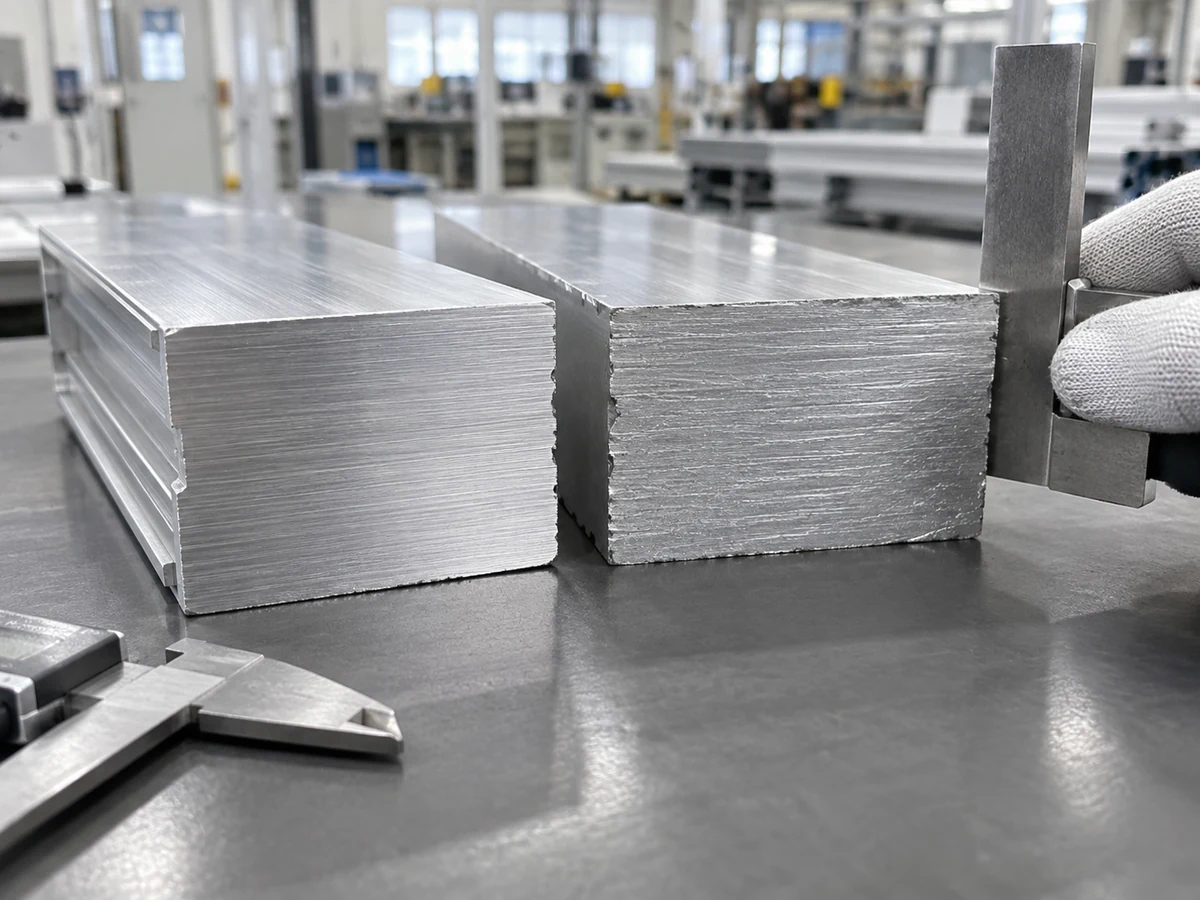
Ask for one first-off part from each representative section, orientation and stock condition. Label each sample with the part code, drawing revision, material batch and machine setup. Measure the agreed length and end geometry using the method named in the RFQ. Inspect the cut face, burrs, wall shape and surfaces that the drawing says must remain undamaged. Put the observations in a record rather than judging a photograph alone.
If the first-off passes as a saw blank, send a separately identified set to the panel fabricator for downstream fit and attachment checks. If it fails, record the deviation and the change made to tooling, clamping or measurement, then repeat the affected check. Do not adjust length to make an unapproved panel assembly fit. The corrective loop belongs to the released drawing and the responsible designer.
7. Compare quotations at one handover stage
Send each supplier the same pack: released panel and stiffener references; profile drawing and physical stock; cut list; length and end datums; finish restrictions; batch mix; first-off method; and the list of downstream work owners. Ask the vendor to state what the saw package includes: blade, pads or nests, infeed and outfeed support, setup, training, and accepted sample pieces. Where the drawing is incomplete, request a written assumption rather than allowing a guessed tolerance to become a quotation fact.
Compare proposals against the same accepted output and representative production mix. A machine with a larger catalog envelope may still need a dedicated fixture for the actual section. A faster cutting cycle may be irrelevant if changeovers, handling or first-off rejections dominate the shift. Conversely, a slightly slower saw with a stable and inspectable setup may be the better fit for a small batch of different stiffener lengths. State these tradeoffs in the trial record.
Keep purchase approval conditional on the evidence that belongs to the saw: a released blank, repeatable setup and documented first-off. Panel attachment, facade design and any listed assembly performance remain with the panel/system authority and project team. For a related machine starting point, review JiurunCut’s CNC aluminum cutting machine overview. To discuss a specific blank trial, send the released stiffener section, cut schedule and surface restrictions. We can review the cutting requirement after receiving those inputs; we cannot approve an unidentified panel system from a saw quotation.
Related aluminum saw demonstration
Video from Jiurun Machinery’s own channel shows a related aluminum saw. It illustrates equipment operation only; it is not a test of the specific stiffener, panel system, attachment, customer project or performance discussed here.
Frequently asked questions
Can a clean cut end prove a panel stiffener is approved?
No. It is evidence only for the measured cut feature on the tested stock. Stiffener section, attachment, spacing and panel performance require the released system instructions and the responsible parties’ acceptance.
Should the saw supplier choose the adhesive or attachment method?
No. The panel or system authority specifies those details. The saw supplier should identify whether its handling or cutting could affect a surface named in the approved process.
What is the minimum useful first RFQ?
Provide the profile drawing and sample, cut list, orientation and datum, stock finish, surface restrictions, output stage and first-off acceptance method. State who will perform later preparation and panel assembly.