
Sliding window interlock cutting starts with the approved window system, not a saw brochure. The interlock is the meeting area where sliding leaves overlap. A cut blank can have a clean end and still be wrong for the sash if its profile code, handed orientation, end allowance or later cap and seal work differs from the fabrication drawing. This guide gives buyers seven checks to define a realistic saw trial and a clear supplier quotation.
Use the current system catalogue and your fabricator’s released drawings for all dimensions. The examples below are purchasing and inspection questions, not universal cut lengths or a claim that Jiurun has tested a named window system.
Contents
- 1. Freeze the system drawing
- 2. Define the blank
- 3. Mark orientation
- 4. Prove support and clamping
- 5. Separate cutting from end work
- 6. Inspect a first-off set
- 7. Quote the complete route
1. Start sliding window interlock cutting with the system drawing
Request the actual extrusion designation, system name, sash arrangement, cut list and revision. A sliding window can use more than one meeting-stile or interlock shape. The two sides may have different profiles, and a reverse arrangement can change the applicable part list. A broad request for “sliding window aluminum” gives the saw supplier too little information to select supports, test stock or estimate handling.
Manufacturer documentation shows why revision control matters. Schüco’s ASE 60 description identifies a slimline interlock section as a system feature. ALUMIL’s S650 Eclipse catalogue update names two interlocking profiles and adds reversed-interlocking typologies to its cutting lists. These are examples of system-specific documentation, not a cut list for another brand.
2. Specify what the saw must deliver
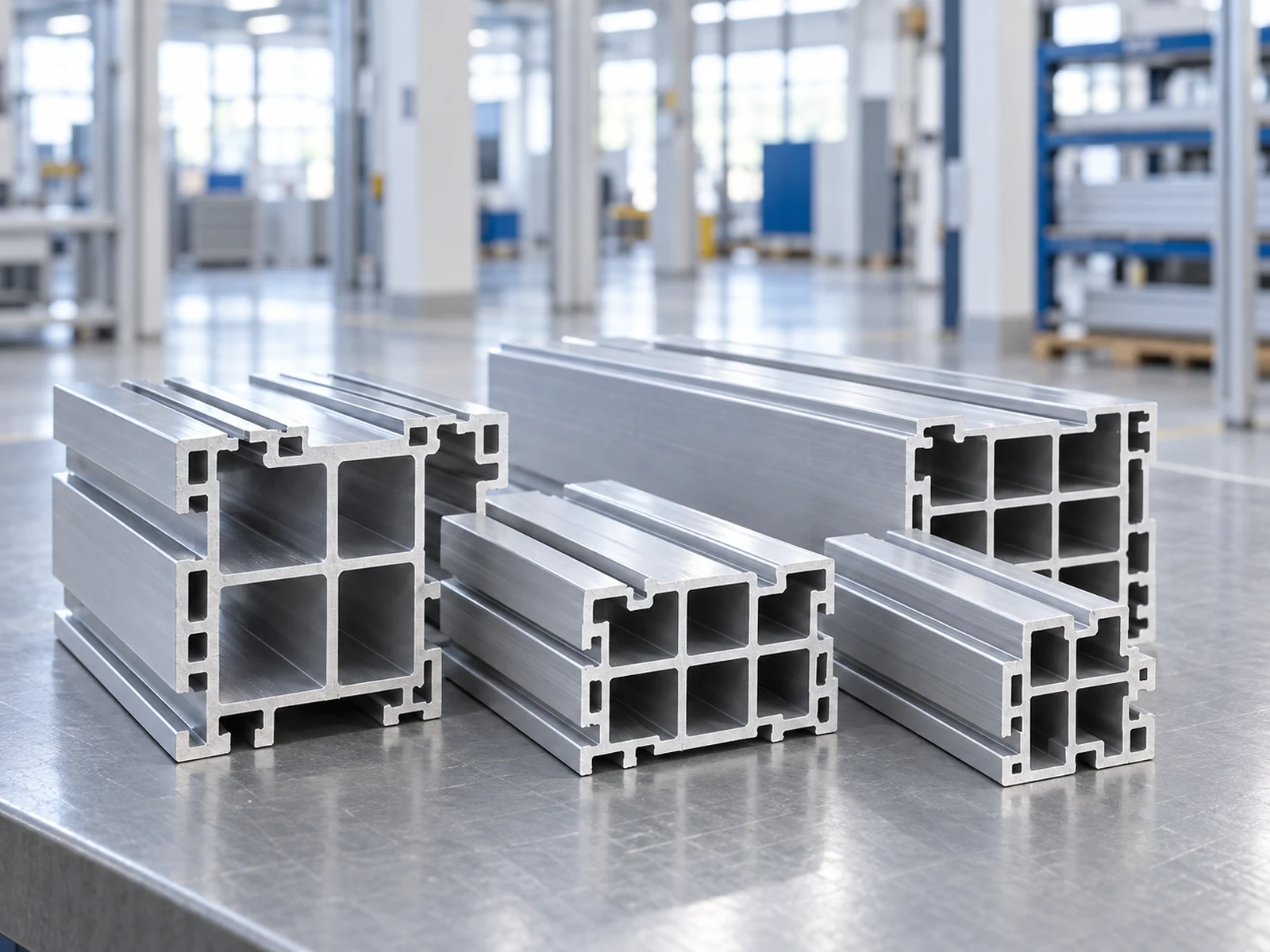
For sliding window interlock cutting, define the saw output as a cut blank. State the profile code, incoming stock length, finished blank reference points, cut angle at each end, quantity per batch and permitted scrap or short tail. Include the drawing’s end allowances rather than assuming that an overall window height equals the cut length. For paired left and right members, list each item separately even if their nominal lengths appear equal.
Agree how length is measured: from which end face, at which edge, and after which cut. A mitered or stepped section can produce different readings on different faces. If an end has a later mill, notch or cap seat, clarify whether the saw dimension is before or after that operation. Do not copy a formula from another system. ALUMIL’s technical news records corrections to interlock profile cuttings, illustrating that the released cutting list is the controlling document.
3. Mark the reference face and left/right orientation
Give the supplier a marked physical sample or a drawing with the room side, exterior side, top, bottom, glazing side and reference face. Show which end goes toward the head and which toward the sill. An asymmetric hollow extrusion may sit securely in two positions while only one position preserves the intended cut orientation. Ask the operator to photograph or label the first piece at the fixture before the first trial cut.
Where the profile has a visible finish, state whether clamp contact or saw handling may touch that face. List any protective film, gasket groove or narrow lip that could be damaged. Those are part-handling requirements; they are not proof that a specific fixture or saw is suitable until the sample is checked on the proposed machine.
4. Check support and clamping against the actual section
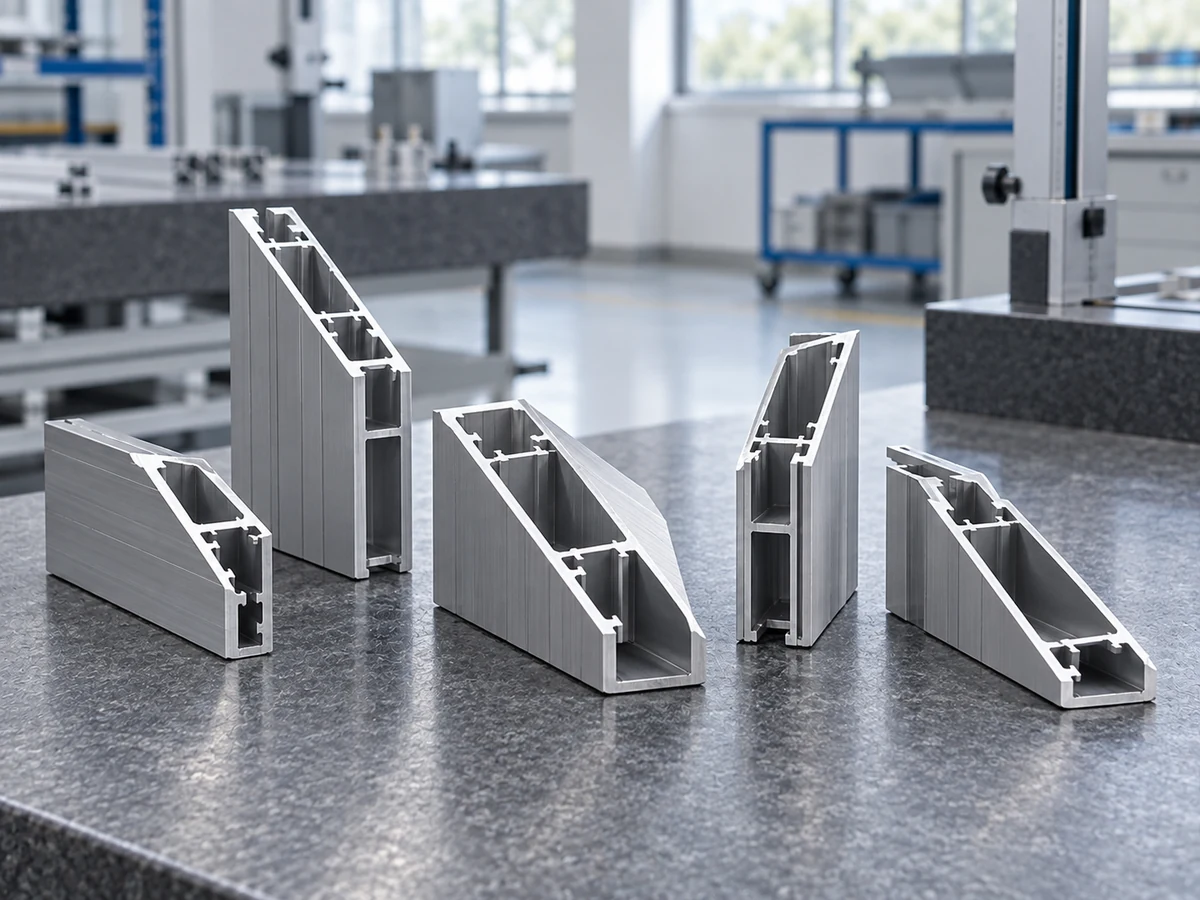
Bring a full-length sample, not only a short offcut. Observe the infeed support, reference stop, clamp pads and outfeed. A thin wall or an open groove can deform if the contact area is too narrow or presses at the wrong point. The relevant question is whether this particular section stays located during the whole cutting cycle and leaves the fixture without marking its functional faces.
Ask for a stopped setup review before powered cutting. Record the profile position, contact points and any shim or dedicated jaw. If different interlock codes share one fixture, repeat the review for each code. A machine’s nominal section envelope or general aluminum-cutting capability is only a starting screen; it does not validate this stock’s support or acceptance result.

5. Separate the saw cut from end machining and assembly
A saw can make the agreed length and end geometry. The complete sliding-window meeting stile may still need holes, local milling, notches, seal or brush insertion, end caps, fasteners and assembly. Put those operations on a route sheet and assign an owner. If a feature must be machined before or after the cut, state the datum it uses. This avoids asking a cutting machine to satisfy a finished-window drawing when the inspection point is downstream.
Keep a separate acceptance line for the joined sash. A cut blank can pass its length and end-face checks while the assembled meeting area needs different inspection. Schüco’s ASE 60 description discusses a complete system with fittings and prefabricated components; the saw trial here addresses only the agreed blank unless the quotation explicitly covers more.
6. Inspect a first-off set with real mating parts
In sliding window interlock cutting trials, cut one of every profile code and orientation in the order. Mark each piece with the cut-list line and drawing revision. Measure the agreed reference length and end angle, check burrs and finish damage, and keep the inspection method with the result. Then have the fabricator check a matched pair against the system’s caps, seals and assembly instructions. Do not treat a visually neat end face as evidence of meeting-stile fit or weather performance.
A useful approval record identifies the stock batch, machine configuration, blade, fixture or jaw, operator setup, cut-list revision, measured results and disposition. If a part fails, change one parameter at a time and repeat the affected first-off check. Any approved change should flow back into the production route and quote.
7. Ask suppliers to quote the complete production route
Send a compact RFQ pack: approved profile drawings and revisions; actual stock samples; separate left/right cut-list lines; batch volume and mix; required saw-cut geometry; finish and handling limits; downstream machining and assembly responsibilities; and first-off inspection criteria. Ask suppliers to identify assumptions and exclusions in writing. Compare proposals on sample fit, cycle sequence, setup changes and documented acceptance rather than a headline speed alone.
For a related equipment starting point, see JiurunCut’s CNC aluminum cutting machine overview. The configuration for your interlock profile needs a sample and drawing review. Send the cut-list, section drawing and sample questions to JiurunCut for a specific discussion.
Related saw demonstration
Frequently asked questions
Can one saw cut every sliding-window interlock profile?
No claim follows from the system name alone. Compare the actual section, length, end geometry, support points and fixture range for each profile code, then test representative stock.
Is a correct cut length enough to approve the meeting stile?
No. The saw blank and the assembled sash have different inspection points. Confirm any caps, seals and mating interfaces using the window system’s own instructions.
What should a buyer send before a cutting trial?
Send the current drawing and cut list, labeled physical samples, finish restrictions, separate orientations and a written first-off checklist. This makes the trial decision reproducible.