
Aluminum window corner cleat cutting starts with a question that a saw quotation cannot answer on its own: which connector does the approved window system require? A corner cleat is a joint component, while the visible frame or sash member is a different profile. A 90-degree blank cut, a mitered frame cut, and a finished crimped corner are separate deliverables. This guide helps a window fabricator define the sawing handoff before comparing machines, cycle times or prices.
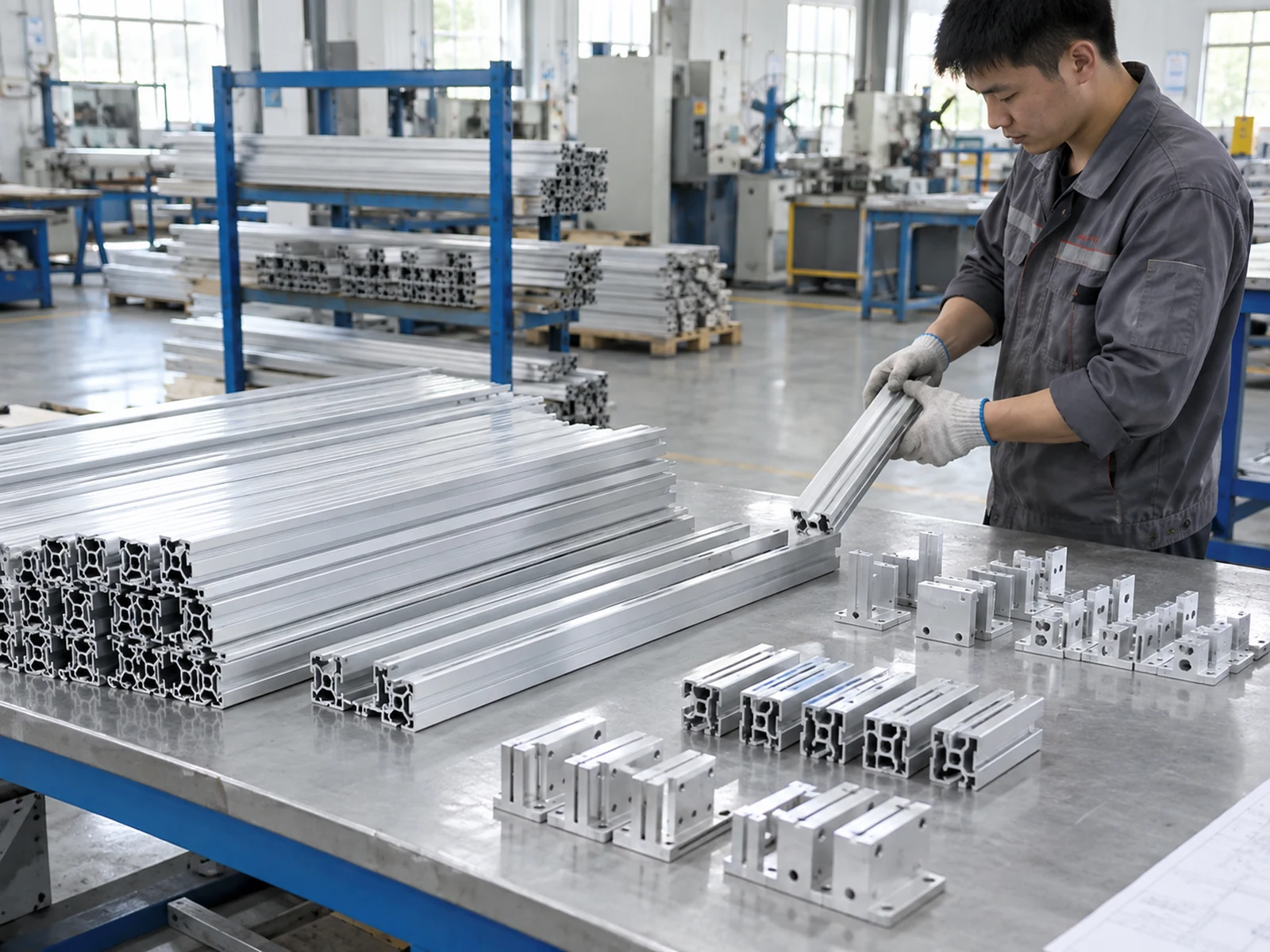
The photographs below are related aluminum profile and window-corner illustrations. They do not identify a specified cleat, customer project, approved configuration, witnessed trial or measured performance.
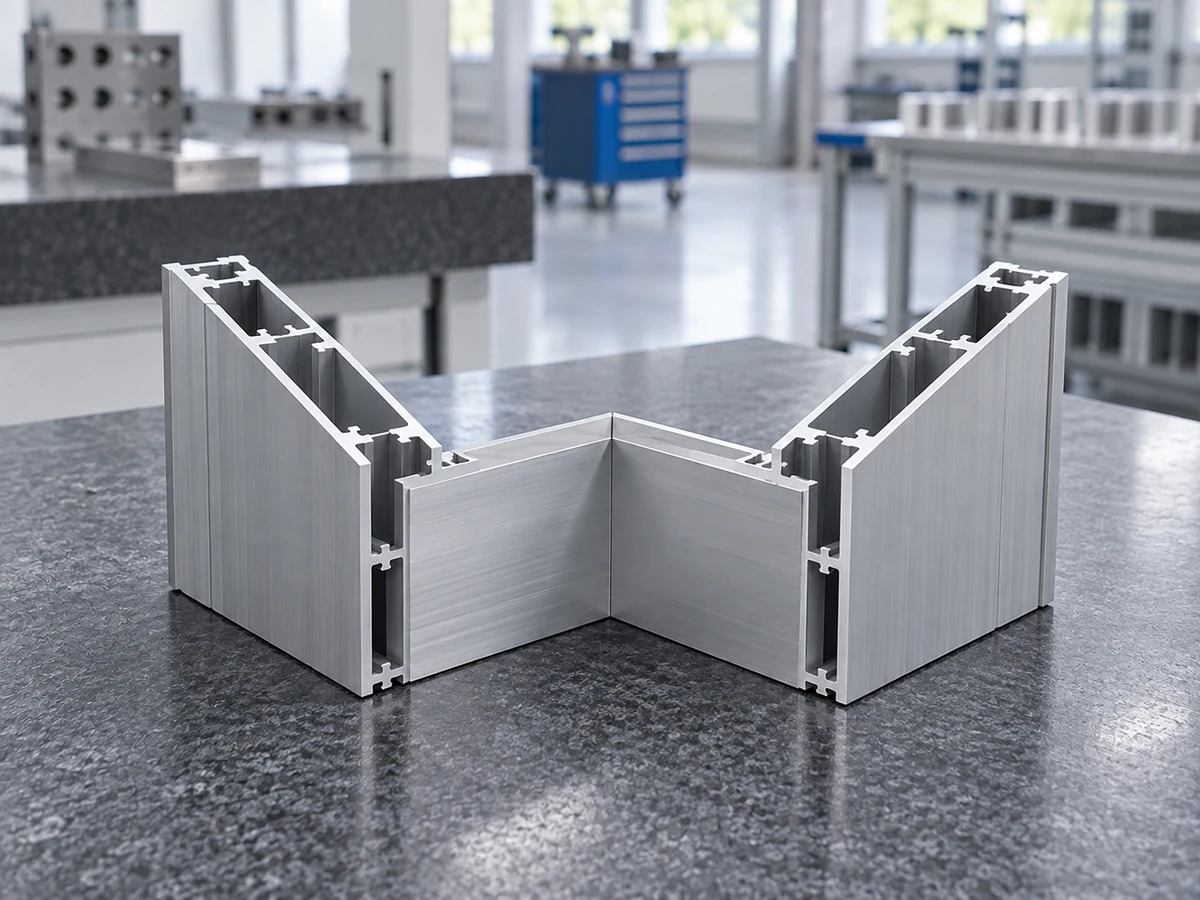
Aluminum window corner cleat cutting: define the deliverable
A purchasing line that says “cut corner connectors” leaves out the most important boundary. Does the shop receive an approved extruded cleat bar and deliver only square-ended blanks? Does it also deburr, drill, punch, mill or identify them? Or is the fabricator buying a complete joint assembly? Put one answer on the drawing and purchase order. A saw can produce a cut component under an approved process; that cut alone does not establish fit, strength, sealing or acceptance of a completed window.
Schüco describes corner connectors supplied either as finished parts or bar stock in one of its own assembly machine descriptions. That distinction is a useful procurement example, not permission to substitute one system’s connector for another. Its corner crimping guidance also places profile joining and cleat fixing in the downstream assembly workflow. Ask the owner of your particular window system which part number, revision, joining method and acceptance instructions apply.
Identify the approved cleat before asking for a saw
For aluminum window corner cleat cutting, start with the window system and whether the joint is for a frame, sash, vent or door section. Request the connector part number and drawing revision, the stock profile drawing, alloy and temper where specified, and the permitted source of the bar or finished cleat. A fit that looks plausible in a photograph is not an approved substitution. Profile chambers, thermal breaks, corner geometry and fixing arrangements vary. The Australian Aluminium Council’s Aluminium Extrusion Manual explains why tolerances and interlocking features need coordination with the extrusion supplier; use the actual system drawing for this joint’s acceptance dimensions.
Give the saw supplier a physical sample with its orientation marked. Identify which face rests on the support, which surfaces may be clamped, and which faces must be protected. For a small hollow cleat section, the way the part is supported can matter more than the broad machine envelope in a catalog. Do not infer a fixture from the fact that a bar fits under the guard. Ask the builder to confirm support, clamping, blade path, collection and safe access for that section and its shortest required blank.
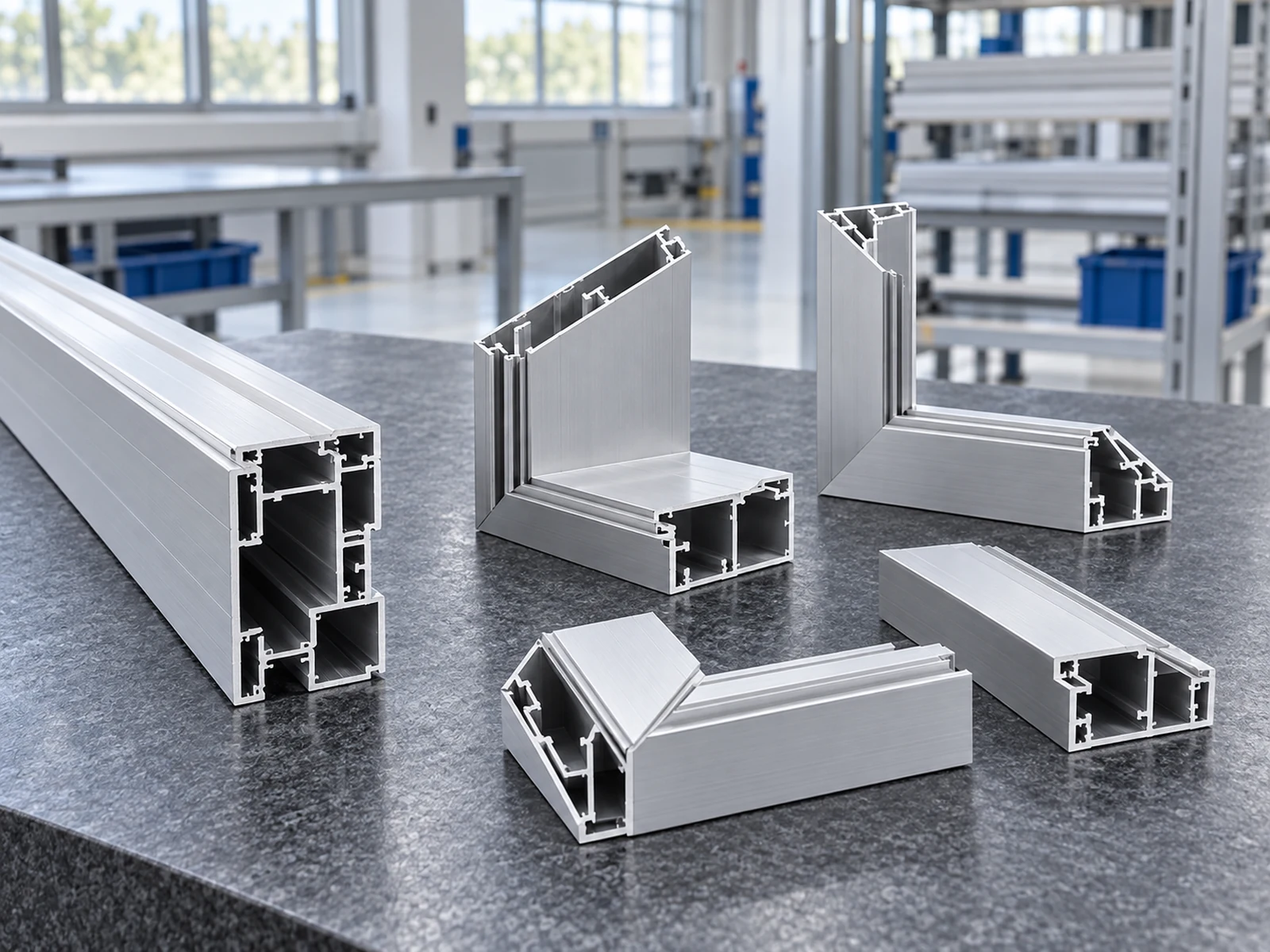
Write a cut list that the receiving team can measure
In aluminum window corner cleat cutting, record the finished blank length for each approved cleat bar, its datum and permitted variation from the released drawing. State whether both ends are square or whether a special end feature belongs to a later operation. Name the method for measuring length and end condition, because a burr or angled edge can shift a reading. Specify whether an end must be deburred before the part can enter a frame chamber and who owns that work. If the bar has a directional feature, mark feed orientation and finished-part orientation on the traveler.
Also state incoming bar length, expected remnant policy, lot identity, target batch size and how short pieces will be collected without mixing revisions. A machine counter might report cycles, cut pieces or completed kits; agree which number appears on the delivery record. For a left/right pair or a multi-chamber joint, count the required connectors per corner explicitly. Packaging is part of the handoff: small blanks that rub together or lose their labels can arrive unsuitable even when a first-off cut was correct.
Trial the short blank, not only the long feed
For aluminum window corner cleat cutting, ask for a representative, guarded sample plan using the actual approved bar and released cut list. The trial should include the shortest and longest specified blank, an initial piece after setup, a sample after repeated cycles, and the planned last usable section of bar. Observe how stock is supported before the blade, how a separated short part exits, and whether a remnant stays controlled. The builder must approve the test method and any handling around the cutting zone. Operators should never reach into an active blade or bypass guarding to rescue a part.
Measure finished length and end geometry with the agreed inspection method. Look for burrs, wall distortion, crushed features and visible-face marks that could affect insertion or later joining. Record the actual fixture and blade configuration used in the trial, along with exceptions and corrective action. A clean demonstration on a different extrusion is useful equipment context but is not evidence that this cleat will meet its drawing. Jiurun’s CNC aluminum cutting machine information describes programmable length and batch cutting as a machine direction, with final capability and accuracy confirmed for the customer’s actual profile and configuration.
Keep sawing acceptance and joint acceptance separate
Aluminum window corner cleat cutting should be accepted as a component operation. At the saw handoff, accept or reject the blank against its drawing: correct profile and revision, measured cut length, end condition, orientation, quantity, identification and packaging. At the assembly handoff, the window-system owner must verify connector insertion, any drilling, punching, adhesive or crimping steps, corner geometry, sealing and the finished joint under that system’s instructions. The fact that a blank enters a chamber does not prove the joint meets structural or weather requirements. Conversely, a frame joint problem may come from a mitered frame member, an assembly step or a wrong connector rather than the blank saw cut.
Use a small two-column acceptance sheet. The first column names the saw supplier’s deliverables and measured samples. The second names fabrication operations and tests performed by the window shop or system provider. Put exceptions on the appropriate side rather than adding them to a vague “corner quality” note. This is especially useful when a shop changes from purchased finished cleats to cutting its own bar stock: the change alters inventory, tooling, inspection, traceability and liability boundaries.
Send an RFQ that supports a real quotation
- Window system, frame or sash application, approved cleat part number and revision.
- Connector bar cross-section, material specification, stock length and marked orientation.
- Finished blank drawing, minimum and maximum cut length, quantity and variation allowed by the system owner.
- End-condition, burr, surface and identification requirements; any drilling or punching explicitly in or out of scope.
- Representative samples, proposed fixture, guarded collection method and first-off inspection plan.
- Batch rate definition, remnant policy, lot separation, packaging and receiving record.
Compare aluminum window corner cleat cutting quotes against that same package. A low quoted cycle time may exclude piece collection, inspection or a changeover between cleat sections. A higher price may include a dedicated fixture or a documented first-off method. Ask each supplier to name assumptions and unresolved trials. If the window-system owner has not released a cleat drawing, hold the equipment choice open until it does; a saw catalog cannot choose the approved joint component.
Related Jiurun saw video
The following video is from Jiurun Machinery’s own YouTube channel. It shows a JR-455CNC aluminum saw and feed area as general equipment context. It does not show this corner cleat, the customer’s window system, an approved fixture, a witnessed sample cut or performance evidence for the application described above.
Ask Jiurun to review the approved cleat blank
For an aluminum window corner cleat cutting review, send Jiurun the released connector bar drawing, cut list, shortest blank, annual and batch quantities, surface requirements, and the window system’s boundary between sawing and joint assembly. Ask for a configuration-specific support and collection proposal and a sample-cutting acceptance plan. Contact Jiurun Machinery with that package so the quotation addresses the part you will actually produce.