
Rotary indexing table base frame cutting is a purchasing decision about cut members, interfaces and inspection evidence before an integrator builds the station. A rotary table may carry fixtures through several assembly or test positions, but the aluminum frame beneath it is only one part of the system. A saw supplier can prepare approved extrusion members to a drawing; the table maker or integrator remains responsible for load calculations, mounting, stiffness, guarding and commissioning.
If your RFQ says only “cut an aluminum stand for a rotary table,” two suppliers may quote different lengths, datum conventions and finishing scopes. The seven checks below turn a concept into a comparable cut-member package without pretending that cut length alone determines indexing accuracy.
1. Freeze the rotary unit and the ownership boundary
Name the rotary unit or provide its current interface drawing, revision and orientation. Identify who supplies the plate, adapter, fasteners, leveling feet, anchors, guards and cable supports. If the frame is a retrofit, distinguish the existing floor, base and surrounding equipment from new cut members. The DESTACO 87R rotary index table page illustrates why the table is a distinct precision component with its own mounting choices; its listed properties are not specifications for your frame.
Ask the integrator to approve the member list before cutting. A saw vendor should not infer a table’s bolt pattern, cyclic loads or allowable deflection from a marketing image. Put any uncertain item in an open-questions column rather than silently adding machining or assembly to the cutting quote.
2. Define the load path and the members it drives
The table’s mass is only a starting point. The integrator should document the mass of fixtures and parts, the position of their centers of gravity, indexing acceleration, stops, off-center moments and any operator or service loads. These inputs determine where supports, cross-members and joints belong. The cut shop can then price approved profiles and lengths, but cannot certify the assembled frame from the cut list.
For a retrofit, mark whether the base is free-standing, floor-anchored or connected to another machine. Separate the table mounting plane from the floor interface. If vibration or repeatability matters, specify how the responsible engineer will evaluate it after assembly. Do not convert a saw’s positional repeatability into a claim about the final station.
3. Make datum and length rules unambiguous
Send a drawing for each profile family, with section, alloy/temper if controlled, nominal cut length, quantity, end condition, angle and revision. State whether the dimension is the overall outside length, a shoulder-to-shoulder distance or a mating-face datum. Identify paired members that must be kept together, and whether the assembly team will trim or machine any interfaces later.
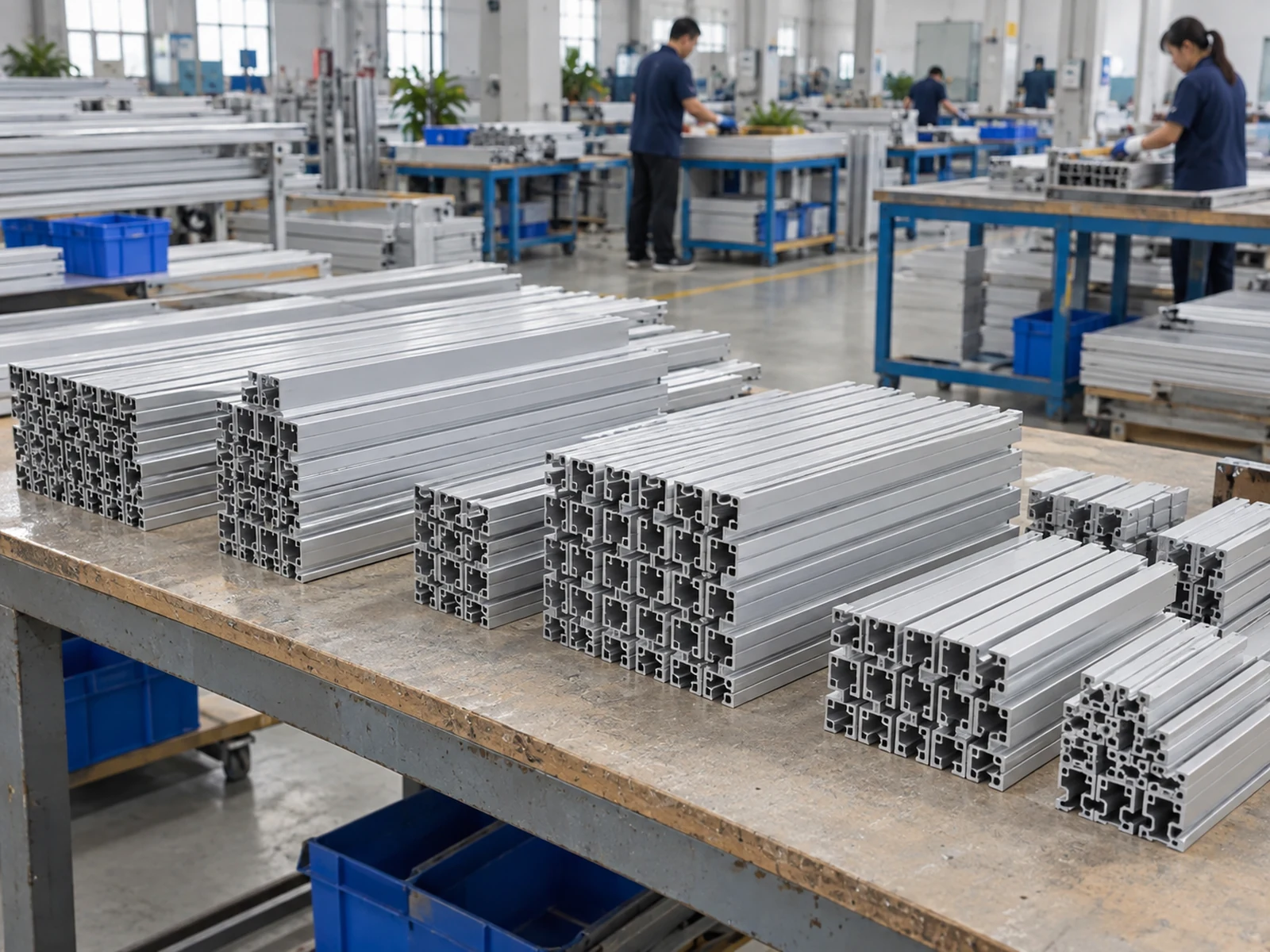
Clarify how the purchaser wants lengths recorded: one measurement per piece, a defined sample per lot or a first-off check followed by process monitoring. A single tolerance printed on a purchase order is not enough if the datum face, measuring temperature and post-cut operations are unresolved. Use a tolerance that the design actually needs and confirm it for the selected profile and saw configuration.
4. Identify interfaces requiring more than sawing
Rotary-table mounting may require plates, holes, slots, tapped features, flatness or perpendicularity controlled after assembly. Mark those on a separate drawing and assign them to a qualified machining or integration step. Saw cutting can establish a member’s length and end geometry within an agreed capability; it does not establish the final table mounting plane or the station’s positional accuracy.
For each member, use a simple process code: cut only; cut and deburr; cut then transfer for drilling; or cut as an assembly kit. State whether the buyer supplies inserts, brackets or fasteners. This avoids comparing a bare-cut quote with a quote that quietly includes downstream fabrication.
5. Plan access before the frame is fixed
Sketch the swept envelope of the index plate and fixtures, operator reach, service doors, drive access and routes for cables, air and sensors. Reserve openings for maintenance and for removal of the rotary unit. Cross-members that look efficient on a static frame drawing can block a motor, an access panel or a cable loop in the assembled station.
Ask the integrator to sign off access and safeguarding. Frame-member cutting is not a machine safety assessment. Any guarding, interlocks, stop strategy or floor anchoring must be designed and validated by the party responsible for the complete machine. The saw vendor should quote only the approved physical members and stated finishing scope.
6. Specify a first-off and inspection handoff
Before the full batch, agree on a first-off piece for each profile/angle combination. Record the drawing revision, member code, measured length and end condition against the same datum used on the drawing. If a part is critical to mounting, identify which downstream fixture or machining operation will confirm the assembled interface. A buyer can then accept or change the cut plan before a full kit is produced.
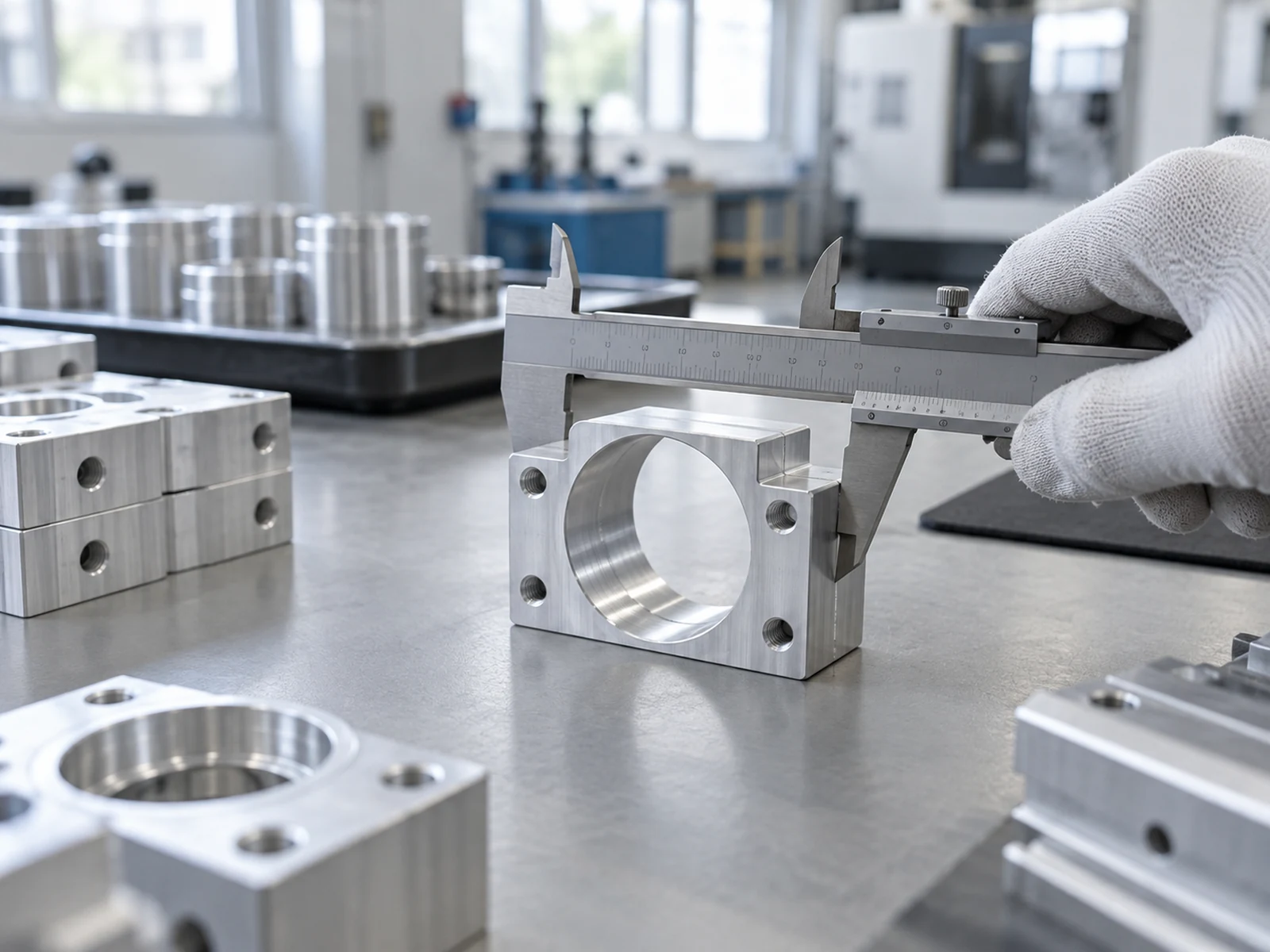
Define how rejects are isolated and how replacement pieces are identified. For longer profiles, the inspection plan may need a different instrument or support method than the small part shown above. Ask for an agreed record format rather than assuming that a photograph of a caliper proves conformity.
7. Quote packaging, labels and revision control as real work
Group members by station and assembly stage. Labels should show part number, length, section, quantity and revision, with paired or mirrored pieces clearly distinguished. Set expectations for protective packing, cut-end protection and separation of finished from unprocessed parts. A mixed carton of accurate pieces can still create time-consuming assembly errors.
Freeze the drawing revision at order release. If the table, fixtures or floor interface change, identify affected members and obtain a written disposition for already-cut stock. A change log is particularly important on retrofit work, where site measurements can supersede the first concept drawing.
Rotary indexing table base frame cutting: RFQ packet
- Approved profile sections and cut-member drawings, with revision and quantities.
- Length datum, angle and end condition for every member code.
- Material and finish requirements; identify buyer-supplied stock if applicable.
- First-off, lot inspection and labeling requirements.
- Any downstream drilling, machining, assembly or guarding responsibility assigned separately.
- Site constraints and a named contact for engineering questions.
For context on rotary-table mounting and installation documents, consult the selected table maker’s current technical documentation, such as the WEISS download center. Use the document for the actual unit and revision; generic examples cannot set frame dimensions for your project.
Example line-item and acceptance conversation
A useful line-item is specific without promising an unverified station result: “Member B04, approved extrusion section per drawing rev C, four pieces, cut length measured from the identified outside face, square ends, deburred, labeled B04-C, first-off approval required before the remainder.” The actual section, length, tolerance and inspection method must come from the buyer’s drawing. This template is a communication example, not a product specification or a claim that Jiurun has produced this assembly.
When comparing quotations, ask each supplier to mark exceptions against that same line-item: stock availability, kerf allowance, handling of anodized surfaces, end protection, measurement records and whether inserts or machining are excluded. Calculate kit completeness by member code and revision, not only by total piece count. The purchaser can then compare process scope and traceability as well as price.
Rotary indexing table base frame cutting is ready for production only after the responsible integrator resolves open load, interface and access questions. Keep those engineering decisions distinct from the first-off cut check. A conforming cut member can still be unsuitable for an incorrectly designed support structure.
Related saw demonstration
The Jiurun Machinery clip below shows a related aluminum sawing process. It does not show the rotary indexing table, this frame design, a customer project, a test cut for this RFQ or proof of assembled performance.
Request a cut-member quote
Send your approved member drawings and the seven answers above to JiurunCut. We can discuss a suitable industrial aluminum sawing workflow and the information needed to compare cut-member options. The integrator should approve the complete rotary station design and its final acceptance criteria.