
Aquaculture cage aluminum frame cutting should be quoted from a released member kit, not from the outside cage dimensions. A frame may combine straight stock, formed corners, reinforcement and attachments for mesh. The saw supplier can assess cut blanks only after the cage fabricator identifies the actual profile, joint, datum and downstream operations. The assembled cage and its site performance need separate engineering approval.
For a real market example, fish-cage manufacturer Iarema says it uses oval aluminum, avoids abrupt corners and includes internal reinforcement. Its product lines also use different wire meshes. Those are Iarema design statements, not Jiurun materials, a customer order or a cutting trial. They show why an RFQ must distinguish the metal frame blanks from formed geometry, mesh and finished cage acceptance.
Aquaculture cage aluminum frame cutting: five checks before the saw quote
1. Release the exact frame member list
List every straight aluminum member by part ID, drawing revision, profile cross-section, alloy and temper, stock condition, cut length, quantity and end type. Separate top rim, side frame and internal reinforcement if the design uses them. Do not infer that all sections are oval simply because a published cage example uses oval stock. Ask the cage designer to identify which parts are aluminum, which are mesh, and which are floats, fasteners or other bought-in components.
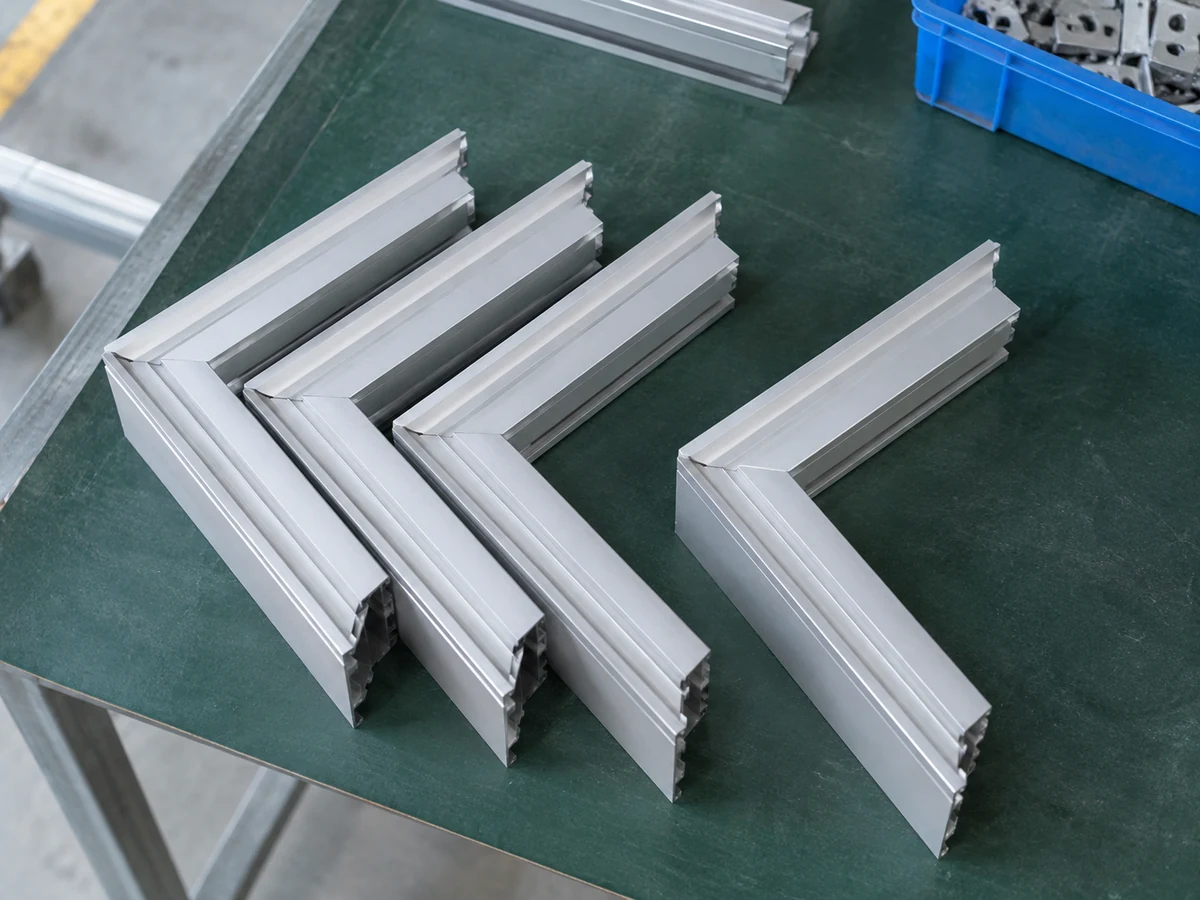
Mark curved or formed members separately. An outside corner that looks smooth on the complete cage does not prove that two saw-cut miters make it. The approved joint design decides whether a piece is straight-cut, angle-cut, formed, welded, sleeved or joined by another process.
2. Define the joint datum and the mesh-facing edge
For each blank, show where length is measured: stock stop face, outside face, centerline or mating surface. Record which side of a non-round profile faces the mesh and which face is cosmetic or needs protection. Specify whether the saw-cut face is hidden in a joint or remains exposed. If later drilling, notching, welding or bending changes the end condition, show that operation on the drawing instead of treating the cut blank as a finished frame part.
Agree with the cage fabricator on burr, sharp-edge and surface acceptance where the frame will meet mesh or handling surfaces. A clean cut face is one input to assembly; mesh attachment and fish containment cannot be certified by the saw cut alone.
3. Prove fixture contact on the actual section
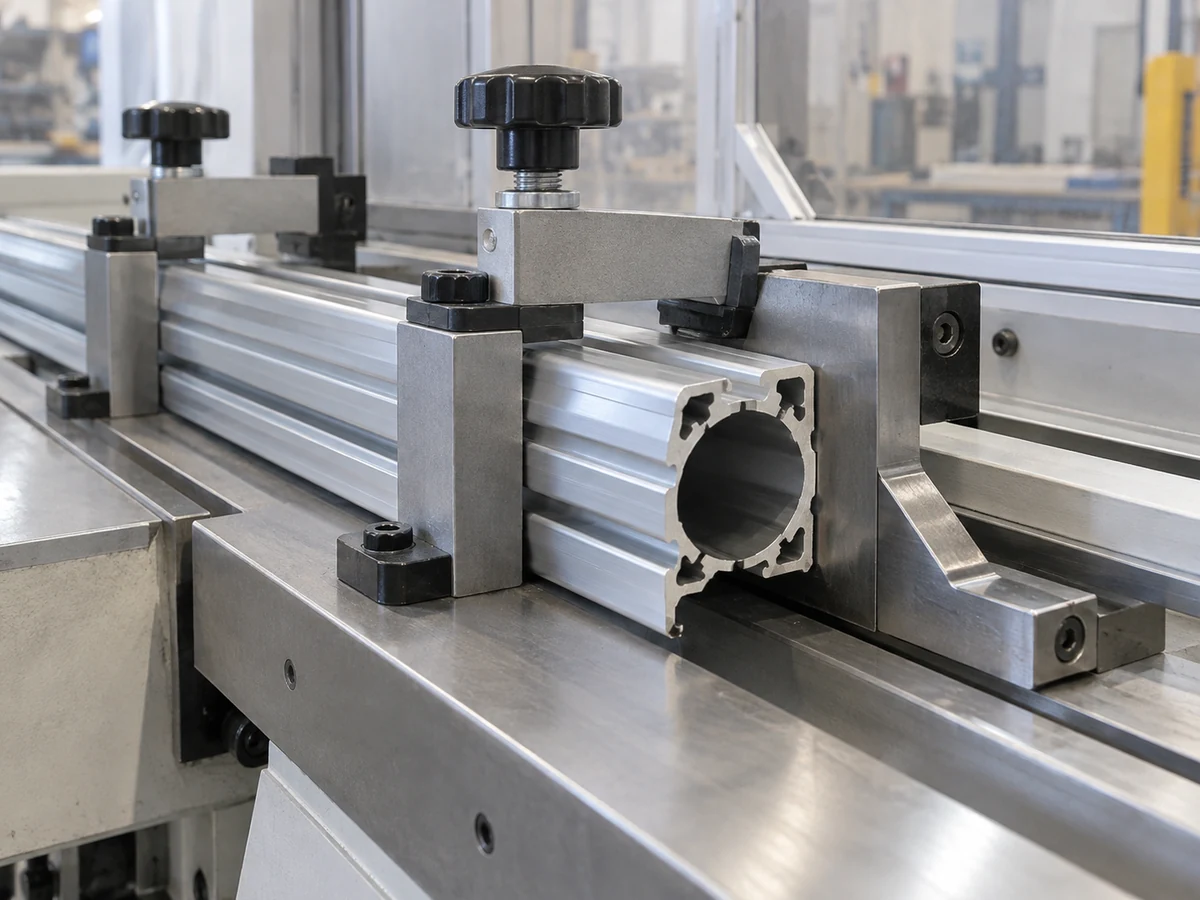
Round, oval and multi-cavity extrusions do not present the same clamp contact. The buyer should provide a profile sample or section drawing and ask the machine supplier to identify support faces, orientation control, clamp position and the risk of local marking or distortion. Check how long stock is supported before and after the blade and how short blanks are caught. Do not transfer a fixture result from a different profile to an oval cage member without a representative trial.
4. Inspect a representative cut kit, not one attractive sample
Plan samples that cover the shortest and longest frame members, each end geometry and each profile orientation. Record drawing revision, stock batch, blade and fixture setup, length readings, end angle or squareness where specified, burr condition and visible surface damage. Include mating-pair fit where a joint is part of the released scope. The cage fabricator should define acceptance limits and sign off the sample kit before production quantities are assumed.
Keep the cut trial separate from corrosion, welded-joint, mesh, float, mooring and full-cage load or use checks. Those require the appropriate design and site validation. A generic equipment video or a visually similar section cannot serve as proof for them.
5. Compare quotations at the same delivery stage
Ask each supplier to price the same stage: bare cut blanks, a prepared frame kit with any approved secondary work, or a complete assembled cage. State who supplies stock, forms corners, attaches mesh, completes joining and packages parts. Include batch quantity, part mix, revision control, scrap disposition and part identification on the RFQ. This prevents a low blank-cutting price from being compared with a quote that includes forming and assembly.
When comparing saw options, judge the accepted output, changeover and handling path against your actual member mix. Provide a drawing and representative stock to JiurunCut for an application review. The machine range is a starting point; the final configuration should be evaluated on the released cage-frame blanks.
Related equipment demonstration
This video from Jiurun Machinery shows a related aluminum saw and feed process. It does not show Iarema stock, an aquaculture cage member, an approved machine setup, a customer trial or any cage performance result.
Next step: for aquaculture cage aluminum frame cutting, issue a member-level cut list with profile samples, joint datums and sample acceptance criteria. Then request a same-stage quotation for the cut kit while the cage designer retains approval of the finished aquaculture system.