
Poultry exhaust shutter frame cutting is a narrow manufacturing decision inside a much larger ventilation system. A buyer may need straight aluminum frame members and tiebar blanks, a machined shutter component kit, a complete shutter, or a fan-and-inlet package. Those are different purchase units. A saw quotation is useful only after the drawing owner says which aluminum profiles actually remain in the buyer’s factory and which features will be made after cutoff.
American Coolair lists its LRW shutter for poultry applications and describes an extruded aluminum frame, aluminum blades and tie bars, with bearings and linkage. That is an example of how many parts a shutter can contain; it is not a Jiurun customer design or an approved cutting specification. J&D publishes aluminum exhaust shutters in several sizes and panel arrangements. Agromax describes poultry tunnel fans with aluminum outlet shutters but a galvanized steel fan housing. These examples show why a buyer should identify the exact shutter family before asking for a machine capacity or a cut price.
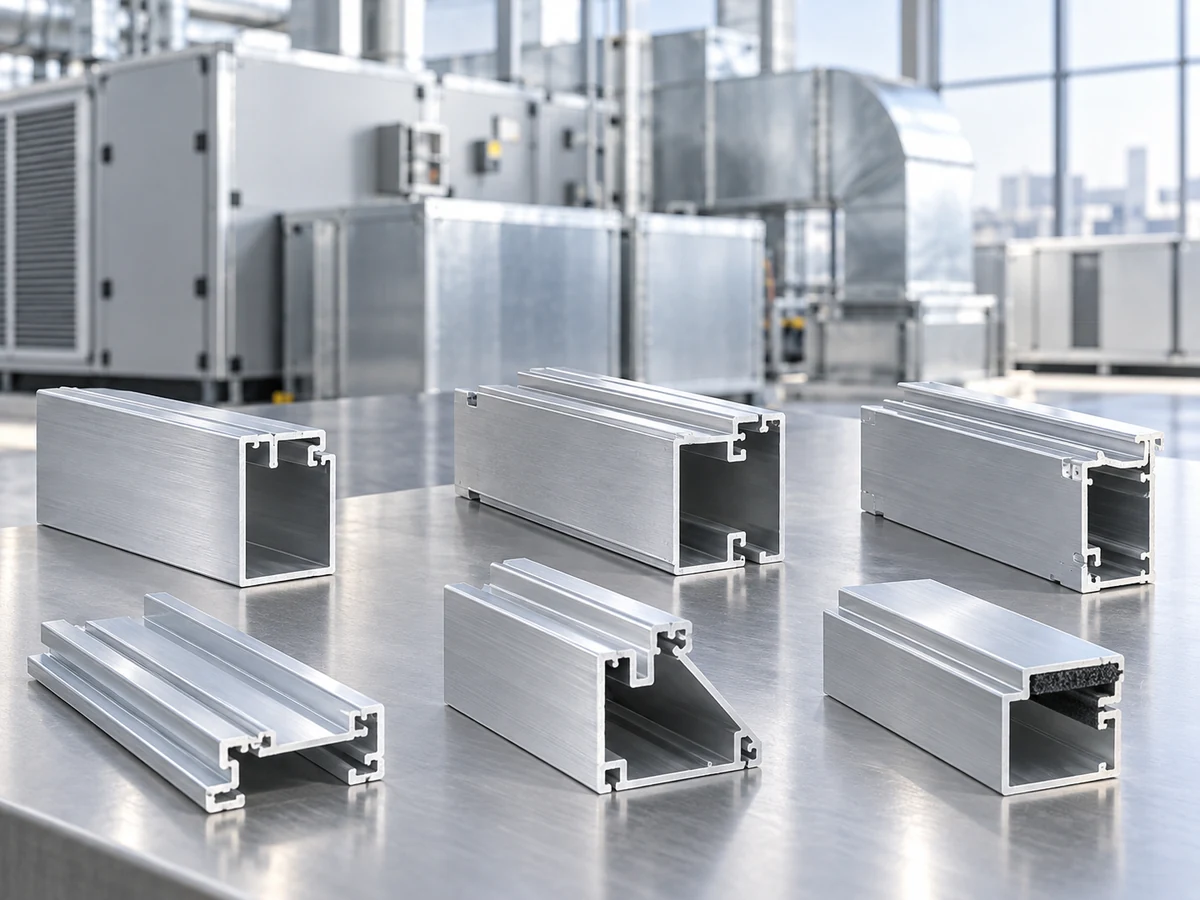
Poultry exhaust shutter frame cutting: start with the purchase unit
Write one line at the top of the RFQ: cut blanks only, finished shutter members, assembled shutter, or complete ventilation equipment. If a supplier quotes straight blanks, it has not accepted responsibility for blade pivots, linkage, sealing, motor control, fan sizing, weather exposure or installed airflow. If the buyer needs those outcomes, the relevant shutter or ventilation system owner must define and verify them. Avoid comparing a cutoff-only unit price with an assembled-shutter price as if they covered the same work.
For a replacement order, first check whether the approved replacement is a complete OEM shutter. Cutting a visually similar profile does not establish compatibility with its blades, bearings, frame opening or mounting pattern. A blank-cut RFQ is appropriate only when the design owner releases the actual section and downstream processing plan. Keep the replacement part number and revision with every quotation and sample.
Separate frame rails, blade stock and tie bars
“Aluminum shutter” does not name one cut profile. In the Coolair example, frame extrusion, shutter blades, tiebar and the T-shaped center member on certain double-panel units play different roles. A factory may buy blades already formed while cutting only frame rails. Another may cut several aluminum profiles but buy its bearings and linkages. The cut list should therefore identify each retained stock family and explicitly exclude bought parts. Do not infer that an aluminum fan shutter means an aluminum fan housing; the Agromax example combines aluminum shutters with a galvanized-steel housing.
For each retained aluminum member, request the controlled profile drawing, alloy/temper if specified by the OEM, finish condition at cutoff, stock length and actual section sample. Mark the face that may contact a clamp and the face that must remain cosmetically protected. The quotation should not assume that a hollow frame extrusion, a blade profile and a tiebar all accept the same support, stop and deburring method. If a section is thin or asymmetric, its trial must check distortion and visible edge quality at the actual clamp position.
Specify the measurement convention before a saw trial
The shutter’s nominal opening size is not a saw blank length. The design owner must provide the released member length and state whether it is measured over the longest point, shortest point or a defined datum face after an angled cut. If the final component has holes, end notches, corner joints or pivot details, say whether the cut drawing is for a blank before those operations or a finished member. Otherwise two vendors can quote different lengths while both appear to match the same headline size.
A useful line item contains: profile and drawing revision; member name and position; quantity per shutter; cut angle and hand/orientation; length datum and tolerance from the approved drawing; allowed burr and face condition; finish-protection requirements; and label or pack identity. A 90-degree frame rail should not inherit an angle requirement from a different corner member. Do not copy a generic saw brochure tolerance into an OEM shutter drawing. A feed-position figure, where published, is not evidence of final assembled-shutter fit.
Make clamping and support part of the trial
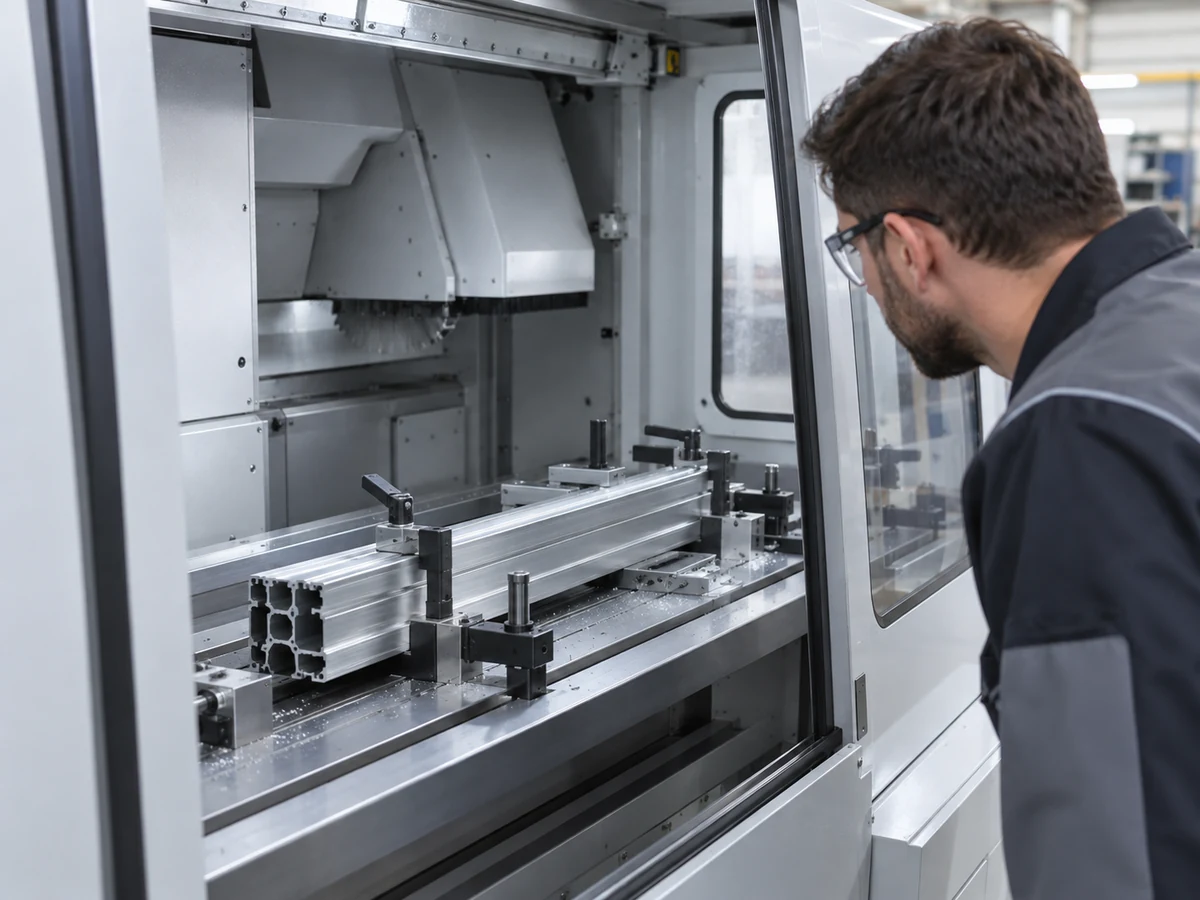
Bring the actual released extrusion to the saw trial. Record whether its contact surface is stable, whether an open channel can flex, and whether long stock needs additional support beyond the machine bed. For multiple profiles, ask for a separate setup record where the holding method changes. The trial should show feed, clamping, cut, stop and collection of finished blanks with guarding and operator procedures appropriate to the site. It should not be presented as an assembled-shutter test.
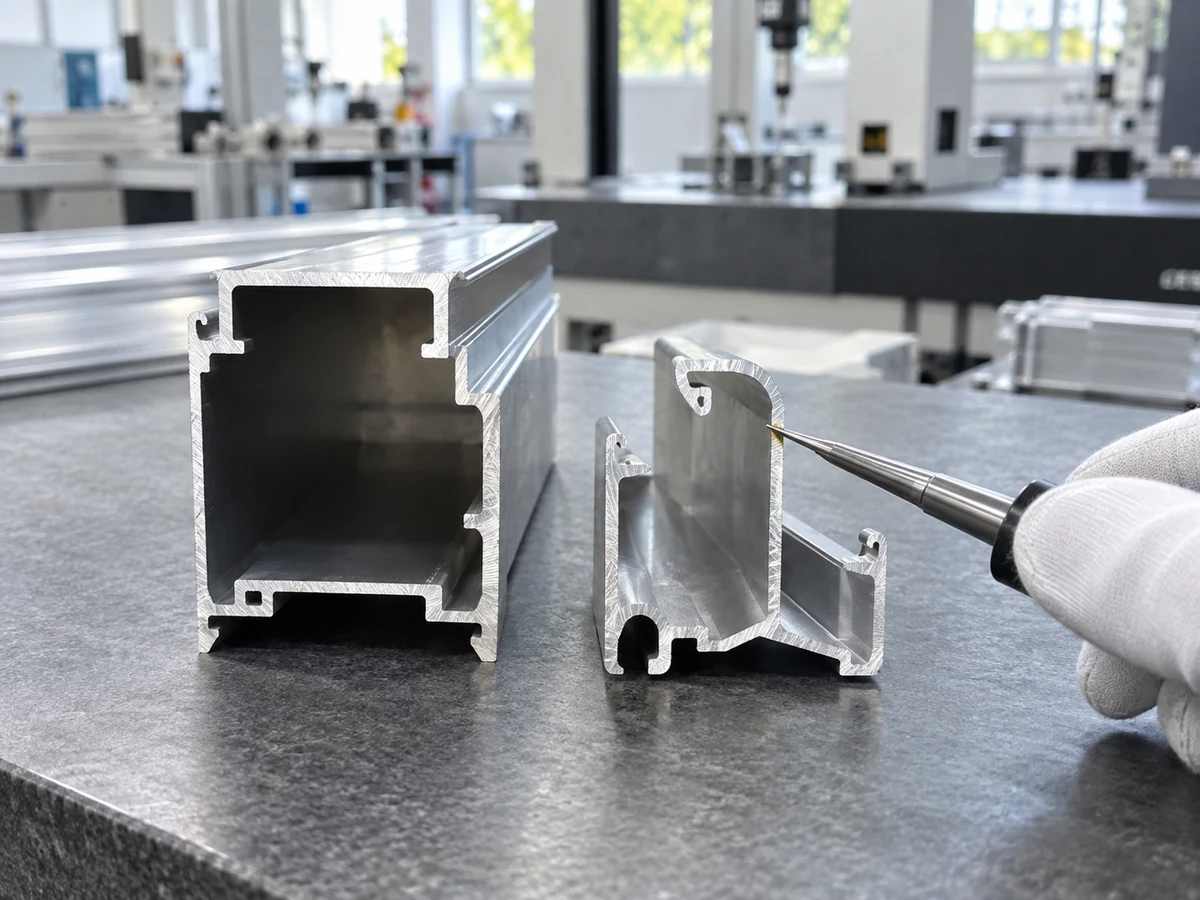
Inspect samples from the beginning and end of a representative batch, including the longest and shortest required blanks if both matter. Compare the defined length datum, end squareness or angle, burr, deformation and finish marks against the released drawing. Note where the profile is supported during measurement. A single attractive cut face on a different extrusion cannot validate the actual shutter member. If another shop will drill, punch, notch or assemble the blanks, agree how the samples will be handed over and which rework or scrap belongs to each stage.
Price the route, not just the saw cycle
Ask suppliers to use the same production period, profile mix and packaging scope. One offer may include setup changes and labeled member kits; another may include only unlabelled straight pieces. Compare incoming stock loss, changeover time, trial scrap, rework from finish damage and the downstream operations still required. Keep blade, bearing, motor and complete shutter purchases on separate lines. For a small replacement batch, buying an approved complete shutter may be simpler than recreating a custom profile route; for repeated OEM production, a released blank list can justify a dedicated cutting workflow. The decision depends on actual volume and design control, not a generic “automatic is better” claim.
Label bins by shutter family, member position, length and revision so visually similar rails do not mix. On a revision change, quarantine old stock and old cut pieces until the drawing owner decides their disposition. This is especially important when a range includes single, double or multi-panel arrangements: a nominal product size or panel count does not by itself specify every cut member.
What the demonstration video shows
The Jiurun channel video below shows a generic saw/feed stage. It helps a buyer see the kind of equipment motion to ask about during a profile trial. The stock shown is not identified as a poultry shutter frame or tiebar. The clip does not prove compatibility, dimensional results, throughput, installed ventilation performance or a specific machine configuration for this RFQ.
Video: a Jiurun channel saw/feed example, not a poultry shutter trial or accepted machine configuration.
Send a controlled RFQ package
- Name the shutter family and whether the purchase is blanks, members, an assembled shutter or a system.
- List each retained aluminum profile with drawing revision, sample, stock length and finish condition.
- Give a separate cut list for frame rails, blades, tie bars and center members only where those are truly cut in-house.
- Define angle, length datum, tolerances, burr and finish acceptance from the approved drawing.
- Identify work after cutoff: holes, pivots, notches, coating, assembly and testing, with the responsible party for each.
- State batch mix, forecast volume, changeover expectation, labeling and sample approval method.
For poultry exhaust shutter frame cutting, ask for a trial on the actual stock and compare the same accepted sample criteria across vendors. If the released profile or drawing is missing, obtain it from the shutter design owner before treating any machine or cut quote as final. Jiurun supplies industrial circular-saw cutting equipment for aluminum and other nonferrous stock; the company does not qualify a poultry ventilation system from a generic profile photograph. See the CNC aluminum cutting machine overview for equipment context, and send the controlled profile and cut list to discuss a stock-specific cutting trial.
Source notes
Application context is drawn from the manufacturers’ own pages: American Coolair LRW shutter, J&D aluminum exhaust shutters, and Agromax poultry tunnel fans. Their configurations are examples of market variation, not Jiurun specifications, customer references or permission to copy a proprietary component drawing.