
Collapsible linen hamper aluminum tube cutting starts with a narrow question: which straight members does your factory actually saw before the folding mechanism, bag support, base, bumpers and casters are assembled? A quote for a complete hospital or laundry hamper is not a quote for its cut tube blanks. The buyer should release a member drawing and an acceptance stage before comparing saws or outside cutting services.
As an application example, Tecni-Quip’s hamper range describes an all-aluminum collapsible TQ-SS cart with a 1-inch aluminum tubing frame, support base, bumpers, bags, wheels and brake. Its S-3-R model has an aluminum tubing frame too, but a different bag and base arrangement. Those are examples of how a cart maker separates components; they are not JiurunCut customers or proven workpieces for any Jiurun saw. Another maker’s convertible linen carts mix a welded stainless cage with anodized aluminum components. Material and joint assumptions cannot transfer between designs.
What is the cut member, and what stays with the cart builder?
Start from the approved bill of materials rather than the outside cart size. Mark each aluminum item as a straight cut tube, a bent or formed part, a drilled or welded subassembly, or a purchased component. If a cart is supplied knocked down, identify the handoff stage for each member: loose saw blank, prepared frame piece, bundled kit, or assembled hamper. The same outer dimensions may hide different joint positions, tube lengths and end conditions.
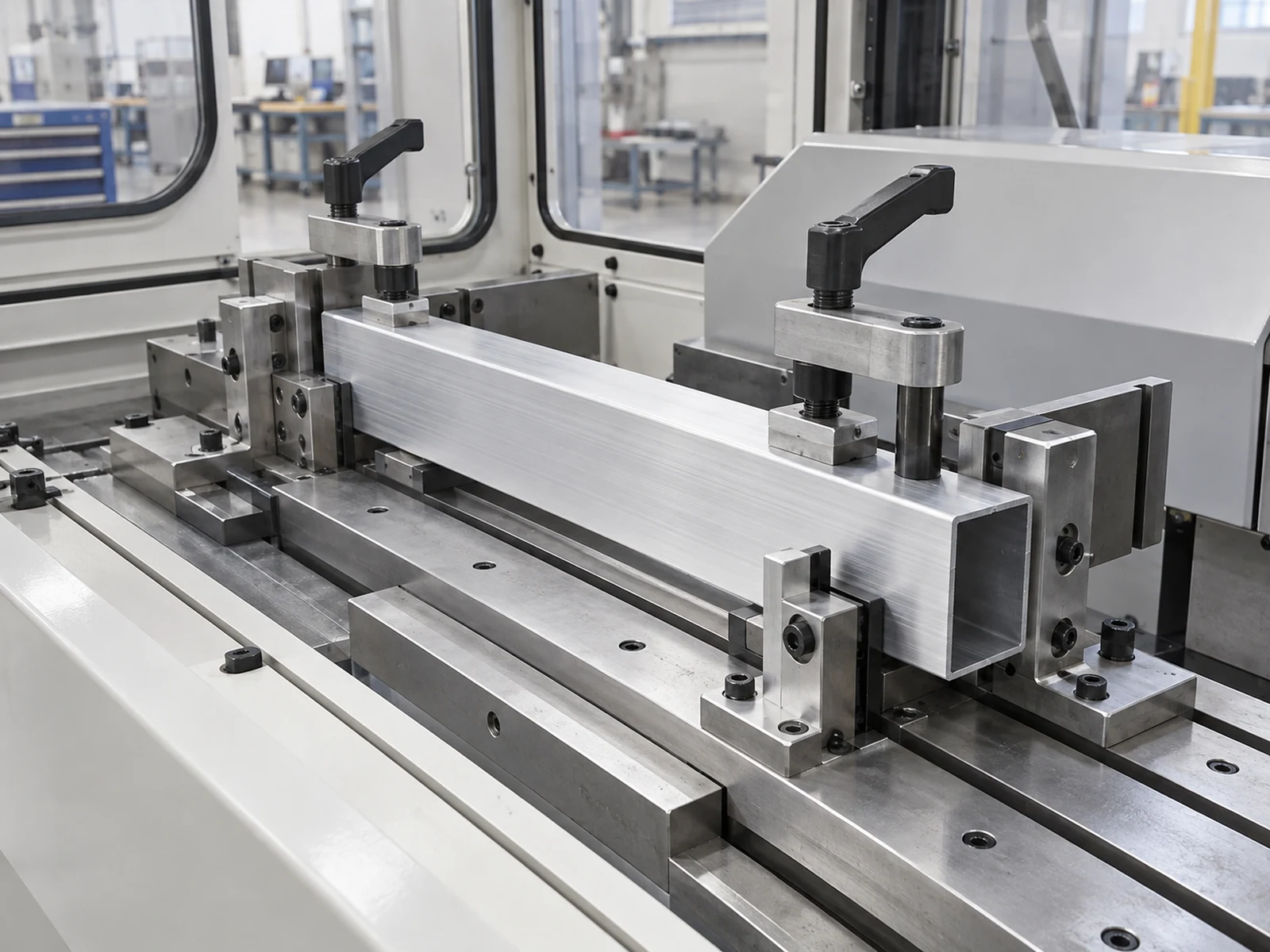
A useful cut-list line identifies the approved profile or tube section, alloy and temper if specified, nominal stock length, finished blank length, cut angle, number of pieces per cart, order quantity and revision. For a hinged hamper, note which end later enters a pivot, connector or base, and which face is visible after assembly. Do not assume the saw operation creates the final hinge hole, weld or folding function.
Collapsible linen hamper aluminum tube cutting: seven RFQ decisions
- Freeze the approved member identity. Supply the cross-section drawing or an identified physical sample. A 1-inch outside dimension in one manufacturer’s catalog does not define your wall, alloy, section shape or joint design.
- State the accepted handoff. Quote loose straight blanks separately from drilled pieces, bent members, complete frame kits and finished carts. List who supplies the tube and who owns downstream work.
- Give the measurement datum. Say whether length is measured across two square faces, along a miter’s long side or against a mating shoulder. Include the inspection method and drawing tolerance, not a generic saw accuracy claim.
- Show the end connection. Identify pivot or connector ends, coating or anodized visible faces, burr-sensitive interfaces and any mark-free contact requirement. Mark the faces that may touch clamps.
- Describe stock and batch mix. Give incoming stock length, straightness or finish condition, member quantities and how often the cut list changes. Ask suppliers to separate cutting time, changeover and handling assumptions.
- Approve a representative first-off. Use the real section and actual length and angle mix. Record cut-face condition, burr, squareness, length and fit with the next operation against the approved print.
- Separate machine purchase from production acceptance. A saw demonstration shows a sawing stage. Folding motion, caster behavior, sanitation, load rating and completed cart certification remain with the cart designer and integrator.
How to compare a saw-ready blank with a prepared frame kit
Place offers on the same basis. In a blank-only route, the buyer or a subcontractor still drills, bends, forms, joins, finishes and assembles the cart. A prepared kit may add those operations, plus identification and packing. A complete hamper adds the bag, base, hardware, casters, brake and final acceptance. A lower price for a bare blank cannot be compared directly with an assembled cart price.
For a collapsible design, the critical interface may be a hinge stack or connector rather than the tube’s outside length alone. A blade can make a repeatable cut while a hole pattern or joined frame remains wrong. Ask for a drawing that shows the assembled reference planes and the individual member datums. If the designer has not released the fold mechanism, keep those dimensions as open engineering items rather than assigning them to the cutting-machine supplier.
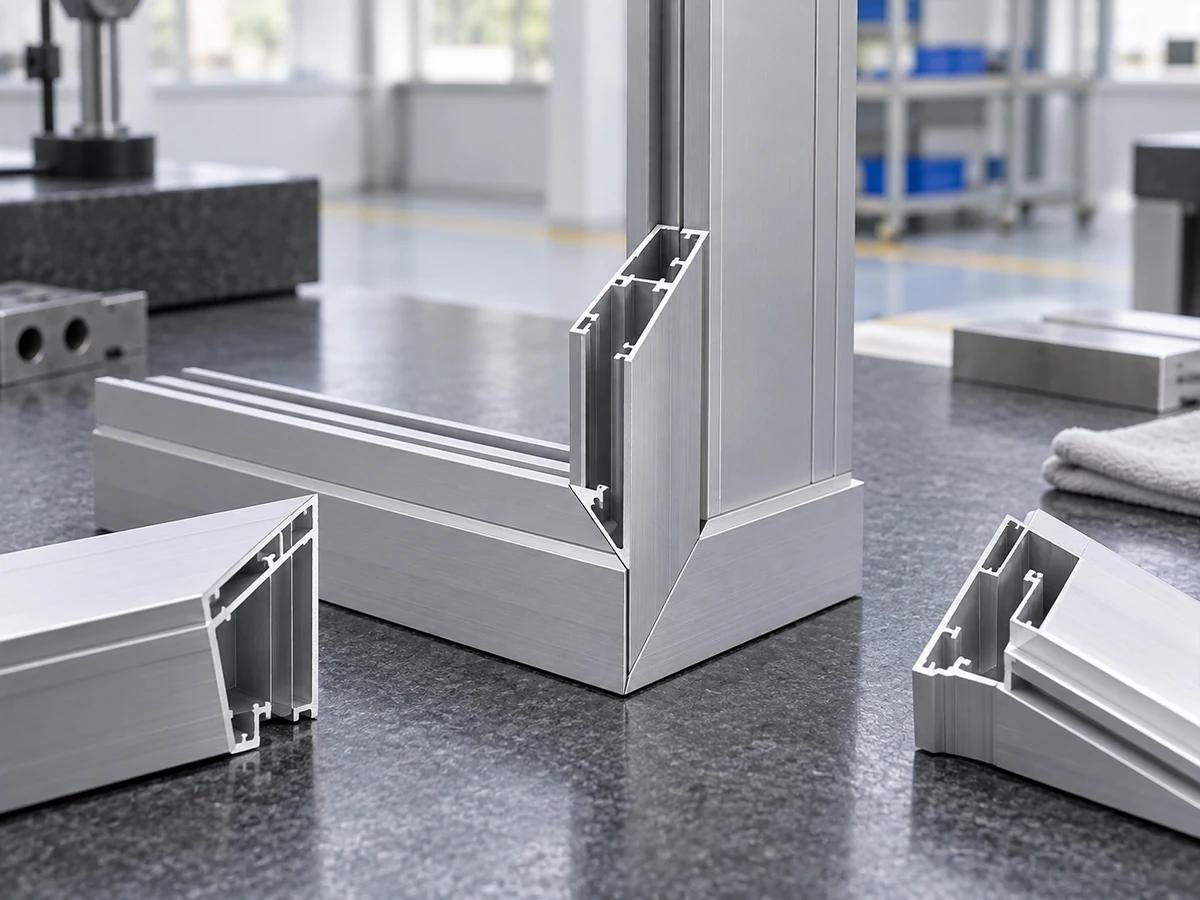
Choosing the cutting process without inventing a cart trial
For straight aluminum tube blanks, evaluate how the stock is supported before and after the blade, how the actual section is located, whether the clamp reaches a safe noncritical face, and how parts are separated and labeled. A thin wall or hollow section can react differently to clamping than a solid bar. Batch length changes matter as much as the longest single part. Ask the vendor to inspect the workpiece under the setup you would buy, including any custom fixture or feeder.
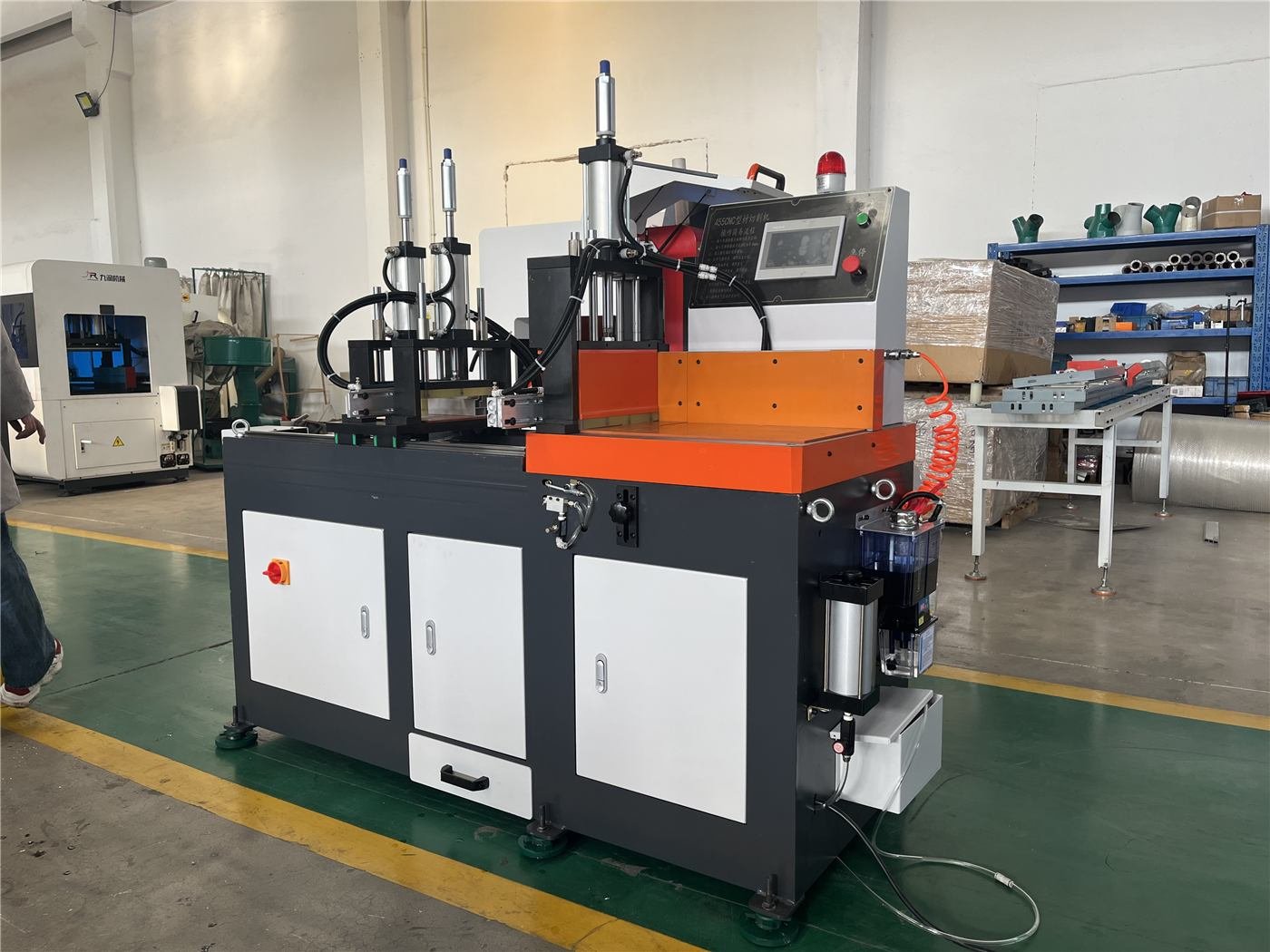
JiurunCut builds industrial aluminum circular-saw equipment. Its CNC aluminum cutting machine page is a starting point for length-positioning questions; final capacity, fixture and cut quality must be confirmed from your actual tube, drawing and configuration. A catalog feeding stroke does not establish the finished tube length or cart assembly tolerance. If your frame uses angle cuts or several section types, include every representative member before selecting a machine direction.
Watch the saw stage, then specify your own validation
The JiurunCut channel clip below shows a visible saw and feed-stage demonstration. It helps a buyer discuss support, feeding and cut-piece handoff; it does not show the linen-hamper material, an approved cart model or a validated cut result. Use it to frame questions, then request a representative trial on your real stock.
Video: another JiurunCut equipment example from the company’s own channel; not a linen-hamper cutting trial.
A small first-off protocol can make offers comparable. Choose the longest member, shortest member, a typical production member and any end that joins the folding linkage. Document the raw stock batch, fixture orientation, blade and feed setting used for the trial, then inspect each drawing-defined dimension and visible surface. Keep samples or measured photos with the drawing revision. Do not convert one successful sample into a guarantee for every stock variation or sustained production rate.
What to send in a useful RFQ
- Released member drawing, section photo and revision, with alloy, temper, wall and finish if known.
- One cut list showing length datum, angle, quantity per cart, batch quantity and changeover mix.
- Incoming stock dimensions and straightness or coating constraints, with the protected surfaces marked.
- Which operations occur after cutting: drilling, bending, joining, finishing, bag installation or cart assembly.
- First-off acceptance method, inspection tools, sample count and who signs off the interface.
- Desired quote stage: cut blanks, prepared kit, or saw equipment with specified fixtures and handling.
If the cart’s frame is mainly sheet metal, stainless, fiberglass or bought assemblies, state that upfront. The correct purchase may be a different process or no new aluminum saw at all. For a broader boundary between frame manufacturing and finished transport carts, see our transport-cart manufacturing guide. This page focuses on the collapsible hamper’s straight tube blank and folding-interface handoff.
Next step: send JiurunCut your approved tube drawing and cut list. Include a stock photo, member lengths and target output. Ask for a cutting-process review and a proposed sample trial. We can discuss a machine configuration for the sawing stage once the real profile and acceptance criteria are clear.