
Container inspection platform frame cutting starts with a released member package, not a request for “a platform saw.” A logistics site may need a mobile access structure beside stacked containers, yet the cutting machine only makes specified blanks from stock that the project has approved. The finished platform, its loading, stability, access and guarding remain the responsibility of the qualified system designer and builder. A buyer should therefore identify exactly which aluminum profiles will be cut in-house, which parts arrive prepared, and what evidence the receiving assembly team needs.
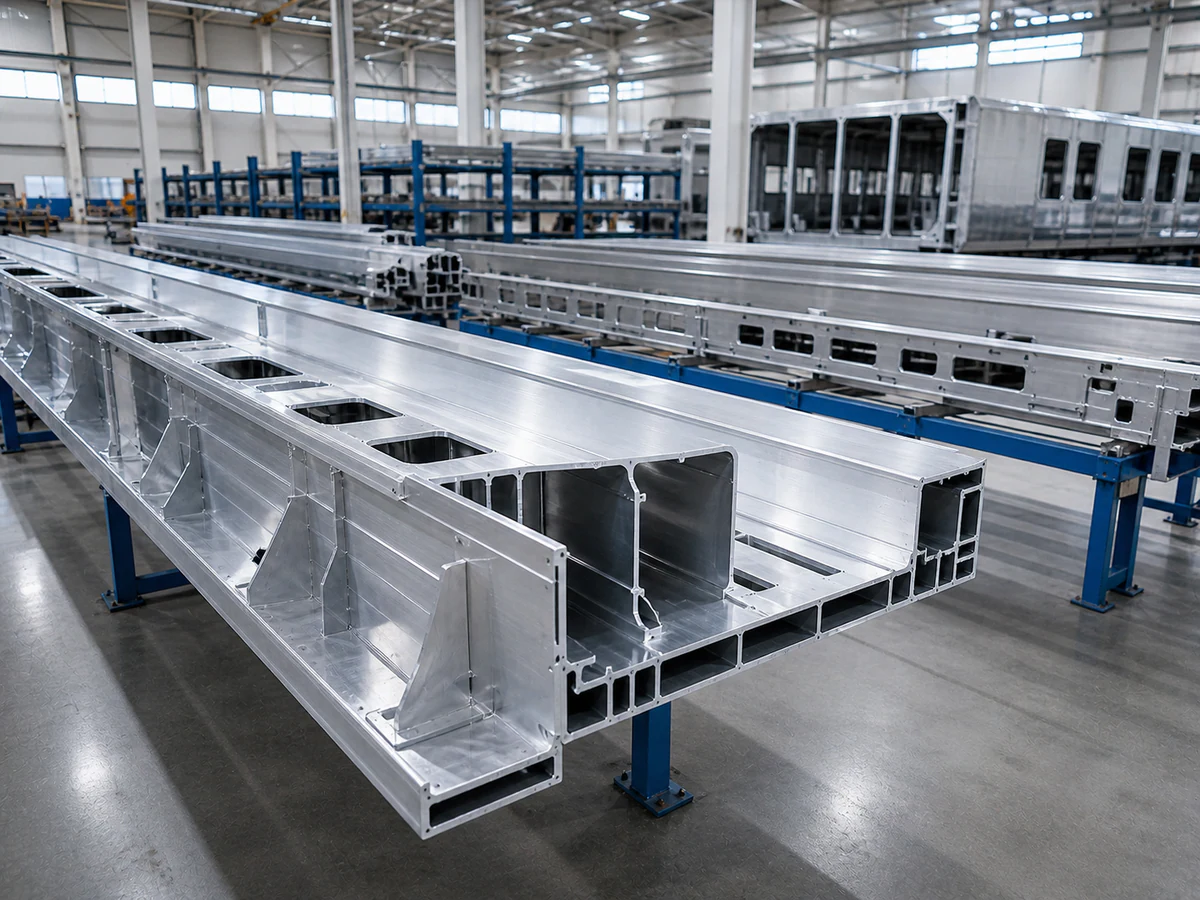
An mk Technology Group container-inspection-platform example shows that an aluminum profile construction can be used for this application. It describes a particular project, not a Jiurun installation or a general load rating. Use such examples to recognize the type of member and assembly boundary, then work from your own approved drawings.
Start with the approved platform variant
Ask the project owner for a controlled assembly drawing and a member schedule for each platform variant. The list should identify the base-frame members, uprights, cross members and bracing that are actually extruded aluminum stock. Keep stairs, deck panels, guard components, wheels, anchors and purchased connectors as separate lines unless a drawing explicitly makes them part of the saw-cut scope. The machine purchase cannot turn a finished structure dimension into a valid blank length.
Record the platform variant, drawing revision, member ID, stock section, alloy and temper where specified, finish condition, quantity, required end form, handedness and receiving assembly stage. If two locations use a visually similar rail with different end treatment, give them different identifiers. If an approved redesign changes an upright or base member, retain the old and new schedules separately until the project owner releases the change.
Container inspection platform frame cutting: the saw RFQ
For every proposed cut blank, provide the actual section drawing and outside envelope rather than the nominal profile-series name alone. Mark the reference faces, the direction in which a member enters the saw, the length reference used on an angled end and any surface that must remain unmarred. Tell suppliers whether stock arrives as long bars, precut lengths or already prepared kits. Ask for the shortest and longest released blanks, the common production mix and the longest incoming bar to be handled.
Do not assume one published saw capacity proves the job. A wide, awkward or flexible section may need a different support and clamping arrangement from a compact square tube. A manufacturer saw example from elumatec lists a support table and horizontal and vertical clamping, illustrating why the contact arrangement belongs in the RFQ. Those are that maker’s features; a Jiurun quotation must confirm its own offered configuration against the submitted sections.
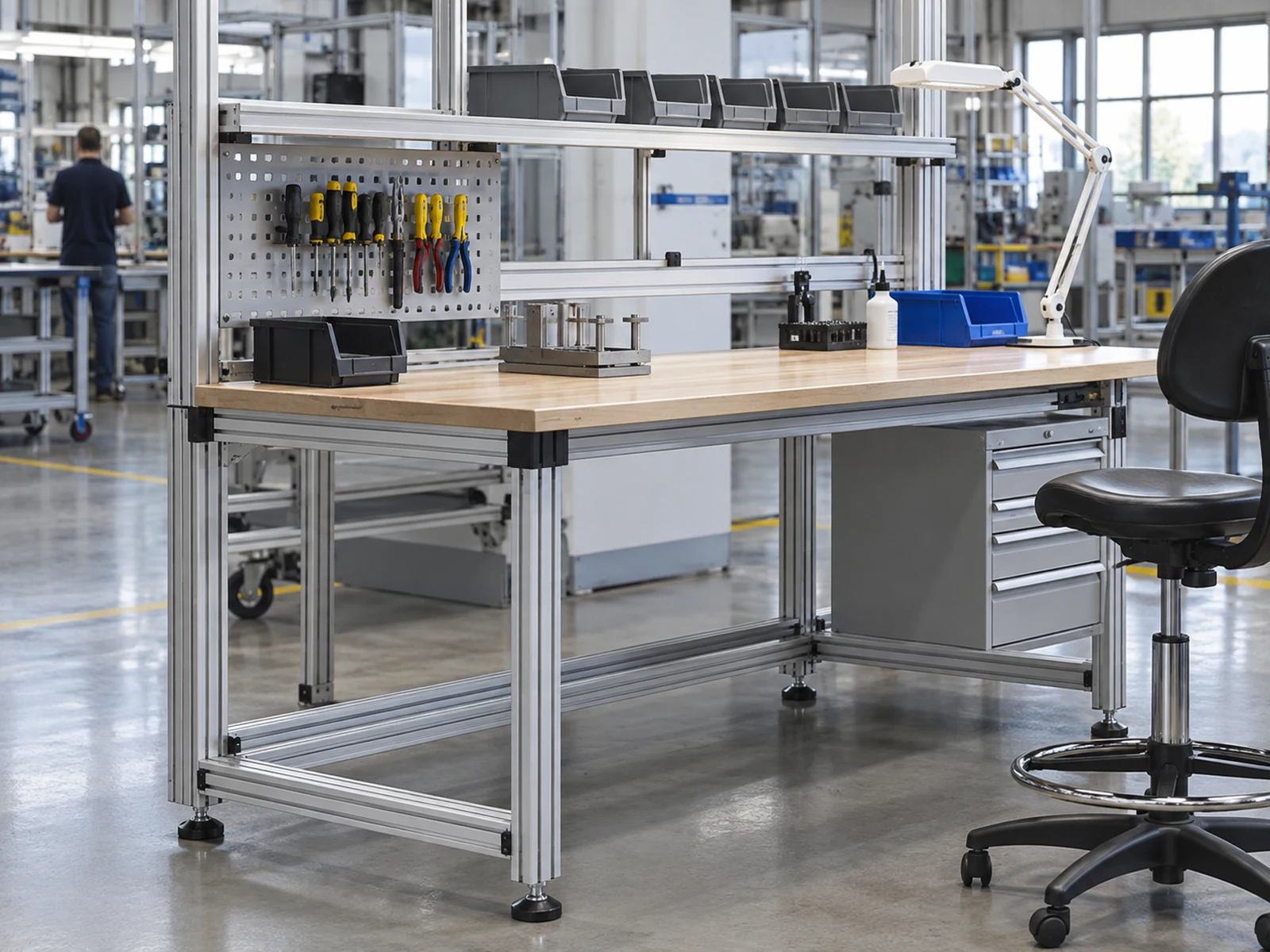
Keep the structural package separate from the cutting package
A saw quotation should say whether it covers loose cut members, marked frame kits or an integrated downstream process. A loose cut-member supply does not include deck installation, staircase fabrication, guardrail approval or on-site assembly. If the builder buys a complete platform module, the relevant decision may be supplier acceptance rather than purchasing another cutting machine. If the builder retains repetitive member cutting, compare the machine with buying accurately labeled precut kits at the same accepted handover stage.
Long sections also change the practical trial. Show how a bar will be supported before the cut, how a finished member exits without striking its finished face, and where short remnants go. Ask the seller to demonstrate the proposed infeed, clamp and outfeed arrangement with the actual stock family. The approved platform drawing and the machine’s operating instructions control any working procedure; the RFQ itself is not a substitute for either.
Run a sample on the difficult members
Select samples by risk, not just by the longest line on a list. Include the longest member, a short member, the largest section, a section with a difficult contact face and any approved angled end. Record the offered saw, blade and fixturing configuration and the stock batch used in the demonstration. Inspect finished length against the stated datum, end form, visible burrs, deformation and surface damage. Then let the assembly owner try the parts in the approved joint or fixture.
A passing cut sample proves only the attributes actually measured for that sample and setup. It does not establish platform load capacity, fall protection, wheel stability, certification or field fit. Those decisions require separate project evidence and competent approval. Likewise, a brochure value cannot be transferred to a different section, blade or fixture without a matching trial.
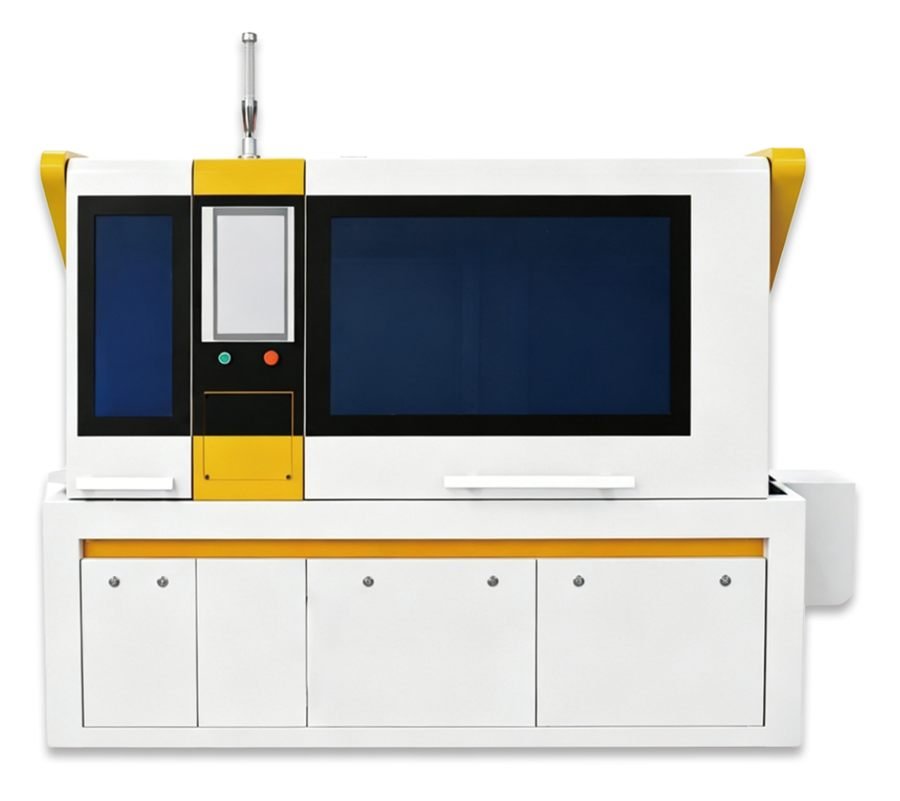
Release complete kits to the assembly team
For a multi-level or movable inspection platform, label the output by project, variant, revision, assembly stage and member ID. State whether handed pairs and replacement spares are included. A partially cut batch should not silently appear as a complete platform kit. The receiving team should be able to compare each bundle with the released schedule before drilling, joining or installation.
This traceable handover matters when one platform is assembled in a factory and reassembled at the final site. It does not make the saw responsible for on-site installation. The published mk example concerns aluminum-profile platforms moved around a logistics center; it provides application context only. Your project’s variant and acceptance records must stand on their own.
Questions to send with the RFQ
- Which members are released aluminum cut blanks, and which are bought modules or non-saw parts?
- What drawing revision, section, reference face, cut length, end form and quantity identifies each member?
- What are the incoming bar lengths, finish conditions, smallest parts and longest handled parts?
- What infeed, clamp, blade, outfeed and part-protection configuration will be demonstrated?
- Who checks the sample blank, who accepts the joint, and who approves the completed platform?
- How will the supplier label complete kits, variant changes, spares and short shipments?
For adjacent procurement questions, see our guides to industrial stair member supply and industrial equipment frame handover. They address different assemblies; your platform package still needs its own released schedule.
Related equipment video
The following video from the Jiurun Machinery channel shows general aluminum saw equipment activity. It does not document a container inspection platform, this article’s material or section, a particular offered configuration, customer job, sample result or performance guarantee.
Need a cutting proposal? For container inspection platform frame cutting, send the released member schedule and representative profile drawings through our contact page. We can discuss an equipment trial for the specified blanks while the qualified project team retains responsibility for the completed access platform.