
Vending machine display door frame cutting starts with the approved door kit, not with a generic cabinet width. A glass-front vending machine may use an aluminum-framed door, while another design uses a formed-metal surround, a bought-in insulated door, or no cut aluminum door members at all. Before comparing saws, the buyer should isolate the actual extrusions to be cut, the way the glass or display panel is retained, and the stage at which the finished parts leave the cutting station.
This guide is for an OEM or component buyer preparing an RFQ for straight, approved aluminum extrusion blanks used in a vending-machine display door. It does not specify a complete machine, electrical system, cooling performance, glass safety, or site installation. Published examples show why the distinction matters: AiFO describes vending door systems with aluminum or PVC frames, optional locks and lighting, while a published transparent display-door design uses four hollow aluminum profiles with corner connectors and a wiring groove. Those are examples of possible construction, not a universal bill of materials for your product.
1. Vending machine display door frame cutting starts at the supply boundary
Start with the released product drawing and purchase boundary. If the vending OEM buys a complete glazed door, the saw supplier may have no door-frame cutting work to quote. If a frame fabricator receives loose extrusions, the cutting requirement concerns identified top, bottom and side members. If a door is fabricated in-house, the RFQ must also name which later tasks belong to other stations: corner joining, milling, drilling, gasket fitting, glazing, wiring, lock fitting, testing and final assembly.
| Supply route | Saw-cut scope to confirm | Handoff beyond the saw |
|---|---|---|
| Complete bought-in door | No assumed in-house frame cuts | Door supplier provides its own approved assembly |
| Cut-blank kit | Released extrusion IDs, cut lengths, end angles and quantities | Separate preparation, corner connection and glazing |
| Prepared member kit | Cut blanks plus explicitly assigned secondary operations | Assembly, electrical and whole-door validation remain separate |
A quote that says only “aluminum vending door” is not enough to choose a blade, fixture or production route. Ask the buyer to mark the retained aluminum members on a section drawing and identify all bought components. Refrigerated display-case frame purchasing is a related but separate scope, especially where the vending door has a thermal or sealing system.
2. Release the profile section, glazing interface and corner method
Send a cross-section for each extrusion. Mark the face that is cosmetic, the glass or panel pocket, gasket seat, accessory channel, corner-connector cavity and any wiring passage. The section determines where the profile can be supported without crushing a thin lip or marking a visible finish. It also determines whether the end must be square, mitered, relieved or left for later machining.

Do not infer the correct cut angle from a finished door photograph. A corner-key system, mechanical fastener, welded frame or proprietary connector can require a different length convention and end preparation. A visible front mitre also may differ from the structural member behind it. Request the approved corner detail and one dimensioned first-article sample rather than translating overall door dimensions into saw lengths by eye.
3. Name the datum for every member cut
“Door outside width” is an assembly dimension. It is not automatically the top-rail cut length. The drawing should state whether each length is measured along an outside face, an inside face, a long point, a short point or between connector shoulders. State the tolerance and inspection method for that same datum. Label left and right uprights when their ends or slots differ, even if the nominal lengths match.
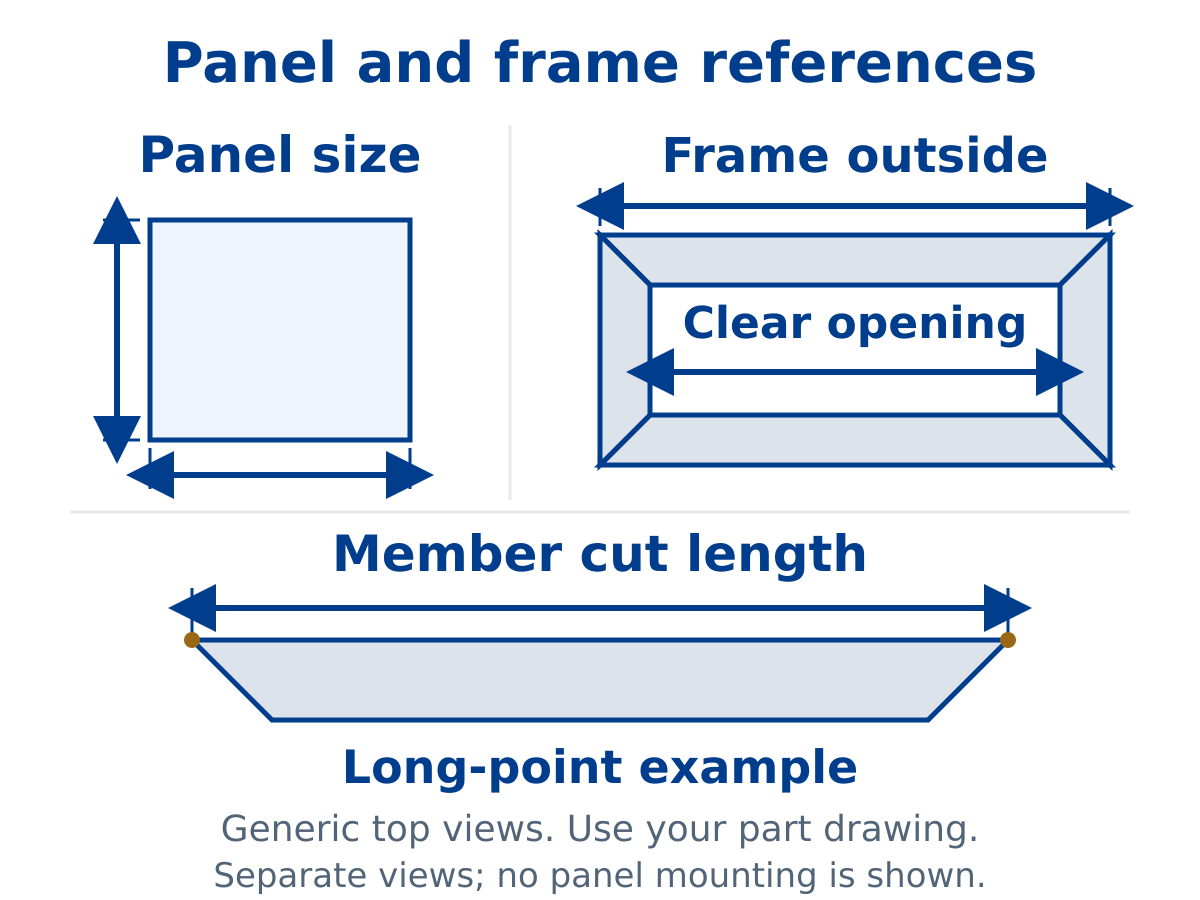
For a transparent display door, the panel, frame and clear opening are different requirements. A frame can meet its outer width while leaving the wrong panel pocket or opening. A shop should therefore measure the cut blank and check the assembled sample separately. If the glass or display panel comes from another supplier, define the handoff dimensions and the party responsible for the final fit.
4. Check finish, orientation and stable holding
Identify whether stock arrives bare, anodized or powder coated, and which faces must be protected. A reversible-looking section may have a front-facing finish or a one-sided groove, so stock orientation must be explicit in the traveler. For a long, thin-wall profile, check that the support and clamp contact solid webs rather than delicate flanges. Specify the accepted clamping marks and the condition of the cut face.

Ask the saw vendor to describe the proposed contact faces, support length and first-off check for the actual supplied section. A still photo cannot establish that a clamp will protect a particular coating or hold a narrow groove correctly. If a machine demonstration is offered, distinguish a generic saw motion demonstration from a controlled trial of your released extrusion.
5. Separate saw output from prepared-door output
A saw can produce the approved end geometry and length of a profile blank. It does not create an electrical wiring channel, drill a lock location, certify an insulated door or prove display operation. A profile may already have an extruded groove, but the cutting RFQ should still show how that groove must face after assembly and whether its open end needs a later cover, deburr or connector operation.
Plan the transfer from cutting to assembly. A usable kit schedule states part number, revision, handedness, quantity per door, stock finish, target cut length and end treatment. Packaging should prevent long rails from rubbing cosmetic faces against short members. Offcuts and mixed revisions need clear identification, particularly when one production line serves multiple cabinet sizes.
6. Run a first-article check against the released kit
Before accepting a production claim, supply the real profile, current drawing, connector and panel information. Check at least one member of each distinct section and end condition. Record cut length at the specified datum, end squareness or angle, burr condition, visible-face damage and correct orientation. Then build or simulate the approved corner and panel interface at the downstream station. A dimensional pass on a loose rail is not the same as an accepted glazed door.
The exact sampling and acceptance limits belong in the purchaser’s drawing and quality agreement; they cannot be inferred from a generic machine specification. If the requested part includes post-cut slots or holes, quote those as separate operations unless the proposed line has demonstrated and contracted capability for them. A useful distinction for the buyer is the frame cut-blank versus completed display assembly boundary, which also appears in other framed products.
7. Send a compact RFQ that can be tested
- Door assembly drawing, revision, section IDs and the exact aluminum members retained in-house.
- Stock form, alloy and temper if specified, section envelope, wall-sensitive areas, finish and supplied length.
- Top/bottom/left/right cut list with quantities, handedness, datum, length tolerance and end geometry.
- Panel pocket, gasket, corner-key, lock and wiring interfaces that affect member orientation or later preparation.
- Required visible-face protection, accepted burr condition, first-off sample and inspection record.
- Expected door sizes, changeover mix, batch volume and output boundary: blank, prepared member or kit.
- Any later machining, assembly, glazing or electrical work that is excluded from the saw quote.
Share this package with Jiurun if you want a machine and trial proposal for the released aluminum members. We can compare the actual section envelope, support and handling route, cut geometry and first-off checks before discussing a model. Send the drawings and cut list for an RFQ; no cut quality, throughput or completed-door claim should be accepted without the agreed sample and inspection conditions.
Related equipment video
The following video from Jiurun Machinery shows a general aluminum-cutting saw operation. It is an equipment illustration only; it does not show this vending door profile, glass, wiring, customer job, approved setup or a qualifying trial.
Source notes
AiFO vending door systems describes available frame materials, finishes and optional door equipment. KinginGlass vending glass door is one example of an upright aluminum-framed door. Published transparent display-door design describes one hollow-profile, corner-connector and wiring-groove arrangement. These sources establish possible configurations only; the purchaser’s released drawing controls its own job.