
Turnstile aluminum frame cutting should start with a released component drawing, not with a picture of a finished entrance lane. Many turnstiles use steel or stainless steel for their main structure. Some designs also have extruded aluminum members around a clear side panel or in an enclosure. Those aluminum parts are a sensible subject for a cut-kit RFQ; the complete access-control system is a different purchase and acceptance task.
This guide helps a buyer separate the cuttable aluminum members from the rotor, top channel, glazing, electronics, anchoring, and life-safety decisions. It offers a practical sequence for asking a saw supplier for a witnessed sample run. It does not specify or certify a turnstile installation.
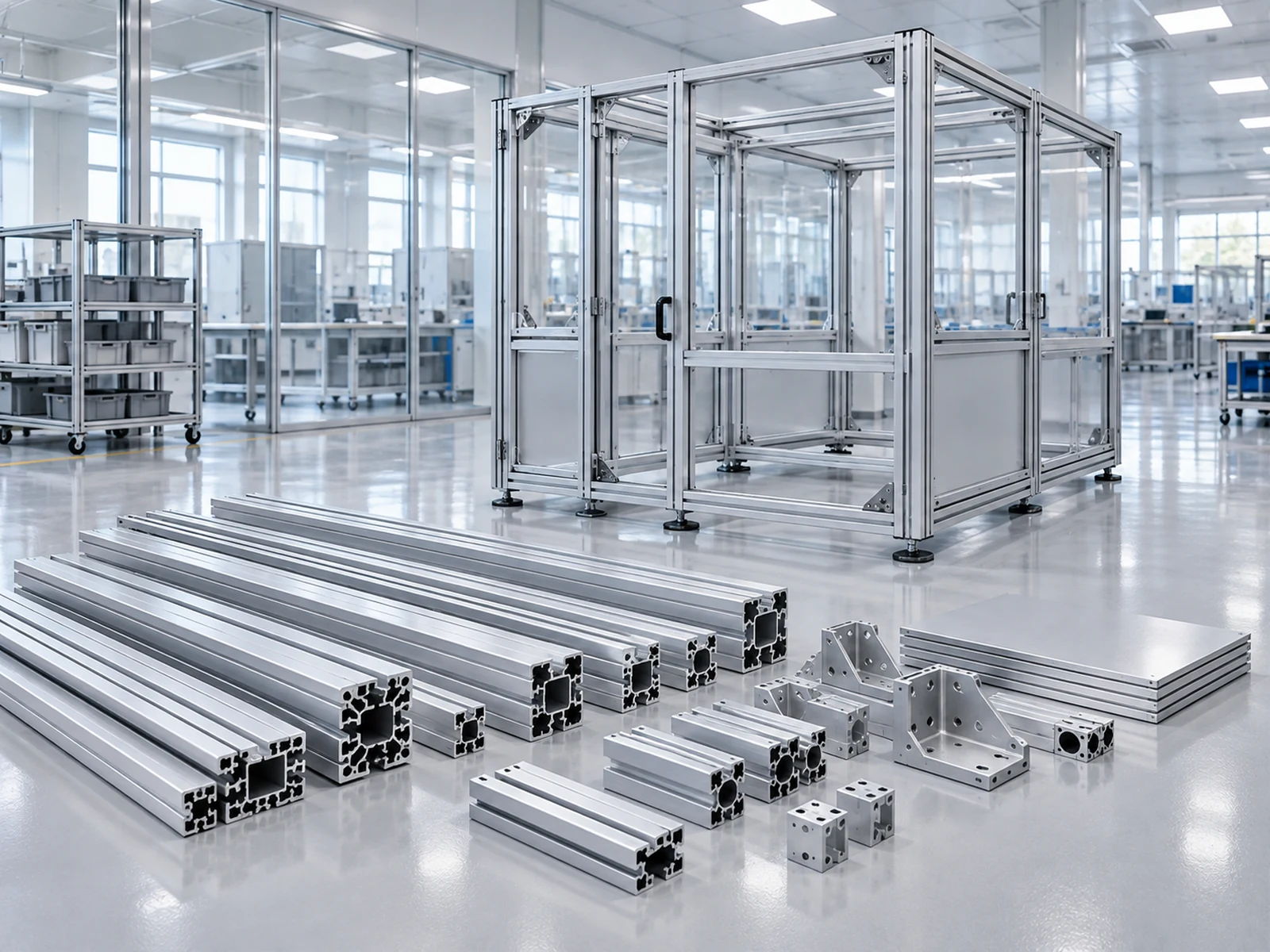
Turnstile aluminum frame cutting starts with approved parts
A turnstile may combine dissimilar structural and finish materials. For example, an Alvarado full-height turnstile specification describes a steel top channel and a clear panel with an extruded aluminum frame. Alvarado’s CLST product also shows an aluminum-framed clear side panel. These examples establish why a buyer should request a bill of materials by material and part number. They do not establish that every turnstile uses the same extrusion or that a Jiurun saw produces those specific parts.
Ask the system designer to highlight only the aluminum extrusion members on the approved drawing. Identify each rail, stile, cover, or mounting member, the profile cross section, finish, handedness, and mating component. Mark steel and stainless parts separately. Do not send a generic perimeter dimension and expect the cutter to infer the clear opening or glazing pocket.
1. Release the profile cross section and datum scheme
Provide the extrusion drawing with a revision, alloy and temper if specified by the design authority, wall and pocket geometry, visible-face orientation, and permitted stock length. The cutting supplier needs to know which face contacts the fixture and which end is the measurement datum. Include any existing finish or protective film that affects clamp contact. If a replacement extrusion is proposed, route it back to the system designer for approval; a similar-looking channel can change the fit of a panel or gasket.
2. Define the cut list by assembled panel, not loose lengths
List each part ID, quantity per panel, nominal length, end angle, mitre direction, and mating part. Distinguish left from right where the profile is asymmetric. State whether dimensions are along the long point, short point, or datum face of a mitre. A drawing of the assembled clear-panel frame is useful for detecting a mirrored pair before stock is cut. The saw supplier should return a labeled kit rather than a mixed pile of nominally similar pieces.

3. Put joint features on the drawing
Some frames need corner keys, screws, brackets, gaskets, or a panel-retaining feature. A clean saw cut is only one input to joint fit. Tell the cutter which features are made by a separate operation, and which edge must remain free of chips, distortion, or coating damage. If holes or slots follow cutting, assign the machining responsibility and inspection datum explicitly. A sample that fits a bare extrusion can still fail when the actual gasket or clear panel is installed.
4. Set an inspection method that matches the failure mode
Instead of asking for a vague “precision cut,” put measurable acceptance criteria on the released drawing. Depending on the design, these may cover length from a named datum, angle and squareness, cut-face condition, burr allowance, visible-face marks, and kit completeness. Define the measuring tool, where the part is supported, sample size, and what happens after an adjustment. Use the actual mating parts for a trial assembly if the design owner permits it. A saw trial cannot prove turnstile throughput, access security, emergency egress, glazing compliance, or field anchoring.
5. Plan holding and handling for finished extrusion
Bring a representative stock batch to the trial. Note the finish, protective film, and any cosmetically critical face. Inspect clamp contact, stop contact, blade entry and exit, chip exposure, and part transfer to the output bin. State which faces may touch a support and whether sacrificial pads or separators are required. Keep offcuts and good parts identified so that short mirrored members cannot enter the wrong panel kit.
6. Witness a repeatable saw trial
Start with a documented setup: blade and fixture identification, stock lot, drawing revision, stop setting, and the first accepted part. Cut a small planned sequence containing the longest, shortest, and both handed parts. Check the first, middle, and last samples, then repeat after a normal stop and restart. Record adjustments and rejected pieces. If the profile changes, require a new first-piece approval rather than treating the earlier result as transferable. The witnessed evidence should be the measured parts and signed checklist, not a general equipment video.
Video scope: this Jiurun Machinery channel clip is a general saw-equipment demonstration. It is not a turnstile-panel trial, the specified material or configuration, a customer installation, or evidence that the acceptance criteria above were met.
7. Keep machine guarding and line approval with the right owners
Ask the saw supplier to demonstrate the guard and operator-access arrangement for the proposed cutting procedure, including loading and removing short parts. The system integrator remains responsible for the turnstile’s access-control equipment, structural assembly, installation instructions, and applicable safety and egress reviews. Do not infer compliance from an image of a machine guard or from a part sample. For the cutting operation, record any required local guarding review and the operator procedure before production release.

RFQ handoff checklist
| Send with the inquiry | Ask the cutter to return |
|---|---|
| Released profile and assembly drawings, revision and part IDs | Part-by-part cut plan and datum interpretation |
| Material, finish, stock length, and approved alternatives | Holding and visible-face protection method |
| Lengths, angle convention, handedness, and kit quantity | First-piece and sequence inspection record |
| Named tolerances and permitted edge condition | Measurement method, rejects, and adjustment log |
| Mating parts or approved assembly-check fixture | Labeled sample kit and unresolved drawing questions |
Before placing the purchase order for turnstile aluminum frame cutting, the design owner should resolve drawing questions in writing. The cutting vendor can validate its own process against the approved cut-part criteria; final turnstile fit, controls, site anchoring, and operational approval stay with the responsible system team.
Ask Jiurun for a drawing-based cut trial
If you have a released aluminum frame-part list, send Jiurun the profile cross section, assembly drawing, cut list, finish requirements, and acceptance method. Ask for a trial plan that names the samples, measurements, and handoff records. If your design uses steel or stainless members instead, identify them up front so the proposed aluminum cutting scope stays accurate. Contact Jiurun to discuss the saw process for the approved aluminum parts.
Design references
- Alvarado full-height turnstile architectural specification, examples of steel top channel and extruded aluminum-framed clear panel.
- Alvarado CLST product page, aluminum-framed clear side panel example.
- Controlled Access turnstile drawing library, a reminder to obtain the specific system drawing rather than infer part geometry from a photograph.