
A golf practice net can look simple in a product photo, but a cut-tube RFQ needs much more than the net’s outside width. The cutting supplier needs a released part list that identifies each straight aluminum member, its length datum, end condition and downstream operation. Otherwise a quote for loose tube blanks may be mistaken for a quote for a complete frame that fits, assembles and safely contains a golf ball.
This guide is for buyers specifying straight round aluminum tube blanks for a practice net or cage frame. It does not validate netting, connectors, impact containment, anchoring or the finished product. The seven checks below help separate a repeatable saw-cut scope from the design decisions the frame owner must approve.
1. Identify the frame architecture before pricing cuts
Do not infer a tube list from a generic phrase such as “golf net frame.” For example, Carron Net’s practice cage describes an aluminum pipe cage with netting and different indoor or outdoor accessories. The Net Return’s Pro Series presents a different freestanding, powder-coated aluminum frame with push-button connections. These are examples of distinct product architectures, not specifications for your project or for Jiurun’s equipment.
In the RFQ, state whether the purchase covers a cage perimeter, a freestanding return-net frame, replacement members, or a new OEM design. Attach the approved frame drawing and revision. Identify which party owns connector geometry, stability and finished-system validation.
2. Release a part-by-part tube schedule
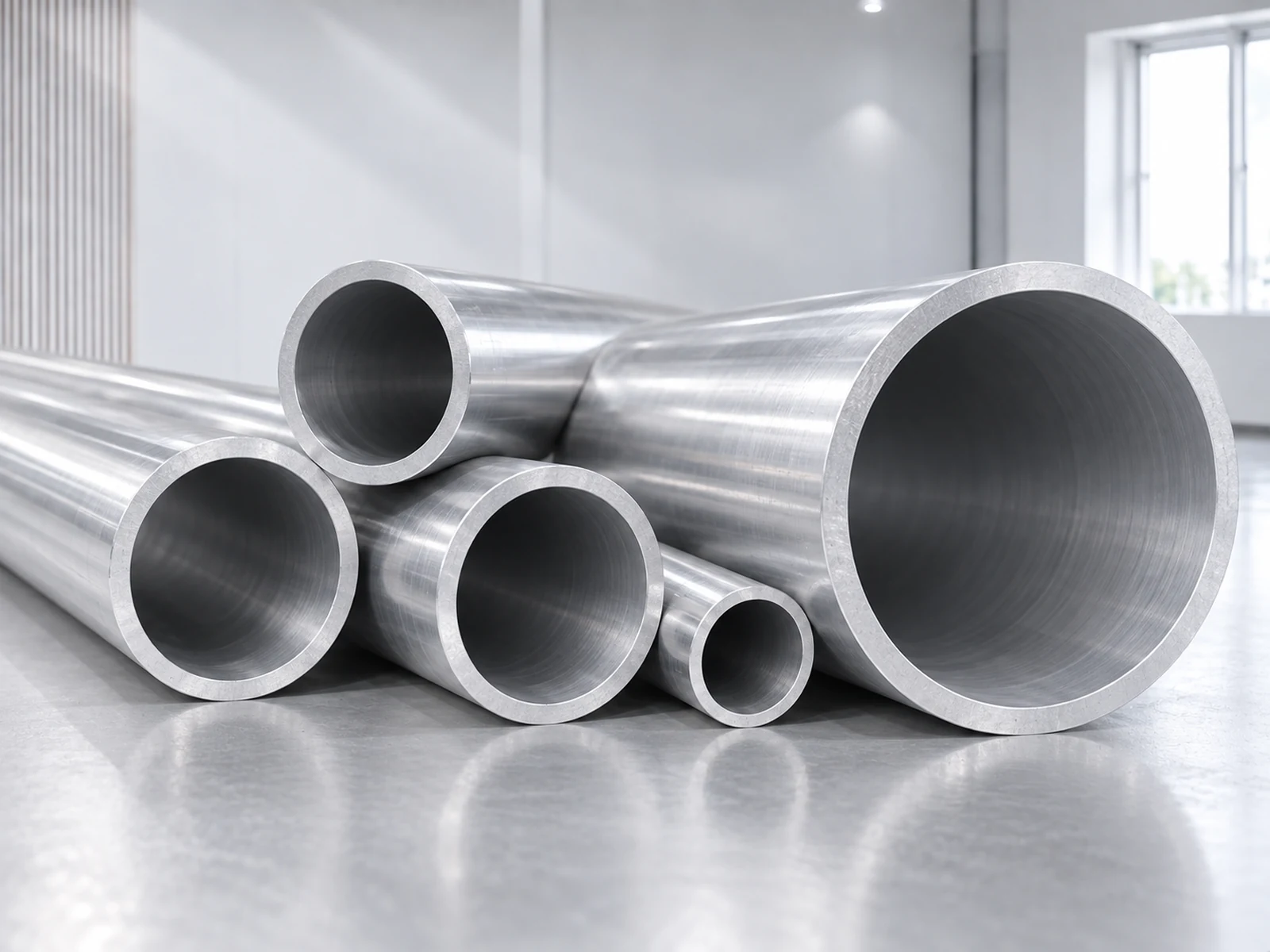
Give every cut member a part number, quantity per finished frame, material designation, outside diameter, wall thickness and finish state. A cage may have uprights, top rails and crossmembers; a shaped return-net frame may use a different set of straight and formed components. Do not ask a saw supplier to derive these from an assembled envelope or sales image. The supplier should quote only the approved straight blanks it can actually produce.
If several diameters or wall thicknesses are used, list them separately. Also distinguish hollow tube from solid rod and non-round extrusion. “Aluminum frame” is not enough to select stock, clamping or a cut method. If alloy or temper remains open, request a technical review before a production quote rather than silently substituting a convenient tube.
3. Define length from the actual mating datum
Nominal assembled width, height and depth do not equal the cut length of each member. Socket insertion, corner fittings, telescoping overlaps, end caps and feet change the blank length. Specify the drawing datum used for measurement: overall end-to-end length, shoulder-to-end length or a length after a secondary operation. Give an approved tolerance for each part, and identify any pairwise or kit-level fit requirement separately.
Mark any asymmetric members and left/right orientation. A cut list should show whether quantities are per frame, per shipping kit or per batch. When drawing revisions change lengths, release a new part revision so old stock cannot be mixed into a new kit.
4. Specify cut ends and separate secondary operations
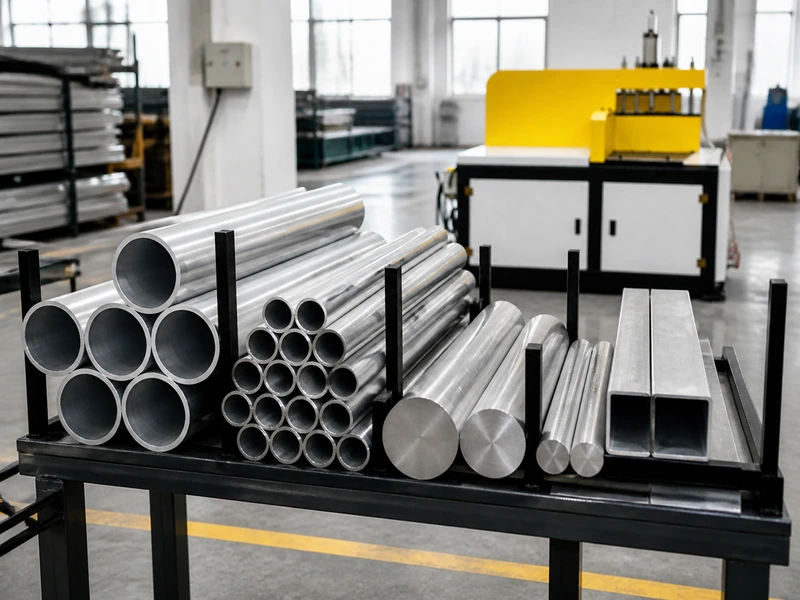
For each part, say whether both ends are square or a drawing calls for an angle, notch or formed feature. Define the end condition needed for the next operation: burr limit, sharp-edge treatment, visible-face protection and any flatness or squareness requirement. Avoid an unqualified “clean cut” requirement; the inspector needs a measurable acceptance method or an approved sample.
Push-button holes, slots, connector seats, bends, welds, powder coating and assembly are separate scope unless the supplier explicitly quotes them. A correct straight blank does not prove that a connector will click into place. Where a hole must register from a cut end, define that end as the datum and decide who performs and checks the hole operation.
5. Confirm indoor and outdoor interfaces
Identify the intended installation environment because the same tube schedule may feed different feet, base plates, ground anchors or guying arrangements. Carron’s indoor and outdoor cage listings illustrate why that distinction belongs in the bill of materials. The tube-cut RFQ should name the interface drawings and required packaging, while the product owner remains responsible for anchoring, ball containment, wind exposure and user safety assessments.
Do not treat an outdoor accessory list as proof that a tube blank or cut length is adequate outdoors. Corrosion protection, joint retention and structural performance need their own specifications and tests.
6. Agree on first-off checks and batch traceability
For a new part or revision, agree on a first-off check before cutting the full batch. Check the stock identification, measured length from the stated datum, end angle or squareness, burr condition and visible damage. If fit to a connector is critical, use an approved mating sample or documented gauge controlled by the frame owner. Record the result against the part number and drawing revision.
During production, keep different lengths and diameters in separate, labeled groups. Decide how the supplier will handle rejected pieces and how many good pieces must arrive per kit. A measurement record for cut blanks supports traceability; it is not a substitute for assembly or impact testing.
7. Quote the delivered kit, not only one cut
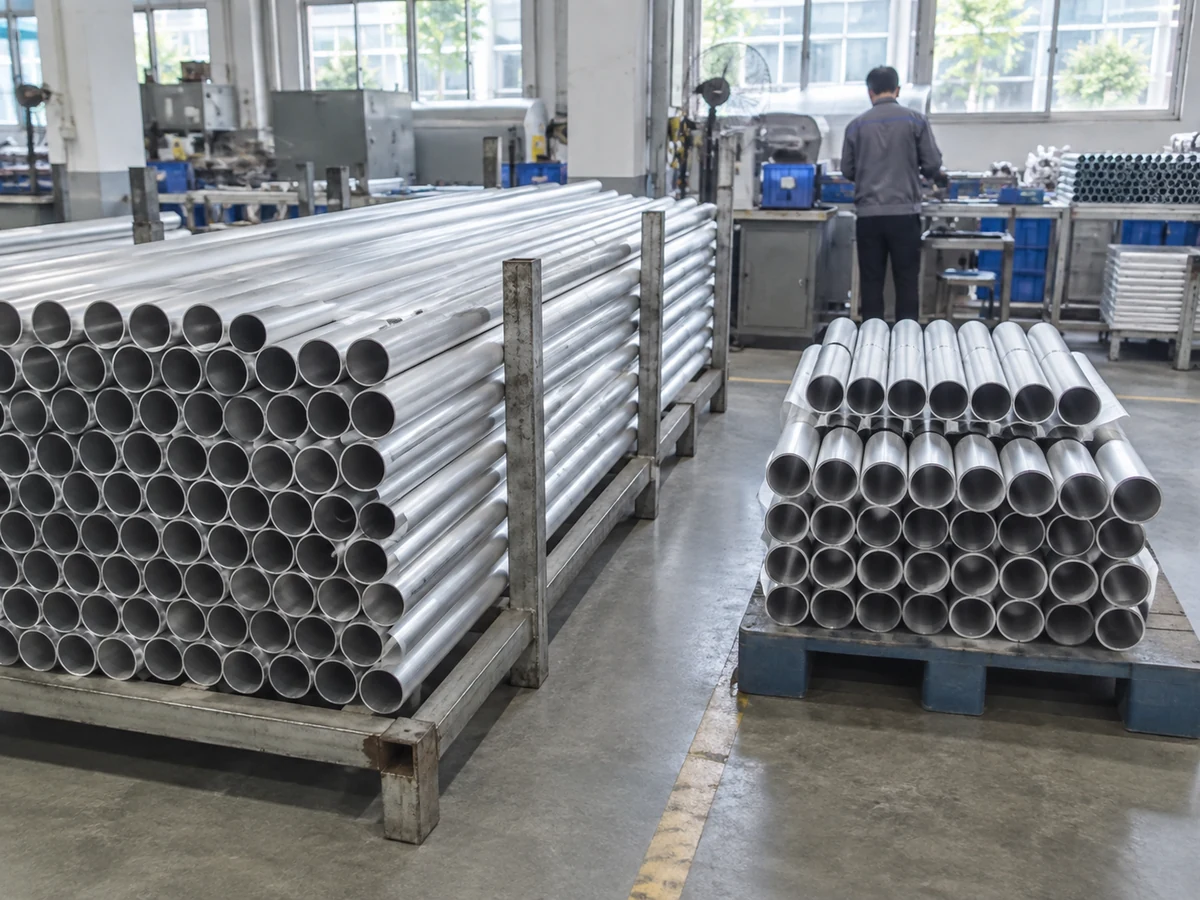
Ask for a quote with separate lines for stock supply, saw cutting, any approved secondary work, inspection, labeling, packaging and freight terms. Provide annual or batch volume, minimum order quantity expectations, shipping destination and the number of frames represented by each order. If the buyer supplies material, define allowance for setup, test pieces and scrap. List exclusions explicitly, especially netting, fasteners, joints and final assembly.
A practical release pack contains: (1) assembly context drawing, (2) approved tube part drawings and revision, (3) material and finish specification, (4) length and end acceptance rules, (5) quantity per kit and order, (6) first-off inspection method, and (7) packaging labels and delivery terms. The supplier can then quote the part of the job it controls without implying a validated practice-net system.
Related cutting-equipment footage
The following video from Jiurun Machinery’s own channel shows related aluminum cutting equipment. It is illustrative footage only: it does not show this golf-net frame, its tube specification, a customer order, or tested impact performance.
Send a drawing-led RFQ
If you are sourcing straight aluminum tube blanks for a golf practice net, send the approved cut list and frame interface drawings to JiurunCut. State which secondary operations and inspection records you need. A drawing-led RFQ makes the scope and quote assumptions clear before anyone commits to a production batch.